Have you ever wondered why your air conditioner suddenly stops working on a hot day? One common culprit is a failed capacitor.
This small, often overlooked part plays a big role in keeping your AC running smoothly. When a capacitor fails, your air conditioner can struggle to start or stop cooling altogether. Understanding what causes a capacitor to fail can save you time, money, and frustration.
You’ll discover the main reasons behind capacitor failure and what you can do to prevent it from ruining your comfort. Keep reading to protect your AC and stay cool all summer long.

Credit: www.frhvac.com
Common Capacitor Types In Ac Units
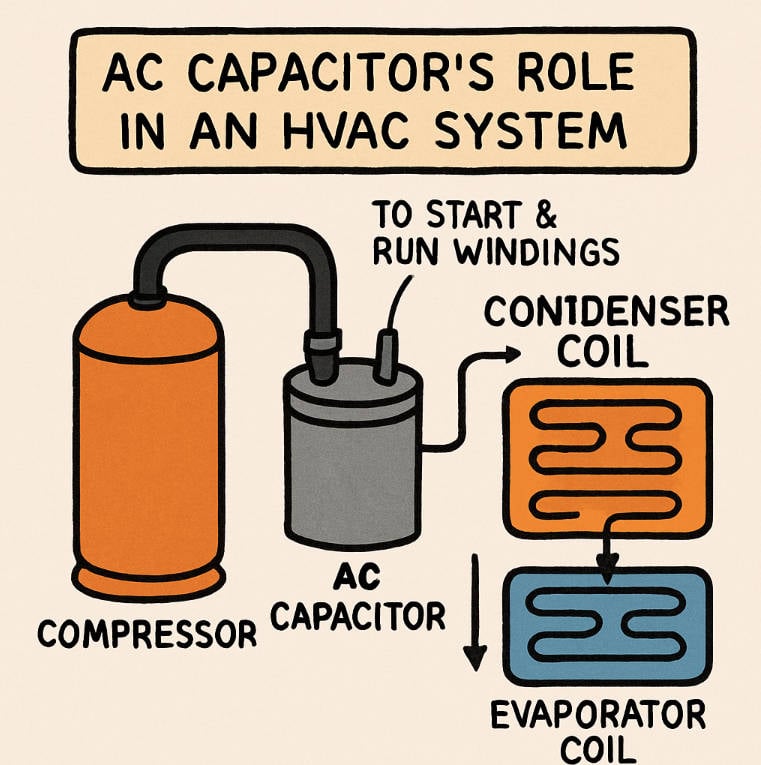
Capacitors help air conditioners start and run smoothly. They store electrical energy and release it when needed. Different types of capacitors serve different jobs in an AC unit.
Knowing the common types of capacitors can help you understand why they fail. This guide explains run capacitors, start capacitors, and dual capacitors.
Run Capacitors
Run capacitors keep the AC motor running once it starts. They help the motor work efficiently and save energy. These capacitors stay active while the unit runs.
Run capacitors usually fail because of heat or age. When they fail, the motor may run slowly or stop working.
Start Capacitors
Start capacitors give the motor a big boost to start turning. They work only at the start and then stop. These capacitors have a higher capacitance than run capacitors.
Start capacitors can fail from high voltage or long use. If they fail, the motor may not start or may make a humming noise.
Dual Capacitors
Dual capacitors combine the functions of run and start capacitors in one unit. They have three terminals for the fan, compressor, and common wire. Dual capacitors save space and cost.
These capacitors can fail from heat, age, or electrical stress. When they fail, both the fan and compressor may stop working properly.
Signs Of A Failing Capacitor
The capacitor in an air conditioner helps start and run the motor. If it fails, the AC may not work properly. Knowing the signs of a failing capacitor can save you time and money.
Watch for unusual behavior in your AC, such as weak fan movement, strange noises, or frequent cycling. These signs often point to capacitor problems.
Slow Or No Fan Movement
The capacitor helps the fan motor start and keep running. If it is weak or dead, the fan may move slowly or stop completely. This causes poor airflow and less cooling.
If you notice the fan struggling or not moving at all, the capacitor might be the cause. This problem can lead to overheating and damage to the motor.
Humming Noise
A failing capacitor can cause a humming noise from the AC unit. This happens because the motor tries to start but cannot run properly. The sound often lasts longer than usual.
The humming noise is a sign that the capacitor is not giving the motor enough power. Ignoring this noise can cause bigger motor problems.
Frequent Ac Cycling
If the capacitor is failing, your AC might turn on and off more often than normal. This frequent cycling wastes energy and stresses the system.
Frequent cycling can make your AC less efficient and increase repair costs. The capacitor may need testing or replacement to fix this issue.
Electrical Overstress
Electrical overstress happens when an air conditioner’s capacitor gets too much electrical energy. This can damage the capacitor and cause it to fail. Understanding these causes helps keep your air conditioner running well.
Many times, electrical overstress comes from sudden changes in the power supply. These changes stress the capacitor and shorten its life.
Voltage Spikes
Voltage spikes are sudden jumps in electrical voltage. They can happen during storms or when large machines turn on or off nearby. These spikes push extra energy into the capacitor, causing damage.
Repeated voltage spikes can wear out the capacitor’s internal parts. This leads to overheating and failure over time.
Power Surges
Power surges are brief increases in electrical power. They often happen when power returns after an outage. These surges send too much current into the capacitor.
Too many power surges can cause the capacitor to swell, leak, or stop working. Protecting your system from surges helps avoid this damage.
Improper Wiring
Improper wiring means the capacitor is connected the wrong way or with poor quality wires. This can cause uneven voltage or short circuits.
Wrong wiring increases electrical stress on the capacitor. It can cause overheating and early failure.
- Loose connections create sparks and heat
- Wrong wire size leads to voltage drops
- Incorrect polarity can damage the capacitor

Credit: yarbroughandsons.com
Heat And Environmental Factors
Capacitors in air conditioners can fail due to heat and environmental problems. These factors put stress on the parts and shorten their life.
Understanding these causes helps in keeping your air conditioner working well for longer.
High Operating Temperatures
High heat makes capacitors work harder. This can cause the internal material to break down. When capacitors get too hot, they lose their ability to store energy.
- Heat speeds up wear and tear
- Too much heat causes swelling or leaking
- High temperatures reduce capacitor life span
Humidity And Moisture
Moisture can enter the capacitor casing and cause damage. Humid air leads to corrosion of metal parts inside the capacitor. This stops the capacitor from working properly.
| Humidity Effect | Damage to Capacitor |
| Condensation inside | Short circuit risk |
| Corrosion | Loss of capacitance |
| Water leaks | Complete failure |
Dust And Debris Accumulation
Dust builds up on capacitors and blocks heat from escaping. Debris can cause short circuits or physical damage. Clean air and parts help capacitors last longer.
- Dust traps heat, causing overheating
- Debris may cause electrical shorts
- Regular cleaning improves performance
Age And Wear
Capacitors in air conditioners lose their ability to work well as they get older. The parts inside them wear out over time. This causes the air conditioner to stop working properly.
Understanding why capacitors fail helps in keeping air conditioners running longer. Age and wear are key reasons for failure.
Capacitor Lifespan
The typical lifespan of a capacitor is about 10 years. Over time, the capacitor’s parts slowly break down. This natural aging reduces its performance. When a capacitor is too old, it can fail suddenly.
Material Degradation
Materials inside capacitors change as they age. Heat and electrical stress cause damage to the internal layers. This damage leads to less efficient operation and can cause failure.
- Plastic casing can crack or warp
- Electrolyte inside may dry out or leak
- Metal plates may corrode or lose contact
- Insulating materials become weaker
Mechanical Stress
Capacitors face mechanical stress from vibrations and temperature changes. These stresses cause physical damage. Cracks or loose connections inside the capacitor lead to failure.
| Type of Stress | Effect on Capacitor |
|---|---|
| Vibration | Loosens internal parts and connections |
| Thermal Expansion | Causes cracks in casing and plates |
| Repeated Heating/Cooling | Weakens materials, causing leaks and shorts |
Manufacturing Defects
Capacitors in air conditioners can fail due to manufacturing defects. These defects happen during the making of the capacitor.
Manufacturing defects reduce the life of a capacitor and cause it to stop working early.
Poor Quality Materials
Using low-quality materials can make capacitors weak. Cheap metals or plastics may not handle electrical stress well.
Poor materials can cause the capacitor to overheat or leak, leading to failure.
- Low-grade dielectric materials reduce insulation
- Cheap metal foils may corrode quickly
- Inferior plastic casing can crack or melt
- Low-quality electrolyte fluids dry out fast
Assembly Errors
Assembly mistakes can cause capacitors to fail. Errors may happen during the fitting or sealing process.
These errors let moisture in or cause poor electrical connections inside the capacitor.
- Incorrect sealing allows air and moisture inside
- Loose connections cause electrical shorts
- Misalignment damages internal parts
- Improper welding weakens the capacitor’s structure
Improper Installation
Improper installation is a common cause of capacitor failure in air conditioners. If the capacitor is not installed correctly, it can stop working soon.
Many installation mistakes can damage the capacitor or reduce its lifespan. It is important to avoid these errors to keep the air conditioner running well.
Incorrect Capacitor Rating
Using a capacitor with the wrong rating can cause it to fail quickly. The rating includes voltage and microfarad values.
If the capacitor rating is too low, it will not handle the electrical load. If it is too high, it may not work properly with the motor.
- Check voltage matches the air conditioner requirements
- Use the correct microfarad rating for the motor
- Avoid mixing different types of capacitors
Loose Connections
Loose electrical connections can cause the capacitor to fail. They create sparks and heat, damaging the capacitor.
Vibrations from the air conditioner can loosen wires if they are not secured well. This leads to poor contact and failure.
- Ensure all wires are tightly connected
- Use proper terminals and connectors
- Check connections regularly for signs of wear
Physical Damage During Setup
Handling the capacitor roughly during installation can cause physical damage. Dents or cracks reduce its ability to work.
Dropping the capacitor or using tools incorrectly can harm the parts inside. This damage often leads to early failure.
- Handle capacitors gently and avoid dropping them
- Do not use sharp tools on the capacitor body
- Inspect capacitors for damage before installation
Preventing Capacitor Failure
Capacitors play a key role in air conditioners. They help start and run motors. If a capacitor fails, the unit may stop working or work poorly.
Preventing capacitor failure saves money and keeps your air conditioner running well. Regular care and smart choices help avoid problems.
Regular Maintenance
Check capacitors often to catch signs of wear. Look for bulges, leaks, or rust. Clean dirt and dust from the unit. Dirty parts can cause extra heat and damage capacitors.
- Inspect capacitors every 6 months.
- Clean air filters and coils regularly.
- Replace damaged capacitors quickly.
- Listen for unusual noises from motors.
Proper Installation Practices
Correct installation stops many capacitor issues. Use the right capacitor size and rating. Connect wires firmly to avoid loose contacts. Avoid bending or stressing capacitor leads.
| Installation Tip | Benefit |
| Use manufacturer-recommended capacitors | Ensures correct voltage and capacity |
| Secure wiring connections | Prevents electrical shorts and sparks |
| Avoid physical damage to capacitor | Extends capacitor life |
| Mount capacitor in dry, ventilated area | Reduces heat and moisture damage |
Surge Protection
Power surges can destroy capacitors fast. Use surge protectors to guard your air conditioner. This device blocks sudden voltage spikes. It lowers risk of capacitor burnout.
- Install whole-house surge protectors.
- Use dedicated surge protection for AC units.
- Check surge protector regularly.
- Replace surge devices after strong storms.
Credit: www.bettlink.com
Frequently Asked Questions
What Are Common Causes Of Capacitor Failure?
Capacitors in air conditioners often fail due to overheating, voltage spikes, or age-related deterioration. Over time, these factors can degrade the dielectric material, leading to reduced efficiency or complete failure. Regular maintenance and monitoring can help mitigate these issues and prolong the lifespan of the capacitor.
How Does Overheating Affect A Capacitor?
Overheating can damage a capacitor’s internal components, leading to reduced functionality or failure. It causes the dielectric material to break down, which can result in short circuits. Ensuring proper ventilation and avoiding excessive heat exposure can help in preventing overheating issues.
Can Voltage Spikes Damage Capacitors?
Yes, voltage spikes can damage capacitors by exceeding their rated voltage, causing dielectric breakdown. This breakdown can lead to short circuits or even complete failure of the capacitor. Installing surge protectors can help safeguard capacitors from voltage spikes.
How Does Age Impact Capacitor Performance?
As capacitors age, their ability to store and release energy efficiently declines. The dielectric material inside can degrade, leading to increased resistance and reduced performance. Regular inspections and timely replacements are key to maintaining optimal performance in aging capacitors.
Conclusion
Capacitors in air conditioners fail due to heat, age, and power issues. Over time, constant stress weakens their parts. Dirt and moisture also damage capacitors. Knowing these causes helps prevent sudden breakdowns. Regular checks keep your AC running smoothly. Fixing or replacing a bad capacitor saves money and hassle.
Stay alert for signs like slow cooling or strange noises. Taking care of your AC ensures comfort all year round. Simple steps can extend the life of your unit. Don’t ignore small problems before they grow bigger.