Have you ever noticed your air conditioner suddenly stopping cold, with ice forming on its coils? It’s frustrating, especially when you rely on your AC to keep your home comfortable.
But why does this freezing happen? Understanding what causes your air conditioner to freeze up can save you from costly repairs and uncomfortable days. You’ll discover the common reasons behind this problem and how you can spot them early. Keep reading to learn how to protect your AC and keep your home cool without interruptions.
Common Causes Of Ac Freezing
Low refrigerant levelscause the AC coils to get too cold. This leads to ice forming on the coils. The system loses cooling power and may stop working.
Dirty air filtersblock the airflow over the coils. This makes the coils cold enough to freeze. Cleaning or changing the filters helps air flow freely again.
Blocked airflowfrom closed vents or dirty ducts can cause freezing. Air must flow well to keep the coils warm. Clearing vents or ducts fixes this issue.
Thermostat issuesmay cause the AC to run too long or too cold. This overworks the system and leads to freezing. Checking and setting the thermostat correctly can prevent this.
Impact Of Frozen Evaporator Coils
Frozen evaporator coils happen when too much moisturebuilds up on the coils. This occurs because of poor airflowor low refrigerant levels. The cold air inside the coils turns the moisture into ice, causing the coils to freeze.
Frozen coils stop the air conditioner from working well. The ice blocks air from passing over the coils. This leads to less cool aircoming out of your vents. The system works harder, which can cause higher energy billsand possible damageto the AC unit.
Role Of Outdoor Temperature
Outdoor temperature plays a big role in an air conditioner’s freezing. Cold weather makes the unit work harder. This can cause the coils to get too cold and freeze.
Running an AC when it is chilly outside risks ice buildup. The unit is not designed for low temperatures. Ice on the coils blocks airflow and cooling.
| Temperature Range | Freezing Risk | Effect on AC |
|---|---|---|
| Above 60°F (15°C) | Low | Normal operation |
| 45°F to 60°F (7°C to 15°C) | Moderate | Possible coil freezing |
| Below 45°F (7°C) | High | Likely freezing and damage |
- Cold outdoor air lowers coil temperature.
- Moisture in the air can freeze on coils.
- Running AC in cold weather causes ice buildup.

Credit: serviceplusheatingcooling.ca
Maintenance Tips To Prevent Freezing
Changing the air filteroften keeps dirt from blocking airflow. A clean filter helps the AC run smoothly and stops freezing.
Cleaning the coilsremoves dust and grime. Dirty coils make the system work too hard, which can cause ice to form.
Checking the refrigerant levelsis important. Low refrigerant makes the AC freeze because it can’t cool properly.
Good airflowkeeps the AC working well. Make sure vents and registers are not blocked. This helps avoid freezing and keeps air moving freely.
When To Call A Professional
Signs of serious problemsinclude ice buildup on coils, strange noises, and weak airflow. If the air conditioner keeps freezing, it may cause damage to parts. A frozen unit can lead to higher energy billsand poor cooling.
Expert inspection helps find hidden issues quickly. Professionals check refrigerant levels, clean coils, and test airflow to fix the root cause. Regular checks prevent future breakdowns and keep the system running efficiently.
| Benefits of Expert Inspection | Details |
|---|---|
| Detects leaks | Finds and repairs refrigerant leaks early |
| Improves efficiency | Keeps the system cooling properly and using less energy |
| Prevents damage | Stops freezing before it harms the unit |
| Extends unit life | Keeps your air conditioner working longer |
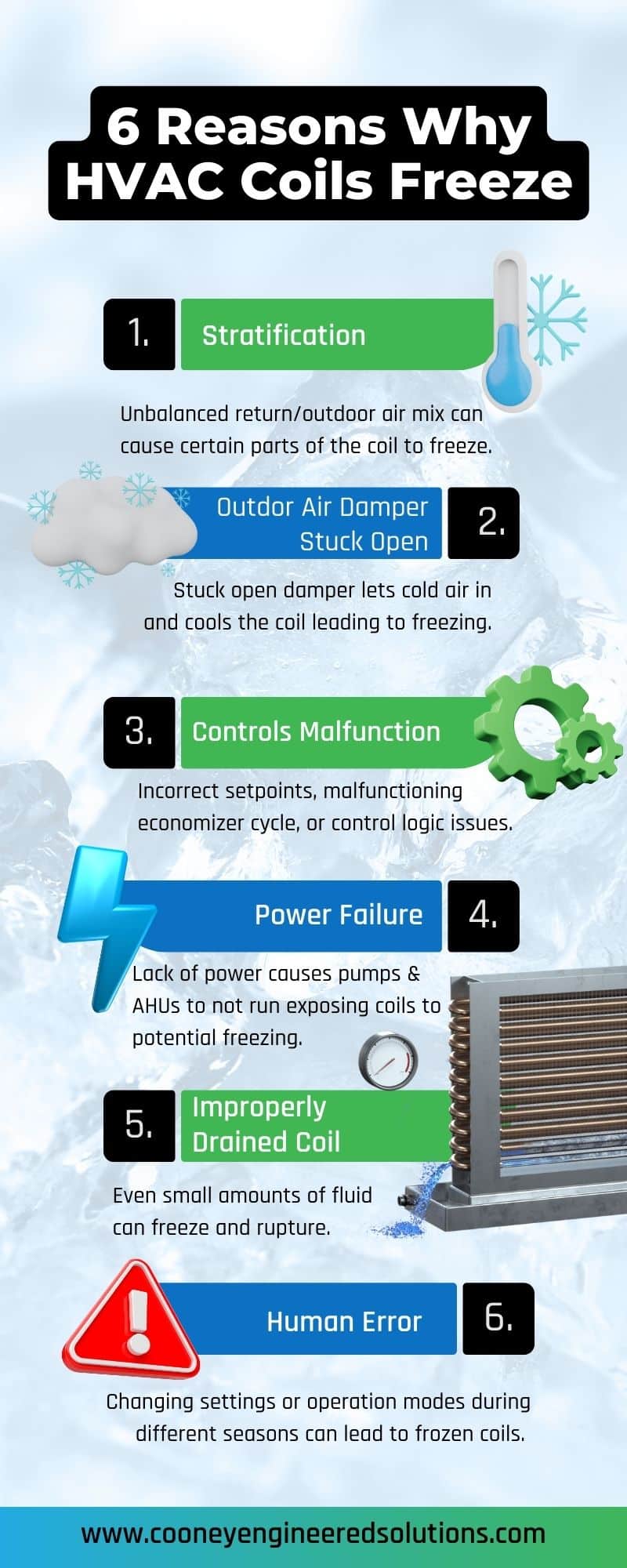
Credit: cooneyengineeredsolutions.com

Credit: www.delcohvac.com
Frequently Asked Questions
Why Does My Air Conditioner Freeze Up?
Your air conditioner might freeze up due to restricted airflow or low refrigerant levels. Blocked vents or dirty filters can impede airflow. Low refrigerant can cause the coils to become too cold. Regular maintenance and cleaning can help prevent these issues and ensure efficient operation.
How Can I Fix A Frozen Air Conditioner?
To fix a frozen air conditioner, first, turn it off to let it thaw. Check and clean or replace air filters. Ensure vents are open and unobstructed. If the problem persists, contact a professional to check refrigerant levels and inspect for any other underlying issues.
What Are Signs Of A Frozen Air Conditioner?
Signs include reduced airflow, visible ice on coils, and warm air output. You might also notice unusual noises or leaks. Regularly inspecting your unit can help detect these signs early, preventing further damage and ensuring efficient operation.
Can Low Refrigerant Cause Freezing?
Yes, low refrigerant can cause the evaporator coils to become too cold, leading to freezing. It reduces the system’s efficiency and may cause further damage. If you suspect low refrigerant, it’s essential to contact a professional to inspect and recharge your system.
Conclusion
A frozen air conditioner can cause many problems. Poor airflow and dirty filters often start the issue. Low refrigerant levels also lead to freezing. Regular maintenance helps keep the system running well. Catching problems early saves time and money. Stay alert to unusual cold or ice on the unit.
Fixing small issues prevents bigger damage later. Keep your home cool and comfortable all summer. Simple steps make a big difference in air conditioner health.