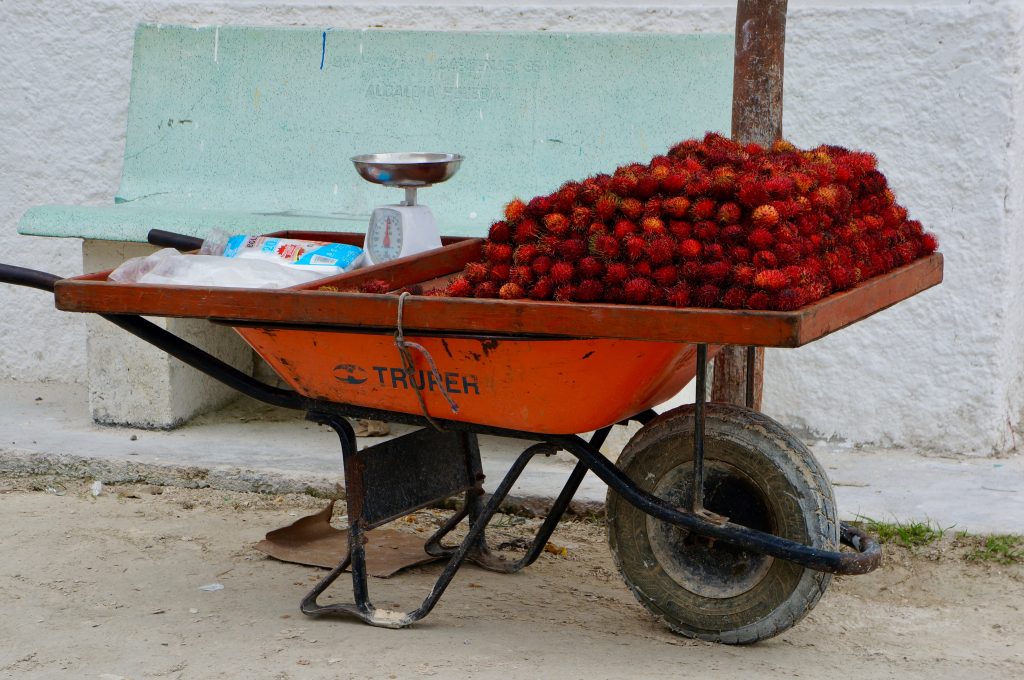
Have you ever wondered how a wheelbarrow makes lifting heavy loads feel so much easier? It’s not just about muscle power; there’s clever science behind it.
Understanding what class lever a wheelbarrow uses can change the way you see this simple tool—and help you use it more effectively. Keep reading, and you’ll discover the secret behind its design and how it gives you a real advantage every time you work.

Credit: studyx.ai
Lever Classes Overview
Levers are simple machines that help us move or lift things. They work by using a rigid bar that pivots on a point called the fulcrum.
There are three classes of levers. Each class depends on the position of the effort, load, and fulcrum.
First-class Lever
In a first-class lever, the fulcrum is between the effort and the load. An example is a seesaw. The effort pushes down on one side to lift the load on the other.
Second-class Lever
In a second-class lever, the load is between the fulcrum and the effort. A wheelbarrow is a good example. The wheel acts as the fulcrum, the load sits in the barrow, and the effort is applied on the handles.
- Fulcrum is at the front (wheel)
- Load is in the middle (barrow bucket)
- Effort is at the back (handles lifted by user)
Third-class Lever
In a third-class lever, the effort is between the fulcrum and the load. An example is a fishing rod. The hand applies effort in the middle to lift the fish at the end.
Wheelbarrow As A Second-class Lever
| Part | Role | Location |
| Wheel | Fulcrum | Front |
| Load | Weight in Barrow | Middle |
| Handles | Effort Applied by User | Back |
The wheelbarrow lifts heavy loads with less effort. The design lets the user carry more weight easily by turning the load and effort around the wheel.

Credit: www.wikiwand.com
Anatomy Of A Wheelbarrow
A wheelbarrow is a simple machine that helps move heavy loads. It uses the principle of a class lever to make work easier.
Understanding the parts of a wheelbarrow shows how it works as a lever. Each part plays a role in lifting and moving weight.
Key Components
A wheelbarrow has several main parts. These include the wheel, handles, tray, and legs. Each part helps with balance and movement.
- Wheel:The front part that rolls on the ground.
- Handles:Used to lift and steer the wheelbarrow.
- Tray:The container that holds the load.
- Legs:Support the wheelbarrow when it is resting.
Functionality
The wheelbarrow works as a class 2 lever. The load sits between the wheel and the handles.
The wheel acts as the pivot point. When you lift the handles, it reduces the effort needed to carry heavy weight.
- The wheel is the fulcrum (pivot).
- The load is in the middle, inside the tray.
- The effort is applied at the handles.
- This setup makes lifting easier.
Identifying Lever Class
A lever is a simple machine that helps move or lift objects. It has three parts: the effort, the load, and the fulcrum.
Levers are divided into three classes. Each class depends on the position of the effort, load, and fulcrum.
Characteristics Of Class 1 Levers
In a Class 1 lever, the fulcrum is between the effort and the load. The effort and load move in opposite directions.
This type of lever can multiply force or distance. It changes the direction of the force.
- Fulcrum is in the middle
- Effort and load are on opposite sides
- Changes direction of force
- Examples: seesaw, crowbar
Characteristics Of Class 2 Levers
Class 2 levers have the load between the fulcrum and the effort. Effort moves farther than the load.
They increase force but do not change the direction of effort. The load moves in the same direction as effort.
- Load is in the middle
- Fulcrum is at one end
- Effort is applied at the other end
- Examples: wheelbarrow, nutcracker
Characteristics Of Class 3 Levers
In Class 3 levers, the effort is between the fulcrum and the load. Effort moves a shorter distance than the load.
This lever type increases speed and distance, but not force. The load moves in the same direction as effort.
- Effort is in the middle
- Fulcrum is at one end
- Load is at the other end
- Examples: fishing rod, human arm
The Wheelbarrow As A Class 2 Lever
A wheelbarrow is a simple tool used to carry loads easily. It works like a lever to lift heavy things with less effort.
In lever terms, a wheelbarrow is a class 2 lever. This means the load is between the effort and the fulcrum.
Fulcrum Position
The fulcrum of a wheelbarrow is the wheel. It is located at the front of the tool.
This position allows the wheel to act as the pivot point when lifting the load.
Load Placement
The load sits in the tray between the wheel and the handles. This is the middle part of the lever.
Placing the load here helps balance and makes lifting easier.
Effort Application
The effort is applied at the handles, opposite the wheel. You lift or push the handles to move the load.
This setup reduces the force needed to carry heavy items in the wheelbarrow.
Mechanics Behind Wheelbarrow Efficiency
The wheelbarrow is a simple machine that helps carry heavy loads with less effort. It uses levers to multiply force, making work easier.
Understanding the mechanics shows why it is efficient and how it balances force and load for better performance.
Force Distribution
A wheelbarrow acts as a second-class lever. The wheel is the fulcrum at the front. The load is in the middle, and the effort is applied at the handles.
- The wheel reduces friction and supports the load.
- Effort is applied upward on the handles.
- Load pushes down between the wheel and handles.
- This setup spreads the force and lowers the effort needed.
Load Balancing
Balancing the load on a wheelbarrow makes lifting easier and safer. The closer the load is to the wheel, the less effort is required.
| Load Position | Effort Needed | Stability |
| Close to wheel | Low | High |
| Far from wheel | High | Low |
Comparative Analysis With Other Lever Types
A wheelbarrow is an example of a class 2 lever. In this type, the load is between the effort and the fulcrum. This design helps lift heavy loads with less effort.
Class 1 and class 3 levers work differently. Class 1 has the fulcrum between effort and load. Class 3 has the effort between fulcrum and load. Each type has its own uses and benefits.
Advantages Of Class 2 Levers
Class 2 levers like the wheelbarrow increase force. This makes it easier to lift heavy objects. The effort you apply is less than the weight you move.
The design also keeps the load stable. The wheel at the fulcrum helps balance the weight. This reduces strain and improves control.
- Requires less effort to lift heavy loads
- Load stays balanced and stable
- Good for moving heavy objects over short distances
- Simple and easy to use
Disadvantages Of Class 2 Levers
Class 2 levers have limited range of motion. You cannot move the load very far or fast. The setup is also larger than other levers.
The effort arm is shorter than in some other lever types. This limits the speed and distance of the load movement. It may not work well for all tasks.
- Shorter range of motion compared to other levers
- Slower load movement
- Larger size can be less convenient
- Not ideal for tasks needing fast or long movement
Practical Applications
A wheelbarrow is a simple machine that works as a class lever. It helps move heavy items with less effort. The wheel acts as the fulcrum, the load is in the bucket, and the handles are where you apply force.
This design makes wheelbarrows very useful in many tasks. They reduce strain and save time when carrying loads.
Common Uses Of Wheelbarrows
People use wheelbarrows in gardens, farms, and construction sites. They carry soil, plants, tools, and building materials easily. Wheelbarrows help move heavy or bulky items over short distances.
They are also useful for cleaning up debris and transporting supplies. Their simple design works well on rough or uneven ground.
- Transporting soil and compost
- Carrying bricks and stones
- Moving plants and garden waste
- Hauling tools and equipment
- Clearing debris from work areas
Innovations In Design
Modern wheelbarrows have improved features for better use. Some have extra wheels for stability and balance. Others use lightweight materials to make them easier to push.
Designs now include ergonomic handles to reduce hand strain. Some models have flat-free tires that do not need air. These changes make wheelbarrows more practical and durable.
- Dual or triple wheels for better balance
- Lightweight metal or plastic frames
- Ergonomic and padded handles
- Flat-free or puncture-proof tires
- Foldable designs for easy storage
Enhancing Wheelbarrow Performance
A wheelbarrow acts as a second-class lever. The wheel is the fulcrum at the front. The load sits in the middle. The effort is applied at the handles.
This design helps move heavy loads easily. Improving its parts can boost its performance. Small changes make work faster and easier.
Maintenance Tips
Keep the wheelbarrow clean and dry. Check the wheel for damage. Tighten any loose bolts or screws.
Lubricate the wheel axle to reduce friction. Replace worn tires or handles on time. Proper care helps the wheelbarrow last longer.
- Clean after each use
- Check tire pressure regularly
- Lubricate moving parts monthly
- Tighten loose hardware
- Store in a dry place
Design Improvements
Use lighter but strong materials for the frame. This reduces weight without losing strength. Comfortable handles improve grip and control.
A wider wheel helps balance heavy loads. Adding a brake improves safety on slopes. These changes help the wheelbarrow work better.
- Lightweight steel or aluminum frame
- Ergonomic rubber handles
- Wide, puncture-resistant wheel
- Wheel brake for stability
- Deep tray for larger loads

Credit: www.teacherspayteachers.com
Frequently Asked Questions
What Class Lever Is A Wheelbarrow?
A wheelbarrow is a second-class lever. The load is between the effort and the fulcrum, making it easier to lift heavy loads.
How Does A Wheelbarrow Function As A Lever?
The wheel acts as the fulcrum. The load sits in the barrow, and you apply effort on the handles to lift and move.
Why Is A Wheelbarrow Considered A Second-class Lever?
Because the load is positioned between the fulcrum (wheel) and the effort (handles), which is the defining feature of second-class levers.
What Are The Benefits Of A Wheelbarrow’s Lever Design?
This lever design reduces effort needed to move heavy objects. It increases mechanical advantage, making work easier and more efficient.
Conclusion
A wheelbarrow works as a second-class lever. The load sits between the wheel and the handle. This design helps lift heavy objects with less effort. Knowing this makes using a wheelbarrow easier and safer. Next time you work outside, think about how the lever helps you.
Simple tools like this use smart science every day. Understanding levers can improve your work and save your energy.