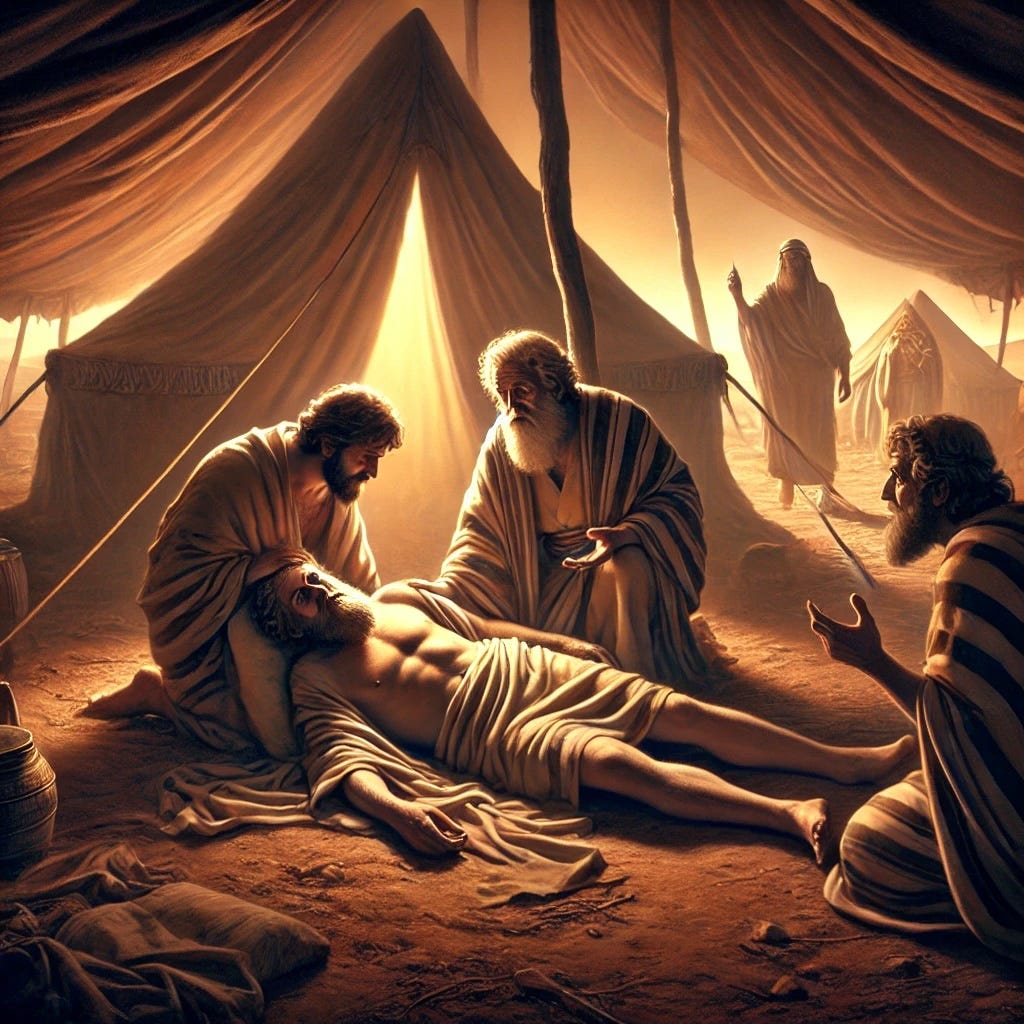
Have you ever wondered about the story of Ham and Noah in the tent? It’s one of those moments that sparks curiosity and leaves many questions unanswered.
What exactly did Ham do, and why does it matter to you today? Understanding this story can reveal surprising insights about respect, family, and consequences. Keep reading, and you’ll discover the truth behind this ancient event and why it still captures attention now.
Ham And Noah: Biblical Background
The story of Ham and Noah is an important part of the Bible. It shows family relationships and lessons after the flood. The events took place after Noah’s ark landed and the world started anew.
This background helps us understand what happened in the tent and why it matters in biblical history. We will look at who Ham was, Noah’s role after the flood, and the context of the tent incident.
Who Was Ham?
Ham was one of Noah’s three sons. His brothers were Shem and Japheth. Ham is known for being the father of several nations. He plays a key role in the story of Noah’s family after the flood.
- Son of Noah and his wife
- Father of Canaan and other sons
- Ancestor of many nations mentioned in the Bible
- Known for an important event in Noah’s tent
Noah’s Role After The Flood
Noah was a righteous man chosen by God to survive the flood. After the flood, Noah became a farmer and planted a vineyard. He played a role as the family leader and a symbol of new beginnings.
| Role | Description |
| Survivor | Saved his family and animals from the flood |
| Farmer | Planted a vineyard and lived off the land |
| Family Leader | Guided his sons and passed on blessings |
| Symbol | Represents new life after destruction |
The Tent Incident Context
After planting the vineyard, Noah became drunk and lay uncovered in his tent. Ham saw his father in this state and told his brothers. Shem and Japheth covered Noah without looking at him.
This event caused a serious family reaction. Noah later cursed Canaan, Ham’s son, for what happened. The incident shows respect and shame in the family culture.

Credit: beholdthestone.com
The Incident In The Tent
The story of Ham and Noah is from the Bible. It tells about an event inside a tent that had lasting effects on their family.
This event occurred after the flood, when Noah became drunk and was in his tent. Ham, Noah’s son, saw his father in an inappropriate state.
What Happened Inside The Tent?
Noah drank wine and became drunk. He lay uncovered inside his tent. This was a private moment that was not meant to be seen by others.
Ham entered the tent and saw Noah in this state. This was considered disrespectful and shameful.
Ham’s Actions And Behavior
Ham did not cover his father. Instead, he went outside and told his two brothers about what he saw.
His actions showed a lack of respect for his father. He did not keep the matter private but shared it with others.
- Ham saw Noah uncovered
- He left the tent and told his brothers
- He did not cover Noah
Noah’s Reaction
Noah found out about what Ham did. He was angry and upset by Ham’s actions. Noah then cursed Ham’s son, Canaan.
This curse affected Canaan’s descendants for generations. Noah’s reaction showed the seriousness of Ham’s disrespect.
| Noah’s state | Drunk and uncovered |
| Ham’s action | Told brothers, did not cover Noah |
| Noah’s response | Cursed Canaan |
Interpretations And Controversies
The story of Ham and Noah in the tent has many interpretations. It is a brief but puzzling event in the Bible. People have debated what really happened for centuries.
This story has caused many controversies about its meaning. Different groups see it in various ways. Some ideas are traditional, while others are new or cultural.
Traditional Views
Many traditional readers think Ham sinned by disrespecting Noah. Some say Ham saw Noah naked and laughed. Others say Ham told his brothers instead of covering Noah.
This act is seen as dishonoring the father. Noah’s curse on Ham’s son, Canaan, is often linked to this event. The story warns against disrespecting parents.
- Ham’s action seen as shameful
- Noah’s curse affects Ham’s family
- Teaches respect for parents
Alternative Theories
Some scholars suggest different meanings. They think Ham’s sin was more serious than just seeing Noah naked. Some say it involved a sexual offense or violence.
Others believe the story shows a power struggle. Ham’s disrespect might mean rejecting Noah’s authority. This view sees the story as a political or family conflict.
- Possible sexual misconduct
- Power or authority challenge
- Symbolic family conflict
Cultural And Historical Perspectives
This story has been used in different cultures. Some used it to justify slavery or racism. This interpretation is controversial and widely rejected today.
Historians see the story as reflecting ancient family and social rules. It shows how honor and shame worked in old times. The curse on Canaan may explain old tribal relations.
- Misuse in racial and slavery justification
- Reflects ancient social rules
- Explains tribal and family ties

Credit: x.com
Consequences For Ham And His Descendants
Ham’s actions in Noah’s tent led to serious consequences. The story shows how his behavior affected his family.
The punishment affected Ham’s descendants for many generations after him.
The Curse On Canaan
Noah cursed Canaan, Ham’s son, after the incident in the tent. This curse was not on Ham directly but on his youngest son.
The curse said Canaan would be a servant to his brothers. This showed the lasting effect of Ham’s disrespect.
- Canaan’s land would be taken by others
- Canaan’s descendants would face hardship
- The curse shaped the future of Canaan’s people
Impact On Ham’s Lineage
Ham’s family line was marked by the curse on Canaan. His descendants were often seen as lower in status.
This story explains why some groups were considered servants or slaves in later times.
- Ham’s sons included Cush, Mizraim, Put, and Canaan
- Canaan’s descendants lived in the land of Canaan
- Other sons founded nations with different roles
Long-term Effects In Biblical Narrative
The curse influenced many Bible stories about nations and peoples. It explained conflicts and power struggles.
Ham’s story warned against disrespect and showed consequences for family dishonor.
- It justified the subjugation of some nations
- It shaped how people viewed Ham’s descendants
- The story stayed important in religious teachings
Lessons From The Tent Incident
The story of Ham and Noah in the tent is a well-known biblical event. It teaches us many moral and ethical lessons. These lessons help us understand respect, family values, and human behavior.
In this post, we will explore key insights from the incident. We will also see how these lessons matter today. Finally, we will learn how to avoid wrong views about the story.
Moral And Ethical Insights
This story shows the importance of respect and honor within a family. Ham’s actions taught us what not to do. He did not show respect to his father, Noah, when he was vulnerable.
- Respect elders and their dignity
- Protect family members in hard times
- Avoid shameful behavior or mocking
- Practice kindness and understanding
Relevance Today
The tent incident reminds us to treat others with care. Respect is still a key value in families and communities. It helps keep peace and trust among people.
| Lesson | Modern Application |
| Respect elders | Listen and honor older family members |
| Protect dignity | Help relatives in tough times |
| Avoid shame | Speak kindly and avoid insults |
| Show kindness | Be patient and forgiving with others |
Avoiding Misinterpretations
Many people misunderstand the story of Ham and Noah. Some blame Ham unfairly or twist the meaning. It is important to see the story in its true context.
To avoid wrong views, remember these points:
- The story warns about disrespect, not about race or nationality.
- Noah’s reaction was about family honor, not a curse on descendants.
- Focus on the lesson of respect and care, not judgment or blame.

Credit: soh.church
Frequently Asked Questions
What Did Ham Do To Noah In The Tent?
Ham saw Noah naked in the tent and told his brothers. He did not cover Noah, which showed disrespect. This act led to a curse on Ham’s son, Canaan, in the Bible.
Why Was Ham’s Action Offensive To Noah?
Ham’s action was offensive because it exposed Noah’s shame. In biblical times, respecting family privacy was crucial. Ham’s behavior was seen as dishonoring his father, leading to serious consequences.
How Did Noah Respond To Ham’s Behavior?
Noah cursed Ham’s son, Canaan, after learning about Ham’s disrespect. This curse affected Ham’s descendants. Noah’s reaction shows the severity of Ham’s offense in the biblical story.
What Is The Significance Of Ham’s Actions In The Bible?
Ham’s actions symbolize disrespect and betrayal in family relationships. The story explains the origin of certain curses. It highlights moral lessons about honor and family respect in biblical teachings.
Conclusion
Ham’s actions in Noah’s tent led to a serious family moment. He showed disrespect by seeing Noah’s nakedness. This caused Noah to curse Ham’s son, Canaan. The story teaches about respect and consequences. It reminds us to act with kindness and care.
Understanding this helps us see the deeper meaning. The story still matters today in many cultures. It shows how one choice can affect many people. Think about how respect shapes your own life and relationships.