Have you ever wondered what the very first air conditioner looked like? You might picture sleek, modern machines, but the original design was quite different.
Understanding its beginnings can change how you see the cool air you enjoy today. Keep reading, and you’ll discover surprising facts about this invention that transformed our comfort forever. Your curiosity is about to pay off.

Credit: medium.com
Early Cooling Methods
People have used different ways to cool down for thousands of years. Ancient techniquesincluded using natural elements like water and wind. For example, Egyptians hung wet mats over windows to cool the air inside.
In some places, people built homes with thick walls and small windows. This kept the heat outside and the cool air inside. Fans made from feathers or palm leaves were also common to move air around.
- Evaporative cooling with water and cloth
- Building houses underground or in shaded areas
- Using natural breezes by designing windows carefully
During the medieval times, new ideas appeared. People used large water wheels to move air through buildings. They also started using ice stored in deep pits to cool rooms.
These old methods show how humans tried to stay cool long before machines existed. Simple ideas made a big difference in hot weather.
Invention Of The First Air Conditioner
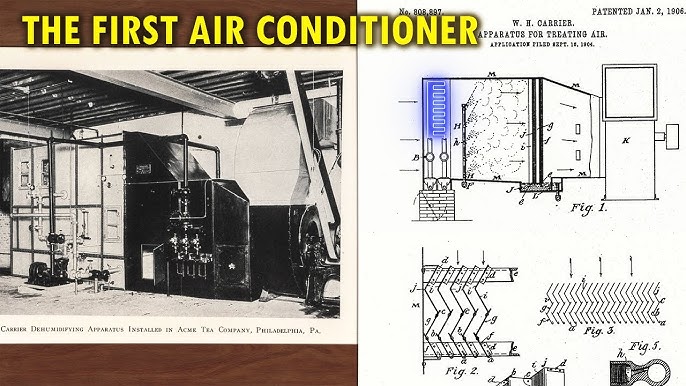
The first air conditioner was created by Willis Carrierin 1902. It was a large machine, unlike today’s small units. Its main job was to control humidityand cool the air inside buildings. The system worked by passing air over cold coils. These coils were cooled by water, which absorbed heat from the air.
The design used fansto move air and pipes to carry cold water. This helped keep the air dry and comfortable. It was mainly used in factories to protect paper and machines from damage. The machine was big, heavy, and not easy to move.
Appearance Of The Original Unit
The first air conditioner was quite large and bulky. It was much bigger than modern units. The structure looked like a box with many pipes and wires.
Its size made it hard to fit inside small rooms. People often placed it outside or in large spaces. The design was simple but effective for cooling.
| Materials Used | Description |
|---|---|
| Wood | Used for the outer frame and casing. |
| Metal | Made the pipes and cooling coils. |
| Fabric | Covered parts to hold moisture for cooling. |
| Water | Played a key role in cooling the air. |

Credit: www.curbsideclassic.com
Functionality And Performance
The first air conditioner used a simple cooling processbased on evaporation. It moved warm air over cold water to lower the temperature. This method helped reduce humidity in the air as well.
Its efficiencywas limited by the technology of that time. It could only cool small spaces and needed a lot of water. The machine was large and noisy, making it hard to use everywhere.
| Feature | Description |
|---|---|
| Cooling Method | Air passed over cold water for evaporation cooling |
| Space Coverage | Small rooms or areas |
| Energy Use | High compared to modern devices |
| Water Requirement | Large amounts needed for cooling |
| Noise Level | Relatively loud |
Impact On Society
The first air conditioner changed how people live by making hot places cooler. It helped improve comfort at work and home. This early invention shaped modern life by reducing heat stress and boosting productivity.
Industrial Applications
The first air conditioner helped factories work better. It kept machines cool and stopped them from breaking. Workers felt more comfortable and could work longer hours. This led to higher production and better products. Factories could stay open in hot weather without problems.
Effect On Architecture
Buildings changed because of air conditioning. Windows got smaller since fresh air was less needed. Walls became thicker to keep cool air inside. Architects designed spaces for air flow and vents. This made homes and offices more comfortable all year.
Evolution After The First Model
The first air conditioner was large and bulky, using chilled water to cool the air. Over time, designs became smaller, more efficient, and easier to use in homes and businesses.
Design Improvements
The first air conditioner was large and bulky. Over time, designs became smaller and easier to use. Cooling units got more compact to fit in homes and offices. Fans and vents improved to spread cool air better. Materials became lighter and more durable. This made air conditioners safer and quieter.
Technological Advances
| Technology | Impact |
|---|---|
| Refrigerants | Safer and more efficient cooling chemicals replaced old ones. |
| Thermostats | Allowed users to control temperature easily. |
| Energy Efficiency | Lowered power use, saving money and environment. |
| Portable Units | Made cooling possible in different rooms or places. |

Credit: medium.com
Frequently Asked Questions
What Did The First Air Conditioner Look Like?
The first air conditioner was a large, boxy machine made of metal. It had visible pipes and ducts. It resembled industrial equipment rather than modern, sleek units.
Who Invented The First Air Conditioner?
Willis Haviland Carrier invented the first modern air conditioner in 1902. His design controlled humidity and temperature for better indoor comfort.
How Did The First Air Conditioner Work?
It used chilled water to cool air by passing it over cold coils. This process reduced heat and humidity indoors effectively.
Where Was The First Air Conditioner Used?
The first air conditioner was installed in a printing plant in Brooklyn, New York. It improved printing quality by controlling humidity.
Conclusion
The first air conditioner was simple but smart. It used basic ideas to cool the air. Over time, air conditioners became smaller and better. Today’s models keep us comfortable in hot weather. Knowing the past helps us appreciate modern technology.
Small beginnings often lead to big changes. Cooling our homes started with one clever invention. It shows how humans solve problems with creativity. Air conditioning is now part of daily life. It all began with that first cool breeze.