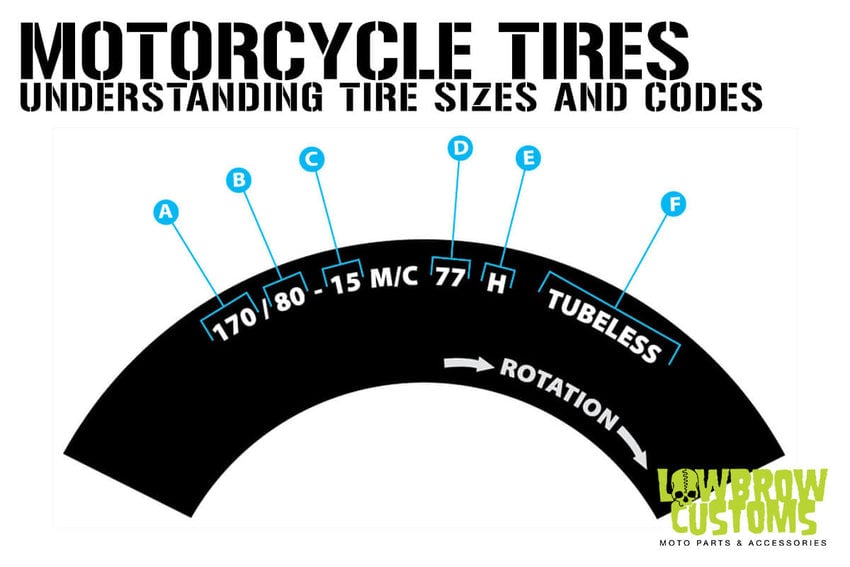
Have you ever looked closely at your motorcycle tire and wondered what those numbers really mean? Understanding these numbers isn’t just for mechanics or experts—it’s something every rider should know.
They hold key information about your tire’s size, performance, and safety. Knowing what these numbers mean can help you choose the right tires, improve your ride, and avoid costly mistakes. Keep reading, and you’ll soon decode the mystery behind your motorcycle tire numbers like a pro.
Tire Size Codes
Motorcycle tires have numbers and letters printed on their sidewalls. These codes tell you the tire’s size and type. Understanding these helps you pick the right tire for your bike.
The codes include width, aspect ratio, and rim diameter. Each part has a specific meaning. Let’s look at these parts one by one.
Width Measurement
The first number in the code shows the tire’s width in millimeters. It measures the distance from one sidewall to the other. This width affects how the tire grips the road.
A wider tire usually offers more traction but may affect handling. The width is important for fitting the tire properly on the rim.
Aspect Ratio
The aspect ratio is the second number after the slash. It shows the tire’s height as a percentage of the width. For example, an aspect ratio of 70 means the height is 70% of the width.
This ratio helps define the tire’s profile. A lower aspect ratio means a shorter, wider tire. A higher ratio means a taller tire with more sidewall.
Rim Diameter
The rim diameter is the last number in the size code. It shows the rim size in inches that the tire fits. This number must match the wheel size exactly.
Using the right rim diameter ensures the tire fits safely and performs well. Common sizes are 17, 18, or 19 inches for motorcycles.
Load Index
The load index is a number on a motorcycle tire. It tells the maximum weight the tire can hold safely. This number helps riders choose the right tire for their bike.
It is important to match the load index with your bike’s weight and the weight it will carry. Using the wrong load index can cause tire damage or accidents.
Weight Capacity
The load index number corresponds to a specific weight in pounds or kilograms. This weight is the limit each tire can carry.
For example, a load index of 50 means the tire can hold 190 kg or 419 lbs. Always check the load index before buying a tire.
Load Index Chart
The chart below shows common load index numbers and their weight limits in kilograms and pounds. Use it to find the right tire for your motorcycle.
| Load Index | Weight Capacity (kg) | Weight Capacity (lbs) |
|---|---|---|
| 40 | 140 | 309 |
| 45 | 165 | 364 |
| 50 | 190 | 419 |
| 55 | 218 | 480 |
| 60 | 250 | 551 |
| 65 | 290 | 639 |
| 70 | 335 | 739 |
| 75 | 387 | 853 |
| 80 | 450 | 992 |
| 85 | 515 | 1135 |
| 90 | 600 | 1323 |
Speed Rating
The speed rating on a motorcycle tire shows the maximum speed the tire can handle safely. It is a letter found on the tire sidewall.
Knowing the speed rating helps riders choose tires that match their motorcycle’s performance and riding style.
Speed Symbols
Each speed rating uses a letter symbol. The letter tells you the highest speed the tire is designed to support.
- J = up to 62 mph (100 km/h)
- K = up to 68 mph (110 km/h)
- L = up to 75 mph (120 km/h)
- M = up to 81 mph (130 km/h)
- N = up to 87 mph (140 km/h)
- P = up to 93 mph (150 km/h)
- Q = up to 99 mph (160 km/h)
- R = up to 106 mph (170 km/h)
- S = up to 112 mph (180 km/h)
- T = up to 118 mph (190 km/h)
- U = up to 124 mph (200 km/h)
- H = up to 130 mph (210 km/h)
- V = up to 149 mph (240 km/h)
- Z = over 149 mph (240 km/h)
Maximum Speed Limits
The maximum speed limit is the highest speed the tire can safely reach. It depends on the tire’s design and materials.
Riders should never exceed the speed rating. Going faster can cause tire damage or failure.
| Speed Symbol | Max Speed (mph) | Max Speed (km/h) |
|---|---|---|
| J | 62 | 100 |
| K | 68 | 110 |
| L | 75 | 120 |
| M | 81 | 130 |
| N | 87 | 140 |
| P | 93 | 150 |
| Q | 99 | 160 |
| R | 106 | 170 |
| S | 112 | 180 |
| T | 118 | 190 |
| U | 124 | 200 |
| H | 130 | 210 |
| V | 149 | 240 |
| Z | Over 149 | Over 240 |

Credit: www.reddit.com
Tire Construction Types
Motorcycle tires have different construction types. These types affect how the tire performs on the road.
Understanding tire construction helps you pick the right tire for your bike and riding style.
Radial Vs Bias Ply
Radial tires have layers that run across the tire from one side to the other. This design gives better grip and smoother rides.
Bias ply tires have layers that run diagonally. They offer strong sidewalls and work well for heavy loads.
- Radial tires improve handling and reduce heat
- Bias ply tires are more durable on rough roads
- Radial tires often cost more than bias ply
- Bias ply tires provide a firmer ride
Identifying Construction Codes
Tire construction is shown by a letter on the tire sidewall. This letter tells you the type of tire inside.
Look for the letter before the tire size numbers to know the construction type.
| Letter | Meaning |
|---|---|
| R | Radial construction |
| B or no letter | Bias ply construction |
| D | Diagonal construction (similar to bias) |
Manufacture Date Code
Motorcycle tires have numbers that tell when they were made. This helps riders know the age of the tire.
Understanding the manufacture date code keeps you safe and ensures good tire performance.
Dot Number
The DOT number is a code set by the U.S. Department of Transportation. It shows important tire details, including the manufacture date.
- The first part of the DOT number identifies the factory where the tire was made.
- The next group of letters and numbers describes the tire size and type.
- The last four digits reveal the tire’s manufacture date.
Week And Year Indicators
The last four digits of the DOT number show the week and year the tire was made. This is key for checking tire age.
| Digits | Meaning | Example |
| First two digits | Week of manufacture | 23 (23rd week) |
| Last two digits | Year of manufacture | 19 (2019) |
Additional Markings
Motorcycle tires have extra markings besides size and speed ratings. These markings give important safety and performance details. Knowing these signs helps you pick the right tire.
These markings include treadwear indicators, traction and temperature grades, and directional arrows. Each shows how the tire performs or how to install it properly.
Treadwear Indicators
Treadwear indicators are small raised bars inside the tire grooves. They show the minimum tread depth needed for safe riding.
When the tire tread wears down to the level of these bars, it is time to replace the tire. Riding with low tread is unsafe, especially on wet roads.
Traction And Temperature Grades
Traction grades show how well the tire stops on wet pavement. The grades are AA, A, B, or C. AA is the highest level of wet grip.
Temperature grades tell how well the tire resists heat. The grades are A, B, or C. A means the tire handles heat best at high speeds.
| Grade Type | Grades | Meaning |
|---|---|---|
| Traction | AA, A, B, C | Grip on wet roads |
| Temperature | A, B, C | Heat resistance |
Directional Arrows
Directional arrows on the tire sidewall show the correct rolling direction. They ensure the tire performs well and wears evenly.
Mount the tire so the arrow points forward when the bike moves. Using the wrong direction can reduce traction and cause uneven wear.
Reading Tire Pressure Recommendations
Knowing the right tire pressure is important for safe motorcycle rides. The numbers on your tire help you find the correct pressure.
Proper tire pressure improves handling, fuel efficiency, and tire life. Learn how to read these numbers to keep your motorcycle in good shape.
Where To Find Tire Pressure Information
Tire pressure recommendations are not only on the tire itself. You can find them in several places for accuracy.
- On the sidewall of the motorcycle tire
- Inside the motorcycle owner’s manual
- On a sticker near the fuel tank or under the seat
Understanding The Pressure Numbers
Tire pressure is shown in pounds per square inch (PSI) or kilopascals (kPa). This tells you how much air to put in the tire.
Correct pressure keeps the tire round and strong. Too low or too high pressure can cause problems.
Recommended Pressure For Different Conditions
| Condition | Front Tire PSI | Rear Tire PSI |
|---|---|---|
| Solo Riding | 30-32 | 32-36 |
| With Passenger | 32-34 | 36-40 |
| Heavy Load | 34-36 | 40-44 |
Tips For Checking Tire Pressure
- Check pressure when tires are cold
- Use a reliable tire pressure gauge
- Adjust pressure to match the load and riding style
- Check pressure regularly, at least once a week

Credit: cheaptiresasap.com
Tips For Choosing The Right Tire
Choosing the right motorcycle tire improves safety and performance. Tires must fit your bike and your riding style.
Understanding the numbers on a tire helps you pick the correct size and type. This guide covers key tips for selecting tires.
Matching Tire To Motorcycle Type
Each motorcycle type needs specific tires. Sport bikes, cruisers, and dirt bikes have different tire needs.
| Motorcycle Type | Tire Features | Example |
| Sport Bike | High grip, smooth tread | Michelin Pilot Road 5 |
| Cruiser | Durable, comfortable ride | Bridgestone Exedra |
| Dirt Bike | Knobby tread for off-road | Dunlop Geomax MX3S |
| Touring | Long life, stable handling | Metzeler Roadtec 01 |
Considering Riding Conditions
Riding conditions affect tire choice. Wet roads, hot weather, or rough terrain need different tires.
- Choose tires with good water drainage for rainy weather.
- Use tires with soft rubber for better grip on dry roads.
- Pick tough tires for rocky or uneven surfaces.
- Consider tire pressure changes for different temperatures.

Credit: www.motorcyclecruiser.com
Frequently Asked Questions
What Do Motorcycle Tire Numbers Represent?
Motorcycle tire numbers indicate tire width, aspect ratio, and rim diameter. They help choose the correct tire size for safety and performance.
How To Read The Tire Width Number?
The first number in the sequence shows tire width in millimeters. It measures the tire’s cross-section from sidewall to sidewall.
What Does The Aspect Ratio Number Mean?
The aspect ratio is the tire’s height as a percentage of its width. It affects the tire’s profile and handling.
Why Is Rim Diameter Important On Tires?
The rim diameter number shows the wheel size the tire fits. Correct rim size ensures proper tire mounting and safety.
Conclusion
Knowing the numbers on a motorcycle tire helps you choose the right fit. These numbers show tire size, speed limit, and load capacity. Reading them keeps your ride safe and smooth. Always check tire numbers before buying or replacing tires.
It saves money and avoids problems on the road. A clear understanding helps you maintain your bike better. Tires with correct numbers match your motorcycle’s needs perfectly. This small step makes a big difference in riding comfort and safety. Stay informed and ride confidently every time.