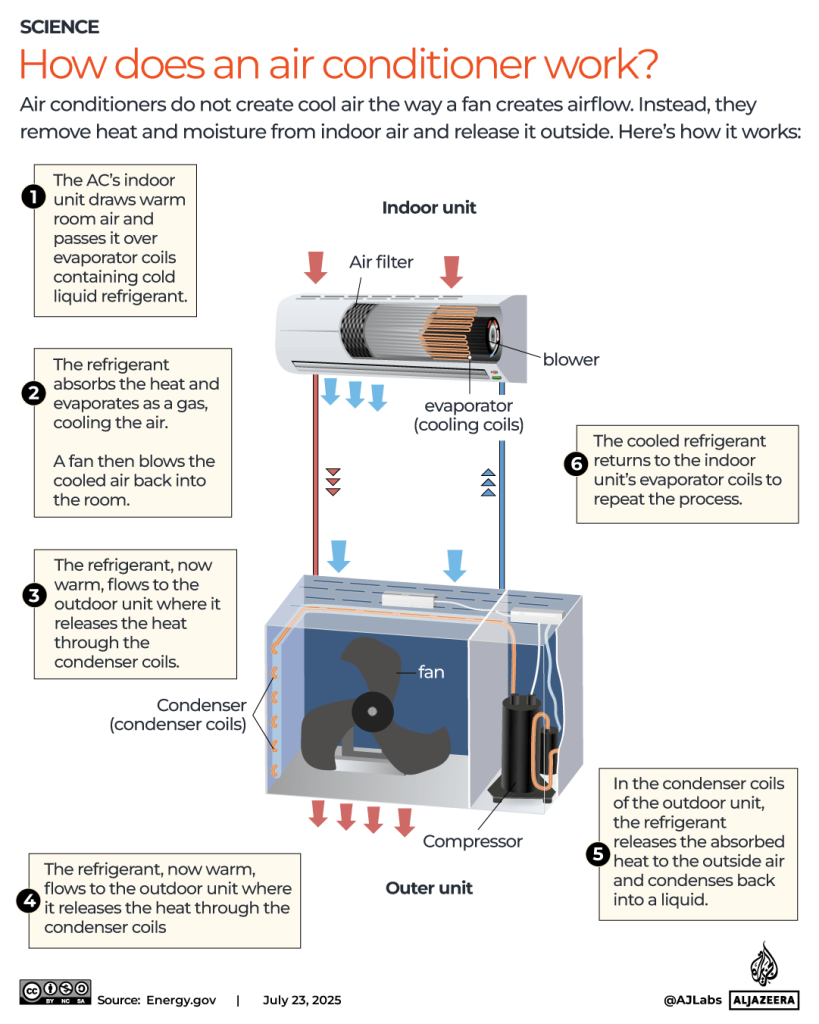
Have you ever wondered what makes your air conditioner cool the air inside your home? The answer lies in a crucial part called the condenser.
Without it, your AC wouldn’t be able to keep you comfortable on hot days. Understanding what an air conditioner condenser does can help you take better care of your system and avoid costly repairs. Keep reading to discover how this important component works and why it matters for your home’s cooling.
Role Of The Condenser
The air conditioner condenser plays a key role in cooling your space. It removes heat from the refrigerant and releases it outside.
This part works with other components to keep the air inside cool and comfortable.
Heat Transfer Process
The condenser helps transfer heat from inside your home to the outside air. It changes the refrigerant from a hot gas into a cooler liquid.
- The hot refrigerant gas enters the condenser coils.
- Air blows over the coils, absorbing heat from the refrigerant.
- The refrigerant cools down and changes into a liquid.
- The heat moves to the outside air, away from your home.
Condenser In The Cooling Cycle
The condenser works as part of the air conditioner’s cooling cycle. It prepares the refrigerant for the next stage of cooling.
| Cooling Cycle Stage | Role of Condenser |
|---|---|
| Compression | Receives hot gas refrigerant from compressor |
| Condensation | Turns hot gas into liquid by releasing heat |
| Expansion | Prepares liquid refrigerant for cooling inside |
| Evaporation | Cool refrigerant absorbs heat inside home |
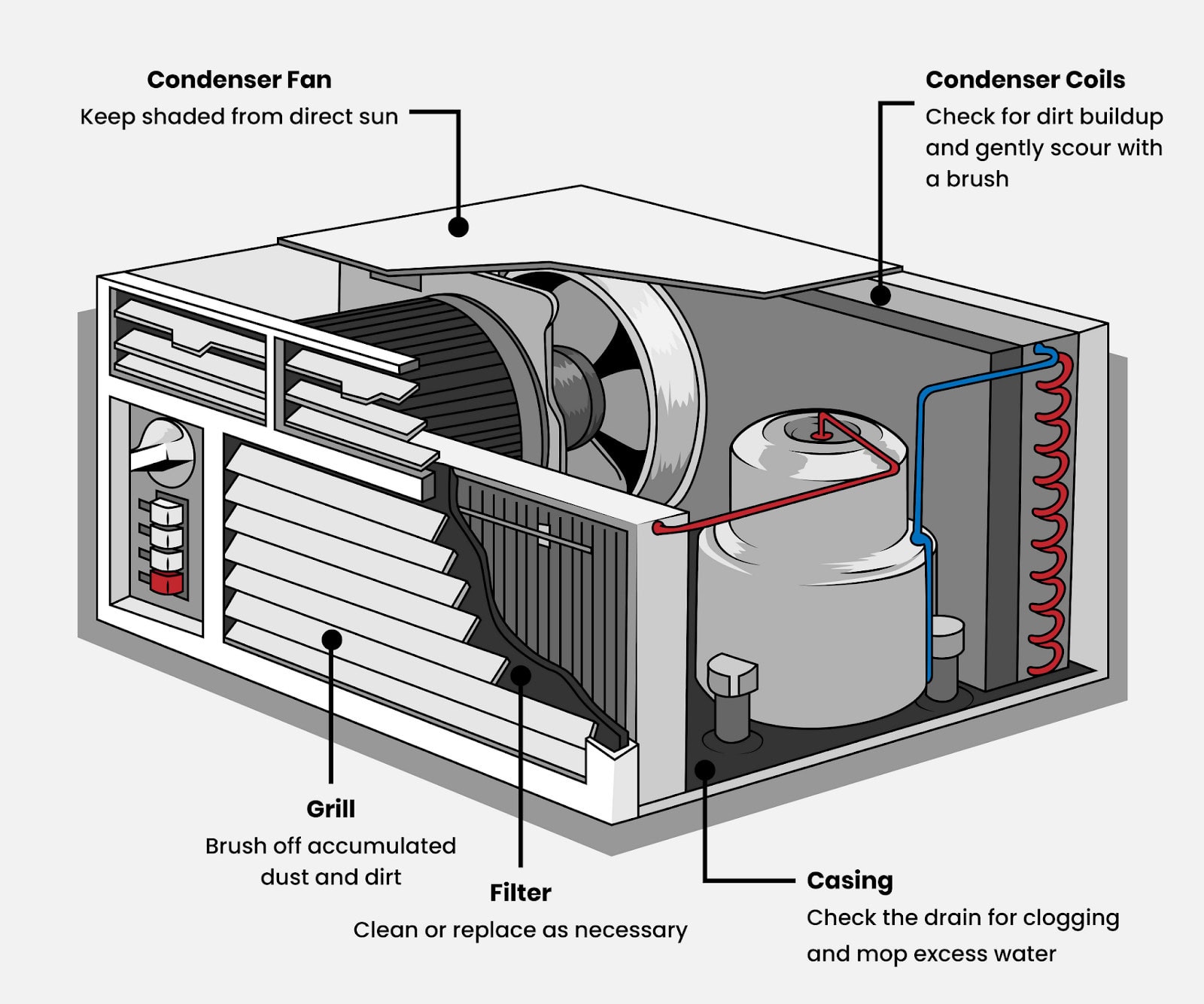
Credit: blog.totalhomesupply.com
Key Components Of A Condenser
An air conditioner condenser has parts that help cool your home. These parts work together to remove heat from inside.
Understanding the main parts helps you know how the condenser works. The key parts are condenser coils, fan and motor, and refrigerant lines.
Condenser Coils
Condenser coils hold the hot refrigerant gas. They help cool the gas by releasing heat into the outside air.
The coils are made of metal and have many small tubes. This design helps air flow easily and cool the refrigerant faster.
Fan And Motor
The fan blows air over the condenser coils. This air helps carry heat away from the coils.
The motor powers the fan. It keeps the fan spinning so the condenser can cool continuously.
Refrigerant Lines
Refrigerant lines carry the refrigerant between the indoor and outdoor units. They connect the condenser to the evaporator inside your home.
One line carries warm gas to the condenser. The other line returns cool liquid refrigerant back inside.
How The Condenser Improves Efficiency
The air conditioner condenser plays a key role in making the cooling system work well. It helps remove heat from the refrigerant so the air conditioner can cool your home better.
By improving how heat moves out of the system, the condenser helps save energy and keeps your air conditioner running smoothly.
Airflow And Heat Dissipation
The condenser uses airflow to push heat away from the refrigerant. Good airflow moves warm air out quickly, so the refrigerant cools down faster.
Heat dissipation is the process of releasing heat into the outside air. The condenser’s design helps spread out heat for faster cooling.
- Fans increase airflow around condenser coils
- Wide coil surfaces allow more heat to escape
- Proper airflow stops overheating and improves cooling
Impact On Energy Consumption
A well-working condenser lowers the energy your air conditioner uses. It reduces the time the system runs to cool your home.
When the condenser cools the refrigerant efficiently, the compressor uses less power. This means lower energy bills and less wear on the air conditioner.
- Efficient condensers cut electricity use
- Less compressor work means longer equipment life
- Improved cooling reduces overall energy waste
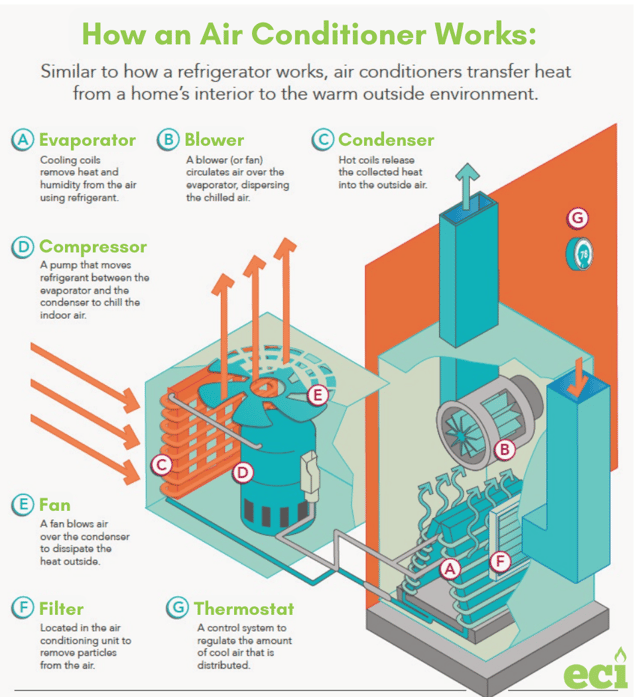
Credit: www.ecicomfort.com
Common Condenser Issues
The condenser in an air conditioner helps release heat from inside your home. It works with other parts to keep your space cool. Sometimes, the condenser can have problems that stop it from working well.
Knowing the signs of these problems can help you fix them early. Regular care can also keep the condenser running longer and better.
Signs Of Malfunction
Watch for these signs that your air conditioner condenser might have issues:
- Warm air coming from the vents instead of cool air
- Loud or strange noises near the outdoor unit
- Condenser fan not spinning or spinning slowly
- Ice forming on the condenser coils
- Higher electricity bills than usual
- Frequent cycling on and off
Preventive Maintenance Tips
Taking care of your condenser helps avoid breakdowns. Use this simple checklist to keep it in good shape:
| Maintenance Task | How Often | Why It Helps |
| Clean the condenser coils | Every 3 months | Removes dirt that blocks heat flow |
| Check and clear debris around unit | Monthly | Allows good airflow |
| Inspect fan and motor | Every 6 months | Ensures smooth operation |
| Check refrigerant levels | Yearly | Keeps cooling efficient |
| Schedule professional tune-up | Yearly | Finds and fixes hidden problems |
Choosing The Right Condenser
The condenser is a key part of an air conditioner. It helps release heat from your home to the outside. Choosing the right condenser keeps your AC working well.
Picking the right condenser means thinking about size, power, and if it fits your AC system. This guide helps you make a smart choice.
Size And Capacity Considerations
The condenser size must match the cooling needs of your space. A small condenser may not cool well. A large one wastes energy.
Look at the capacity, often shown in tons or BTUs. This number shows how much heat the unit can remove. Choose a condenser with the right capacity for your room size.
- Too small: poor cooling and more wear
- Too large: higher costs and short cycles
- Match capacity to room size and climate
Compatibility With Ac Systems
Your condenser must work with your AC system type. Different systems use different refrigerants and parts. Check if the condenser fits your model.
Using the wrong condenser can cause damage and lower efficiency. Make sure it matches the brand, model, and refrigerant type.
- Match refrigerant type (e.g., R-410A, R-22)
- Check physical size and connections
- Confirm electrical requirements
- Use compatible parts for best performance
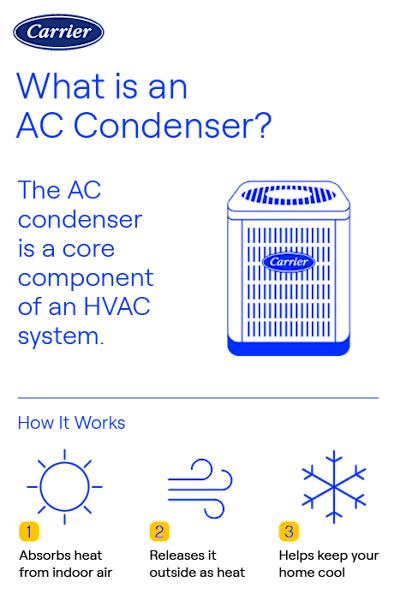
Credit: www.carrier.com
Innovations In Condenser Technology
Air conditioner condensers have changed a lot over the years. New technologies make them work better and use less energy.
These improvements help save money and protect the environment while keeping homes cool.
Energy-saving Features
Modern condensers use smart designs to reduce power use. They run more efficiently and cut electricity bills.
- Variable speed fans adjust airflow based on cooling needs.
- Advanced compressors use less energy during operation.
- Improved heat exchangers transfer heat faster and better.
- Smart sensors optimize performance depending on weather.
Sustainable Materials And Designs
New condensers use eco-friendly materials. These reduce waste and lower the carbon footprint of air conditioners.
| Material | Benefit |
| Recycled aluminum | Reduces mining and energy use |
| Biodegradable insulation | Easier to dispose without harm |
| Corrosion-resistant coatings | Lasts longer, reduces replacements |
| Compact designs | Use fewer materials and space |
Frequently Asked Questions
What Is The Main Function Of An Air Conditioner Condenser?
The condenser releases heat absorbed from inside your home to the outside air. It converts refrigerant from gas to liquid, enabling cooling inside.
How Does The Air Conditioner Condenser Work?
It compresses hot refrigerant gas and cools it by releasing heat through coils. This process allows the refrigerant to cool and cycle back.
Where Is The Air Conditioner Condenser Located?
The condenser is usually outside your home, near the outdoor unit. It needs airflow to effectively release heat from the refrigerant.
Why Is Condenser Maintenance Important For Air Conditioners?
Regular cleaning prevents dirt buildup, improving efficiency and lifespan. Proper maintenance ensures the condenser releases heat effectively for optimal cooling.
Conclusion
Understanding your air conditioner condenser is important. It cools your home efficiently. The condenser releases heat from the refrigerant. It works with other parts to keep you comfortable. Proper maintenance extends its life. Clean it regularly to avoid issues. Always ensure there’s clear airflow around it.
This keeps it running smoothly. A well-functioning condenser means a cooler home. Comfort at its best. Make sure to check it often. Simple steps can prevent costly repairs. Enjoy a cool, pleasant environment. That’s what a good condenser offers. Your comfort depends on it.
Keep it in top shape.