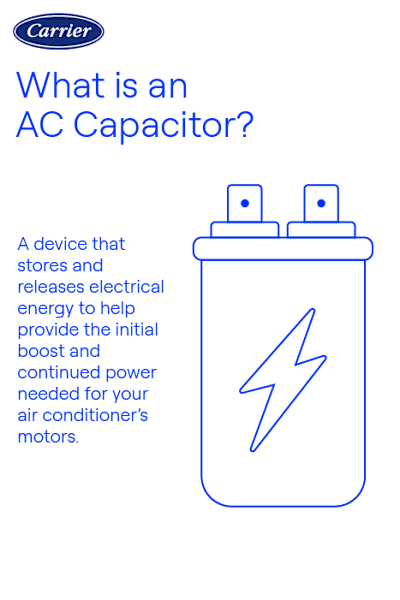
Have you ever wondered why your air conditioner sometimes struggles to start or suddenly stops working? The secret often lies in a small but powerful component called the capacitor.
This tiny part plays a big role in keeping your AC running smoothly and efficiently. If you want to understand how your air conditioner stays cool and what could go wrong, knowing what a capacitor does is a great place to start.
Keep reading to discover how this little device affects your comfort and how it can save you from costly repairs.

Credit: www.amazon.com
Role Of Capacitor In Ac
The capacitor is a small but vital part of an air conditioner. It helps the AC start and run smoothly. Without a capacitor, the AC may fail to work properly.
Capacitors store and release electrical energy. This supports the motors inside the AC. Let’s look at how capacitors help in different ways.
Starting The Compressor Motor
The compressor motor needs a strong push to start running. The capacitor gives this push by sending extra electrical energy. This helps the motor turn on quickly and without strain.
Powering The Fan Motor
The fan motor moves air over the coils to cool your room. The capacitor keeps the fan motor running smoothly. It balances the power supply to avoid flickering or stopping.
- Provides extra energy at start-up
- Maintains steady power for the fan
- Prevents motor overheating
- Reduces electrical noise and vibration
Maintaining Electrical Efficiency
| Function | Capacitor Role |
| Energy storage | Stores electric charge for motor boost |
| Power factor correction | Improves AC power efficiency |
| Voltage stabilization | Keeps voltage steady for motor safety |
| Reduced power loss | Limits energy waste and heat |
The capacitor helps the air conditioner use electricity wisely. This saves energy and extends the life of the AC parts.
Types Of Capacitors In Ac
Capacitors play a key role in air conditioners. They help start and run the motors smoothly. Different types of capacitors serve different purposes in AC units.
Knowing the types of capacitors can help you understand how your AC works. It also helps in maintenance and repair.
Start Capacitor
The start capacitor gives the motor a boost to start running. It stores energy and releases it quickly. This helps the motor overcome initial resistance.
Start capacitors work only for a short time. They disconnect once the motor reaches a certain speed.
- Provides extra torque to start the motor
- Works only during motor startup
- Usually has a higher capacitance value
Run Capacitor
The run capacitor stays active while the motor runs. It helps the motor use electricity more efficiently. This reduces power consumption and heat.
Run capacitors have a lower capacitance than start capacitors. They are designed to work continuously.
- Improves motor efficiency during operation
- Runs continuously with the motor
- Helps reduce energy use
Dual Capacitor
A dual capacitor combines start and run capacitors in one unit. It saves space and is easier to install. It has three terminals for connection.
Dual capacitors are common in many air conditioners. They support both the start and run functions efficiently.
| Terminal | Function |
|---|---|
| Common (C) | Shared connection point |
| Fan (F) | Connects to the fan motor |
| Herm (H) | Connects to the compressor motor |
How Capacitor Affects Ac Performance
The capacitor is a key part of an air conditioner. It helps the motor start and run smoothly. Without a good capacitor, the AC may not work well or may stop working.
This guide explains how the capacitor affects cooling, energy use, and noise levels in your air conditioner.
Impact On Cooling Efficiency
The capacitor provides the needed power to the compressor and fan motors. This helps the AC cool the room properly. A weak or faulty capacitor can cause slow or weak motor start. This lowers cooling performance.
- Ensures the compressor runs at full speed
- Keeps the fan motor working steadily
- Prevents frequent motor stops and starts
- Helps maintain steady airflow
Energy Consumption
A bad capacitor makes motors work harder. This increases electricity use. A good capacitor helps motors start quickly and run smoothly. This lowers energy consumption and reduces your power bills.
| Capacitor Condition | Motor Start Time | Energy Use |
| Good | Fast | Low |
| Weak | Slow | High |
| Faulty | Fails to start | Very High |
Noise Reduction
The capacitor helps motors run without jerks or vibrations. This lowers noise from the AC unit. A failing capacitor can cause buzzing or humming sounds. Replacing it keeps the AC quieter and more comfortable to use.
- Reduces motor vibration
- Prevents buzzing noise
- Supports smooth motor rotation
Signs Of A Failing Capacitor
The capacitor is a small part inside your air conditioner. It helps start the motor and keep it running. If the capacitor fails, your AC may not work properly.
Knowing the signs of a bad capacitor can help you fix problems early. Watch for these common symptoms to protect your AC.
Ac Not Starting
If your air conditioner does not start, the capacitor might be the problem. The capacitor gives the motor the extra push to begin running. A failing capacitor cannot do this.
You may hear the AC try to start but it will not turn on. This means the motor is not getting enough power from the capacitor.
Humming Noise
A humming noise from your AC can mean a bad capacitor. The motor tries to run but gets stuck. The capacitor fails to supply the right current.
This humming often lasts a few seconds or longer. It may stop if the motor overheats or the AC shuts off.
Intermittent Operation
Your air conditioner may start and stop suddenly. This happens if the capacitor works only sometimes. The motor may lose power or stop running.
This can cause uneven cooling and higher energy use. It is a clear sign the capacitor is failing and needs checking.
Replacing And Maintaining Capacitors
The capacitor is a key part of your air conditioner. It helps start the fan and compressor motors. Keeping it in good shape keeps your AC running well.
Replacing and maintaining capacitors can stop many AC problems. It saves money by avoiding bigger repairs. Learn how to handle capacitors safely and correctly.
Safety Precautions
Capacitors store electrical energy. They can shock you even if the power is off. Always be careful before touching any AC parts.
Wear insulated gloves and use tools with insulated handles. Discharge the capacitor before replacing it to avoid electric shock.
- Turn off power at the breaker box
- Use a screwdriver with an insulated handle
- Discharge the capacitor by touching terminals with a resistor
- Do not touch terminals with bare hands
- Work in a dry area to avoid slipping
Choosing The Right Capacitor
Choose a capacitor that matches your air conditioner’s specs. Check the voltage and microfarad (µF) rating on the old capacitor.
Using the wrong capacitor can harm your AC or cause it not to work. Always buy a capacitor with the exact ratings or as recommended by the manufacturer.
- Match voltage rating exactly (e.g., 370V or 440V)
- Match microfarad (µF) rating within 5% tolerance
- Check if it is a dual or single capacitor
- Buy from trusted suppliers or brands
Routine Maintenance Tips
Regular maintenance helps capacitors last longer. Inspect capacitors every year or during AC tune-ups. Look for signs of damage or wear.
Clean the area around the capacitor to keep it free from dust and debris. Tighten any loose connections to avoid electrical problems.
- Check for bulging or leaking capacitors
- Listen for humming sounds from the capacitor
- Keep the capacitor and terminals clean and dry
- Tighten terminal screws if loose
- Replace capacitors every 5 years or as needed
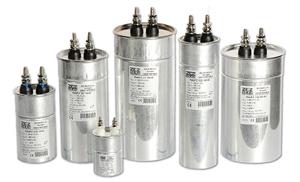
Credit: www.apogeeweb.net

Credit: www.amazon.com
Frequently Asked Questions
What Role Does A Capacitor Play In An Ac Unit?
A capacitor in an air conditioner stores electrical energy, providing the initial boost needed to start the motor. It ensures smooth operation by maintaining a steady power supply. Without it, the AC might not start or could overheat, leading to potential system failures.
How Does A Faulty Capacitor Affect Ac Performance?
A faulty capacitor can cause the air conditioner to struggle starting, or not start at all. It may also lead to inefficient cooling or unusual noises. Over time, this can stress other components, resulting in higher energy bills and costly repairs.
Can An Air Conditioner Run Without A Capacitor?
An air conditioner cannot run without a capacitor, as it initiates the motor’s operation. Without it, the AC won’t start or may start sluggishly, affecting performance. This can lead to overheating and potential damage to the compressor or motor.
How Often Should Ac Capacitors Be Replaced?
AC capacitors should typically be replaced every 5 to 10 years, depending on usage and environmental factors. Regular maintenance checks help identify wear and tear. Replacing capacitors proactively can prevent unexpected breakdowns and ensure efficient operation.
Conclusion
A capacitor helps start and run an air conditioner’s motor. It stores and releases electrical energy quickly. This makes the motor work smoothly and efficiently. Without a good capacitor, the AC may struggle to cool your home. It can cause the unit to stop or run poorly.
Checking the capacitor regularly helps keep your AC in good shape. Simple maintenance can save you from costly repairs later. Understanding the capacitor’s role shows why it matters for your comfort. It’s a small part with a big job.