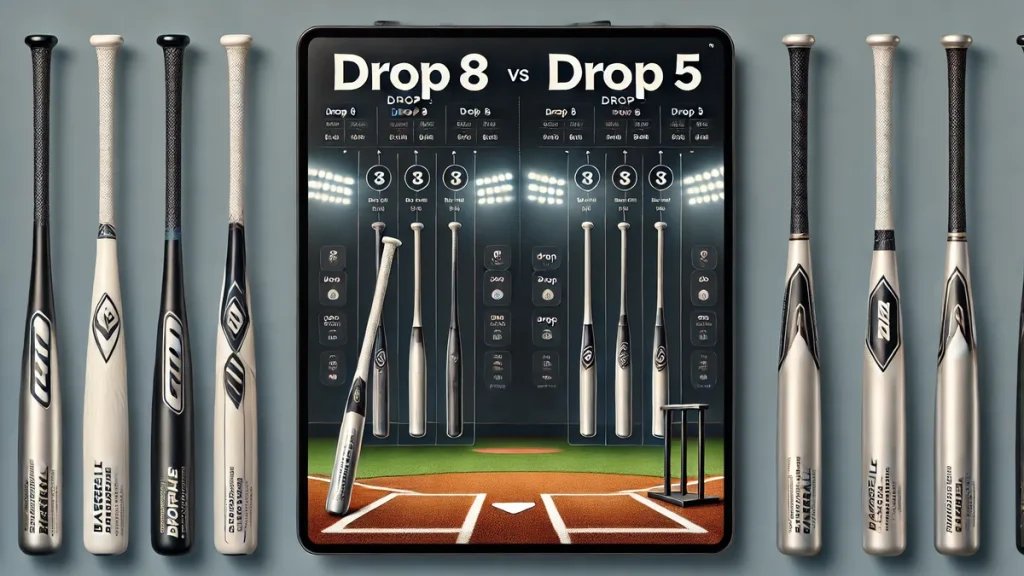
When you pick up a baseball bat, you might notice a number like “-3” or “-5” on it. But what does “drop” mean for baseball bats, and why should you care?
Understanding this simple term can change the way you choose your bat and improve your game. If you want to know how the drop affects your swing, power, and control, keep reading. This guide will help you make the best choice for your playing style and take your baseball skills to the next level.
Drop Concept In Baseball Bats
The drop of a baseball bat shows the difference between its length and weight. It helps players pick a bat that fits their size and strength. Understanding drop helps improve batting comfort and control.
Many players and coaches use drop to compare bats. It is an important number when choosing the right bat for practice or games. Knowing what drop means makes buying a bat easier.
Definition Of Drop
Drop is the number you get when you subtract the bat’s weight from its length. It is always a negative number. This number shows how heavy or light a bat feels.
A higher drop means the bat is lighter for its length. A lower drop means the bat is heavier. Players choose different drops based on their age, strength, and style.
How Drop Is Calculated
To find the drop, subtract the bat’s weight in ounces from its length in inches. The result is the drop number, usually shown with a minus sign.
- Drop = Length (inches) – Weight (ounces)
- Example: A 32-inch bat weighing 20 ounces has a drop of -12
- Drop helps compare bats of different sizes and weights
Impact Of Drop On Performance
The drop of a baseball bat is the difference between its length and weight. It affects how the bat feels and performs. Understanding drop helps players choose the right bat for their style.
A bat with a higher drop means it is lighter for its length. A lower drop means the bat is heavier. Both affect how fast you can swing and how much control you have.
Bat Speed And Control
Bats with a higher drop are lighter, which helps players swing faster. Faster swings give more time to react and make better contact with the ball.
Lighter bats also offer better control. Players can adjust their swing easily and aim better. This is useful for young or less experienced players who need quick reactions.
- Higher drop bats increase swing speed
- Better control with lighter bats
- Helps with timing and aiming
Power And Distance
Lower drop bats are heavier and can generate more power. The extra weight helps hit the ball harder and farther. Stronger players often choose lower drop bats for this reason.
Heavier bats may reduce swing speed but add force behind the hit. This trade-off can increase the ball’s distance if the player can handle the weight.
- Lower drop bats add more power
- Heavier bats can hit the ball farther
- Requires more strength to swing fast
Choosing The Right Drop For Age And Skill
In baseball, the “drop” of a bat is its length-to-weight ratio. A lower drop number means a heavier bat. Choosing the right drop is important for players’ performance.
Different age groups and skill levels need different bat drops. This helps players swing comfortably and hit effectively.
Youth Players
Youth players often use bats with higher drop numbers. These bats are lighter and easier to handle.
A common drop for young players is between -10 and -12. This allows them to swing faster and learn proper techniques.
High School And College Players
High school and college players usually use bats with a drop of -3. This drop is standard for competitive play.
The -3 drop helps players develop strength and control. It prepares them for more advanced levels of play.
Adult And Professional Players
Adult and professional players often choose bats with lower drop numbers. These bats are heavier and provide more power.
Typically, a drop of -3 or lower is used. Experienced players can handle the weight and benefit from the added power.
Drop And Bat Material
In baseball, the term “drop” refers to the difference between a bat’s length and its weight. It helps players pick the right bat for their strength and style.
The material of the bat also affects how it performs. Different materials change the bat’s weight and feel, which works with the drop number.
Aluminum Bats
Aluminum bats are light and strong. They usually have a bigger drop number, meaning they are longer but lighter. This helps players swing faster.
These bats are popular in youth and amateur leagues. The light weight and good balance make hitting easier for many players.
Composite Bats
Composite bats are made from a mix of materials like carbon fiber. They tend to have a balanced weight and a moderate drop number.
These bats offer good power and control. The drop helps players find a bat that feels right for their swing speed and strength.
Wooden Bats
Wooden bats are heavier and usually have a smaller drop number. This means they are shorter and heavier compared to aluminum or composite bats.
The heavy weight helps with hitting power but requires more strength. Wooden bats are common in professional baseball.
League Regulations On Bat Drop
The drop of a baseball bat is the difference between its length and weight. It affects how players choose their bats.
Different leagues set rules on bat drop to keep the game fair and safe for players of all ages.
Little League Rules
Little League limits the drop to control bat speed and power. This helps young players learn proper hitting skills.
- Bats must have a drop of -10 or greater (for example, -10, -8, -5).
- The length-to-weight ratio must be printed on the bat.
- Bats that do not meet drop rules are not allowed in official games.
High School Rules
High School bats follow strict drop limits. The goal is to keep play safe and competitive.
| Rule | Requirement |
| Maximum Drop | -3 |
| Bat Certification | USA Baseball stamp required |
| Bat Material | Aluminum or composite allowed |
College And Professional Rules
College and pro leagues have their own drop standards. These ensure bats match high skill levels.
Key points about drop in college and professional play:
- Wood bats have no drop limit but must meet weight and length rules.
- Metal bats are rare and usually banned in pro leagues.
- College bats often follow NCAA drop -3 regulations.

Credit: www.betweenthelinesaz.com
Common Misconceptions About Drop
The term “drop” is often misunderstood when it comes to baseball bats. Many players and parents confuse drop with other bat features.
Clearing up these misconceptions helps in choosing the right bat for better performance and comfort.
Drop Vs Weight
Some believe drop is the weight of the bat, but it actually shows the difference between length and weight.
- Drop equals bat length in inches minus weight in ounces.
- A higher drop means a lighter bat for its length.
- Drop does not tell the total weight of the bat alone.
- Two bats with the same drop can feel different in weight.
Drop And Bat Length
Many think drop changes the bat length, but length is measured separately.
| Bat Length (inches) | Bat Weight (ounces) | Drop |
| 30 | 20 | -10 |
| 32 | 22 | -10 |
| 33 | 23 | -10 |
As the table shows, drop stays the same while length and weight change together.
Tips For Selecting A Bat Based On Drop
In baseball, the drop of a bat is the difference between its length and weight. It helps players find the right balance for their swing.
Choosing the right drop makes hitting easier and helps improve control and power on the field.
Testing Different Drops
Try bats with different drops to see which feels best. Each player’s strength and style affect their choice.
Start with a few options and swing them to check comfort and control. Notice how the bat’s weight feels during your swing.
- Use lighter bats with larger drops for faster swings
- Heavier bats with smaller drops offer more power
- Pick a drop that lets you swing smoothly without strain
Balancing Weight And Length
The drop number helps balance bat length and weight. A good balance improves your hitting ability and comfort.
Choose a bat length that fits your height and weight. Then select a drop that feels natural when swinging.
- Longer bats usually have higher drops for better control
- Shorter bats with lower drops add power but need more strength
- Find a balance where the bat is easy to swing and hits well

Credit: www.betweenthelinesaz.com

Credit: batdigest.com
Frequently Asked Questions
What Does “drop” Mean In Baseball Bats?
“Drop” refers to the difference between a bat’s length (in inches) and weight (in ounces). It affects swing speed and control.
How Does Drop Impact Bat Performance?
A larger drop means a lighter bat, which boosts swing speed but may reduce power. Smaller drop bats offer more power but less speed.
What Is The Ideal Drop For Youth Baseball Bats?
Youth bats typically have a drop between -8 and -13. This range balances control and power for growing players.
Why Do Adult Bats Have Smaller Drop Values?
Adult bats usually have drops from -3 to -5. This offers more weight for power, matching the strength of adult players.
Conclusion
Choosing the right drop for your baseball bat affects your swing and control. A smaller drop means a heavier bat, offering more power but less speed. A bigger drop means a lighter bat, helping you swing faster but with less power.
Think about your strength and hitting style before picking a bat drop. Knowing what drop means helps you play better and enjoy the game more. Keep practicing, and you’ll find the perfect bat for your play.