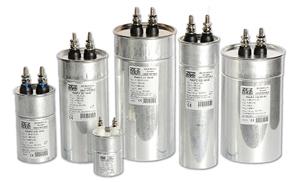
Have you ever wondered what keeps your air conditioner running smoothly, especially on those scorching hot days? One small but powerful part inside your AC unit plays a huge role in making sure your home stays cool and comfortable.
This tiny component is called the capacitor. If you’re curious about what a capacitor does and why it’s so important for your air conditioner, you’re in the right place. Understanding this can help you spot problems early and even save money on repairs.
Keep reading to discover how this little device works and why your AC can’t do without it.
Capacitor Basics
The capacitor is a small but important part of an air conditioner. It helps start the motors and keeps them running smoothly.
Without a capacitor, the AC unit may not work properly or may stop working altogether.
Types Of Capacitors In Ac Units
There are different capacitors in an air conditioner. Each one has a special job to do.
- Start Capacitor:Gives a quick burst of energy to start the motor.
- Run Capacitor:Helps the motor run efficiently after it starts.
- Dual Capacitor:Combines start and run capacitors in one unit.
How Capacitors Work
A capacitor stores electrical energy and releases it when needed. It helps the motor create a magnetic field to start spinning.
| Function | Description |
| Energy Storage | Stores electrical charge for quick use. |
| Energy Release | Provides power to start and keep the motor running. |
| Voltage Regulation | Keeps voltage steady for motor efficiency. |

Credit: www.amazon.com
Capacitor’s Role In Air Conditioners
The capacitor is a small but vital part of an air conditioner. It helps the system start and run smoothly. Without it, the air conditioner may not work properly or may stop working.
This article explains what the capacitor does in an air conditioner. We look at how it starts the compressor, powers the fan motor, and keeps the system efficient.
Starting The Compressor
The compressor is the heart of the air conditioner. It pumps refrigerant through the system to cool the air. The capacitor gives the compressor a boost to start turning.
Without the capacitor, the compressor motor would struggle to start. This can cause the motor to overheat or fail early. The capacitor stores and releases electrical energy to help the compressor start quickly and smoothly.
Powering The Fan Motor
The fan motor moves air over the condenser coils and inside your home. The capacitor helps the fan motor run with enough power and speed. This keeps air flowing properly for cooling and heat exchange.
- Provides a steady current to the fan motor
- Helps maintain the right fan speed
- Prevents the motor from overheating
- Improves overall air circulation
Maintaining Efficient Operation
| Function | Effect on Air Conditioner |
| Starting Compressor | Quick and smooth motor start |
| Powering Fan Motor | Stable airflow and motor protection |
| Energy Storage | Reduces power surges and saves energy |
| Extends Equipment Life | Prevents motor damage and breakdowns |
The capacitor also stores electrical energy briefly. This helps reduce power surges and keeps the air conditioner running efficiently. A working capacitor helps the air conditioner last longer and use less electricity.
Signs Of A Failing Capacitor
The capacitor is a key part of an air conditioner. It helps start the motors that run the compressor and fan. When the capacitor fails, the AC may stop working properly.
Recognizing early signs of a bad capacitor can save you from costly repairs. Watch for specific symptoms to know when to check the capacitor.
Common Symptoms
Many symptoms can show a failing capacitor. These problems affect how well your AC runs and its overall efficiency.
- AC won’t start or has trouble starting
- Unusual humming or buzzing sounds near the outdoor unit
- Fan blades spin slowly or stop completely
- Frequent cycling or short running periods
- Higher electricity bills without more use
Impact On Ac Performance
A failing capacitor reduces the AC’s ability to cool your home. The compressor and fan may not get enough power to run smoothly.
| Effect | Result |
|---|---|
| Weak Compressor Start | AC cools less and takes longer to reach temperature |
| Fan Motor Issues | Poor air circulation and uneven cooling |
| Frequent Shutdowns | Wear on AC parts and less reliability |
| Increased Energy Use | Higher electric bills due to inefficient operation |
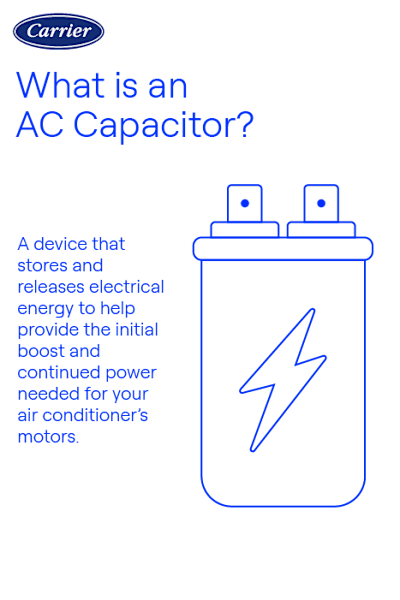
Credit: www.carrier.com
Replacing And Testing Capacitors
The capacitor in an air conditioner helps start the motor and keeps it running. If it fails, the AC may not cool properly or stop working.
Testing and replacing capacitors can fix many common AC problems. This guide covers safety, tools, and knowing when to get help.
Safety Precautions
Capacitors store electricity even when the AC is off. This can cause shocks or injury. Always follow safety steps before handling them.
- Turn off power at the breaker box before starting work.
- Use insulated tools to avoid electric shock.
- Discharge the capacitor with a resistor or screwdriver with an insulated handle.
- Wear safety glasses and gloves to protect yourself.
- Work in a dry area to prevent slipping or shocks.
Tools And Techniques
You need a few tools to test and replace capacitors safely and correctly. Knowing how to use them is important.
| Tool | Purpose |
| Multimeter | Measure capacitance and voltage |
| Screwdriver (insulated) | Remove and discharge capacitor safely |
| Needle-nose pliers | Handle small wires and connectors |
| Replacement capacitor | Fit the exact size and rating of the old one |
Testing involves disconnecting the capacitor and checking its microfarads (µF) value. Replace it if the reading is far from the label or shows no charge.
When To Call A Professional
Some capacitor problems need expert care. Call a professional if you feel unsure or face complex issues.
- You do not have the right tools or knowledge.
- The capacitor is hard to reach or inside sealed parts.
- The AC has other electrical or mechanical problems.
- You want a safe and quick repair without risk.
Improving Ac Longevity With Proper Capacitor Care
The capacitor is a key part of your air conditioner. It helps start the motor and keeps it running smoothly. Taking care of the capacitor can make your AC last longer.
Proper capacitor care prevents breakdowns and keeps your AC efficient. You can avoid costly repairs by paying attention to this small but important part.
Regular Maintenance Tips
Check the capacitor regularly for any signs of damage or wear. Look for bulges, leaks, or rust on the capacitor body. These signs mean it needs replacement.
Turn off the power before inspecting or cleaning the capacitor. Use a multimeter to test its electrical charge if you know how. Clean the area around the capacitor to keep dirt away.
- Inspect capacitor every 6 months
- Turn off power before checking
- Look for bulges, leaks, or rust
- Test with a multimeter carefully
- Keep the area clean and dry
Avoiding Common Mistakes
Do not ignore small problems like slow AC start or strange noises. These could mean the capacitor is failing. Avoid trying to fix the capacitor if you lack experience.
Never touch the capacitor terminals with bare hands. Avoid using the wrong size or type of capacitor when replacing. Wrong parts can damage your AC system.
- Do not ignore slow or noisy AC start
- Do not repair capacitor yourself if unsure
- Never touch capacitor terminals directly
- Use correct capacitor type and size
- Hire a professional for replacements

Credit: www.amazon.com
Frequently Asked Questions
What Is The Role Of A Capacitor In An Air Conditioner?
A capacitor stores and releases electrical energy to start and run the AC motor. It ensures smooth motor operation and efficient cooling.
How Does A Capacitor Affect Air Conditioner Performance?
A faulty capacitor can cause slow starts or stop the compressor motor. This leads to poor cooling and higher energy use.
When Should You Replace An Air Conditioner Capacitor?
Replace the capacitor if the AC struggles to start, makes noise, or fails to cool properly. Regular checks prevent costly repairs.
Can A Bad Capacitor Damage The Air Conditioner?
Yes, a bad capacitor can overheat and strain motors, causing compressor or fan failures. Timely replacement protects the AC unit.
Conclusion
A capacitor helps the air conditioner start and run smoothly. It stores energy and gives a boost to the motor. Without it, the AC might not work well or might stop. Knowing its role can help you care for your AC better.
Small parts like this keep your home cool and comfortable. Checking the capacitor can save you from bigger problems later. Keep your air conditioner healthy by understanding its key parts. Simple but important.