Have you ever wondered what makes your air conditioner deliver that cool, refreshing breeze on a hot day? It’s more than just blowing air.
Inside your AC, a clever mix of parts and processes work together to change warm, stuffy air into the fresh, cool air you enjoy. Understanding what goes into your air conditioner can help you appreciate how it keeps your home comfortable and why proper care matters.
Keep reading, and you’ll discover the secrets behind the cool air you often take for granted.

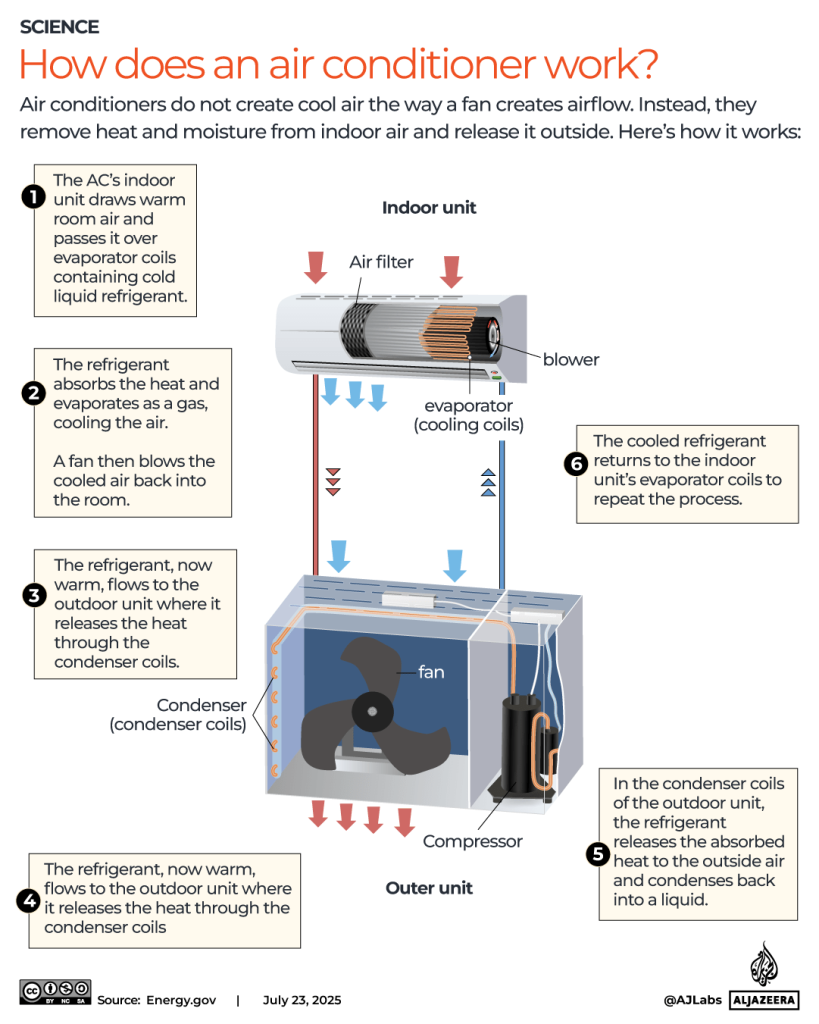
Credit: www.aljazeera.com
Key Components Of An Air Conditioner
An air conditioner cools the air inside your home or office. It uses several parts working together to make cool air.
Each component has a special job in moving heat and moisture out of the room. Understanding these parts helps you see how air conditioning works.
Compressor
The compressor is the heart of the air conditioner. It pumps refrigerant through the system.
This part squeezes the refrigerant gas to raise its pressure and temperature. The hot gas moves to the next part.
Condenser Coil
The condenser coil cools the hot gas from the compressor. It changes the gas into a liquid.
Heat leaves the refrigerant here and goes outside. The coil looks like a metal grid and has fans to help cool it.
- Removes heat from refrigerant
- Changes gas to liquid
- Located outside the building
Evaporator Coil
The evaporator coil is inside the building. It cools the air by absorbing heat.
The refrigerant in the coil evaporates and takes heat from the air. A fan blows the cool air into the room.
- Absorbs heat from indoor air
- Turns liquid refrigerant into gas
- Works with a fan to cool rooms
Expansion Valve
The expansion valve controls the flow of refrigerant into the evaporator coil. It lowers the refrigerant’s pressure.
This drop in pressure cools the refrigerant so it can absorb heat well. The valve helps keep the system balanced.
How Air Conditioning Cools The Air
Air conditioners cool indoor air by removing heat and moisture. They use a special process that changes warm air into cool air. This keeps rooms comfortable during hot days.
The cooling happens through parts working together. These parts move heat outside and clean the air inside your home or office.
Refrigerant Cycle
The refrigerant cycle is the main way air conditioners cool air. A liquid called refrigerant flows inside tubes in the system. It changes from liquid to gas and back again.
When the refrigerant evaporates, it absorbs heat from the indoor air. Then it moves outside, where it releases the heat and cools down. This cycle keeps repeating.
Heat Exchange Process
The heat exchange process moves heat from inside your room to the outside. The indoor coil absorbs heat, and the outdoor coil releases it. Fans help move the air through these coils.
This process lowers the air temperature inside. It also removes moisture, making the air feel cooler and less humid.
- Indoor coil absorbs heat from air
- Outdoor coil releases heat outside
- Fans help air flow over coils
- Moisture is removed during cooling
Air Circulation And Filtration
Air conditioners circulate air to keep rooms fresh and cool. They pull warm air inside, cool it, and push it back out. This movement helps maintain a steady temperature.
Filters clean the air by trapping dust, pollen, and other particles. This improves air quality and protects the air conditioner parts from dirt.
- Warm air is pulled inside the system
- Air passes through filters to remove dirt
- Cooled air is pushed back into the room
- Continuous circulation keeps air fresh
Role Of Moisture Removal
An air conditioner cools the air by removing heat and moisture. Moisture removal is key to making the air feel comfortable. Without removing moisture, the room feels sticky and warm.
The process of moisture removal helps control humidity. This improves air quality and comfort inside homes and buildings.
Condensation Process
Condensation happens when warm air hits the cold surface of the air conditioner’s evaporator coil. The moisture in the air turns into water droplets.
- Warm air passes over the cold evaporator coil.
- Air temperature drops below the dew point.
- Water vapor changes into liquid water.
- Water collects and drains away from the unit.
Dehumidification Benefits
| Benefit | Description |
| Improved Comfort | Lower humidity makes the air feel cooler and fresher. |
| Prevents Mold | Less moisture stops mold and mildew growth. |
| Protects Furniture | Dry air keeps wood and fabrics from warping or rotting. |
| Better Health | Reduces allergens like dust mites and mold spores. |
Credit: alertelectrical.com
Air Purification Features
Air conditioners do more than cool the air. They also clean it. This helps keep rooms fresh and healthy.
Many air conditioners include special parts to remove dust, pollen, and other particles. These parts improve air quality.
Filters And Their Types
Filters catch dirt and dust before air enters the room. Different filters serve different purposes. Some common types include:
- Fiberglass filters:Basic filters that trap large particles like dust and lint.
- HEPA filters:Capture tiny particles, including allergens and bacteria.
- Activated carbon filters:Remove odors and harmful gases.
- Electrostatic filters:Use static electricity to attract dust and smoke.
Impact On Air Quality
Good filters improve air quality by trapping harmful particles. They reduce allergies and respiratory problems. Here is a table showing how each filter affects air quality:
| Filter Type | What It Removes | Effect on Air Quality |
|---|---|---|
| Fiberglass | Large dust and lint | Basic cleaning, lowers dust levels |
| HEPA | Allergens, bacteria, fine dust | Greatly improves air purity |
| Activated Carbon | Odors, gases, smoke | Removes smells and harmful gases |
| Electrostatic | Dust, smoke particles | Efficient particle removal |
Factors Influencing Crisp Air
An air conditioner cools the air and makes it feel fresh. Many parts work together to create crisp air.
Understanding what affects the air can help you appreciate how air conditioners work well.
Temperature Control
Temperature control is the main job of an air conditioner. It cools warm air by removing heat.
The thermostat helps keep the room at the right temperature by turning the AC on or off.
- The compressor pumps refrigerant to absorb heat from the air.
- The evaporator coil cools the air as refrigerant evaporates inside it.
- The thermostat senses room temperature and adjusts cooling accordingly.
Humidity Levels
Humidity is the amount of water vapor in the air. High humidity makes air feel sticky.
An air conditioner removes moisture from the air, lowering humidity and making air crisp.
- The evaporator coil cools air below its dew point, causing water to condense.
- Condensed water drains away, reducing moisture in the room.
- Lower humidity helps air feel cooler and more comfortable.
Airflow Management
Good airflow spreads cool air evenly around the room. It stops hot spots from forming.
Fans and vents help move air through the air conditioner and into the space.
- The blower fan pushes air over the cold coils to cool it.
- Air vents direct cool air to different parts of the room.
- Filters clean the air before it cools, removing dust and allergens.

Credit: www.lahorecentre.com
Maintenance For Optimal Performance
Keeping your air conditioner in good shape helps it work well. Regular care saves energy and extends its life.
Simple tasks like cleaning and checking parts can stop problems before they start.
Cleaning Coils And Filters
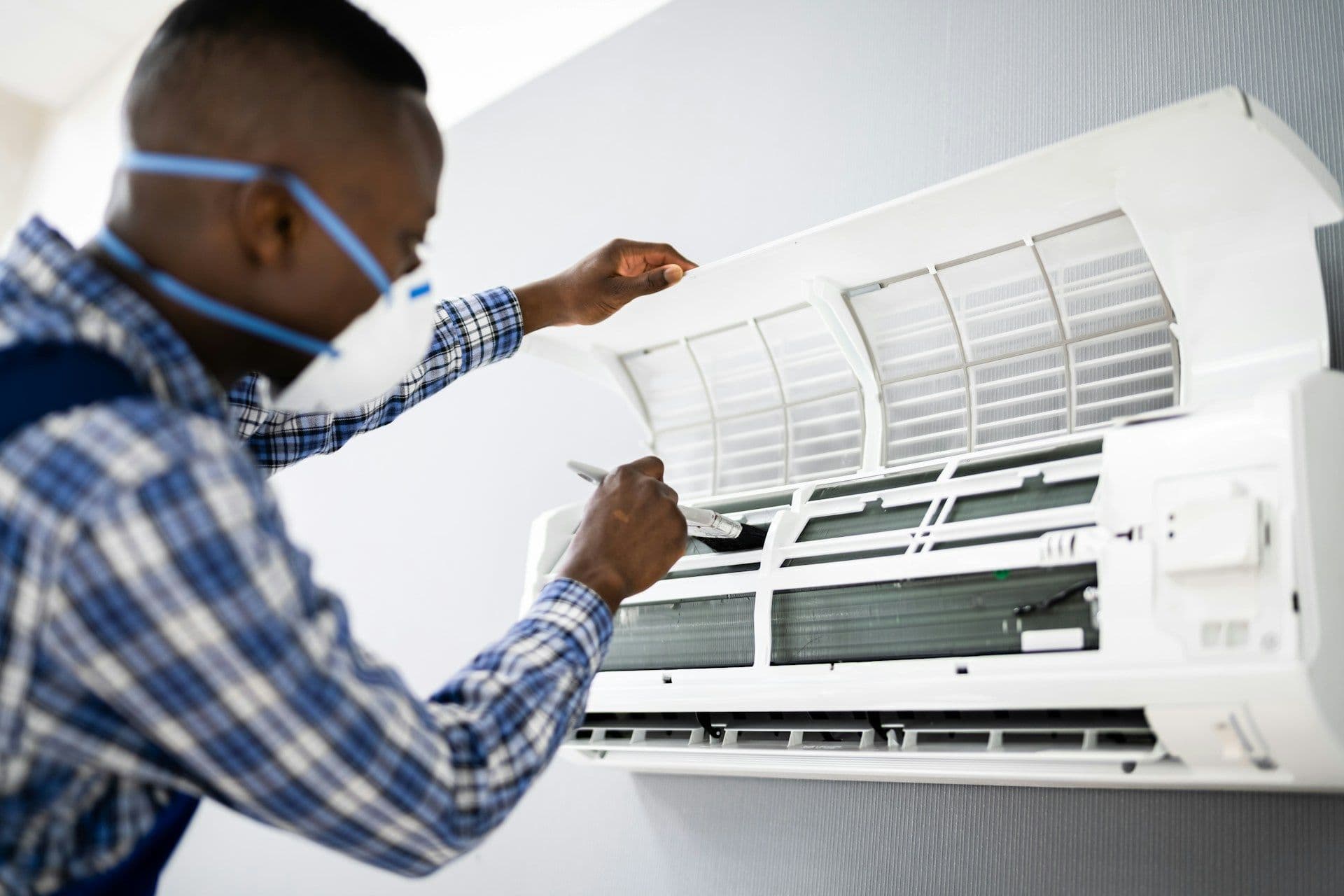
Coils and filters catch dirt that can block airflow and reduce cooling. Clean them often to keep air fresh and cool.
- Turn off the unit before cleaning.
- Remove and wash filters with warm water.
- Use a soft brush to clear dirt on coils.
- Let all parts dry completely before reassembling.
Checking Refrigerant Levels
Refrigerant cools the air inside your home. Low levels make the system work hard and waste energy.
| Refrigerant Issue | Effect |
| Low Level | Less cooling, higher bills |
| Leaks | Damage to parts and environment |
| Correct Level | Efficient and cool air |
Ensuring Proper Airflow
Good airflow helps your AC cool better. Blocked vents or dirty fans slow air and strain the system.
Tips to keep airflow strong:
- Keep vents clear of furniture and dust.
- Check that fans run smoothly and quietly.
- Seal any leaks in ductwork to avoid air loss.
Frequently Asked Questions
What Components Make An Air Conditioner Cool The Air?
An air conditioner uses refrigerants, compressors, evaporators, and fans. Refrigerants absorb heat, compressors pressurize gases, evaporators cool air, and fans circulate the cooled air indoors.
How Does The Refrigerant Work In An Air Conditioner?
Refrigerant absorbs heat from indoor air and turns into gas. It moves to the compressor, where it’s pressurized and cooled, then cycles back to absorb more heat.
Why Is The Compressor Important In Air Conditioning?
The compressor pressurizes the refrigerant gas, raising its temperature. This step allows the refrigerant to release heat outside, enabling the cooling cycle to continue efficiently.
What Role Do Fans Play Inside An Air Conditioner?
Fans help circulate air through the evaporator coils. They pull warm indoor air in, pass it over cooled coils, and blow the chilled air back into the room.
Conclusion
An air conditioner uses many parts to cool the air around you. It removes heat and moisture to make rooms comfortable. The compressor, coils, and fans all work together smoothly. Clean air filters help keep the air fresh and healthy.
Understanding these parts helps you care for your AC better. Cool air is not magic; it is science in action. Keeping your AC well-maintained saves energy and money too. Simple steps can make a big difference in your comfort.