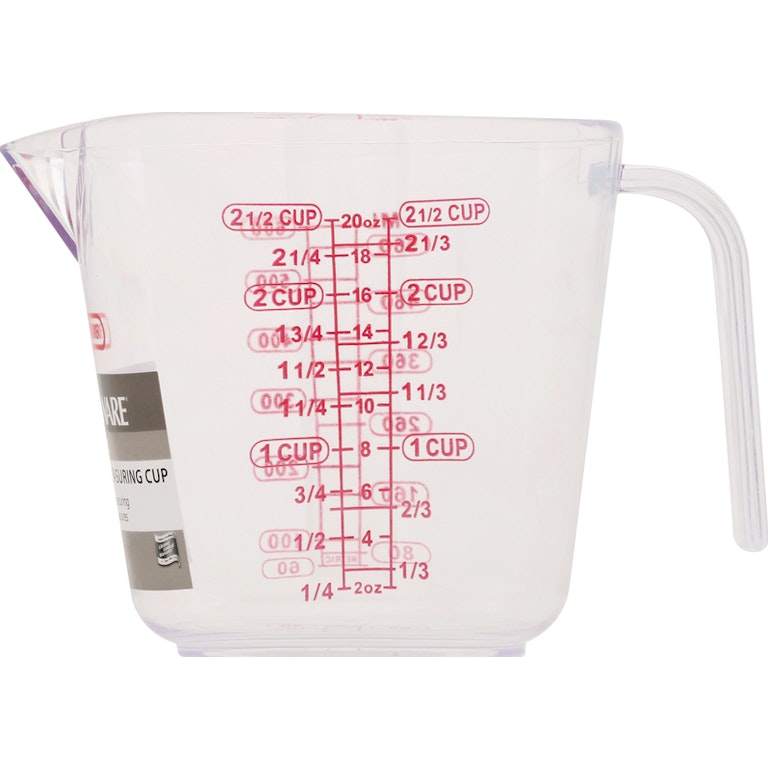
Have you ever stared at your measuring cup and wondered, “What does 1 3 mean?” It’s a simple marking, but it can confuse anyone in the kitchen.
Knowing exactly what this measurement means can save your recipe from turning out wrong. If you want to bake or cook with confidence, understanding this small detail is key. Keep reading, and you’ll never hesitate over your measuring cup again.
Credit: www.walmart.com
Decoding 1 3 On A Measuring Cup
Measuring cups have many markings to help with cooking and baking. Sometimes these markings can be confusing. One common marking you may see is “1 3”.
This article explains what “1 3” means on a measuring cup and how to use it correctly in recipes.
Common Measurement Markings
Measuring cups often show numbers and fractions to indicate volume. These markings help you add the right amount of ingredients.
- Whole numbers like 1, 2, or 3 usually mean cups.
- Fractions such as ½, ⅓, or ¼ represent parts of a cup.
- Sometimes numbers appear together, like “1 3”, which can be confusing.
Fractional Measurements Explained
The marking “1 3” on a measuring cup means 1 and 1/3 cups. It combines a whole number and a fraction.
| Marking | Meaning | Decimal Equivalent |
| 1 | One full cup | 1.0 |
| ⅓ | One-third of a cup | 0.33 |
| 1 3 | One and one-third cups | 1.33 |
Converting 1 3 To Standard Measurements
Understanding how to read measurements on a measuring cup is useful in the kitchen. The measurement “1 3” can be confusing at first.
This guide explains how to convert “1 3” into common cooking measurements. You will learn cups, tablespoons, teaspoons, and metric values.
Cups To Tablespoons And Teaspoons
The notation “1 3” usually means 1 and 1/3 cups. This is a common measurement in recipes.
- 1 cup equals 16 tablespoons
- 1 tablespoon equals 3 teaspoons
- 1 1/3 cups equals 1 cup plus 1/3 cup
- 1/3 cup equals 5 tablespoons and 1 teaspoon
So, 1 1/3 cups equals 16 tablespoons plus 5 tablespoons and 1 teaspoon. That is 21 tablespoons and 1 teaspoon total.
Metric Equivalents
| Measurement | Metric Equivalent |
| 1 cup | 240 milliliters (ml) |
| 1/3 cup | 80 milliliters (ml) |
| 1 1/3 cups | 320 milliliters (ml) |
| 1 tablespoon | 15 milliliters (ml) |
| 1 teaspoon | 5 milliliters (ml) |
Using 1 3 In Baking Recipes
The measurement “1 3” on a measuring cup usually means one-third cup. This small amount is common in many baking recipes.
Measuring ingredients like flour, sugar, or oil as one-third cup helps you follow the recipe correctly. This leads to better baking results.
Precision In Ingredient Measurement
Using one-third cup precisely ensures the right amount of each ingredient. Baking needs exact measures to work well.
Too much or too little of an ingredient can change the texture and taste of your baked goods.
- Level the ingredient for accuracy
- Use the right measuring cup for dry or liquid items
- Check the measurement at eye level
Impact On Recipe Outcomes
Measuring one-third cup correctly affects how your recipe turns out. It helps create the texture and flavor you expect.
If you measure wrong, cookies can be too dry or cake may not rise well. Accurate measuring keeps your baking consistent.
- Correct sweetness level
- Proper dough consistency
- Even baking and good rise

Credit: littlesproutslearning.co
Tips For Accurate Measuring
Measuring ingredients correctly helps your recipe turn out just right. Using the right tools and techniques makes measuring easier and more precise.
Understanding what “1/3” on a measuring cup means is important. It shows one-third of a cup, which is about 5 tablespoons plus 1 teaspoon.
Choosing The Right Measuring Tools
Use the correct measuring cup for the ingredient type. Dry ingredients need dry measuring cups, and liquids need liquid measuring cups.
Dry measuring cups are usually made of plastic or metal and come in different sizes like 1/3, 1/4, and 1/2 cup. Liquid measuring cups have a spout and clear markings on the side.
- Use a 1/3 cup for measuring dry ingredients like flour or sugar.
- Use a clear liquid cup for measuring liquids like milk or oil.
- Choose cups with easy-to-read markings for accuracy.
Techniques For Leveling Ingredients
Leveling ingredients ensures you do not add too much or too little. Use a flat edge to smooth off dry ingredients in the measuring cup.
Hold the measuring cup steady on a flat surface. Fill it slightly above the mark, then gently scrape the excess off with a knife or spatula.
- Fill the cup to overflowing for accuracy.
- Use a straight edge to level off the ingredient.
- Do not tap or shake the cup to settle ingredients.
Common Measuring Mistakes To Avoid
Measuring ingredients correctly is important for good cooking and baking. Small errors can change the final result.
Understanding what “1/3” on a measuring cup means helps avoid common mistakes in the kitchen.
Misreading Fractional Marks
Many people confuse the marks on measuring cups. “1/3” means one-third of the cup size, not one and three.
Look closely at the lines. Each fraction has its own mark. Reading the wrong mark adds too much or too little.
- Check the numbers next to the lines carefully.
- Use clear measuring cups with visible marks.
- Read the measurement at eye level to avoid mistakes.
Overpacking Ingredients
Pressing ingredients down in the cup can cause overpacking. This happens often with flour or brown sugar.
Overpacked ingredients weigh more than the recipe calls for. This can change the taste and texture.
- Fill the cup lightly without pushing down.
- Use a spoon to add ingredients gently.
- Level off the top with a straight edge for accuracy.
Credit: www.recipesandplaces.com
Adjusting Recipes With 1 3 Measurements
Using 1/3 on a measuring cup helps you measure small amounts easily. It is useful when recipes need precise ingredient amounts.
Adjusting recipes with 1/3 measurements lets you change servings without mistakes. You can scale ingredients up or down and find substitutes.
Scaling Ingredients Up Or Down
To make more or less food, multiply or divide the 1/3 measurement. This keeps the recipe balanced and tasty.
For example, doubling 1/3 cup means using 2/3 cup. Halving 1/3 cup means using about 2 tablespoons plus 2 teaspoons.
- 1/3 cup × 2 = 2/3 cup
- 1/3 cup ÷ 2 ≈ 2 tablespoons + 2 teaspoons
- 1/3 cup × 3 = 1 cup
- 1/3 cup × 0.5 ≈ 2 tablespoons + 2 teaspoons
Substituting Measurements
You can replace 1/3 cup with smaller or larger measures using simple conversions. This helps if you lack the exact cup size.
For example, 1/3 cup equals 5 tablespoons plus 1 teaspoon. You can mix these to get the right amount.
- 1/3 cup = 5 tablespoons + 1 teaspoon
- 1/3 cup = 16 teaspoons
- 1/3 cup = about 79 ml
Frequently Asked Questions
What Does 1/3 Mean On A Measuring Cup?
1/3 on a measuring cup represents one-third of the cup’s capacity. It is a common measurement in recipes, especially for baking. This fraction helps ensure precise ingredient proportions, which is crucial for the success of your culinary creations.
How To Measure 1/3 Cup Accurately?
To measure 1/3 cup accurately, fill the measuring cup to the 1/3 mark. Use a liquid measuring cup for liquids and a dry measuring cup for solids. Level off the ingredient with a straight edge for precision.
Is 1/3 Cup Measurement The Same For Liquids And Solids?
Yes, 1/3 cup represents the same volume for both liquids and solids. However, use a liquid measuring cup for liquids and a dry measuring cup for solids to ensure accuracy. Accurate measurements are essential for consistent results in recipes.
Can I Use A Tablespoon To Measure 1/3 Cup?
Yes, you can use tablespoons to measure 1/3 cup. One-third cup is equivalent to 5 tablespoons plus 1 teaspoon. This method is helpful when you don’t have a 1/3 cup measuring tool available.
Conclusion
Understanding what “1 3” means on a measuring cup helps in cooking. It usually means one-third of a cup. This small measurement is common in many recipes. Using the right amount keeps your food tasting great. Always check your measuring cup carefully.
It saves time and avoids mistakes. Now, you can measure ingredients with confidence. Cooking becomes easier and more fun. Keep practicing to get better every time. Simple steps lead to good results in the kitchen.