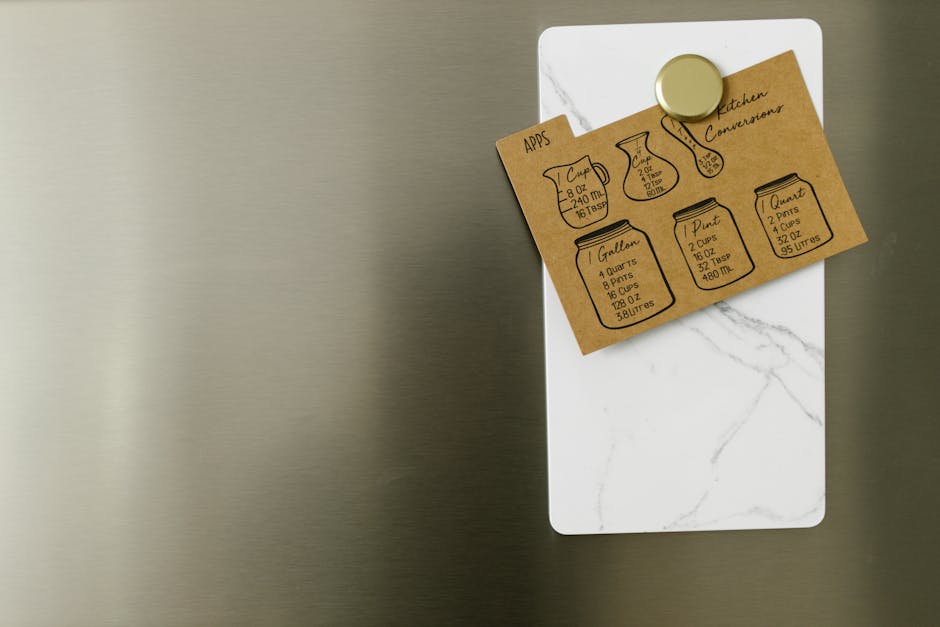
Have you ever stared at your measuring cup and wondered, “What exactly is 3/4 equal to?” If you’re cooking or baking, getting measurements right is key to making your dish turn out perfectly.
Knowing how to read and convert measurements on your cup can save you time, prevent mistakes, and boost your confidence in the kitchen. You’ll discover exactly what 3/4 means on a measuring cup and how to use it without second-guessing yourself.
Keep reading to make your next recipe easier and more accurate than ever before.
Credit: foodnutters.com
Reading Measuring Cups
Measuring cups help you add the right amount of ingredients. They are common in every kitchen. Knowing how to read them saves you from cooking mistakes.
One common question is what “3/4” means on a measuring cup. This guide explains different types of cups and their markings.
Types Of Measuring Cups
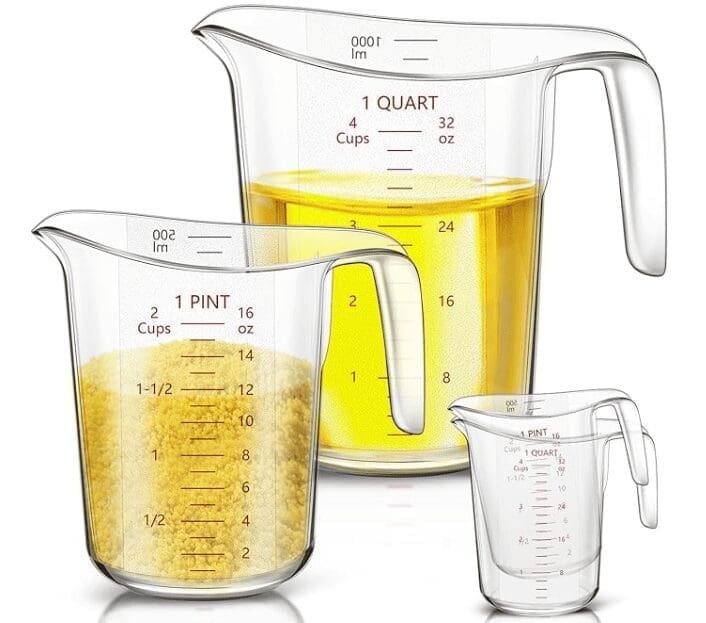
There are mainly two types of measuring cups: liquid and dry. Liquid cups usually have a spout for easy pouring. Dry cups are solid and come in sets.
- Liquid Measuring Cups:Made of glass or plastic with a handle.
- Dry Measuring Cups:Usually metal or plastic, used for flour and sugar.
- Specialty Cups:For specific ingredients like coffee or spices.
Markings And Measurements
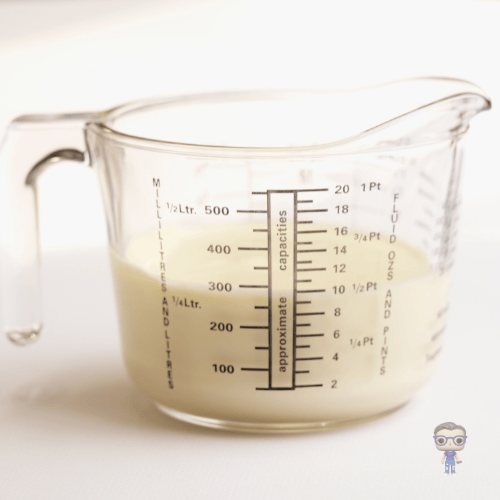
Measuring cups show volume in cups, ounces, and milliliters. The “3/4” mark means three-quarters of a cup. It equals 0.75 cups or 6 fluid ounces.
| Fraction | Decimal | Ounces (fl oz) | Milliliters (ml) |
|---|---|---|---|
| 1/4 | 0.25 | 2 | 60 |
| 1/2 | 0.50 | 4 | 120 |
| 3/4 | 0.75 | 6 | 180 |
| 1 cup | 1.00 | 8 | 240 |
Understanding 3/4 Measurement
Measuring ingredients correctly is important in cooking and baking. The 3/4 measurement is common on many measuring cups.
This guide explains what 3/4 means and how to use it on your measuring cup.
Fraction To Decimal Conversion
The fraction 3/4 means three parts out of four equal parts. In decimal form, 3/4 equals 0.75.
This decimal helps you measure liquids or dry ingredients more precisely, especially with digital tools.
Common Equivalents
| Fraction | Decimal | Measuring Cup Mark | Equivalent Cups |
| 1/4 | 0.25 | 1/4 | 0.25 cups |
| 1/3 | 0.33 | 1/3 | 0.33 cups |
| 1/2 | 0.50 | 1/2 | 0.5 cups |
| 3/4 | 0.75 | 3/4 | 0.75 cups |
| 1 | 1.00 | 1 | 1 cup |
Visualizing 3/4 On A Cup
Understanding what 3/4 means on a measuring cup helps in cooking and baking. It shows how much liquid or dry ingredient to use.
Measuring cups often have marks for fractions. Seeing 3/4 on the cup makes it easier to pour the right amount.
Liquid Measurements
For liquids, 3/4 cup means filling the cup to the line that shows three-quarters full. This is 75% of the cup’s total volume.
- Use a clear measuring cup for liquids.
- Place the cup on a flat surface.
- Pour the liquid slowly until it reaches the 3/4 mark.
- Check the level at eye height to be accurate.
Dry Measurements
Dry ingredients like flour or sugar can be measured with a 3/4 cup too. You fill the cup and level it off with a flat edge.
| Ingredient | 3/4 Cup Weight |
| All-Purpose Flour | 90 grams |
| Granulated Sugar | 150 grams |
| Brown Sugar (packed) | 165 grams |
| Butter (melted) | 170 grams |
Credit: thisoldbaker.com
Tips For Accurate Measuring
Measuring ingredients precisely is important for good cooking results. Using the right methods can help you get the exact amount needed.
This guide focuses on tips to measure 3/4 cup correctly using simple techniques.
Leveling Techniques
Leveling off ingredients ensures you do not add too much or too little. This is key for dry ingredients like flour or sugar.
- Fill the measuring cup slightly over the 3/4 mark.
- Use a flat edge, like the back of a knife, to scrape off the excess.
- Make sure the surface is even with the cup’s top edge.
- Check the measurement at eye level to confirm accuracy.
Using Multiple Cups
If your measuring cup does not have a 3/4 mark, combine smaller measures to reach the amount.
| Measure | Amount |
| 1/2 cup | 0.5 cup |
| 1/4 cup | 0.25 cup |
| Total | 0.75 cup (3/4 cup) |
Common Measurement Mistakes
Measuring ingredients correctly is important for cooking and baking. Small mistakes can change the outcome of your recipe.
When using a measuring cup, it is easy to make errors that affect the amount of liquid you add. Understanding these mistakes helps you get better results.
Misreading Lines
Measuring cups have lines that show different amounts. Sometimes, people read the wrong line or guess between lines. This causes incorrect measurements.
- Look carefully at the line that matches your needed measurement.
- Do not guess if the liquid level is between two lines.
- Use a measuring cup with clear, easy-to-read markings.
- Place the cup on a flat surface for better accuracy.
Ignoring Meniscus
The meniscus is the curve of the liquid surface in the cup. Ignoring it leads to wrong amounts. You must read the bottom of the meniscus to measure right.
| Common Error | Correct Method |
| Reading from the top of the liquid curve | Read from the bottom of the meniscus |
| Measuring at eye level above or below the cup | Measure at eye level, straight on with the cup |
| Ignoring reflections or shadows on the liquid | Focus on the true liquid edge, not reflections |

Credit: rhondasues.com
Frequently Asked Questions
What Does 3/4 Mean On A Measuring Cup?
3/4 on a measuring cup means three-quarters of a cup. It represents 75% of a full cup, commonly used in recipes.
How Many Ounces Equal 3/4 Cup In Measurements?
3/4 cup equals 6 fluid ounces. This conversion helps when using different measuring tools or following varied recipe formats.
Is 3/4 Cup The Same As 12 Tablespoons?
Yes, 3/4 cup is equal to 12 tablespoons. This is useful when precise tablespoon measurements are needed for cooking or baking.
Can I Substitute 3/4 Cup With Other Measurements?
You can substitute 3/4 cup with 6 ounces or 12 tablespoons. These alternatives maintain recipe accuracy and convenience.
Conclusion
Knowing that 3/4 on a measuring cup equals 0. 75 cups helps in cooking. This small fact makes recipes easier to follow. It saves time and avoids mistakes. Measuring cups show clear marks to guide you. Use this knowledge to measure liquids or dry ingredients correctly.
Cooking becomes more fun and less stressful. Simple tips like this make a big difference in the kitchen. Keep practicing, and you will get better every day.