Have you ever wondered what keeps your air conditioner running smoothly, especially on those hot summer days? One small but powerful part plays a key role in making sure your AC starts up quickly and cools your home efficiently.
That part is called a capacitor. Understanding what a capacitor does can save you from unexpected breakdowns and costly repairs. You’ll discover exactly what a capacitor for an air conditioner is, why it matters to your comfort, and how it works behind the scenes to keep your cool.
Keep reading—you’ll soon see why this tiny component is a big deal for your AC’s performance.
Capacitor Basics
A capacitor stores and releases electrical energy. It helps the air conditioner start and run smoothly. Without a capacitor, the motor may not work well or may stop.
The capacitor gives a boost to the compressor and fan motors. It helps them start spinning quickly. It also keeps the motors running with steady power.
| Type of Capacitor | Purpose |
|---|---|
| Start Capacitor | Provides extra power to start motors |
| Run Capacitor | Keeps motors running efficiently |
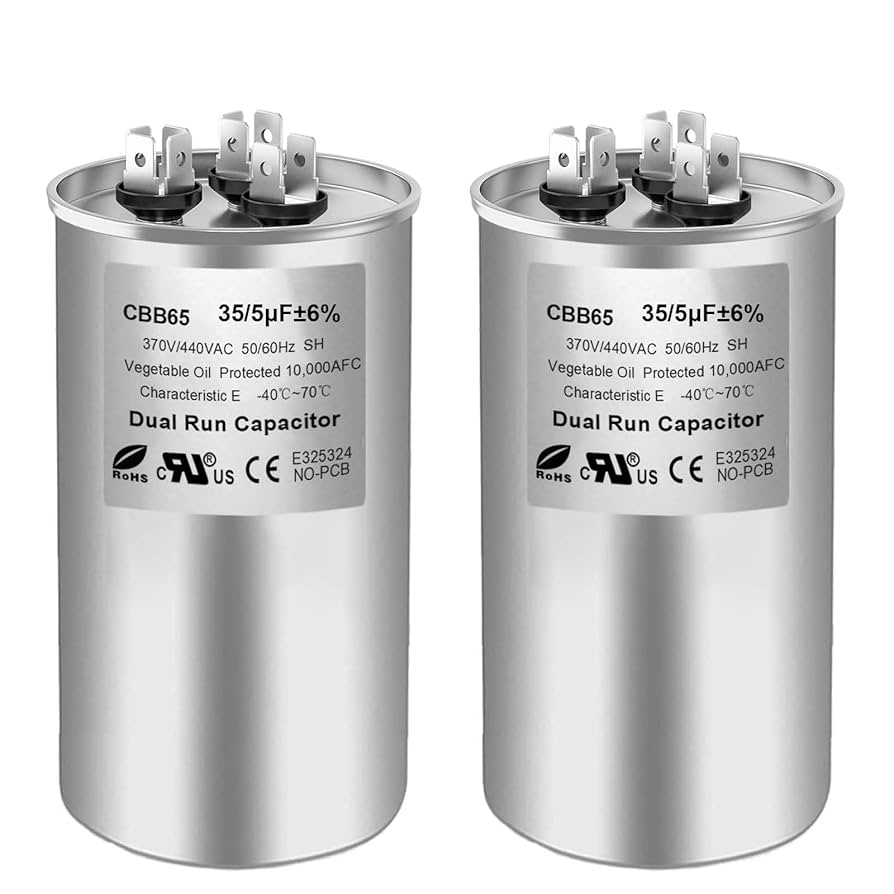
| Dual Capacitor | Combines start and run capacitors in one unit |

Credit: www.amazon.com
How Capacitors Work
A capacitor is a small device that stores electrical energy. It holds this energy and then releases it to help the air conditioner’s motor start and run smoothly. The capacitor works like a battery but charges and discharges very quickly.
There are two main roles of capacitors in air conditioners:
- Storing electrical energyto provide a quick burst of power.
- Starting and running motorsby giving extra torque at startup and helping the motor run efficiently.
This quick energy helps the motor overcome the initial resistance when it starts. Without a capacitor, the motor might not start or could run poorly. Capacitors keep the motor working well and save energy.
Common Signs Of Failure
Unusual noisesfrom the air conditioner can signal a capacitor problem. Sounds like buzzing or humming often mean the capacitor is weak or failing. These noises come from the motor struggling to start or run.
AC not startingis a common sign of a bad capacitor. The capacitor helps the motor start. Without it, the AC may not turn on at all or may take longer to start.
Frequent cyclingmeans the AC turns on and off too often. This happens because the capacitor cannot keep the motor running smoothly. Frequent cycling can wear out the AC quickly and increase energy bills.

Credit: www.amazon.com
Testing Capacitors
Testing a capacitor requires a few basic tools. A multimeterwith a capacitance setting is key. You also need insulated glovesand a screwdriverto discharge the capacitor safely.
Start by turning off power to the air conditioner. Use the screwdriver to discharge the capacitor by bridging its terminals. Next, set the multimeter to the capacitance mode and connect its leads to the capacitor terminals.
The multimeter will show a reading. Compare this to the capacitor’s rating, which is written on its side. A reading within 6% of the rating means the capacitor is good. A reading much lower or zero means the capacitor is bad and needs replacement.
| Reading | Meaning |
|---|---|
| Within 6% of rating | Capacitor is good |
| Much lower than rating | Capacitor is weak or bad |
| Zero or no change | Capacitor is faulty |
Replacing A Capacitor
Turn off the powerbefore working on the air conditioner. Capacitors store electricity and can shock you. Use a screwdriver with an insulated handle to discharge the capacitor. Wear safety glasses and gloves to protect your eyes and hands. Never touch the capacitor terminals directly.
Choose a capacitor that matches the voltage and microfarad (µF) ratingsof the old one. Check the model number and specs on the capacitor label. Using the wrong capacitor can damage the AC unit or cause failure.
- Disconnect the power supply completely.
- Note the wire positions on the old capacitor before removing.
- Use a screwdriver to discharge the capacitor terminals safely.
- Remove the old capacitor carefully.
- Attach the wires to the new capacitor exactly as before.
- Secure the new capacitor firmly in place.
- Restore power and test the AC unit.

Credit: www.amazon.com
Maintaining Capacitors
Routine inspectionsof air conditioner capacitors help spot problems early. Check for signs like bulging, leaking, or corrosion on the capacitor’s body. Listen for unusual noises during operation, which may indicate capacitor failure. Always turn off power before inspecting to stay safe.
Preventive measuresinclude keeping the area clean and dry. Avoid dust buildup around the capacitor and ensure proper ventilation. Replace capacitors every few years as part of regular maintenance. Using high-quality capacitors reduces the chance of sudden breakdowns.
Troubleshooting Tips
Common mistakescan cause capacitor problems in air conditioners. Avoid touching capacitor terminals with bare hands. This can cause electric shocks. Never test a capacitor without discharging it first. Using the wrong tools or meters can give false readings. Avoid replacing the capacitor with the wrong size or type. This can harm the AC unit.
Check for signs of damagelike bulging or leaking before testing. Do not ignore strange noises or smells from the AC. These often mean capacitor issues.
Call a professionalif you see burning smells or sparks. Capacitors store high voltage and can be dangerous. If the AC still does not work after replacing the capacitor, expert help is needed. Professionals have the right tools and knowledge to fix complex problems safely.
Frequently Asked Questions
What Is The Role Of A Capacitor In An Air Conditioner?
A capacitor stores electrical energy to help start and run the AC motor. It provides the initial boost for compressor and fan motors, ensuring efficient operation and smooth performance.
How Does An Ac Capacitor Affect Air Conditioner Performance?
A faulty capacitor can cause slow starts, overheating, or failure to start. A good capacitor maintains proper voltage, improving energy efficiency and extending the AC’s lifespan.
What Are The Common Signs Of A Bad Ac Capacitor?
Signs include humming noises, AC not cooling, frequent cycling, or the unit failing to start. These symptoms often indicate capacitor failure needing timely replacement.
Can I Replace An Air Conditioner Capacitor Myself?
Replacing a capacitor requires electrical knowledge and safety precautions. It is recommended to hire a professional technician to avoid risks and ensure proper installation.
Conclusion
Understanding capacitors helps maintain your air conditioner. They store energy. Provide the initial boost. Essential for starting the compressor and fan. Without them, your unit struggles. Performance drops. Energy efficiency suffers. Regular checks keep them functioning well. A faulty capacitor leads to breakdowns.
A simple replacement fixes this issue. Always consult a professional. DIY fixes can be tricky. Safety first. Now you know the role of capacitors. Keep your air conditioner running smoothly. Your home stays cool and comfortable.