Have you ever wondered why some fishing rods feel stiff while others bend smoothly? Understanding the “action” of a fishing rod can change the way you fish and improve your catch.
It’s not just a technical term—it’s the key to matching your rod with the type of fishing you want to do. You’ll discover what action really means, how it affects your fishing experience, and how to choose the right rod for your needs.
Keep reading to unlock the secret behind every great cast and catch.
Action Types
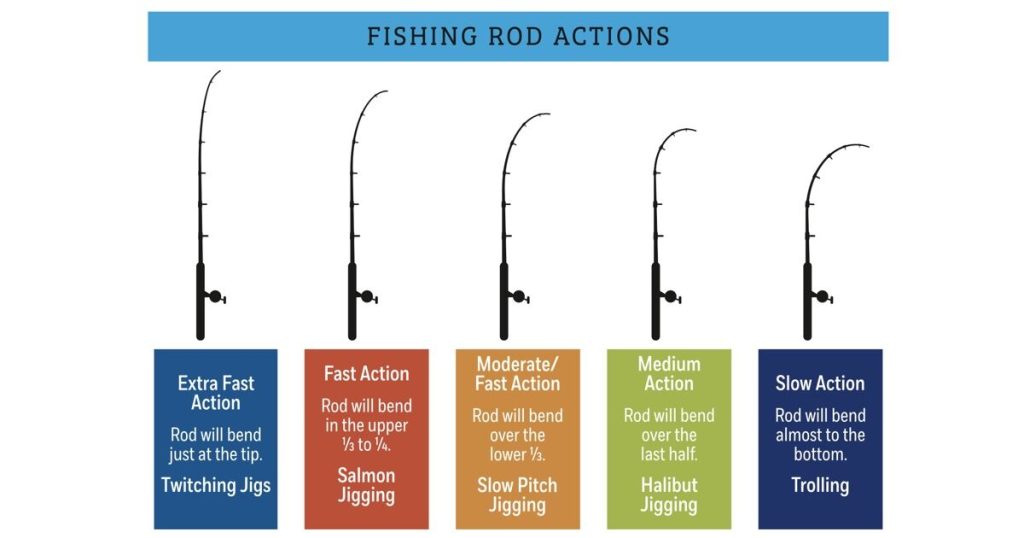
The action of a fishing rod describes how much it bends when pressure is applied. Different action types suit different fishing styles and preferences.
Understanding these action types helps anglers choose the right rod for their fishing needs.
Fast Action
Fast action rods bend mostly at the tip. They are sensitive and good for detecting light bites.
These rods offer quick hook sets and are ideal for fishing in cover or for larger fish.
- Best for single-hook lures
- Good for long casting
- Provides more control
Moderate Action
Moderate action rods bend more towards the middle. They offer a balanced feel and are versatile for different types of fishing.
These rods are suitable for a variety of lures and techniques, making them a popular choice.
- Good for treble-hook lures
- Offers smooth casts
- Ideal for beginners
Slow Action
Slow action rods bend throughout the entire length. They provide a more gradual bend and are ideal for light line and small fish.
These rods are great for casting light baits and offer a fun, challenging experience.
- Suitable for small streams
- Allows for softer presentations
- Good for small fish

Credit: www.reddit.com
Impact On Casting
Action on a fishing rod affects how you cast your line. It changes the way the rod bends and moves during casting.
Understanding rod action helps improve casting skills and fishing results.
Casting Distance
Fast action rods bend near the tip and release the lure quickly. This gives longer casting distance.
Slow action rods bend more deeply and release the lure slower. This can reduce casting distance but adds control.
Accuracy
Medium action rods offer a balance between power and flexibility. They help anglers cast with good accuracy.
- Fast action rods need more skill for accurate casts.
- Slow action rods provide smooth casts but less control in wind.
- Medium action rods suit most fishing conditions for accuracy.
Lure Control
| Rod Action | Lure Control | Best Use |
| Fast | High control, quick response | Heavy lures, long casts |
| Medium | Good control, balanced feel | Various lure weights |
| Slow | Less control, smooth action | Light lures, finesse fishing |
Effect On Hook Setting
The action of a fishing rod affects how well you can set the hook. Hook setting means driving the hook into the fish’s mouth firmly.
A rod’s action changes the speed and force of the hook setting. Different actions suit different fishing styles and fish types.
Hook Penetration
Rod action controls how fast and strong the hook goes into the fish. Fast action rods bend mostly near the tip. This helps the hook go deep quickly.
Slower action rods bend more along the length. This spreads the force, so the hook sets more gently. It may not penetrate as deeply but can help keep fish on the line.
- Fast action rods give quick, strong hook sets
- Medium action rods offer balanced hook penetration
- Slow action rods provide softer, gentler hook setting
Sensitivity To Bites
Rod action also affects how well you feel fish bites. Fast action rods are very sensitive. They let you detect small or light bites quickly.
Slower action rods are less sensitive but can absorb strong runs better. This helps avoid losing fish with hard fights.
- Fast action rods detect light bites fast
- Medium action rods balance sensitivity and strength
- Slow action rods reduce shock from big fish

Credit: www.reddit.com
Choosing The Right Action
Action on a fishing rod describes how much the rod bends when pressure is applied. It affects how you feel the fish and how you cast your lure. Choosing the right action helps improve your fishing experience.
Different rods have fast, medium, or slow action. Each suits certain fish, techniques, and environments. Understanding these can help you pick the best rod for your needs.
Target Fish Species
Different fish need different rod actions. Fast action rods bend near the tip and give quick hook sets for strong fish. Medium action rods bend more and offer better control for medium-sized fish. Slow action rods bend the whole length and work well for small or shy fish.
- Fast action: bass, pike, and larger fish
- Medium action: trout, walleye, and panfish
- Slow action: small trout, bluegill, and crappie
Fishing Techniques
Your fishing style affects the rod action you need. Fast action rods give better sensitivity for jigging and casting lures far. Medium action rods suit live bait fishing and controlled retrieves. Slow action rods help with delicate presentations and casting light baits.
| Technique | Best Rod Action |
| Jigging | Fast |
| Live bait | Medium |
| Light casting | Slow |
Environment Considerations
Where you fish also matters. Strong currents or windy spots may need a fast action rod for power. Calm lakes or small streams may benefit from a slow action rod for better feel. Rod length and action should match the fishing location.
- Fast action rods work well in rivers and windy conditions.
- Medium action rods fit most lake fishing situations.
- Slow action rods are best for quiet ponds and streams.
Materials And Construction
Action on a fishing rod describes how the rod bends under pressure. It affects casting, hook setting, and fish fighting. Materials and construction influence rod action greatly.
Understanding rod blank composition, guide placement, and handle design helps choose the right rod action for fishing needs.
Rod Blank Composition
The rod blank is the main part of the fishing rod. It is usually made from graphite, fiberglass, or composite materials. Each material changes the rod’s action.
- Graphite:Lightweight and sensitive. It has a fast action and bends mostly near the tip.
- Fiberglass:Heavier and more flexible. It provides slow action and bends along the whole rod.
- Composite:Mix of graphite and fiberglass. It offers medium action and balanced bend.
Guide Placement
Guides are rings on the rod that control the fishing line. Their placement affects the rod’s strength and action. Proper guide spacing helps the rod bend evenly.
| Guide Type | Effect on Action |
| More Guides | Even line pressure, smoother bend |
| Fewer Guides | Less weight, faster action |
| Spaced Closer to Tip | Better control for fast action rods |
| Spread Out Evenly | Balanced bend for slow action rods |
Handle Design
The handle affects comfort and control during fishing. It also influences how the rod bends and feels in hand.
- Material:Cork is light and comfortable. EVA foam is durable and affordable.
- Length:Longer handles give more leverage for casting and fighting fish.
- Shape:Trigger grips help with control on baitcasting rods. Straight handles suit spinning rods.
Maintaining Rod Performance
The action of a fishing rod affects how it bends and handles fish. Keeping your rod in good shape helps it perform well every time you fish.
Simple care steps like inspection, storage, and repair keep the rod’s action smooth and reliable.
Regular Inspection
Check your rod often for cracks, loose guides, or bent tips. These problems can change the rod’s action and make fishing harder.
- Look closely at the rod blank for any damage
- Test the guides to see if they move or are broken
- Feel the handle for cracks or loose parts
- Check the reel seat to ensure it holds the reel firmly
Proper Storage
Store your fishing rod in a dry place away from direct sunlight. Heat and moisture can weaken the rod and affect its action.
| Storage Tip | Reason |
| Use rod holders or racks | Prevent bending or warping |
| Keep away from extreme temperatures | Avoid damage to rod materials |
| Store vertically or horizontally with support | Maintain rod shape and action |
Repair Tips
Fix small issues quickly to keep the rod’s action steady. Replace worn guides and tighten loose parts.
Basic repair tips include:
- Use epoxy to fix small cracks
- Replace damaged guides with new ones of the same size
- Apply cork or foam tape to worn handles
- Tighten or replace reel seat parts as needed

Credit: www.bassresource.com
Frequently Asked Questions
What Does Action Mean On A Fishing Rod?
Action describes how much and where a rod bends when pressure is applied. It affects casting accuracy, lure control, and hook setting.
How Does Rod Action Affect Casting Distance?
Fast action rods bend near the tip, allowing longer, more precise casts. Slow action rods bend deeper, reducing distance but increasing lure movement.
Which Fishing Rod Action Suits Beginners Best?
Moderate action rods are ideal for beginners. They offer balanced flexibility and control, helping to learn casting and handle various fish species.
Can Rod Action Impact The Type Of Fish Caught?
Yes, rod action influences sensitivity and power. Fast action rods suit larger, aggressive fish, while slow action rods work well for smaller, cautious species.
Conclusion
Action on a fishing rod affects how it bends and feels. Fast action rods bend near the tip for quick response. Slow action rods bend more, offering better control and flexibility. Knowing rod action helps choose the right rod for your fishing style.
It makes fishing easier and more fun. Keep this in mind when picking your next fishing rod. The right action can improve your catch and overall experience.