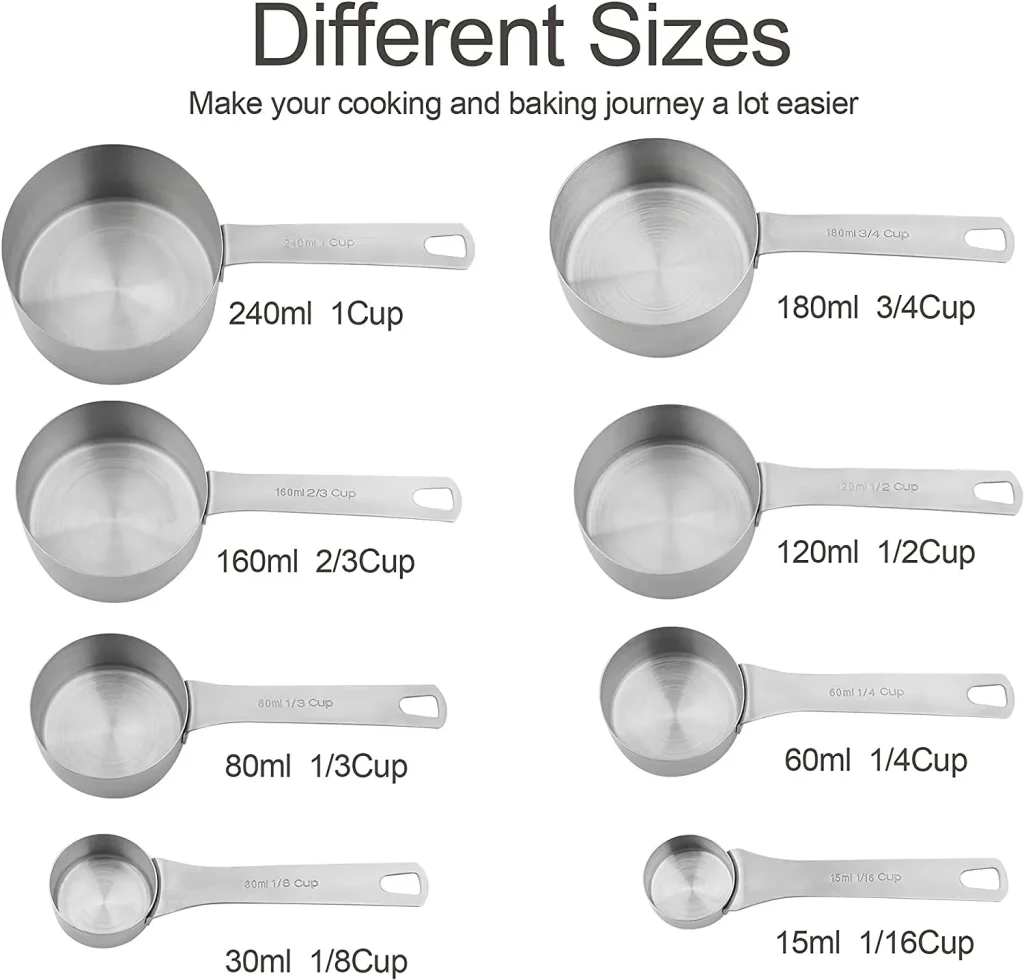
Are you standing in your kitchen, recipe in hand, wondering how to measure 3/4 cup without the right tool? You’re not alone.
Many home cooks face this exact challenge and wish there was a simple way to get it right every time. What if you could easily find another measurement for 3/4 cup that fits perfectly with what you have on hand?
Keep reading, because by the end of this article, you’ll have quick, practical answers that make your cooking and baking smoother and more enjoyable.
Common Equivalents For 3/4 Cup
Measuring ingredients accurately helps your recipes turn out well. Knowing different ways to measure 3/4 cup can be useful.
This guide shows common equivalents for 3/4 cup in tablespoons, teaspoons, milliliters, and fluid ounces.
Tablespoons And Teaspoons
Tablespoons and teaspoons are small measuring units. They are easy to use for small amounts of ingredients.
Here are the equivalents for 3/4 cup in tablespoons and teaspoons.
- 3/4 cup = 12 tablespoons
- 3/4 cup = 36 teaspoons
Milliliters And Fluid Ounces
Milliliters and fluid ounces are common units in cooking and baking. They are used in many countries.
These are the milliliter and fluid ounce equivalents for 3/4 cup.
- 3/4 cup = 177 milliliters (ml)
- 3/4 cup = 6 fluid ounces (fl oz)
Using Kitchen Tools For Accuracy
Measuring ingredients correctly is important for cooking and baking. Using the right kitchen tools helps you get accurate results every time.
One common question is how to measure 3/4 cup using other tools. Let’s look at some ways to do this with common kitchen items.
Measuring Spoons Vs. Measuring Cups
Measuring cups are made for larger amounts, like 1 cup or 1/4 cup. Measuring spoons work well for small amounts, such as teaspoons or tablespoons.
- 3/4 cup equals 12 tablespoons
- 1 tablespoon equals 3 teaspoons
- You can use 12 tablespoons or 36 teaspoons to get 3/4 cup
- Mix and match spoons to reach 3/4 cup if needed
Digital Scales For Precision
Digital scales give you exact weight measurements. This is useful for dry and liquid ingredients.
| Measurement | Equivalent Weight |
| 3/4 cup flour | 90 grams |
| 3/4 cup sugar | 150 grams |
| 3/4 cup butter | 170 grams |
Converting 3/4 Cup In Baking
Measuring ingredients correctly is important in baking. Understanding how to convert 3/4 cup helps you follow recipes easily. This guide explains common conversions for dry and liquid ingredients.
Using accurate measurements ensures your baked goods turn out well. Let’s look at how to convert 3/4 cup for dry and liquid ingredients.
Dry Ingredients Conversion
Dry ingredients like flour, sugar, and cocoa powder have different weights. Here are common equivalents for 3/4 cup in dry ingredients.
| Ingredient | 3/4 Cup Equivalent |
| All-Purpose Flour | 90 grams (about 3.2 ounces) |
| Granulated Sugar | 150 grams (about 5.3 ounces) |
| Brown Sugar (packed) | 165 grams (about 5.8 ounces) |
| Cocoa Powder | 75 grams (about 2.6 ounces) |
Liquid Ingredients Conversion
Liquid ingredients like milk, water, or oil convert differently. Here are some simple ways to measure 3/4 cup of liquids.
- 3/4 cup equals 6 fluid ounces
- It also equals about 177 milliliters
- Use a liquid measuring cup for accuracy

Credit: momspark.net
Tips For Easy Measurement Conversions
Measuring ingredients correctly is important for cooking and baking. Knowing simple conversions saves time and reduces mistakes.
This guide covers easy ways to convert 3/4 cup into other measurements. Use these tips to make your kitchen work smoother.
Memorizing Key Conversions
Remembering a few key conversions helps you measure 3/4 cup quickly without tools.
- 3/4 cup equals 12 tablespoons
- It is also 9 fluid ounces
- In milliliters, 3/4 cup is about 177 ml
- 3/4 cup equals 1/2 cup plus 1/4 cup
Using Conversion Charts
Conversion charts show many measurements side by side. They help you find equivalents fast.
| Measurement | Equivalent for 3/4 Cup |
| Tablespoons (Tbsp) | 12 Tbsp |
| Teaspoons (tsp) | 36 tsp |
| Fluid Ounces (fl oz) | 6 fl oz |
| Milliliters (ml) | 177 ml |
Common Mistakes To Avoid
Measuring 3/4 cup correctly is important for recipe success. Many people make errors that change the final result.
Understanding common mistakes helps you get the right amount every time. Avoid these errors to improve your cooking and baking.
Incorrect Measuring Techniques
Using the wrong method to measure 3/4 cup can cause problems. Spooned or packed ingredients need different handling.
- Do not scoop flour directly with the cup; it packs too much in.
- Level off dry ingredients with a flat edge for accuracy.
- Use liquid measuring cups for wet ingredients only.
- Fill to the line on the cup, not above or below.
Ignoring Ingredient Density
Different ingredients weigh differently even at the same volume. This can affect your results if not considered.
| Ingredient | Weight for 3/4 Cup |
| All-purpose flour | 90 grams |
| Sugar (granulated) | 150 grams |
| Butter (softened) | 170 grams |
| Chopped nuts | 80 grams |

Credit: www.amazon.com

Credit: www.amazon.co.uk
Frequently Asked Questions
What Is The Metric Equivalent Of 3/4 Cup?
3/4 cup is approximately 177 milliliters. Measuring in milliliters provides precision, especially in baking. Use a metric measuring cup for accuracy. Always level the ingredient for the correct amount.
How Many Tablespoons Are In 3/4 Cup?
3/4 cup equals 12 tablespoons. This conversion is helpful for smaller ingredient measurements. Measuring spoons can help ensure accuracy. Always fill and level each tablespoon for consistent results.
Can I Use A Scale For 3/4 Cup?
Yes, you can use a kitchen scale. 3/4 cup of water weighs about 177 grams. This method is precise for baking. Weighing ingredients reduces errors caused by volume measurements.
What Fraction Is Equal To 3/4 Cup?
3/4 cup can be divided into three 1/4 cups. This fraction is useful for scaling recipes. Divide ingredients into smaller portions if needed. This ensures accurate measurements when adjusting recipes.
Conclusion
Knowing another measurement for 3/4 cup helps in cooking and baking. It equals 12 tablespoons or 9 fluid ounces. Using these simple swaps saves time and avoids mistakes. Keep these measurements handy in your kitchen. Cooking becomes easier and recipes turn out just right.
Small changes make a big difference. Remember, accuracy leads to better results every time.