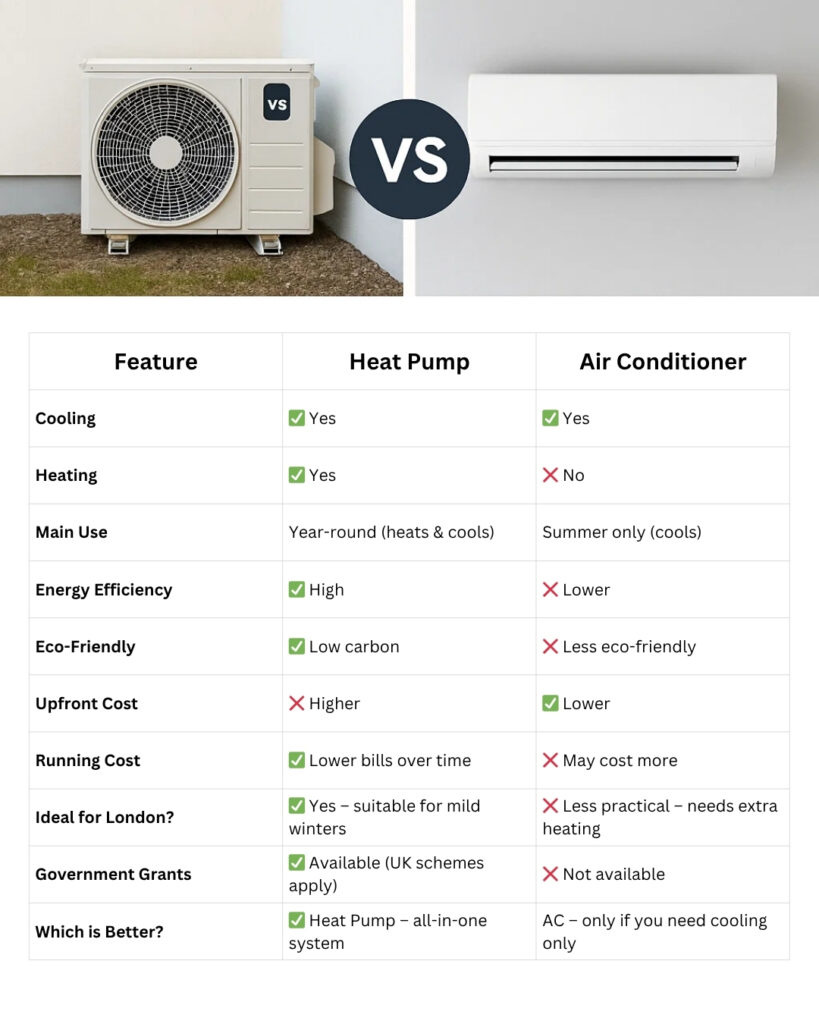
Are you confused about whether to choose an air conditioner or a heat pump for your home? You’re not alone.
Both devices cool your space, but they work in very different ways and offer unique benefits. Understanding these differences can save you money, boost your comfort, and help you make the right choice for your needs. Keep reading, and by the end, you’ll know exactly which option suits your lifestyle and climate best.
Don’t miss out on making a smart, informed decision for your home’s heating and cooling.
Basic Functions
An air conditionercools the air inside a room by removing heat. It takes warm air from the room, cools it with refrigerant, and blows out cool air. The heat removed is sent outside.
A heat pumpalso cools the air like an air conditioner. But it can do more. It can reverse the process to provide heat. This makes it useful in both summer and winter.
- Air conditioner:Only cools air.
- Heat pump:Cools and heats air.
Heat pumps use a special valve to switch between heating and cooling modes. This allows them to pull heat from outside air and bring it inside during cold weather. Air conditioners do not have this feature.

Credit: northnjhvac.com
Energy Efficiency
Air conditionersmainly cool spaces by using electricity to remove heat. They use more power in hot weather. Heat pumpscan both heat and cool by moving heat in or out. They usually consume less power for heating compared to electric heaters.
| Device | Power Consumption | Seasonal Performance |
|---|---|---|
| Air Conditioner | Higher in hot weather | Good for cooling only |
| Heat Pump | Lower for heating and cooling | Works well in mild climates |
Installation Requirements
Air conditioners need less spaceoutside your home compared to heat pumps. Heat pumps require room for both heating and cooling functions. Installation of a heat pump might need more planningdue to its dual role.
The setup for an air conditioner is usually simpler. Heat pumps need extra wiring and controls. This can make the installation take longer and cost more.
| Cost Factors | Air Conditioner | Heat Pump |
|---|---|---|
| Installation | Lower cost, simpler setup | Higher cost, complex setup |
| Equipment | Less expensive units | More expensive units |
| Maintenance | Standard maintenance | May require more care |
Operational Differences
Air conditionerscool the air by removing heat inside a room. They only work for cooling. Heat pumpscan both cool and heat by moving heat in or out of a space. They switch modes based on the season. This makes heat pumps more versatile for year-round use.
| Aspect | Air Conditioner | Heat Pump |
|---|---|---|
| Temperature Control | Only cools air to lower room temperature. | Cools in summer and heats in winter. |
| Noise Levels | Can be noisy due to compressor and fan. | Usually quieter; designed for dual operation. |
Maintenance Needs
Both air conditioners and heat pumps need regular servicingto work well. Cleaning filters and checking refrigerant levels help keep them efficient.
Heat pumps often require more attention because they work year-round for heating and cooling. Air conditioners mainly run in hot months.
- Cleaning or replacing filters is needed every 1-3 months.
- Check for refrigerant leaks to avoid poor performance.
- Inspect electrical components to prevent breakdowns.
Common issues include frozen coils and strange noises. These problems need quick fixes to stop bigger damage.
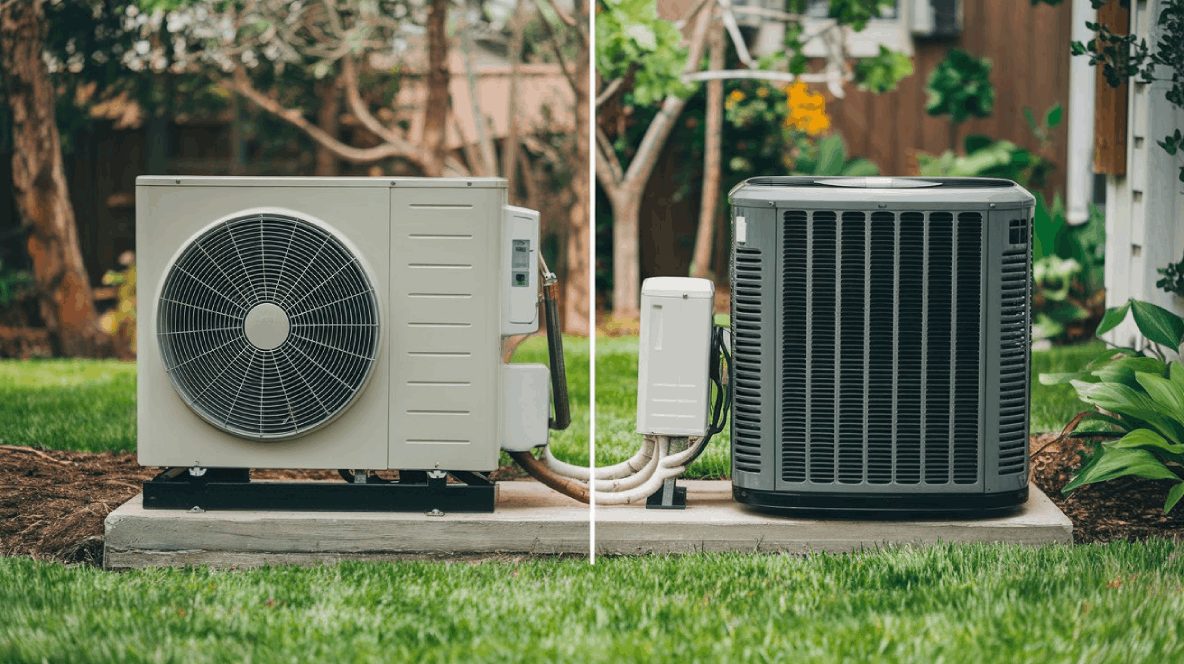
Heat pumps may face defrosting problemsin winter. Air conditioners often have clogged drains causing water leaks.
Credit: aristotleair.com
Suitability For Climate
Air conditioners work best in hot climates by cooling indoor air. Heat pumps suit moderate climates well, as they both heat and cool efficiently. Choosing between them depends on your local weather needs.
Warm Climates
Air conditionerswork very well in warm places. They cool air efficiently and keep homes comfortable. Heat pumps can also cool, but in very hot weather, air conditioners are often stronger. Heat pumps save energy when used mainly for cooling.
Cold Climates
Heat pumps are better for cold places because they can heat and cool. They take heat from outside even when it is cold. Air conditioners only cool and need another system for heating. Heat pumps save money by doing both jobs in one machine.
Environmental Impact
Air conditionersand heat pumpsuse different types of refrigerants. Most air conditioners use older refrigerants like R-22, which harm the ozone layer. Heat pumps often use newer refrigerants such as R-410A, which are less damaging to the environment. Choosing a system with eco-friendly refrigerants helps protect the planet.
The carbon footprintof these devices varies. Air conditioners only cool, so they use energy only for cooling. Heat pumps both heat and cool, often using less energy than separate systems. This means heat pumps can reduce carbon emissions by using electricity more efficiently. Using renewable energy with heat pumps can lower emissions even more.

Credit: www.rapidheat247.co.uk
Frequently Asked Questions
How Do Air Conditioners And Heat Pumps Differ?
Air conditioners cool spaces by removing heat and moisture from the air. Heat pumps can both heat and cool. They transfer heat from outside to inside during winter and reverse in summer. This makes heat pumps more versatile, while air conditioners are primarily for cooling.
Which Is More Energy-efficient: Heat Pump Or Ac?
Heat pumps are generally more energy-efficient than air conditioners. They use less electricity to transfer heat rather than generate it. This efficiency can lead to lower energy bills. However, in extremely cold climates, their efficiency may decrease, making supplemental heating necessary.
Can A Heat Pump Replace An Air Conditioner?
Yes, a heat pump can replace an air conditioner. Heat pumps provide both heating and cooling functions. This makes them versatile solutions for year-round climate control. However, in very cold regions, they might need additional heating support to maintain comfort levels.
Are Heat Pumps Effective In Cold Climates?
Heat pumps are effective in moderate climates but less efficient in extremely cold conditions. In such climates, their performance might decrease, requiring supplementary heating. Newer models with advanced technology offer improved cold-weather performance, making them more viable for colder regions.
Conclusion
Air conditioners cool your home by removing heat. Heat pumps can both cool and heat your space. They work by moving heat in or out depending on the season. Choosing between them depends on your climate and needs. Heat pumps save energy in mild winters.
Air conditioners are simpler and usually cost less upfront. Understanding these differences helps you pick the right system. Comfort and efficiency go hand in hand with the right choice. Keep your home cozy all year with the best option.