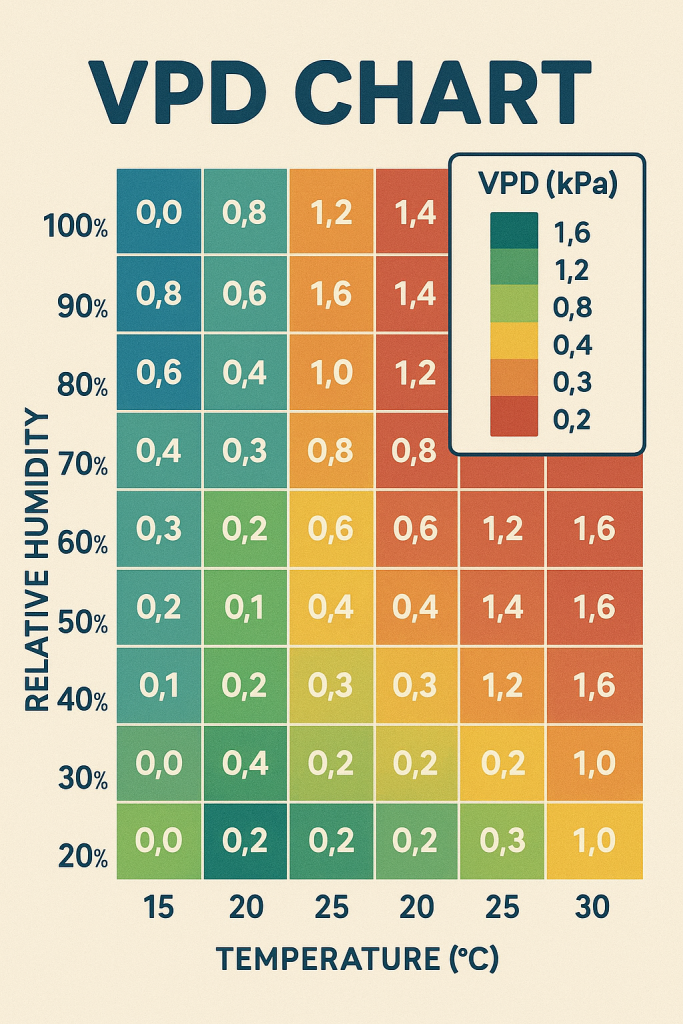
Are you struggling to get the best results from your grow tent? Understanding VPD could be the game-changer you need.
VPD, or Vapor Pressure Deficit, plays a crucial role in how your plants breathe, absorb water, and grow strong. If you want healthier plants and bigger yields, knowing what VPD is and how to control it inside your grow tent is essential.
Keep reading, and you’ll discover simple ways to master VPD and take your indoor gardening to the next level.

Credit: www.drgreenthumbs.com.au
Vpd Basics
VPD stands for Vapor Pressure Deficit. It is important for growers using grow tents.
Understanding VPD helps control plant growth and health by managing air moisture.
Defining Vapor Pressure Deficit
VPD is the difference between how much moisture air can hold and how much it actually holds.
| Term | Meaning |
| Vapor Pressure | Amount of moisture air can hold |
| Actual Moisture | Current water vapor in the air |
| Deficit | Difference between vapor pressure and actual moisture |
Vpd’s Role In Plant Health
VPD affects how plants breathe and take in water through leaves.
- High VPD can dry out plants fast.
- Low VPD can cause too much moisture and mold.
- Correct VPD helps plants grow strong and healthy.
Measuring Vpd
VPD, or Vapor Pressure Deficit, is crucial for plant growth in a grow tent. It measures the difference between the moisture in the air and how much moisture the air can hold when saturated.
Accurate VPD measurement helps in maintaining optimal conditions for plant development. Knowing how to measure VPD is essential for any grower.
Tools For Monitoring Vpd
Using the right tools can help monitor VPD effectively. These tools ensure that plants are growing in the best environment possible.
- Hygrometers: Measure humidity in the grow tent.
- Thermometers: Track the temperature for accurate VPD readings.
- VPD Calculators: Use these to compute VPD using temperature and humidity data.
Interpreting Vpd Readings
Understanding VPD readings is important for making adjustments in the grow tent. Proper interpretation ensures plants receive the right amount of moisture and warmth.
| VPD Value | Plant Condition |
| Low | Too much humidity; risk of mold |
| Optimal | Healthy growth |
| High | Too dry; plants may wilt |
Vpd And Grow Tent Environment
VPD means Vapor Pressure Deficit. It shows how much moisture the air can hold. This is important in a grow tent.
Good VPD helps plants grow strong. It balances temperature and humidity in the tent.
Temperature And Humidity Effects
Temperature changes how much water the air holds. Warm air holds more moisture than cold air.
Humidity is the amount of moisture in the air. High humidity lowers VPD. Low humidity raises VPD.
- High temperature + low humidity = high VPD
- Low temperature + high humidity = low VPD
- Ideal VPD helps plants take in water and nutrients
Balancing Airflow And Ventilation
Airflow moves fresh air inside the grow tent. It stops heat and moisture from building up.
Ventilation controls temperature and humidity. It keeps VPD at the right level for plants.
- Use fans to move air evenly
- Install vents to let moisture out
- Adjust airflow to keep stable temperature
- Check humidity often for best VPD
Optimizing Vpd For Growth Stages
VPD stands for Vapor Pressure Deficit. It measures the difference between how much moisture the air holds and how much it can hold when fully saturated. In a grow tent, VPD helps control plant transpiration and growth.
Each growth stage needs a different VPD level. Keeping VPD in the right range helps plants absorb water and nutrients better.
Seedling And Clone Stage
Young plants need higher humidity and lower VPD. This keeps them from drying out and supports root development. The ideal VPD range is between 0.4 and 0.8 kPa.
- Keep humidity around 70% to 80%
- Maintain temperature between 20°C and 25°C (68°F to 77°F)
- Monitor VPD closely to avoid stress
Vegetative Stage
During the vegetative stage, plants grow leaves and stems. The VPD should be moderate to encourage strong growth and good transpiration.
| Growth Stage | Temperature (°C) | Humidity (%) | Ideal VPD (kPa) |
| Vegetative | 22 – 28 | 50 – 70 | 0.8 – 1.2 |
Flowering Stage
The flowering stage needs a lower humidity and higher VPD. This helps reduce mold risk and supports bud development.
Tips for flowering stage VPD:
- Keep humidity between 40% and 50%
- Maintain temperature from 20°C to 26°C (68°F to 79°F)
- Target VPD range is 1.0 to 1.5 kPa
Common Vpd Mistakes
Vapor Pressure Deficit (VPD) is key for plant health in grow tents. It helps balance humidity and temperature. Many growers make errors that hurt their plants.
Understanding common VPD mistakes can improve your grow tent environment. This guide explains two major issues to avoid.
Over-humidification Issues
Too much humidity raises the VPD level incorrectly. This causes slow plant growth and mold risks. Plants may not absorb nutrients well.
- Leaves stay wet for too long, inviting fungus.
- Roots get less oxygen, slowing growth.
- Plants become weak and more prone to disease.
- Excess moisture can cause pests to thrive.
Excessive Dryness Problems
Low humidity causes VPD to rise too high. This stresses plants and makes them lose water fast. Leaves may curl and dry out.
| Symptom | Cause | Effect |
| Leaf curling | Dry air | Water loss |
| Slow growth | High VPD | Stress |
| Wilting | Excessive dryness | Damage |

Credit: pulsegrow.com
Adjusting Vpd In Grow Tents
VPD means Vapor Pressure Deficit. It shows how much water vapor the air can still hold. Adjusting VPD helps plants grow well inside grow tents.
Keeping the right VPD level controls plant water loss and helps roots take in nutrients. You can adjust VPD by managing humidity and temperature.
Using Humidifiers And Dehumidifiers
Humidifiers add moisture to the air if the VPD is too high. Dehumidifiers remove moisture if the VPD is too low. Both tools keep humidity in the best range for plants.
- Use a humidifier to raise humidity when air is dry.
- Use a dehumidifier to lower humidity if air is too wet.
- Monitor humidity levels with a hygrometer regularly.
- Adjust devices slowly to avoid sudden changes.
Temperature Control Strategies
Temperature affects how much water air can hold. Warmer air holds more moisture, raising VPD. Cooler air holds less moisture, lowering VPD.
| Temperature (°F) | Effect on VPD |
| Below 70 | Lower VPD, air holds less moisture |
| 70 to 85 | Ideal VPD range for most plants |
| Above 85 | Higher VPD, air holds more moisture |
Use fans, heaters, or air conditioners to keep temperature steady. Avoid big swings. Stable temperature means steady VPD and healthier plants.
Benefits Of Proper Vpd Management
VPD stands for Vapor Pressure Deficit. It measures the difference between the moisture in the air and how much moisture the air can hold. Managing VPD is very important in a grow tent.
Proper VPD helps plants grow strong and healthy. It controls how plants lose water and take in nutrients. This guide explains two main benefits of good VPD control.
Enhanced Nutrient Uptake
When VPD is at the right level, plants absorb nutrients better. The right humidity and temperature help roots take up water and minerals. This makes plants grow faster and look healthier.
- Improves water movement in roots
- Boosts nutrient absorption
- Supports strong cell growth
- Prevents nutrient lockout
Improved Disease Resistance
Good VPD control keeps humidity at safe levels. This helps stop mold and mildew from growing. Plants with proper VPD are less stressed and can fight diseases better.
| VPD Level | Effect on Disease |
| Too High | More mold and mildew growth |
| Too Low | Plants dry out and weaken |
| Proper Range | Strong plants and less disease |

Credit: www.reddit.com
Frequently Asked Questions
What Does Vpd Mean In A Grow Tent?
VPD stands for Vapor Pressure Deficit. It measures the difference between air moisture and plant moisture. This helps optimize plant growth by balancing humidity and temperature in your grow tent.
Why Is Vpd Important For Plant Growth?
VPD controls how plants absorb water and nutrients. Proper VPD prevents stress, boosts photosynthesis, and improves yield. Maintaining ideal VPD levels ensures healthy, thriving plants in your grow tent.
How Do You Measure Vpd In A Grow Tent?
You measure VPD using temperature and relative humidity sensors. These readings calculate the moisture difference between air and plant leaves. Many growers use digital tools or apps for accurate VPD monitoring.
What Is The Ideal Vpd Range For Seedlings?
The ideal VPD for seedlings ranges from 0. 4 to 0. 8 kPa. This range supports gentle transpiration and prevents moisture stress. Keeping VPD in this range helps young plants develop strong roots and leaves.
Conclusion
VPD is key to healthy plants in your grow tent. It helps control moisture and air balance. Keeping VPD in the right range boosts plant growth and stops problems. Check your VPD often and adjust temperature or humidity as needed.
This simple step makes your grow tent work better. Healthy plants mean a better harvest. Understanding VPD is a smart choice for any grower. Keep it steady, and your plants will thank you.