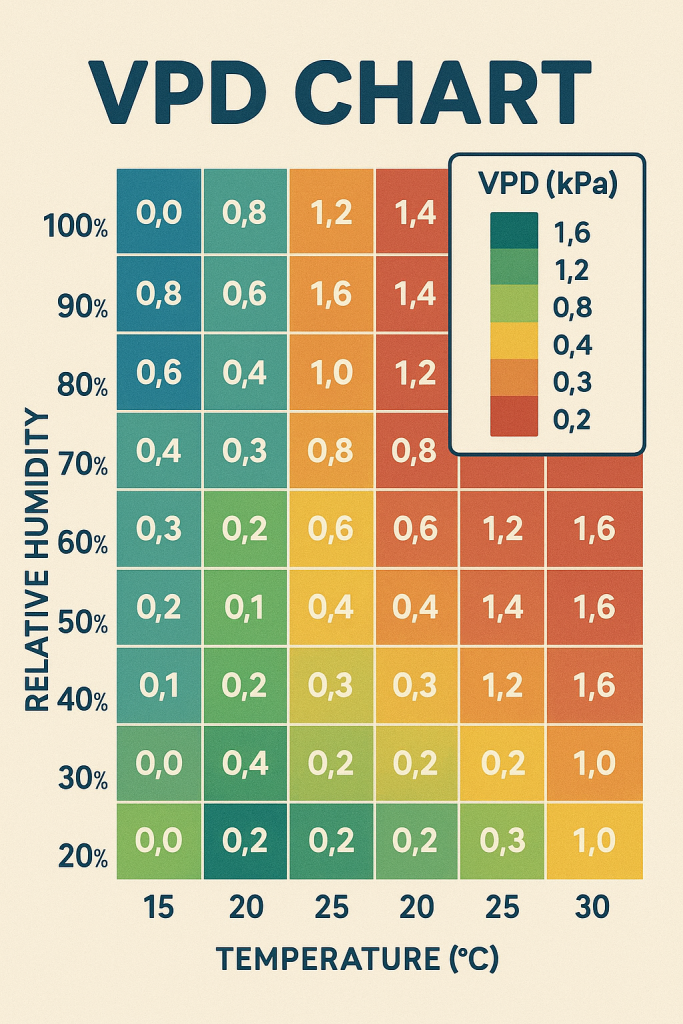
If you’re growing plants in a tent, understanding VPD can change the way you care for your garden. VPD, or Vapor Pressure Deficit, might sound complex, but it’s actually a simple concept that directly affects your plants’ health and growth.
Knowing how to measure and control VPD inside your grow tent can help you avoid common problems like mold, slow growth, or nutrient issues. Keep reading, and you’ll discover how mastering VPD can make your plants thrive like never before.
What Is Vpd
VPD stands for Vapor Pressure Deficit. It measures the difference between the moisture in the air and the maximum moisture the air can hold.
In a grow tent, VPD helps control humidity and temperature. This balance is key for healthy plant growth.
Definition And Basics
Vapor Pressure Deficit is the gap between how much water vapor is in the air and how much it could hold if fully saturated. It is measured in kilopascals (kPa).
- High VPD means dry air that pulls moisture from plants quickly.
- Low VPD means humid air that slows moisture loss from plants.
- Ideal VPD levels vary by plant type and growth stage.
Why Vpd Matters In Growing
Maintaining the right VPD helps plants absorb water and nutrients well. It also reduces stress and disease risk.
| VPD Range (kPa) | Plant Response |
| 0.4 – 0.8 | Too low, risk of mold and slow growth |
| 0.8 – 1.2 | Ideal, best for photosynthesis and growth |
| 1.2 – 1.6 | Too high, plants lose water too fast |

Credit: www.drgreenthumbs.com.au
Vpd And Plant Growth
Vapor Pressure Deficit (VPD) is crucial in a grow tent environment. It affects how plants breathe and take in nutrients.
Understanding VPD helps you optimize plant growth. It balances temperature and humidity for better plant health.
Impact On Photosynthesis
VPD influences photosynthesis by controlling the stomata. Stomata are tiny openings on leaves that let in carbon dioxide.
| VPD Level | Photosynthesis Rate |
| Low | Decreased |
| Optimal | Increased |
| High | Decreased |
Effect On Transpiration
Transpiration is how plants release water vapor. VPD plays a big role in this process by regulating water loss.
- Low VPD: Less water loss, can cause root rot
- Optimal VPD: Balanced water loss, healthy growth
- High VPD: Excessive water loss, may cause wilting
Role In Nutrient Uptake
Nutrient uptake is vital for plant health. VPD affects how well plants absorb nutrients from the soil.
Measuring Vpd In Grow Tents
VPD stands for Vapor Pressure Deficit. It shows the difference between the moisture in the air and how much moisture the air can hold.
Measuring VPD in grow tents helps plants grow healthy. It controls how plants breathe and use water.
Tools And Equipment
You need tools to measure temperature and humidity inside the grow tent. These tools help calculate VPD accurately.
- Thermometer: Measures air temperature.
- Hygrometer: Measures relative humidity.
- VPD Meter: Combines temperature and humidity for direct VPD reading.
- Data Logger: Records changes over time.
Calculating Vpd
First, measure the temperature and relative humidity inside the grow tent. Then use these values to find the VPD.
Use this simple formula to calculate VPD:
VPD = (1 - (RH / 100)) × SVP
RH is relative humidity in percent. SVP is saturation vapor pressure at the air temperature. You can find SVP from tables or online charts.
Ideal Vpd Ranges For Different Plants
Different plants grow best with different VPD levels. Keeping the right VPD helps plants take in water and nutrients well.
| Plant Type | Ideal VPD Range (kPa) |
|---|---|
| Seedlings | 0.4 – 0.8 |
| Vegetative Stage | 0.8 – 1.2 |
| Flowering Stage | 1.0 – 1.5 |
| Herbs and Leafy Greens | 0.6 – 1.0 |
Adjust your grow tent’s temperature and humidity to stay in these ranges for best plant health.
Controlling Vpd For Better Growth
VPD stands for Vapor Pressure Deficit. It shows the difference between how much moisture is in the air and how much it can hold.
In a grow tent, controlling VPD helps plants grow strong and healthy. It affects how plants take in water and nutrients.
Adjusting Temperature
Temperature affects how much water the air can hold. Warmer air holds more moisture than cooler air.
Keep your grow tent temperature steady to keep VPD in the right range. This helps plants use water well.
- Use heaters or coolers to control temperature
- Check temperature often with a reliable thermometer
- Avoid big temperature swings during day and night
Managing Humidity
Humidity is the amount of water vapor in the air. It directly affects VPD levels.
Keep humidity balanced to prevent too much or too little moisture. Both can stress your plants.
- Use humidifiers to add moisture if the air is dry
- Use dehumidifiers to reduce moisture if the air is too wet
- Measure humidity with a hygrometer regularly
Ventilation Strategies
Ventilation helps control both temperature and humidity. Good airflow keeps VPD stable.
Use fans and vents to move fresh air in and stale air out. This prevents mold and other problems.
- Place intake fans to bring fresh air inside
- Use exhaust fans to remove hot, moist air
- Adjust fan speed to maintain good airflow without drying plants
Common Vpd Mistakes
VPD stands for Vapor Pressure Deficit. It is a key factor in grow tents. Many growers make mistakes that hurt plant growth.
Understanding common VPD mistakes helps keep plants healthy. Avoiding these errors improves air and moisture balance.
Over-humidifying
Adding too much humidity raises the moisture in the air. This lowers VPD too much. Low VPD slows plant transpiration and growth. It also causes mold and mildew problems.
- Plants get less oxygen at low VPD.
- Leaves may stay wet for too long.
- Roots can suffer from poor air exchange.
- Pests like spider mites thrive in high humidity.
Ignoring Temperature Effects
Temperature changes affect VPD strongly. Warm air holds more moisture than cool air. If you ignore temperature, VPD readings become wrong. This causes wrong humidity adjustments.
| Temperature (°C) | Ideal Humidity (%) | VPD Range (kPa) |
| 20 | 50-60 | 0.8-1.2 |
| 25 | 40-50 | 1.0-1.5 |
| 30 | 30-40 | 1.2-1.7 |
Inconsistent Monitoring
VPD changes throughout the day. Not checking often leads to big swings. Plants get stressed by sudden changes. Consistent monitoring keeps VPD steady.
- Use a reliable hygrometer and thermometer.
- Check VPD multiple times daily.
- Record data to spot trends.
- Adjust ventilation and humidifiers as needed.

Credit: www.reddit.com
Advanced Tips To Optimize Vpd
VPD stands for Vapor Pressure Deficit. It measures the difference between how much moisture air can hold and how much it actually holds. Controlling VPD in a grow tent helps plants absorb water and nutrients better.
Optimizing VPD improves plant growth and reduces stress. Use the tips below to keep VPD at the right level for your plants.
Using Automation Systems
Automation systems can keep VPD steady by controlling temperature and humidity. Devices like humidifiers, dehumidifiers, and fans adjust the environment automatically.
- Use sensors to monitor temperature and humidity continuously.
- Set desired VPD levels in the control system.
- Automate fans to increase airflow when humidity is high.
- Control heaters or coolers to keep temperature stable.
- Schedule humidifiers or dehumidifiers to run only when needed.
Combining Vpd With Other Environmental Factors
VPD works best when combined with light, CO₂, and soil moisture control. These factors affect plant transpiration and growth.
| Factor | Effect on VPD | How to Manage |
| Light | Increases temperature and transpiration | Use timers and adjust light intensity |
| CO₂ | Affects stomata opening and water use | Monitor CO₂ levels and adjust supply |
| Soil Moisture | Impacts water uptake and humidity | Use moisture sensors and water plants properly |
Seasonal Adjustments
VPD changes with the seasons. Air temperature and humidity vary, so you must adjust your grow tent settings.
Use this checklist for seasonal VPD care:
- Measure outdoor temperature and humidity regularly.
- Adjust your automation system settings to match seasonal changes.
- Increase airflow during warm months to reduce humidity.
- Add humidity during dry winter months with humidifiers.
- Monitor plants closely for stress signs during transitions.

Credit: humboldtseedcompany.com
Frequently Asked Questions
What Does Vpd Mean In A Grow Tent?
VPD stands for Vapor Pressure Deficit. It measures the difference between the moisture in the air and the plant leaves’ moisture. Proper VPD helps optimize plant growth by balancing humidity and temperature inside the grow tent.
Why Is Vpd Important For Plant Growth?
VPD controls how plants transpire and absorb nutrients. If VPD is too high or low, plants may stress or grow slower. Maintaining ideal VPD boosts photosynthesis, improves water uptake, and prevents mold or pests in grow tents.
How To Measure Vpd In A Grow Tent?
You can measure VPD using a hygrometer and thermometer. These tools track temperature and humidity. Then, use an online VPD calculator or chart to find the exact vapor pressure deficit for your grow tent.
What Is The Ideal Vpd Range For Plants?
The ideal VPD range varies by growth stage but generally stays between 0. 8 and 1. 2 kPa. Seedlings prefer lower VPD (~0. 8), while mature plants thrive near 1. 2 kPa. This range maximizes growth and prevents stress in grow tents.
Conclusion
VPD helps plants grow strong inside your grow tent. It controls how much water plants lose and take in. Keeping VPD balanced means healthier leaves and bigger buds. Watch your temperature and humidity to keep VPD right. This simple step improves your indoor garden’s success.
Understanding VPD makes growing easier and more fun. Try to check it often for best results. Your plants will thank you with better growth and yield.