Choosing the right fishing rod can make all the difference between a great day on the water and a frustrating one. You might wonder, “What kind of fishing rod do I need?” The answer depends on where you fish, what you want to catch, and how you like to fish.
In this guide, you’ll discover simple tips to help you pick the perfect rod that fits your style and goals. Keep reading, and soon you’ll feel confident stepping into the fishing world with the right gear in hand.
Types Of Fishing Rods
Fishing rods come in many styles. Each type suits a different fishing method. Choosing the right rod helps you catch fish more easily.
This guide explains five common types of fishing rods. Learn what makes each rod unique and when to use it.
Spinning Rods
Spinning rods are popular for beginners. They work well with light lures and lines. The reel hangs below the rod, making casting smooth and easy.
Casting Rods
Casting rods offer more control and power. The reel sits on top of the rod. Anglers use them to cast heavier baits and catch bigger fish.
Fly Rods
Fly rods are designed for fly fishing. They are flexible and long. The rod helps cast very light flies using line weight instead of lure weight.
- Long length, usually 7 to 9 feet
- Very flexible to handle delicate casts
- Used with special fly fishing reels
- Best for rivers and streams
Telescopic Rods
Telescopic rods collapse for easy transport. They extend to full length when fishing. These rods are good for travel or casual fishing trips.
Ice Fishing Rods
Ice fishing rods are short and strong. They work well in cold weather. The short length helps control fish through ice holes.
| Rod Type | Best Use | Key Feature |
| Spinning Rods | Light lures, beginners | Reel hangs below rod |
| Casting Rods | Heavy baits, big fish | Reel sits on top |
| Fly Rods | Fly fishing, rivers | Long and flexible |
| Telescopic Rods | Travel, casual fishing | Collapsible design |
| Ice Fishing Rods | Fishing through ice | Short and strong |
Choosing The Right Rod Length
Picking the right fishing rod length is important. It affects your casting distance and control.
Different rod lengths work best for different fishing styles and environments.
Short Rods Benefits
Short rods usually measure 5 to 7 feet. They are easier to handle in tight spaces.
These rods give you better control when fishing from a boat or near thick plants.
- Better for close-range casting
- Easy to use in small areas
- Lightweight and simple to carry
Long Rods Benefits
Long rods are usually 8 to 12 feet. They help cast bait farther into the water.
These rods offer more leverage when fighting bigger fish from shore or open water.
- Cast longer distances
- Better for open water fishing
- More power for larger fish
Matching Length To Fishing Style
Think about where and how you fish before choosing rod length. This helps you pick the best rod.
Use short rods for fishing in small rivers or from boats. Use long rods for lakes and shore fishing.
- Short rods for accuracy and control
- Long rods for distance and power
- Choose length based on your fishing spot
Rod Power And Action
Choosing the right fishing rod depends on its power and action. These two factors affect how you handle the rod and what fish you can catch.
Power tells you how strong the rod is. Action shows how much the rod bends when you pull the line. Both help match your rod to your fishing style.
Light, Medium, And Heavy Power
Rod power means how much force it takes to bend the rod. Light rods bend easily and are for small fish. Heavy rods need more force and suit big fish.
- Light Power:Best for small fish like trout and panfish.
- Medium Power:Good for medium fish such as bass and walleye.
- Heavy Power:Made for big fish like catfish and pike.
Fast, Medium, And Slow Action
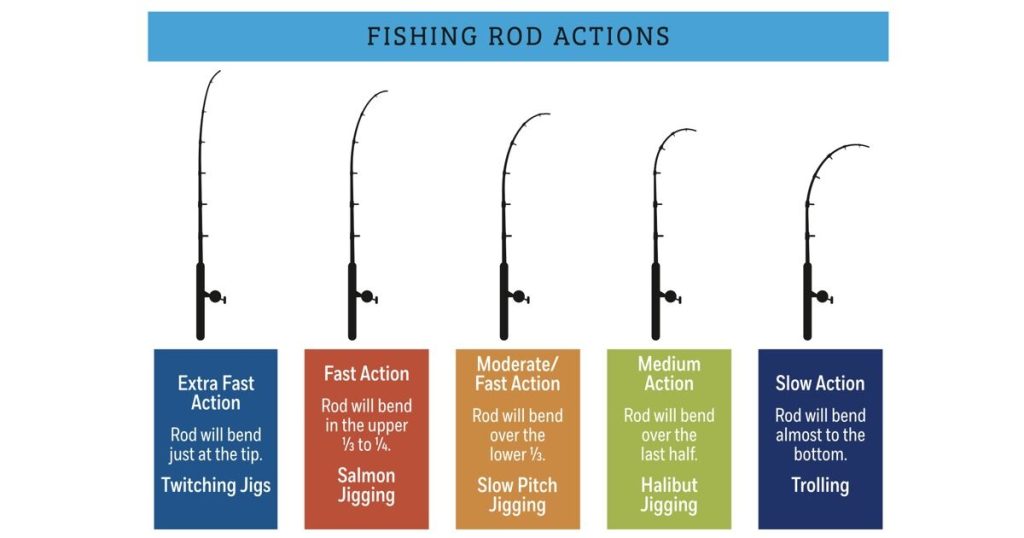
Action describes where the rod bends. Fast action rods bend near the tip. Slow action rods bend near the handle. Medium action rods bend in the middle.
| Action | Bend Location | Best Use |
| Fast | Tip | Quick hook sets and long casts |
| Medium | Mid-rod | Versatile for many fishing styles |
| Slow | Near handle | Good for casting light baits |
Selecting Based On Target Fish
Choose rod power and action by the fish you want to catch. Match the rod to the fish’s size and fight style.
- Small Fish:Use light power and slow or medium action rods.
- Medium Fish:Medium power rods with medium or fast action work well.
- Large Fish:Heavy power rods with fast action help control big catches.
Material And Build Quality
Choosing the right fishing rod means looking closely at its material and build quality. These factors affect how the rod performs and lasts.
The material decides the rod’s weight, strength, and sensitivity. Build quality shows how well the rod holds up over time.
Graphite Vs. Fiberglass
Graphite rods are light and very sensitive. They help you feel even small fish bites. These rods are stiff, which helps with casting accuracy.
Fiberglass rods are heavier but very strong. They bend more without breaking. This makes them good for bigger fish or rough conditions.
- Graphite rods: lightweight, sensitive, and stiff
- Fiberglass rods: heavier, flexible, and strong
Composite Rods
Composite rods mix graphite and fiberglass to get the best of both. They balance sensitivity with strength. These rods work well for many fishing styles.
They can be a good choice if you want a rod that feels light but still handles tough fish. The blend helps the rod last longer too.
- Combine graphite’s sensitivity with fiberglass’s flexibility
- Good for various fishing situations
- Offer balanced strength and lightness
Durability Considerations
Look for rods with quality guides and reel seats. These parts affect how long the rod stays strong. Cheap parts wear out fast and break easily.
Rod blanks should have smooth finishes without cracks. Strong rods handle pressure and resist damage from drops or heavy fish.
- Check for sturdy guides and reel seats
- Inspect the rod blank for smooth finish
- Choose rods that resist wear and damage
Fishing Environment Factors
Choosing the right fishing rod depends on where you will fish. The environment affects your choice a lot.
Different places need different rods. You must think about water type, fishing spot, and weather.
Freshwater Vs. Saltwater
Freshwater and saltwater fishing have unique needs. Saltwater rods must resist corrosion. Freshwater rods can be lighter and more flexible.
- Saltwater rods use stronger materials like graphite or fiberglass
- Freshwater rods often have softer action for smaller fish
- Saltwater rods need more power to handle big fish and tough conditions
- Freshwater rods vary for lakes, rivers, or ponds
Boat Fishing Vs. Shore Fishing
Fishing from a boat or the shore changes rod choice. Boat fishing needs shorter rods for tight spaces.
| Fishing Type | Rod Length | Rod Power |
| Boat Fishing | 6 to 7 feet | Medium to Heavy |
| Shore Fishing | 7 to 10 feet | Light to Medium |
Weather And Terrain Impact
Weather and terrain affect rod durability and handling. Wind and rain demand rods that balance strength and sensitivity.
Consider these weather and terrain points:
- Windy days need rods with good control to cast accurately
- Rain requires corrosion-resistant materials
- Rocky or rough terrain calls for durable rods that resist damage
- Sunny, calm conditions allow lighter rods for better feel

Credit: fishingbooker.com
Matching Rods With Reels And Line
Choosing the right fishing rod means picking the right reel and line too. These three parts must work well together.
If your rod, reel, and line do not match, you will have trouble casting and catching fish. Let’s look at how to match them.
Spinning Vs. Baitcasting Reels
Spinning reels hang under the rod and are easy to use. They work well for light to medium fishing.
Baitcasting reels sit on top of the rod and are better for heavy fishing. They give more control but need practice.
- Spinning reels fit rods with large guides on the bottom
- Baitcasting reels match rods with smaller guides on top
- Choose the reel type based on your fishing style and skill
Line Weight Compatibility
Fishing lines have weight ratings. Rods also have line weight limits. Match them to avoid problems.
Using a line too heavy for your rod can cause it to break. A line too light can reduce casting distance.
| Rod Line Weight | Recommended Line Type |
|---|---|
| 2-6 lbs | Light monofilament or fluorocarbon |
| 6-12 lbs | Medium monofilament or braided line |
| 12-20 lbs | Heavy braided or fluorocarbon line |
Setting Up Your Gear
Start by attaching the reel to the rod firmly. Check that the reel fits the rod’s reel seat well.
Thread the line through the rod guides. Tie the line to the reel spool using a strong knot.
- Tighten the drag system to match your line strength
- Test cast to see if the line flows smoothly
- Adjust the reel and rod setup if you feel resistance or tangles
Specialized Rods For Different Fish
Fishing rods are made for specific types of fish. Using the right rod helps you catch fish better.
Different fish need different rod strength and length. This guide explains rods for bass, trout, and saltwater fish.
Bass Fishing Rods
Bass fishing rods are usually medium to medium-heavy power. They have fast action for quick hook sets.
These rods are often 6 to 7 feet long. They work well for casting lures like crankbaits and spinnerbaits.
- Medium to medium-heavy power
- Fast action for quick response
- 6 to 7 feet in length
- Good for casting various lures
Trout Fishing Rods
Trout rods are lighter and more sensitive. They help feel small bites in streams or lakes.
These rods are usually 5 to 7 feet long. They have light or ultralight power and slow to medium action.
- Light to ultralight power
- Slow to medium action
- 5 to 7 feet in length
- Good sensitivity for small bites
Saltwater Game Rods
Saltwater rods are built strong to handle big fish and harsh water. They resist salt corrosion.
These rods range from medium to heavy power. Lengths vary from 6 to 8 feet or more for offshore fishing.
- Medium to heavy power
- 6 to 8 feet or longer
- Corrosion-resistant materials
- Strong for big saltwater fish

Credit: fishingbooker.com
Budget And Brand Considerations
Choosing the right fishing rod depends on your budget and favorite brands. Both factors help find a rod that fits your needs and wallet.
Understanding what to expect from different price ranges and brands helps you make a smart choice. Let’s look at options for every budget.
Affordable Options
Affordable fishing rods work well for beginners and casual anglers. These rods offer good quality without a high price.
Most affordable rods use basic materials but still perform well. They are easy to find and replace if needed.
- Made from fiberglass or basic graphite
- Simple designs with fewer advanced features
- Good for light to medium fishing tasks
- Often sold as combo sets with reels
Premium Rod Features
Premium rods have high-quality materials and better build. These rods offer more power, sensitivity, and durability.
Features include advanced graphite blends, better guides, and ergonomic handles. They suit serious anglers who fish often.
- Lightweight but strong construction
- Precision guides for smooth casting
- Comfortable grips for long use
- Higher price but longer lifespan
Trusted Brands To Explore
Some brands have a strong reputation for quality fishing rods. Choosing a trusted brand can mean better support and reliability.
Look for brands known for testing and customer care. These brands offer rods for all budgets and skill levels.
- Shimano – known for durable and smooth rods
- St. Croix – popular for premium, handcrafted rods
- Ugly Stik – offers affordable, tough rods
- Fenwick – trusted for lightweight and sensitive rods
Maintenance And Care Tips
Taking good care of your fishing rod keeps it working well. Proper maintenance helps avoid damage and saves money. This guide covers cleaning, storing, and extending the life of your rod.
Simple daily care can make your fishing rod last for many seasons. Use these tips to protect your gear and enjoy fishing more.
Cleaning Your Rod
After fishing, rinse your rod with fresh water. Salt, dirt, and debris can harm the material. Use a soft cloth or sponge to wipe it down gently.
- Rinse the rod and guides with fresh water
- Use mild soap if the rod is very dirty
- Wipe dry with a soft towel to avoid rust
- Check guides for cracks or buildup
Storage Best Practices
Store your rod in a cool, dry place. Avoid leaving it in direct sunlight or damp areas. Keep it away from heavy objects that could bend or break it.
| Storage Tip | Reason |
| Use a rod rack | Keeps rod straight and safe |
| Store indoors | Protects from weather damage |
| Keep away from heat | Prevents warping or fading |
| Cover rod tip | Stops accidental damage |
Extending Rod Lifespan
Regular checks and gentle handling extend your rod’s life. Avoid dropping it or leaning it against hard surfaces. Repair small damages quickly to prevent bigger problems.
- Inspect guides and reel seat for damage monthly
- Remove the reel before transport to reduce stress
- Use rod sleeves for extra protection
- Loosen drag on reel to reduce pressure on rod

Credit: fishingbooker.com
Frequently Asked Questions
What Type Of Fishing Rod Suits Beginners Best?
Spinning rods are ideal for beginners. They are easy to use, versatile, and handle various fish types. These rods allow better control and reduce line tangles, making learning smooth and enjoyable for new anglers.
How To Choose The Right Fishing Rod Length?
Choose rod length based on fishing style and location. Longer rods cast farther, ideal for open waters. Shorter rods offer better control in tight spaces, like streams or small lakes. Match rod length to your fishing environment for best results.
Which Fishing Rod Power Is Suitable For Big Fish?
Heavy power rods are best for big fish. They provide strength and durability to handle strong, large catches. Medium-heavy rods work well for moderately sized fish. Always select power based on the fish species you target.
What Rod Action Should I Pick For Fishing?
Rod action refers to how much the rod bends. Fast action rods bend near the tip, offering sensitivity and power. Medium action rods bend further down for versatility. Choose action based on your fishing technique and target species.
Conclusion
Choosing the right fishing rod is crucial for a great experience. Consider your fishing style and the type of fish. Match your rod to the environment. Freshwater or saltwater? Each needs a different rod type. Think about your budget too.
Don’t overspend on features you won’t use. Start with a basic rod if new to fishing. As you gain experience, try different types. Remember, comfort is key. Hold the rod before buying. Make sure it feels good in your hands.
Happy fishing!