Have you ever wondered what actually makes your air conditioner blow cold air? It might seem simple, but there’s a smart process behind that refreshing chill you enjoy on hot days.
Understanding how your AC cools the air can help you appreciate your unit more and even spot problems before they start. You’ll discover the key parts and steps that turn warm air into cool comfort. Keep reading to unlock the secrets behind your air conditioner’s cool breeze!

Credit: www.youtube.com
How Air Conditioners Work
Air conditioners cool the air inside your home. They remove heat and humidity to make the room comfortable.
These machines use a special process to take heat out of the air and release it outside.
Basic Cooling Cycle
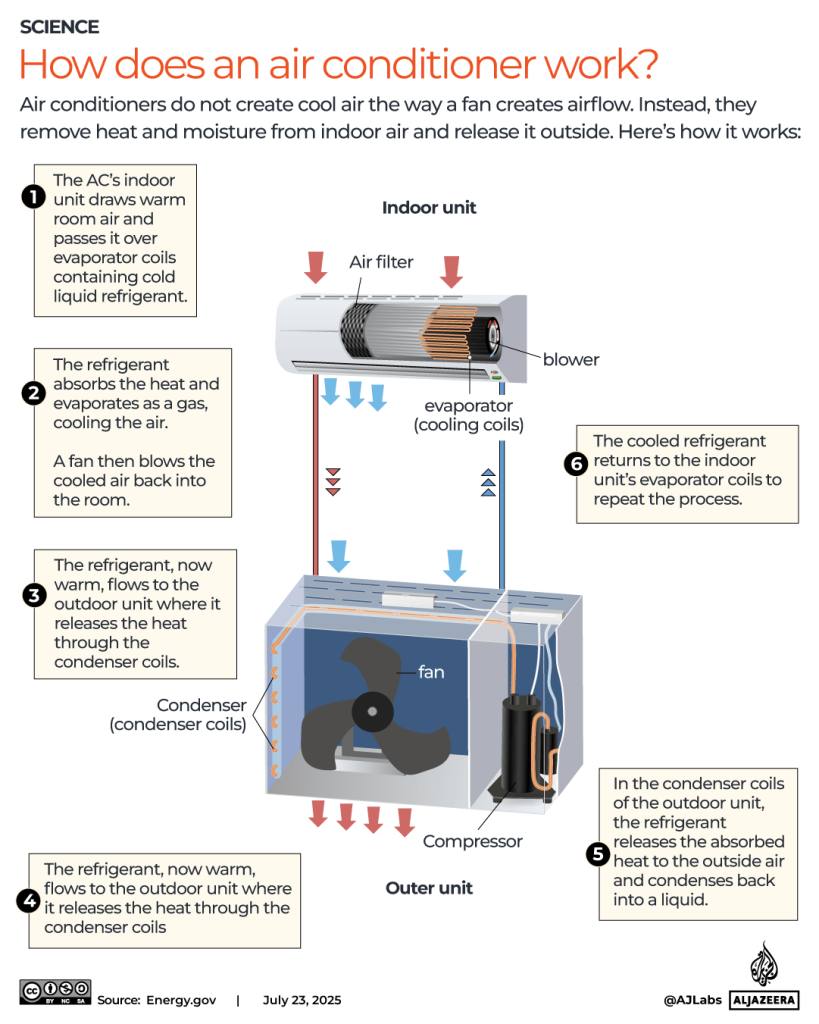
The cooling cycle moves heat from inside to outside. It uses a closed loop of pipes and a special fluid.
The warm air inside passes over cold coils. The heat transfers to the fluid inside the coils.
- Warm air enters the air conditioner.
- Heat moves to the refrigerant fluid.
- The cooled air blows back into the room.
- Heat is pushed outside the house.
Role Of Refrigerants
Refrigerants are special fluids that absorb and release heat. They change from liquid to gas and back.
This change helps move heat out of the air. Refrigerants carry heat from inside to outside the building.
- Absorb heat inside the evaporator coil.
- Turn into gas as they collect heat.
- Release heat outside in the condenser coil.
- Change back to liquid to repeat the cycle.
Compressor’s Function
The compressor pumps the refrigerant through the system. It squeezes the gas to raise its pressure and temperature.
This step is important to push heat outside. The compressor keeps the refrigerant moving in the cycle.
- Draws in low-pressure refrigerant gas.
- Compresses gas to high pressure.
- Pushes hot gas to the condenser coil.
- Keeps the cooling cycle active.

Credit: www.homeone.com.sg
Key Components That Cool Air
An air conditioner uses several key parts to make air cold. These parts work together to remove heat from inside your home. Understanding these components helps you see how your AC keeps you cool.
Three main parts play a big role in cooling air: the evaporator coil, condenser coil, and expansion valve. Each part has a special job in the cooling process.
Evaporator Coil
The evaporator coil is inside the air handler or indoor unit. It absorbs heat from the air inside your home. The refrigerant inside the coil changes from liquid to gas as it takes in heat.
- Cold refrigerant flows through the evaporator coil.
- Warm air from your home passes over the coil.
- The refrigerant absorbs heat and evaporates.
- Cool air is then blown back into your rooms.
Condenser Coil
The condenser coil is in the outdoor unit of the air conditioner. It releases the heat absorbed by the refrigerant to the outside air. The refrigerant changes back from gas to liquid here.
| Function | Location | Process |
| Heat release | Outdoor unit | Refrigerant changes from gas to liquid |
| Heat transfer | Exposed coil fins | Heat moves to outside air |
| Preparation for cooling | Before expansion valve | Refrigerant cools down |
Expansion Valve
The expansion valve controls how much refrigerant goes into the evaporator coil. It lowers the pressure of the liquid refrigerant. This pressure drop helps the refrigerant cool quickly inside the coil.
The expansion valve’s main roles are:
- Regulate refrigerant flow
- Reduce refrigerant pressure
- Allow refrigerant to absorb heat efficiently
Heat Transfer Process
An air conditioner cools a room by moving heat from inside to outside. It uses a heat transfer process to make indoor air cold.
This process involves absorbing heat from the indoor air and releasing it outside. This keeps the room comfortable and cool.
Absorbing Indoor Heat
The air conditioner has a part called the evaporator coil. It absorbs heat from the indoor air.
A special fluid called refrigerant flows through the coil. It picks up heat as it changes from liquid to gas.
- Warm air passes over the evaporator coil
- Refrigerant inside the coil absorbs the heat
- The air cools down and circulates back into the room
Releasing Heat Outside
The refrigerant carries the heat outside to the condenser coil. Here, it releases the heat into the outdoor air.
The refrigerant changes back from gas to liquid as it loses heat. Fans help blow the hot air away from the coil.
- Hot refrigerant enters the condenser coil
- Heat moves from refrigerant to outdoor air
- Refrigerant cools down and returns inside to start again

Credit: www.reddit.com
Factors Affecting Cooling Efficiency
Air conditioners cool the air by removing heat from inside your home. Several factors affect how well your air conditioner cools the room. Understanding these can help improve its performance.
Proper settings and care keep your air conditioner working efficiently. Small changes can make a big difference in comfort and energy use.
Thermostat Settings
The thermostat controls the temperature your air conditioner aims to reach. Setting it too low makes the unit work harder and wastes energy.
Keep the thermostat at a moderate temperature to save energy and keep rooms comfortable.
- Set thermostat between 24°C and 26°C (75°F to 78°F)
- Avoid frequent temperature changes
- Use programmable thermostats for better control
Airflow And Ventilation
Good airflow helps cool air spread evenly inside the room. Blocked vents or closed doors reduce airflow and lower cooling efficiency.
Proper ventilation removes warm air and brings in fresh air, helping the air conditioner cool better.
- Keep vents and registers open and unblocked
- Use fans to improve air circulation
- Ensure outdoor unit has space and is free from debris
Maintenance And Cleanliness
Regular maintenance keeps the air conditioner parts clean and working well. Dirty filters or coils reduce cooling power and increase energy use.
Clean or replace filters monthly during high use. Check and clean coils and drainage to avoid blockages.
- Clean or replace air filters every 1-3 months
- Remove dust and dirt from condenser and evaporator coils
- Clear drain lines to prevent water buildup
Common Issues Reducing Cold Air
An air conditioner cools your home by removing heat from the air. It needs all parts working well to keep air cold. Sometimes, common problems reduce the cold air output.
Understanding these issues can help you spot trouble early. Fixing them keeps your AC running efficiently and your room cool.
Refrigerant Leaks
The refrigerant carries heat out of your home. If it leaks, the AC cannot cool properly. You may notice less cold air or longer cooling times.
Signs of refrigerant leaks include:
- Hissing sounds near the AC unit
- Ice buildup on coils
- Higher electricity bills
- Warm air blowing from vents
Dirty Filters
Filters trap dust and dirt from the air. When filters get dirty, air flow drops. This makes the AC work harder and cool less.
| Effect | Result |
| Clogged filter | Less air flow |
| Reduced cooling | Room stays warm |
| Increased energy use | Higher bills |
| Possible system damage | Costly repairs |
Faulty Components
Parts like the compressor or fan may fail. This stops the AC from cooling well. Faulty parts cause noises or no cold air at all.
Common faulty parts and their effects:
- Compressor:Stops refrigerant flow, no cooling
- Fan motor:Poor airflow, weak cooling
- Thermostat:Wrong temperature reading, inconsistent cooling
Tips To Maximize Cooling Performance
Air conditioners cool your home by removing heat and moisture from the air. To keep your unit working well, you need to follow some simple tips. These tips help your AC cool better and use less energy.
We will cover three important areas: regular maintenance, proper installation, and energy-saving practices. Each helps your air conditioner perform at its best.
Regular Maintenance
Regular maintenance keeps your air conditioner clean and efficient. Dirt and dust block airflow and reduce cooling power. Clean filters and coils regularly to avoid problems.
- Clean or replace air filters every 1 to 3 months
- Clear debris around outdoor units
- Check refrigerant levels and refill if needed
- Inspect and clean evaporator and condenser coils
- Schedule a professional tune-up once a year
Proper Installation
Correct installation affects how well your air conditioner cools. A poorly installed unit wastes energy and cools unevenly. Make sure your AC fits your space and is placed in a good spot.
| Installation Factor | Why It Matters | Tip |
| Unit Size | Too big or small units cool poorly | Choose size based on room area |
| Location | Direct sunlight heats outdoor unit | Place unit in shaded area |
| Airflow | Blocked airflow lowers performance | Keep 2 feet clearance around unit |
| Insulation | Poor insulation wastes cooled air | Seal windows and doors well |
Energy-saving Practices
Using your air conditioner wisely saves energy and keeps your home cool. Small habits reduce strain on your AC and lower electricity bills.
Try these energy-saving tips:
- Set the thermostat to 78°F (26°C) when home
- Use ceiling fans to help air circulate
- Close curtains to block heat from sun
- Turn off AC when rooms are empty
- Use programmable thermostat to control cooling times
Frequently Asked Questions
How Does An Air Conditioner Make Air Cold?
An air conditioner cools air by removing heat from indoor air. It uses a refrigerant cycle to absorb heat and release it outside. This process lowers indoor temperature, providing cool air through vents for comfortable living spaces.
What Role Does Refrigerant Play In Cooling?
Refrigerant absorbs heat from indoor air and evaporates. Then, it carries heat outside where it condenses and releases heat. This cycle continuously cools the air inside your home efficiently.
Why Is The Compressor Important In Ac Cooling?
The compressor pumps refrigerant through the system. It increases refrigerant pressure and temperature, enabling heat transfer. Without the compressor, the refrigerant wouldn’t circulate, and cooling wouldn’t occur.
How Do Evaporator And Condenser Coils Work?
The evaporator coil absorbs heat from indoor air, cooling it. The condenser coil releases heat outside. Together, they enable heat exchange necessary for air conditioning.
Conclusion
Air conditioners cool the air by removing heat and moisture. They use a refrigerant to absorb heat inside your room. The compressor pushes this heat outside, making the air feel cool. Fans help spread the cold air evenly. Understanding this process helps you use your AC better.
Keep filters clean and check refrigerant levels often. This keeps your AC working well and saves energy. Now, you know what makes an air conditioner cold and efficient. Stay cool and comfortable all summer long.