Have you ever wondered why your air conditioner suddenly stops feeling as cold as it used to? Or why some units cool your room faster than others?
Understanding what makes an air conditioner cold can help you get the most comfort out of your device—and save money on energy bills. You’ll discover the simple science behind how your air conditioner cools the air, and what you can do to keep it working at its best.
Keep reading, because knowing these secrets could change the way you enjoy your home every day.

Credit: www.youtube.com
How Air Conditioners Work
Air conditioners cool the air inside buildings. They take warm air and make it cooler.
They use a special process that moves heat from indoors to outside. This keeps rooms comfortable.
Basic Cooling Cycle
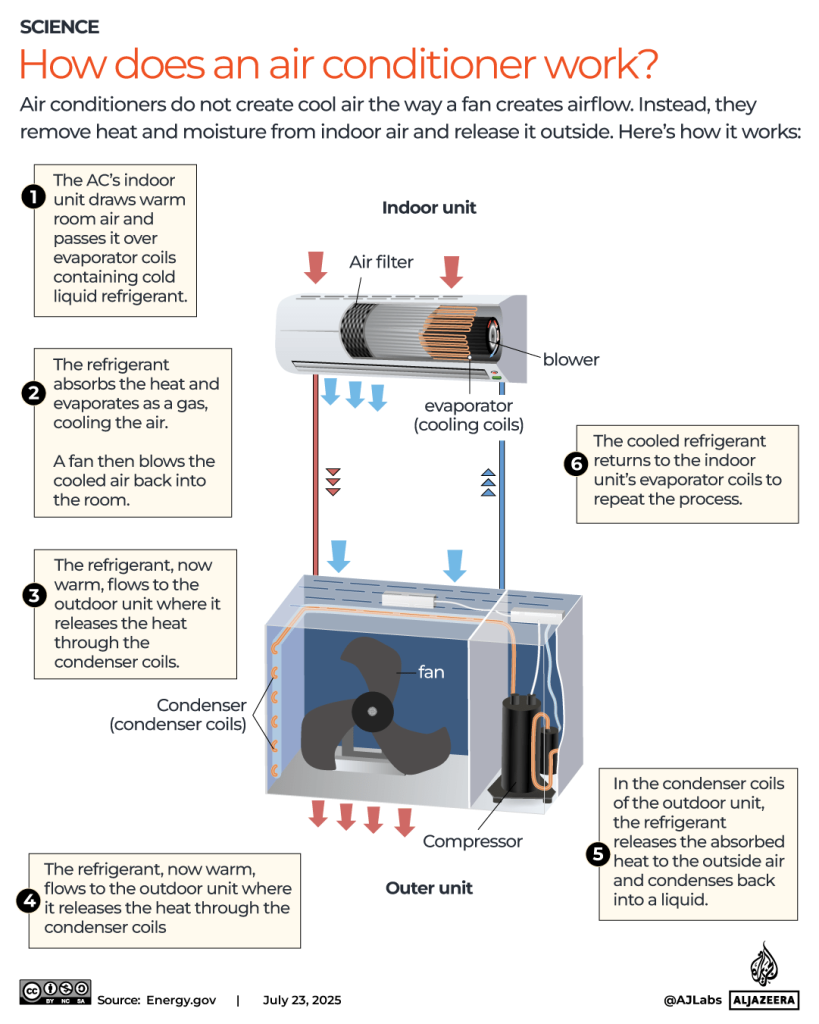
The cooling cycle starts with warm air inside the room. The air conditioner pulls this warm air in.
The warm air passes over cold coils. These coils absorb heat from the air. The cooler air is sent back.
- Warm air enters the system
- Heat moves from air to cold coils
- Cooled air returns to the room
- Heat is released outside
Key Components
Air conditioners have parts that work together to cool air. Each part has a special job.
The main parts are the compressor, condenser, expansion valve, and evaporator.
- Compressor:Presses the refrigerant gas to make it hot and high pressure.
- Condenser:Releases heat from the refrigerant outside the building.
- Expansion Valve:Lowers refrigerant pressure to cool it down.
- Evaporator:Absorbs heat from indoor air to cool the room.
Role Of Refrigerants
Refrigerants are key to making an air conditioner cold. They carry heat from inside your home to the outside. This process keeps your room cool and comfortable.
Understanding refrigerants helps us see how air conditioners work. Their properties and how they absorb and release heat matter a lot.
Properties Of Refrigerants
Refrigerants must have certain qualities to work well. They should evaporate and condense easily at low temperatures. This lets them move heat efficiently.
- Low boiling point to absorb heat quickly
- Non-toxic for safe use in homes
- Non-flammable to prevent fire risks
- Stable under pressure and temperature changes
- Environmentally friendly with low ozone impact
Heat Absorption And Release
The refrigerant absorbs heat from inside the room. It changes from liquid to gas to do this. Then it moves outside and releases the heat.
| Stage | Refrigerant State | Action | Effect |
| Inside Evaporator | Liquid to Gas | Absorbs heat | Cools indoor air |
| Outside Condenser | Gas to Liquid | Releases heat | Warms outside air |
Compressor Function
The compressor is a key part of an air conditioner. It helps cool the air inside a room.
This device moves refrigerant through the system. It raises the pressure and temperature of the refrigerant gas.
Increasing Pressure And Temperature
The compressor squeezes the refrigerant gas. This makes the gas hotter and increases its pressure.
- The gas enters the compressor at low pressure.
- The compressor compresses the gas.
- The gas leaves the compressor at high pressure and temperature.
- High-pressure gas moves to the condenser coil next.
Circulation Of Refrigerant
The compressor keeps the refrigerant moving in a loop. This cycle removes heat from inside the room.
| Stage | Refrigerant State | Role |
| Compression | Low-pressure gas to high-pressure gas | Raises temperature and pressure |
| Condensation | High-pressure gas to liquid | Releases heat outside |
| Expansion | High-pressure liquid to low-pressure liquid | Cools refrigerant |
| Evaporation | Low-pressure liquid to gas | Absorbs heat inside |
Evaporator And Condenser
The evaporator and condenser are key parts of an air conditioner. They help remove heat from the air inside your home. This process makes the air feel cold and comfortable.
Both parts work together to move heat outside and cool the indoor air. Understanding their role helps explain how air conditioners keep rooms cool.
Heat Exchange Process
The heat exchange process is how the air conditioner removes heat from your home. The evaporator and condenser work in a cycle to move heat from inside to outside.
- The evaporator absorbs heat from indoor air.
- The refrigerant inside the evaporator changes from liquid to gas.
- The gas carries heat to the condenser outside.
- The condenser releases heat to the outdoor air.
- The refrigerant cools down and returns to liquid form.
Cooling The Air
The evaporator cools the air by absorbing heat and moisture. The cooled air is then blown into the room. This makes the indoor temperature drop and feel comfortable.
| Part | Function | Location |
| Evaporator | Absorbs heat from indoor air and cools it | Inside the home, usually in the air handler |
| Condenser | Releases heat absorbed from inside to outside air | Outside the home, in the outdoor unit |
Thermodynamics In Action
An air conditioner cools a room by moving heat from inside to outside. It uses the principles of thermodynamics to do this. Thermodynamics studies how heat and energy move and change.
Understanding how an air conditioner works means looking at phase changes and energy transfer. These two ideas explain why the air gets cold.
Phase Changes
Phase changes happen when a substance changes from one state to another. Air conditioners use a special fluid called refrigerant for this. The refrigerant changes between liquid and gas inside the system.
When the refrigerant evaporates (liquid to gas), it absorbs heat from the air. This makes the air cooler. When it condenses (gas to liquid), it releases heat outside the building.
- Evaporation cools the indoor air by absorbing heat
- Condensation releases heat outside
- These phase changes happen inside coils in the air conditioner
Energy Transfer
Energy transfer is the movement of heat from one place to another. An air conditioner moves heat from inside a room to the outside air. It uses a compressor, coils, and fans to do this.
The compressor squeezes the refrigerant gas, making it hot. Then, the hot gas moves through coils outside and cools down. Fans blow air over the coils to carry heat away. This cycle keeps the indoor air cool.
- Compressor raises refrigerant pressure and temperature
- Heat moves from indoor air to refrigerant
- Fans push heat outside through coils
Factors Affecting Cooling Efficiency
Air conditioners cool your home by removing heat from inside air. Many things affect how well they do this job.
Understanding these factors helps keep your air conditioner cold and efficient. Two key factors are insulation and airflow, and maintenance and refrigerant levels.
Insulation And Airflow
Good insulation keeps cool air inside and hot air outside. Poor insulation lets heat in, making your air conditioner work harder.
- Seal cracks around windows and doors to stop air leaks.
- Use curtains or blinds to block sunlight during hot days.
- Ensure vents and ducts are clean and not blocked.
- Keep doors and windows closed when the air conditioner runs.
Maintenance And Refrigerant Levels
Regular maintenance helps your air conditioner run smoothly. Checking refrigerant levels is very important for cooling.
| Maintenance Task | Why It Matters |
| Clean or replace filters | Allows good airflow and better cooling |
| Check refrigerant levels | Low levels reduce cooling power |
| Inspect coils | Dirty coils lower efficiency |
| Clear drain lines | Prevents water damage and mold |
Advancements In Air Conditioning
Air conditioners have improved a lot over the years. New technologies make them cooler and kinder to the planet.
These advances help save energy and reduce harmful gases. They also keep homes and offices comfortable.
Eco-friendly Refrigerants
Older air conditioners used refrigerants that harm the ozone layer. Today, safer options are available to cool the air.
- Hydrofluoroolefins (HFOs) have low global warming potential.
- Natural refrigerants like CO2 and ammonia are non-toxic and safe.
- These refrigerants reduce damage to the environment.
Energy-saving Technologies
New air conditioners use smart technology to cut energy use. This helps save money and lowers power waste.
| Technology | Benefit |
| Inverter compressors | Adjust speed to save energy |
| Smart thermostats | Control temperature efficiently |
| Variable refrigerant flow | Cool only needed areas |

Credit: www.homeone.com.sg

Credit: www.reddit.com
Frequently Asked Questions
How Does An Air Conditioner Cool The Air?
An air conditioner cools air by removing heat and moisture. It circulates refrigerant through coils to absorb heat. The cooled air is then blown into the room, lowering the temperature efficiently.
What Role Does Refrigerant Play In Cooling?
Refrigerant absorbs heat from indoor air and releases it outside. It changes from liquid to gas and back, enabling heat transfer. This process keeps the indoor air cool and comfortable.
Why Is Compressor Important In An Air Conditioner?
The compressor pumps refrigerant through the system. It compresses the refrigerant gas, raising its temperature and pressure. This step is essential for heat release and proper cooling performance.
How Do Evaporator And Condenser Coils Work?
Evaporator coils absorb heat from indoor air, cooling it down. Condenser coils release heat outdoors. Together, they enable the air conditioner to transfer heat and maintain cool indoor temperatures.
Conclusion
An air conditioner stays cold by moving heat from inside to outside. The refrigerant inside absorbs heat and cools the air around you. Fans help spread this cool air through your room. Regular cleaning keeps the system working well and cold.
Understanding how it works helps you use it better. Keep your AC maintained for fresh, cool air all day. Simple steps can make your space comfortable and cool.