Have you ever wondered why your air conditioner feels so refreshingly cold on a hot day? Understanding what makes an air conditioner cold can help you get the most comfort from your unit.
Whether your AC is struggling to cool your space or you just want to know how it works, this article will break down the simple science behind that cool breeze you love. By the end, you’ll see your air conditioner in a whole new light—and you might even discover easy tips to keep it running at its best.
Ready to find out what really cools the air you breathe? Let’s dive in.

Credit: www.homeone.com.sg
How Air Conditioners Work
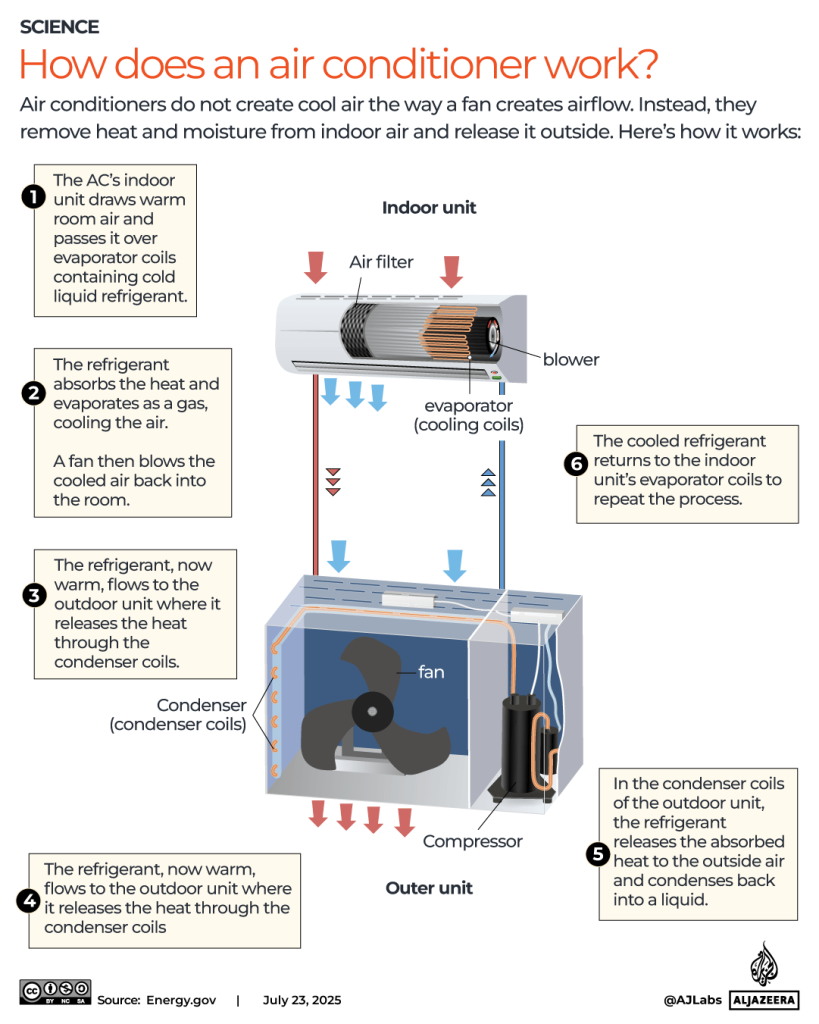
An air conditioner cools by moving heat from inside to outside. The basic cooling cyclestarts with the refrigerant, a special fluid that absorbs heat. It flows through pipes inside the unit. The refrigerant absorbs warm air from the room, turning into a gas.
The compressorthen squeezes this gas, raising its temperature and pressure. This makes the heat easier to release outside. The hot gas moves through coils where it cools down and changes back to liquid. This cycle repeats, keeping the room cool and comfortable.
| Component | Role |
|---|---|
| Refrigerant | Absorbs heat inside and releases it outside |
| Compressor | Compresses refrigerant gas to move heat out |
| Coils | Help refrigerant change between liquid and gas |

Credit: telegrafi.com
Key Components That Cool
Evaporator Coilcools the air inside your room. It absorbs heat from the indoor air. The coil uses a cold refrigerant to do this. Warm air passes over the coil and cools down. Then, the cool air blows back into the room.
Condenser Coilreleases the heat outside. The refrigerant carries heat from the evaporator coil here. The coil uses a fan to blow air and cool the refrigerant. This process changes the refrigerant from gas back to liquid.
Expansion Valvecontrols the flow of refrigerant. It reduces the pressure of the liquid refrigerant. This makes the refrigerant very cold. Then, the cold refrigerant moves to the evaporator coil to start cooling again.
Factors Affecting Cooling Efficiency
Thermostat settingsplay a big role in cooling. Setting it too high can make the room warm. Too low can waste energy and wear out the AC. A good temperature is around 24°C (75°F).
Airflow and ventilationhelp spread cool air evenly. Blocked vents or closed doors stop air movement. Keep vents clear and doors open for best cooling.
Maintenance and cleanlinesskeep the AC working well. Dirty filters and coils reduce cooling power. Clean or change filters often. Check for dust and dirt on coils to keep air cold.

Credit: www.youtube.com
Common Cooling Problems
Air conditioners cool air by removing heat and moisture. Common problems include dirty filters, low refrigerant, or blocked vents that reduce cooling efficiency. Regular maintenance keeps the system cold and working well.
Refrigerant Leaks
Refrigerantis the fluid that cools the air in your AC. A leak causes less cooling power. The AC may blow warm air or stop cooling altogether. It also harms the environment. Fix leaks quickly to keep your AC working well.
Frozen Coils
Coilsinside the AC can freeze. This stops air from flowing properly. Frozen coils often happen from low refrigerant or poor airflow. When coils freeze, the AC cannot cool the room. Turn off the AC and call a technician to fix the issue.
Dirty Filters
Filterscatch dust and dirt to keep air clean. Dirty filters block airflow and reduce cooling. Change or clean filters every 1-3 months. This keeps the AC working efficiently and improves air quality.
Tips For Maximizing Cooling Power
Regular servicing keeps your air conditioner working well. Clean or change filters often. Check the refrigerant level to ensure it is enough. Clean the coils to improve cooling power.
Proper insulation stops cool air from escaping. Seal windows and doors tightly. Use curtains or blinds to block heat from sunlight. Good insulation lowers energy use and keeps rooms cooler.
Smart thermostats help control the temperature easily. Set the temperature to a comfortable level, not too cold. Use timers to turn the AC off when not needed. This saves energy and keeps the room cool.
Frequently Asked Questions
How Do Air Conditioners Cool The Air?
Air conditioners cool the air by using refrigerant to absorb heat from indoor air. This process involves a cycle of compression, condensation, and evaporation, ultimately releasing the heat outside. The cooled air is then circulated back into the room, maintaining a comfortable temperature.
What Role Does Refrigerant Play In Cooling?
Refrigerant is crucial for cooling as it absorbs and releases heat. It circulates through the system, transforming from liquid to gas and back. This phase change allows it to draw heat from the air, effectively cooling the interior space.
Why Is The Compressor Important In An Ac?
The compressor is vital because it pressurizes the refrigerant, enabling it to absorb heat efficiently. By compressing the refrigerant, it increases its temperature and pressure, which facilitates heat exchange. This process is essential for the air conditioner to function effectively.
How Does An Evaporator Coil Work?
The evaporator coil absorbs heat from indoor air, cooling it in the process. As the refrigerant passes through the coil, it evaporates, drawing heat from the surrounding air. This cooled air is then circulated back into the room, providing a comfortable environment.
Conclusion
An air conditioner cools by moving heat from inside to outside. The compressor, refrigerant, and coils work together to create cold air. Clean filters and proper maintenance keep it running well. Understanding how it works helps you use it smartly.
A cool home depends on these simple parts doing their job. Stay comfortable by knowing what makes your AC cold.