Have you ever wondered what actually makes your air conditioner blow out that refreshing cold air on a hot day? You might think it’s just magic or some complicated machine, but the truth is simpler and more fascinating than you expect.
Understanding how your air conditioner works can help you appreciate it more—and even keep it running better for longer. You’ll discover the key parts and processes that turn warm air into cool comfort. Ready to unlock the secret behind your AC’s chill?
Let’s dive in!
How Air Conditioners Cool
Air conditioners make rooms cool by moving heat outside. They use a special process to take heat from the air inside.
This process depends on a cycle and a fluid called refrigerant. Both work together to cool the air effectively.
Basic Cooling Cycle
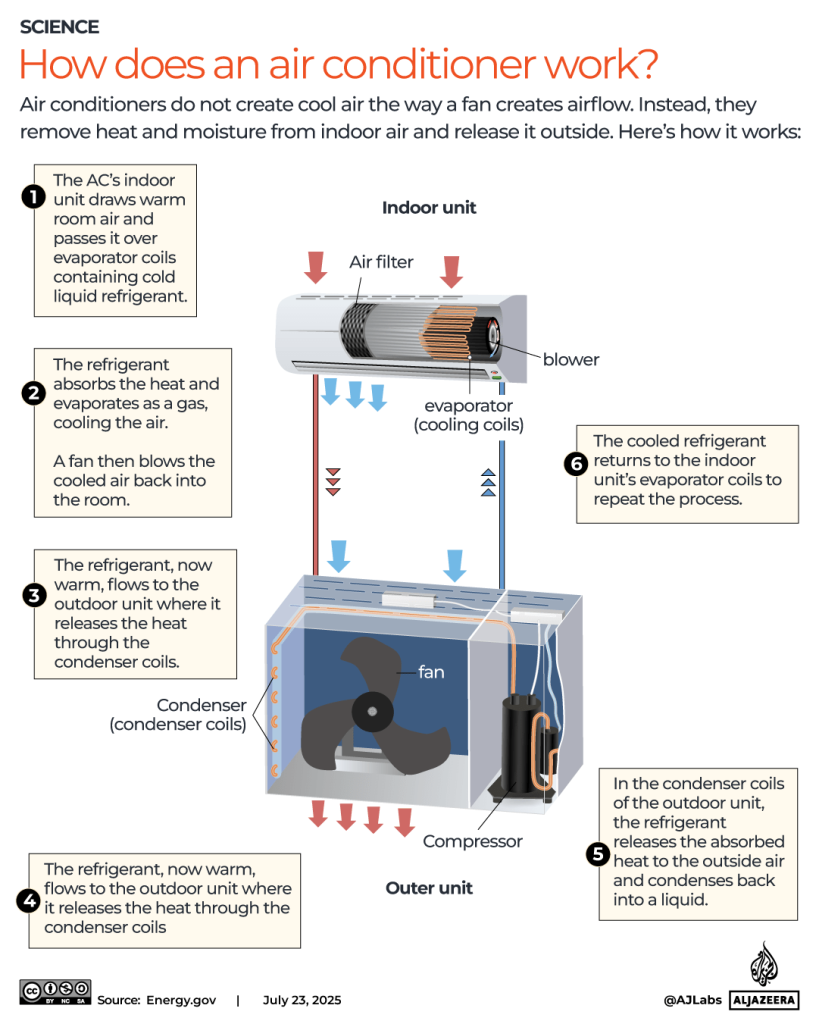
The cooling cycle has four main parts: compressor, condenser, expansion valve, and evaporator. These parts work in a loop to cool the air.
- Compressor:It compresses the refrigerant gas, raising its temperature and pressure.
- Condenser:The hot gas releases heat outside and turns into a liquid.
- Expansion Valve:This valve lowers the refrigerant’s pressure and temperature.
- Evaporator:The cold refrigerant absorbs heat from the indoor air, cooling the room.
The cycle repeats to keep the room temperature low and comfortable.
Role Of Refrigerants
Refrigerants are special fluids that change from liquid to gas easily. They carry heat from inside to outside.
| Property | Importance in Cooling |
|---|---|
| Low Boiling Point | Allows refrigerant to evaporate at room temperature |
| Non-Toxic | Safe for indoor use |
| Non-Flammable | Reduces fire risk |
| Efficient Heat Transfer | Moves heat quickly and effectively |
Key Components That Create Cold Air
An air conditioner cools the air using several important parts. These parts work together to lower the temperature inside a room. Understanding these parts helps explain how cold air is made.
The main components that create cold air are the compressor, evaporator coil, and expansion valve. Each part has a special job in the cooling process.
Compressor Function
The compressor is the heart of the air conditioner. It pumps refrigerant through the system. This part makes the refrigerant hot by compressing it into a high-pressure gas.
After compression, the refrigerant moves to the next part to cool down and remove heat from the air inside the room.
Evaporator Coil Mechanics
The evaporator coil cools the air by absorbing heat from the room. The refrigerant inside the coil changes from liquid to gas. This change makes the coil cold.
- Warm air from the room blows over the coil
- The refrigerant absorbs heat from the air
- The air becomes cool and is sent back into the room
- The refrigerant turns into gas and moves to the compressor
Expansion Valve Purpose
| Function | Effect on Refrigerant |
| Controls flow of refrigerant | Reduces pressure and temperature |
| Allows refrigerant to enter evaporator coil | Changes liquid to low-pressure liquid |
| Helps maintain cooling efficiency | Prepares refrigerant to absorb heat |
Instant Chill Factors
An air conditioner cools the air by removing heat quickly. Several key factors help it chill a room fast. Understanding these can explain what makes the air conditioner cold right away.
This guide looks at rapid heat exchange, airflow efficiency, and the role of thermostats and sensors in cooling.
Rapid Heat Exchange
Air conditioners use rapid heat exchange to cool air quickly. The refrigerant inside the unit absorbs heat from the room air. Then it releases that heat outside.
The faster this heat moves, the quicker the air cools. Good heat exchange means the air conditioner can chill the space almost instantly.
Airflow Efficiency
Airflow efficiency helps spread cool air evenly and fast. The air conditioner uses fans and vents to push air through the cooling coils.
- Strong fan speed moves more air
- Clean filters allow smooth airflow
- Well-placed vents direct air where needed
Better airflow means the room feels cool faster because cold air reaches all corners quickly.
Thermostat And Sensor Impact
Thermostats and sensors control how the air conditioner chills the room. They detect the current temperature and adjust cooling power.
| Component | Function |
| Thermostat | Measures room temperature and sets cooling level |
| Temperature Sensor | Detects air temperature near the unit for accuracy |
| Humidity Sensor | Adjusts cooling based on moisture in the air |
Accurate sensors help the air conditioner chill the room quickly without wasting energy.
Common Cooling Technologies
Air conditioners cool the air using different technologies. These systems remove heat and moisture from indoor air. They help keep rooms comfortable during hot days.
Common types include split systems, window units, and portable air conditioners. Each type uses a cooling cycle but works in a unique way.
Split Systems
Split systems have two main parts: an indoor unit and an outdoor unit. The indoor unit blows cool air inside the room. The outdoor unit releases heat outside.
These systems use refrigerant that absorbs heat from indoor air. A compressor pumps the refrigerant between the two units. Fans help move air through the system.
Window Units
Window units fit into a window frame. They cool air by pulling warm room air inside. The refrigerant inside the unit absorbs heat from the air.
- They blow cooled air back into the room.
- Heat is expelled outside through the back of the unit.
- These units are easy to install and cost less than split systems.
Portable Air Conditioners
Portable air conditioners move cool air through a hose. The hose vents hot air outside a window or door. These units are flexible and easy to move.
| Feature | Description |
| Cooling Method | Uses refrigerant to absorb heat |
| Ventilation | Requires exhaust hose to vent hot air |
| Mobility | Can be moved from room to room |
| Installation | Simple setup, no permanent installation |
Energy Efficiency And Cooling Performance
Air conditioners cool rooms by removing heat from the air inside. They use energy to power this process. The efficiency and performance depend on several factors. Understanding these helps you choose the right system.
Energy efficiency saves money and reduces power use. Cooling performance means how well the unit keeps your room comfortable. Both are important for a good air conditioner.
Seer Ratings Explained
SEER stands for Seasonal Energy Efficiency Ratio. It measures how much cooling a unit provides per unit of electricity it uses. A higher SEER means better energy efficiency.
- SEER rating shows energy use during cooling season
- Units with higher SEER cost less to run
- Modern air conditioners usually have SEER ratings between 13 and 21
- Choosing a high SEER model helps reduce electricity bills
Impact Of Insulation And Room Size
Insulation keeps cool air inside and hot air outside. Good insulation improves cooling performance and efficiency. Room size also matters. Larger rooms need more cooling power.
| Factor | Effect on Cooling | Effect on Energy Use |
|---|---|---|
| Good Insulation | Keeps room cooler longer | Reduces energy needed |
| Poor Insulation | Allows heat in quickly | Increases energy consumption |
| Small Room | Cools faster | Uses less energy |
| Large Room | Takes longer to cool | Needs more energy |

Credit: www.homeone.com.sg
Maintenance Tips For Optimal Cooling
Keeping your air conditioner cold depends on regular care. Proper maintenance helps it cool better and saves energy.
Simple tasks can improve your AC’s performance and extend its life. Here are key tips to follow.
Filter Cleaning
Dirty filters block airflow and reduce cooling. Clean or replace filters every month during heavy use.
- Turn off the unit before removing the filter
- Use a vacuum or wash with water if washable
- Let the filter dry completely before reinstalling
- Replace filters if damaged or very dirty
Refrigerant Level Checks
Refrigerant cools the air inside your home. Low levels cause the AC to work harder and cool less.
| Signs of Low Refrigerant | What to Do |
| Warm air from vents | Call a professional to check levels |
| Hissing or bubbling noises | Have leaks repaired and refrigerant refilled |
| Ice buildup on coils | Turn off unit and schedule service |
Coil Maintenance
Coils remove heat from the air. Dirt on coils lowers cooling efficiency and can damage the unit.
To maintain coils:
- Turn off power before cleaning
- Use a soft brush or coil cleaner to remove dirt
- Clear debris around the outdoor unit
- Schedule professional coil cleaning yearly
Troubleshooting Cooling Issues
Air conditioners sometimes stop cooling properly. Finding the cause helps fix the problem fast. You can check some common issues yourself before calling a technician.
This guide explains typical problems and signs to watch for. It also tells when you need expert help to keep your AC cold and efficient.
Common Problems
Several common issues may reduce your air conditioner’s cooling power. Some are easy to fix, while others need more care.
- Dirty Air Filters:Clogged filters block airflow and lower cooling. Clean or replace filters monthly.
- Low Refrigerant:Leaks or low refrigerant cause weak cooling. A professional should refill it.
- Frozen Coils:Ice on coils stops cooling. Turn off the AC and check airflow or refrigerant levels.
- Faulty Thermostat:Wrong readings cause wrong cooling settings. Test or replace the thermostat if needed.
- Blocked Condenser Unit:Dirt or plants near the outdoor unit reduce cooling. Keep the area clean and clear.
When To Call A Professional
Some problems need special tools and knowledge. Calling a professional helps avoid damage and saves money long-term.
| Issue | Signs | Action |
| Refrigerant Leak | Weak cooling, hissing sound | Call a technician to find and fix leaks |
| Electrical Problems | AC won’t start or turns off | Have a professional inspect wiring and parts |
| Compressor Failure | AC runs but no cold air | Require expert repair or replacement |
| Repeated Freezing | Ice forms again after thawing | Professional check for airflow and refrigerant issues |

Credit: www.youtube.com

Credit: www.reddit.com
Frequently Asked Questions
How Does An Air Conditioner Make The Air Cold?
An air conditioner cools air by removing heat and humidity. It circulates refrigerant that absorbs indoor heat. The heat transfers outside, and cool air is blown inside, lowering room temperature efficiently.
What Role Does Refrigerant Play In Cooling?
Refrigerant absorbs heat from indoor air and evaporates. It carries this heat outside when compressed and condensed. This cycle continuously removes heat, keeping the indoor air cold and comfortable.
Why Is The Compressor Important In An Air Conditioner?
The compressor pumps refrigerant through the system. It increases refrigerant pressure and temperature, enabling heat release outside. Without it, the refrigerant can’t cycle properly, and cooling won’t occur.
How Does The Evaporator Coil Cool The Air?
The evaporator coil contains cold refrigerant. Warm indoor air passes over it, transferring heat to the refrigerant. This process cools the air, which is then circulated back into the room.
Conclusion
Understanding how air conditioners cool is important. They rely on key parts. Compressor, condenser, and evaporator work together. These parts move refrigerant. The refrigerant absorbs heat. Then releases it outside. This process makes the air cold. Regular maintenance is crucial.
It keeps your air conditioner efficient. Clean filters and check for leaks. These steps improve performance. You now know what makes your AC cold. Stay cool and comfortable all summer long.