Have you ever wondered what simple machine a wheelbarrow really is? You might use one often but never stopped to think about how it makes your work easier.
Understanding this can change the way you see everyday tools. By the end of this article, you’ll know exactly why a wheelbarrow is more than just a handy cart—it’s a clever machine designed to save your effort. Ready to discover the secret behind your wheelbarrow’s power?
Let’s dive in!
Wheelbarrow As A Lever
A wheelbarrow is a simple machine that helps carry heavy loads. It uses the principle of a lever to make work easier.
By using a wheelbarrow, you use less force to move things. This is because the wheelbarrow spreads the effort over a distance.
Basic Parts Of A Wheelbarrow
The main parts of a wheelbarrow are the wheel, handles, and the tray. Each part helps the wheelbarrow work as a lever.
- Wheel:Supports the weight and allows movement.
- Handles:Used to lift and push the wheelbarrow.
- Tray:Holds the load or materials.
Lever Classes And Wheelbarrow
A lever has three classes based on the position of effort, load, and fulcrum. The wheelbarrow is a second-class lever.
In a second-class lever, the load is between the effort and the fulcrum. This setup helps lift heavy objects easily.
Effort, Load, And Fulcrum Roles
The wheelbarrow’s fulcrum is the wheel. The load sits in the tray, and the effort is applied on the handles.
When you lift the handles, you apply effort that moves the load over the wheel. This reduces the force needed to carry heavy items.
- Fulcrum:Wheel supports and pivots the wheelbarrow.
- Load:Material inside the tray.
- Effort:Force applied on the handles to lift and push.

Credit: www.freepik.com
Mechanical Advantage Of Wheelbarrows
A wheelbarrow is a simple machine that helps people move heavy loads easily. It combines a wheel, a lever, and a load to reduce the effort needed.
Understanding the mechanical advantage of wheelbarrows shows why they are so useful in work and daily life.
How Wheelbarrows Reduce Effort
The wheelbarrow uses a wheel and axle along with a lever arm. This design lowers the force needed to lift and move heavy objects.
- The wheel carries most of the load’s weight.
- The handles act as a lever to lift the load.
- The fulcrum is the wheel’s axle, where the lever pivots.
- This setup spreads out the effort, making work easier.
Calculating Mechanical Advantage
Mechanical advantage (MA) tells how much a machine multiplies force. For wheelbarrows, it depends on the lengths of the handles and the distance to the wheel.
| Component | Description | Example Length (meters) |
| Effort Arm | Distance from handles to wheel axle | 1.2 |
| Load Arm | Distance from wheel axle to center of load | 0.3 |
Use this formula to find MA:
Mechanical Advantage (MA) = Effort Arm ÷ Load Arm
With the example lengths, MA = 1.2 ÷ 0.3 = 4. This means the wheelbarrow multiplies your force by four.
Practical Benefits In Daily Use
Wheelbarrows save time and energy in many tasks. They help carry soil, tools, and materials easily.
- Gardeners move plants and soil faster.
- Builders transport bricks and cement with less strain.
- Farmers carry feed and crops efficiently.
- Homeowners use them for yard work and cleanup.
Wheel And Axle Role
A wheelbarrow is a simple machine that uses the wheel and axle to make work easier. It helps move heavy loads with less effort.
The wheel and axle combination is key in the wheelbarrow’s operation. This simple machine reduces the force needed to move objects.
Function Of The Wheel In Movement
The wheel in a wheelbarrow helps it move smoothly over surfaces. It reduces friction, making it easier to push or pull.
With the wheel, heavy loads can be moved with less energy. This is because the wheel rolls, instead of sliding across the ground.
- Reduces the force needed to move objects
- Allows for smooth movement over uneven surfaces
- Makes transporting heavy items more manageable
Axle Support And Efficiency
The axle in a wheelbarrow supports the wheel. It acts as the central point around which the wheel turns.
An efficient axle reduces the effort needed to push the wheelbarrow. It ensures the wheel rotates freely, aiding in easy movement.
- Supports the wheel’s rotation
- Ensures stable movement
- Reduces wear and tear on the wheel
Combining Wheel And Lever Actions
A wheelbarrow also uses a lever action. The handles work like levers to lift loads easily when combined with the wheel and axle.
By combining the wheel’s rolling and the lever’s lifting, the wheelbarrow makes transporting heavy loads much easier.
| Wheel Role | Axle Role | Lever Action |
| Reduces friction | Supports wheel | Lifts load |
| Allows rolling | Ensures rotation | Increases force |
Common Uses And Applications
A wheelbarrow is a simple machine used to carry loads easily. It has one wheel and two handles.
This tool helps move heavy or bulky items with less effort. People use it in many places.
Gardening And Landscaping
Wheelbarrows help gardeners move soil, plants, and tools. They reduce trips back and forth.
Landscapers use them to transport mulch, stones, and other materials easily around a yard.
- Carry soil and compost
- Move plants and pots
- Transport garden tools
- Haul mulch and rocks
Construction And Heavy Lifting
On construction sites, wheelbarrows carry bricks, cement, and debris. They save time and energy.
Workers use them to lift and move heavy items without needing machines for small jobs.
- Transport bricks and blocks
- Move cement and concrete
- Carry tools and equipment
- Remove waste and debris
Innovations In Wheelbarrow Design
Modern wheelbarrows have better wheels and lighter frames. This makes them easier to use.
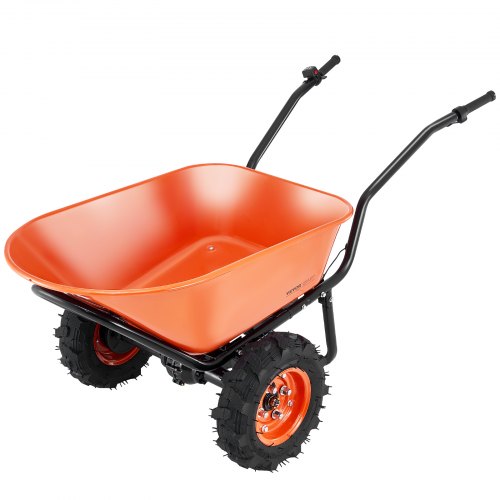
Some designs include two wheels for stability and ergonomic handles for comfort during use.
- Two-wheel models for balance
- Lightweight metal or plastic tubs
- Ergonomic grips to reduce strain
- Flat-free or pneumatic tires
Tips For Maximizing Wheelbarrow Efficiency
A wheelbarrow is a simple machine that helps move heavy loads easily. Using it right can save effort and time. Follow these tips to get the best use from your wheelbarrow.
Proper care and smart choices make your tasks easier. Learn how to load, maintain, and pick the right wheelbarrow for your work.
Proper Loading Techniques
Load your wheelbarrow carefully to keep balance and avoid spills. Place heavy items near the wheel for better control. Do not overload the wheelbarrow to prevent tipping.
- Put heavy materials close to the wheel
- Distribute weight evenly on both sides
- Keep loads within the wheelbarrow’s capacity
- Stack items securely to prevent falling
Maintenance For Smooth Operation
Regular maintenance keeps your wheelbarrow working well. Check the tire pressure and pump it up if it feels soft. Clean the wheelbarrow after use to stop rust and dirt build-up.
| Maintenance Task | Frequency |
| Check tire pressure | Weekly |
| Lubricate wheel axle | Monthly |
| Clean after use | Every time |
| Inspect handles for damage | Monthly |
Choosing The Right Wheelbarrow
Pick a wheelbarrow that fits your work needs. Look at the size, wheel type, and material. A good match makes your job easier and safer.
Consider these factors:
- Wheel type: pneumatic for rough ground, solid for smooth surfaces
- Tray size: larger trays hold more but can be heavier
- Material: steel trays are strong, plastic trays are lightweight
- Handle design: comfortable grips reduce hand fatigue
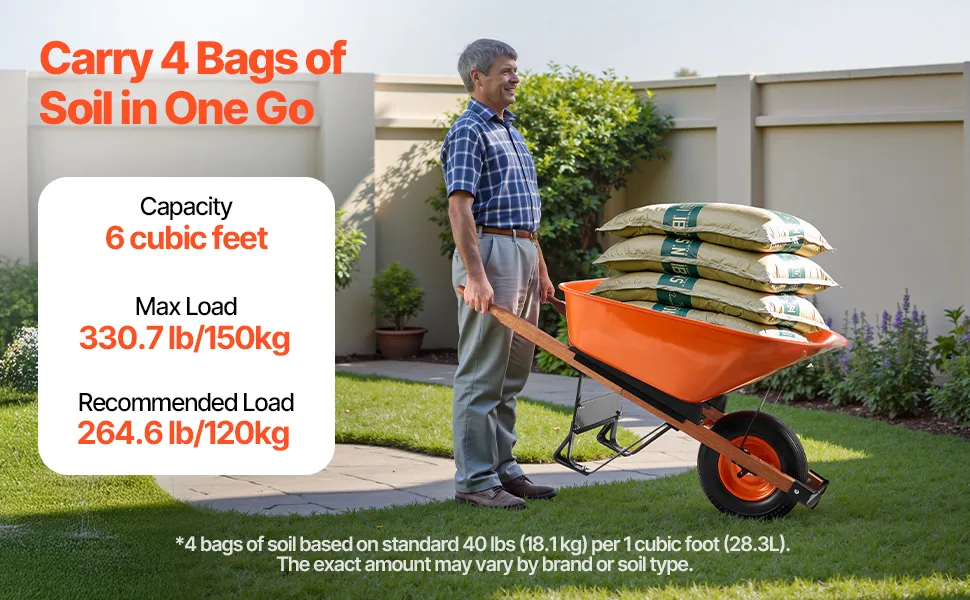
Credit: www.vevor.ca
Credit: www.vevor.ca
Frequently Asked Questions
What Type Of Simple Machine Is A Wheelbarrow?
A wheelbarrow is a second-class lever. It uses a wheel and axle combined with a lever. This design helps lift and move heavy loads easily.
How Does A Wheelbarrow Work As A Simple Machine?
It reduces effort by increasing force. The wheel acts as the fulcrum. The handles serve as the effort arm, lifting the load placed in the barrow.
Why Is A Wheelbarrow Considered A Lever?
Because it pivots around a fixed point, the wheel. The load sits between the effort and the fulcrum, characteristic of second-class levers.
What Are The Main Components Of A Wheelbarrow?
The wheel, axle, tray, and handles. These parts work together to move heavy materials with less effort.
Conclusion
A wheelbarrow is a simple machine called a lever. It helps move heavy loads with less effort. The wheel acts as a wheel and axle, making movement easier. Using a wheelbarrow saves time and energy in work. Understanding its parts shows how simple machines help us daily.
Next time you see one, you will know why it works well. Simple, smart, and useful—that’s the wheelbarrow’s power.