Choosing the right size air conditioner condenser is key to keeping your home cool and comfortable. If your condenser is too small, your system will struggle and run constantly.
If it’s too large, you’ll waste energy and money. You might be wondering, “What size air conditioner condenser do I need? ” This guide will help you find the perfect fit for your space. By the end, you’ll know exactly what to look for to save money, stay comfortable, and avoid costly mistakes.
Keep reading to make the smartest choice for your home.
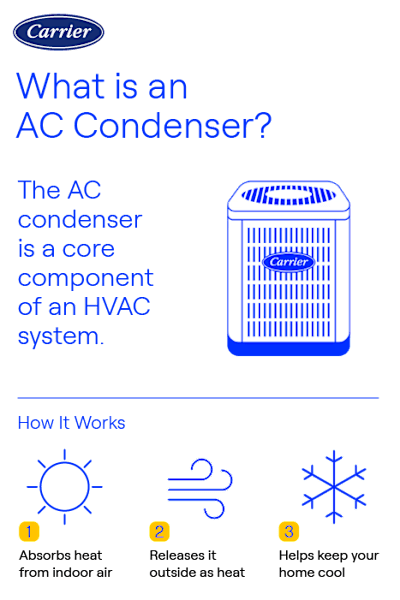
Credit: www.carrier.com
Factors Influencing Condenser Size
Choosing the right size for your air conditioner condenser is important. It helps keep your space cool and saves energy.
Several factors affect what size condenser you need. Understanding these can help you pick the best option.
Room Dimensions And Layout
The size and shape of your room affect the condenser size. Larger rooms need bigger condensers to cool well.
Open layouts may need more cooling power than rooms divided by walls. Ceiling height also matters.
Climate And Weather Conditions
Hotter climates require larger condensers. They work harder to keep indoor air cool.
Areas with high humidity also need bigger units. Moist air makes cooling more difficult.
Insulation Quality
Good insulation keeps cool air inside. Poor insulation lets heat in and cool air out.
Better insulation means you can use a smaller condenser. Bad insulation means a bigger one is needed.
Number Of Occupants
More people in a room add heat. Each person gives off body heat that affects cooling needs.
Rooms with many occupants need larger condensers to keep the temperature comfortable.
Heat-generating Appliances
Appliances like ovens, computers, and lights produce heat. This heat adds to the cooling load.
Rooms with many appliances need bigger condensers to handle extra heat.
Measuring Your Space
Choosing the right size air conditioner condenser starts with measuring your space. Accurate measurements help find a unit that cools well without wasting energy.
Measure your room carefully. This ensures your air conditioner works efficiently and keeps your space comfortable.
Calculating Square Footage
Square footage is the area of your room. You need this number to pick the right condenser size. Measure the length and width of the room in feet.
Multiply the length by the width to get the square footage. For example, a room 20 feet long and 15 feet wide is 300 square feet.
- Measure the longest length of the room
- Measure the widest width of the room
- Multiply length × width to get square feet
Ceiling Height Considerations
Ceiling height affects how much air your space holds. Taller ceilings need more cooling power because heat rises and fills the space.
If your ceiling is higher than 8 feet, add extra cooling capacity. This helps the air conditioner cool the room evenly.
- Standard ceiling height is 8 feet
- Add cooling power for ceilings above 8 feet
- Taller rooms need larger condensers
Open Floor Plans Vs. Divided Rooms
Open floor plans combine areas like living and dining rooms. These spaces need more cooling power than separate rooms.
Divided rooms often need smaller condensers for each space. Cooling one room at a time saves energy and keeps temperatures steady.
- Open floor plans require larger condensers
- Divided rooms can use smaller units per room
- Consider how air flows between spaces
Btu And Tonnage Basics
Choosing the right size air conditioner condenser is important. It helps cool your space efficiently and saves energy.
This guide explains BTU and tonnage, two key terms used to measure air conditioner capacity.
What Is Btu?
BTU stands for British Thermal Unit. It measures the amount of heat energy.
One BTU is the energy needed to raise one pound of water by one degree Fahrenheit.
Tonnage Explained
Tonnage refers to the cooling power of an air conditioner. It is based on tons of ice melted in 24 hours.
- 1 ton equals 12,000 BTUs per hour
- Higher tonnage means more cooling power
- Homes usually need between 1 to 5 tons
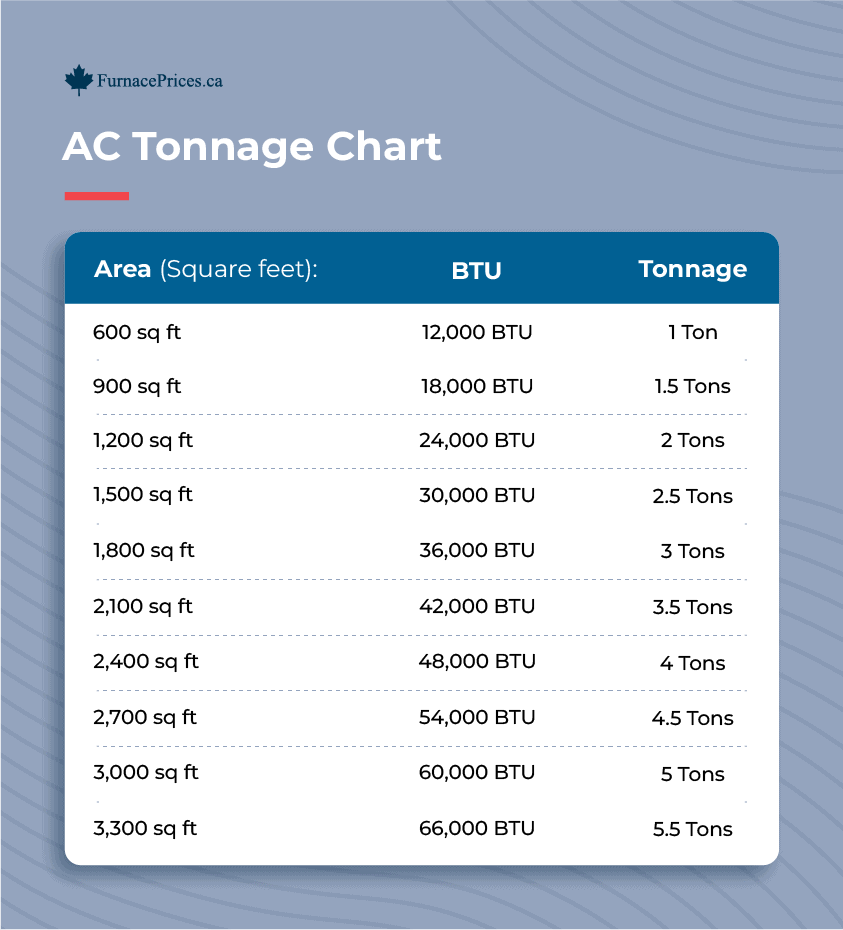
Btu To Tonnage Conversion
You can convert BTU to tons by dividing BTU by 12,000.
| BTU | Tonnage |
|---|---|
| 12,000 | 1 Ton |
| 24,000 | 2 Tons |
| 36,000 | 3 Tons |
| 48,000 | 4 Tons |
| 60,000 | 5 Tons |
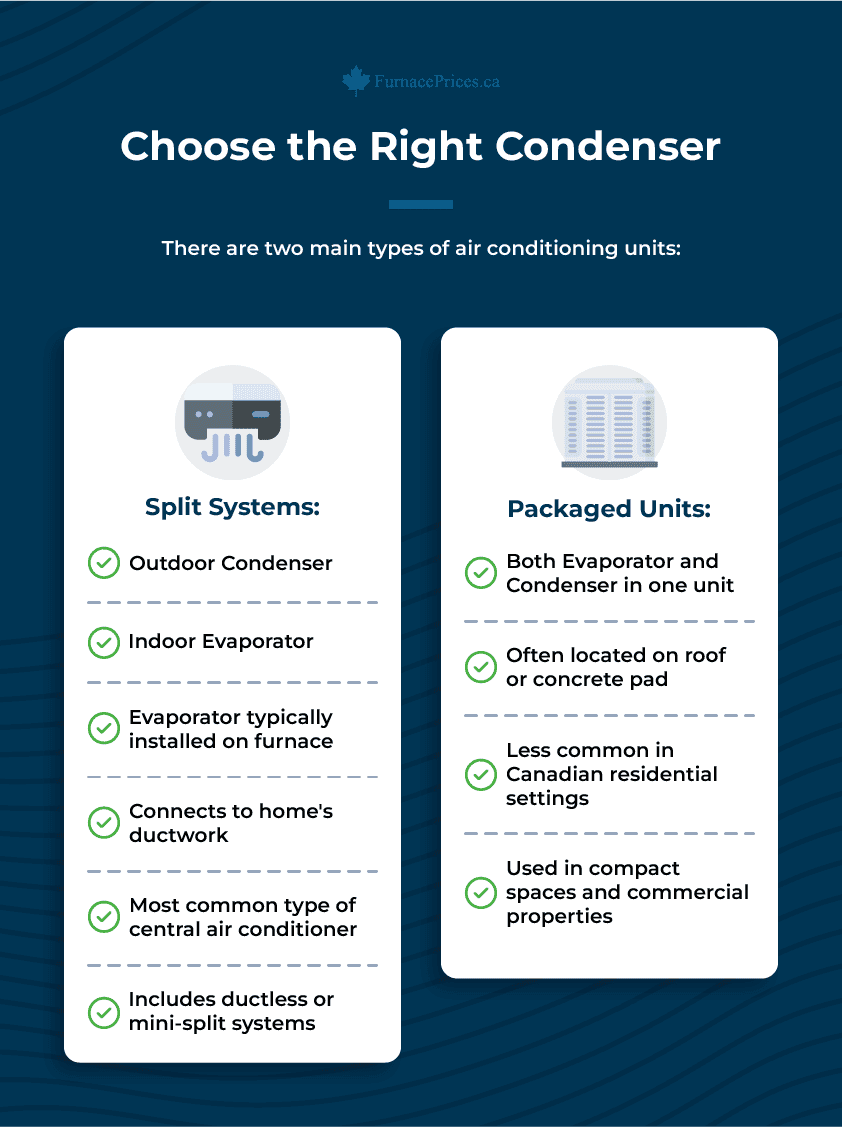
Credit: www.furnaceprices.ca
Matching Condenser Size To Cooling Needs
Choosing the right size for your air conditioner condenser is key to effective cooling. A properly sized unit keeps your home comfortable without wasting energy.
Too large or too small can cause problems. Understanding your cooling needs helps you pick the right condenser size.
Estimating Btu Requirements
BTU stands for British Thermal Unit. It measures how much heat an air conditioner can remove. You need to estimate the BTU required to cool your space.
- Measure the square footage of the area to cool.
- Multiply the square footage by 20 BTU for a rough estimate.
- Adjust for factors like ceiling height, sun exposure, and insulation.
- Consider the number of occupants and heat from appliances.
Avoiding Oversizing And Undersizing
Choosing a condenser that is too big or too small can cause trouble. An oversized unit cools quickly but cycles on and off often. An undersized unit runs constantly but may not cool well.
| Problem | Effect |
| Oversized Condenser | Short cycles, higher wear, humidity issues |
| Undersized Condenser | Long run times, poor cooling, higher energy use |
Impact On Energy Efficiency
Energy efficiency depends on the right condenser size. A correct size reduces electricity bills and extends the unit’s life. It also keeps your home comfortable all day.
- Proper size reduces energy waste.
- Less cycling means less wear and tear.
- Better humidity control improves comfort.
- Longer equipment life saves money over time.
Additional Factors To Consider
Choosing the right size air conditioner condenser depends on more than just room size. Other factors affect the cooling needs.
Considering these factors can help you get better performance and save energy.
Sun Exposure
Rooms with a lot of sun exposure need a larger condenser. Sunlight heats the room and makes the air conditioner work harder.
- South-facing rooms get the most sun during the day.
- East-facing rooms warm up in the morning.
- West-facing rooms get afternoon sun and heat.
- North-facing rooms get the least sun and stay cooler.
Window Type And Placement
Windows affect how well your room keeps cool. Some types lose more heat than others.
| Window Type | Cooling Impact |
| Single-pane | High heat gain, needs bigger AC |
| Double-pane | Better insulation, moderate AC size |
| Triple-pane | Best insulation, smaller AC size |
| Window placement | Windows on sunny sides increase cooling load |
Ventilation And Airflow
Good ventilation helps cool air move around. Poor airflow can make a room feel hotter.
Check these for good airflow:
- Use ceiling or exhaust fans to circulate air
- Avoid blocking vents or windows
- Keep doors open to allow air to flow between rooms
- Make sure the condenser unit has space around it
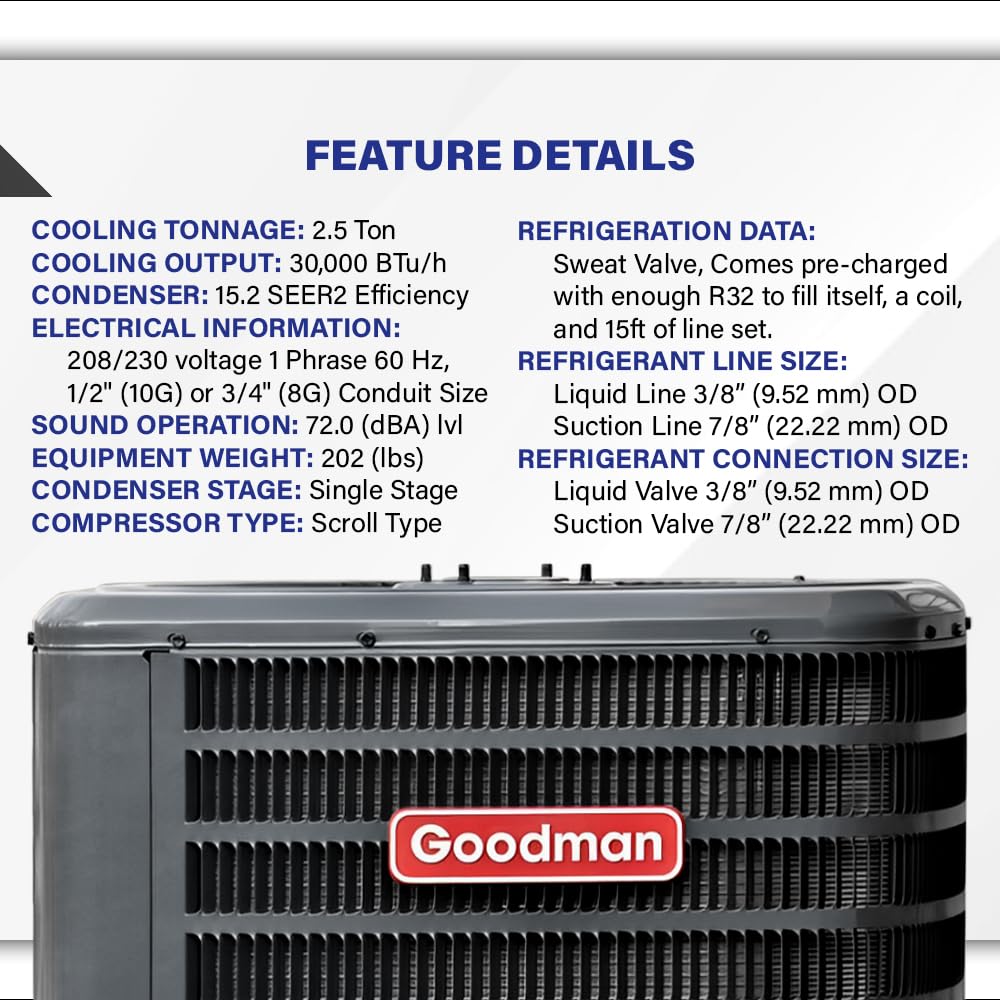
Credit: www.amazon.com
Professional Sizing Vs. Diy
Choosing the right size air conditioner condenser is important for comfort and energy savings. You can either measure it yourself or hire a professional. Each option has its own benefits and challenges.
This guide helps you understand the differences between professional sizing and do-it-yourself methods. It also shows when it is best to call a specialist.
Benefits Of Professional Assessment
Professionals use special tools and knowledge to size your air conditioner correctly. They consider your home’s size, insulation, and climate. This ensures the system works efficiently and lasts longer.
- Accurate load calculation for your space
- Correct sizing prevents high energy bills
- Improves indoor comfort and air quality
- Helps avoid frequent repairs and breakdowns
- Ensures proper installation and warranty support
Tools For Diy Measurement
If you want to size the condenser yourself, you can use simple tools. These tools help estimate the cooling load based on your home’s features.
| Tool | Purpose |
| Measuring Tape | Measure room dimensions |
| Calculator | Calculate square footage |
| Online Load Calculator | Estimate BTU needs |
| Thermometer | Check indoor/outdoor temperature |
When To Call A Specialist
There are times when a professional’s help is needed. Complex homes or unusual layouts require expert knowledge. Also, if you want to avoid mistakes, a specialist is best.
- Your home has multiple floors or additions
- There is poor insulation or air leaks
- You face very hot or cold climates
- You want to install a high-efficiency system
- You are unsure about load calculations
Common Sizing Mistakes
Choosing the right size air conditioner condenser is important for comfort and energy use. Many people make mistakes that cause poor cooling or high bills.
Knowing common errors helps you pick the best size for your needs. Avoid these sizing mistakes to get better results.
Ignoring Local Climate
Different places have different weather. A big air conditioner in a cool area wastes energy. A small one in a hot place will not cool well.
Think about how hot or cold your area gets during summer. This helps you pick a condenser that works well year-round.
- Hot climates need larger condensers
- Cool climates need smaller condensers
- Humidity also affects cooling needs
Overlooking Insulation
Good insulation keeps your home cool or warm. Poor insulation means the air conditioner works harder. This can make a small unit fail.
Check how well your home is insulated. Use this to decide if you need a bigger or smaller condenser for your space.
- Well-insulated homes keep cool air longer
- Bad insulation lets heat in quickly
- Better insulation can lower air conditioner size
Misjudging Room Usage
Different rooms use different amounts of cooling. A living room with many people needs more cooling than a bedroom used at night.
Think about how each room is used. This helps avoid buying a condenser that is too big or too small for your needs.
- Rooms with many windows may need larger units
- Rooms used less often need smaller units
- High-activity rooms generate more heat
Energy Efficiency And Cost Implications
Choosing the right size air conditioner condenser affects your home’s comfort and bills. It also plays a big role in energy use and costs.
Picking the right size helps save energy and lowers expenses over time. This guide explains key points to consider.
Energy Star Ratings
Energy Star ratings show how efficient an air conditioner is. Higher ratings mean better energy use and lower electric bills.
- Look for units with Energy Star labels for energy savings.
- Check the Seasonal Energy Efficiency Ratio (SEER) score.
- Higher SEER means the unit uses less power to cool your space.
- Efficient models help reduce your carbon footprint.
Long-term Savings
Buying the right condenser size saves money over many years. Too big or too small units waste energy and increase bills.
| Condenser Size | Effect on Energy Bills | Comfort Level |
| Too Small | Higher bills due to constant running | Rooms may stay warm or humid |
| Correct Size | Lower bills with efficient cooling | Comfortable and consistent temperature |
| Too Large | Higher bills from frequent cycling | Uneven cooling and humidity problems |
Maintenance Costs
Maintenance affects total cost and system life. The right size reduces wear and lowers upkeep expenses.
- Regular cleaning keeps the condenser efficient.
- Right size means fewer repairs over time.
- Oversized units may break down more often.
- Properly sized units last longer and cost less to maintain.
Frequently Asked Questions
What Size Air Conditioner Condenser Do I Need?
To determine the right condenser size, consider your room’s square footage and insulation quality. Proper sizing ensures efficient cooling and energy savings. An HVAC professional can perform a load calculation to recommend the best size for your space.
How Does Condenser Size Affect Air Conditioner Performance?
A correctly sized condenser cools efficiently without wasting energy. Too small, and it won’t cool adequately. Too large, and it cycles too frequently, increasing wear and utility costs. Proper sizing balances performance, comfort, and cost.
Can I Use A Larger Condenser Than Recommended?
Using a larger condenser may cool faster but leads to short cycling. This causes inefficient operation, higher energy bills, and potential system damage. It’s best to install the size recommended for your home’s cooling load.
What Factors Influence Condenser Size Selection?
Factors include room size, ceiling height, insulation quality, window exposure, and local climate. These affect how much cooling power your condenser needs. An accurate assessment ensures comfortable temperatures and energy efficiency.
Conclusion
Choosing the right size air conditioner condenser matters a lot. A properly sized unit cools your home well and saves energy. Too small means poor cooling; too big wastes power and money. Consider your room size, insulation, and climate for best results.
Getting expert advice can help avoid costly mistakes. Take time to measure and compare before buying. The right choice keeps you comfortable and lowers bills. Simple steps lead to better cooling and peace of mind.