Choosing the right size air conditioner for your house is more important than you might think. If your AC is too small, it won’t cool your home properly.
If it’s too big, you’ll waste money and energy. You want to feel comfortable without overspending. But how do you figure out the perfect size for your space? Keep reading, and you’ll discover simple tips to help you pick the ideal air conditioner that fits your home and keeps you cool all year long.
Factors Affecting Ac Size
Choosing the right air conditioner size is important for comfort and energy savings. Several factors affect how big or small your AC unit should be.
Understanding these factors helps you pick an air conditioner that cools well without wasting power.
House Square Footage
The size of your house is a key factor in AC size. Larger homes need bigger air conditioners to cool all rooms.
Smaller houses require smaller units that use less energy but still keep the space cool.
Ceiling Height
Taller ceilings mean more air space to cool. This can increase the needed AC size.
Standard ceiling heights need less cooling power than rooms with high or vaulted ceilings.
Insulation Quality
Good insulation keeps cool air inside and hot air outside. This lowers AC size needs.
Poor insulation causes air leaks and heat gain, requiring a larger air conditioner.
Window Type And Orientation
Windows that let in a lot of sunlight add heat to your home. This raises AC size requirements.
South- and west-facing windows usually cause more heat gain than north- or east-facing ones.
- Single-pane windows increase heat gain
- Double-pane windows reduce heat gain
- Window coverings can block sunlight
Local Climate
Hotter climates need bigger air conditioners to keep homes cool. Cooler areas need smaller units.
Humidity also affects cooling power. High humidity requires more cooling capacity.
Number Of Occupants
People inside generate body heat. More occupants increase the cooling load on the AC unit.
A larger family needs a bigger air conditioner than a single person or couple.
Heat-generating Appliances
Appliances like ovens, computers, and lights add heat to your home. This affects AC size.
More heat from appliances means your air conditioner must work harder and be larger.
Calculating Cooling Capacity
Choosing the right air conditioner size is key for comfort and energy savings.
Cooling capacity depends on factors like house size and heat gain.
Understanding Btu Requirements
BTU stands for British Thermal Unit. It measures how much heat an AC can remove.
Each room needs a certain BTU level based on its size and heat sources.
- Small rooms need about 5,000 to 6,000 BTUs.
- Medium rooms require 7,000 to 10,000 BTUs.
- Larger rooms may need 12,000 BTUs or more.
Using Manual J Load Calculation
Manual J is a detailed method to find exact cooling needs for a home.
This calculation considers insulation, windows, doors, and climate.
Typical factors included in Manual J:
- House square footage
- Wall and attic insulation levels
- Number and type of windows
- Local weather data
- Appliance heat output
Estimating Based On Room Size
One simple way is to use room size to guess BTU needs.
| Room Size (sq ft) | BTU Needed |
| 100 – 150 | 5,000 |
| 150 – 250 | 6,000 – 8,000 |
| 250 – 350 | 8,000 – 10,000 |
| 350 – 450 | 10,000 – 12,000 |
| 450+ | 12,000+ |
Adjusting For Sunlight Exposure
Rooms with a lot of sunlight get warmer and need more cooling power.
- Add about 10% more BTUs for rooms with heavy sun.
- Reduce BTUs slightly for shaded rooms.
- Consider window type and coverings when adjusting.
Types Of Air Conditioners
Choosing the right air conditioner size depends on your home’s cooling needs. Different types of air conditioners serve different spaces and purposes.
Knowing the types of air conditioners helps you pick the best system for your house.
Central Air Conditioning
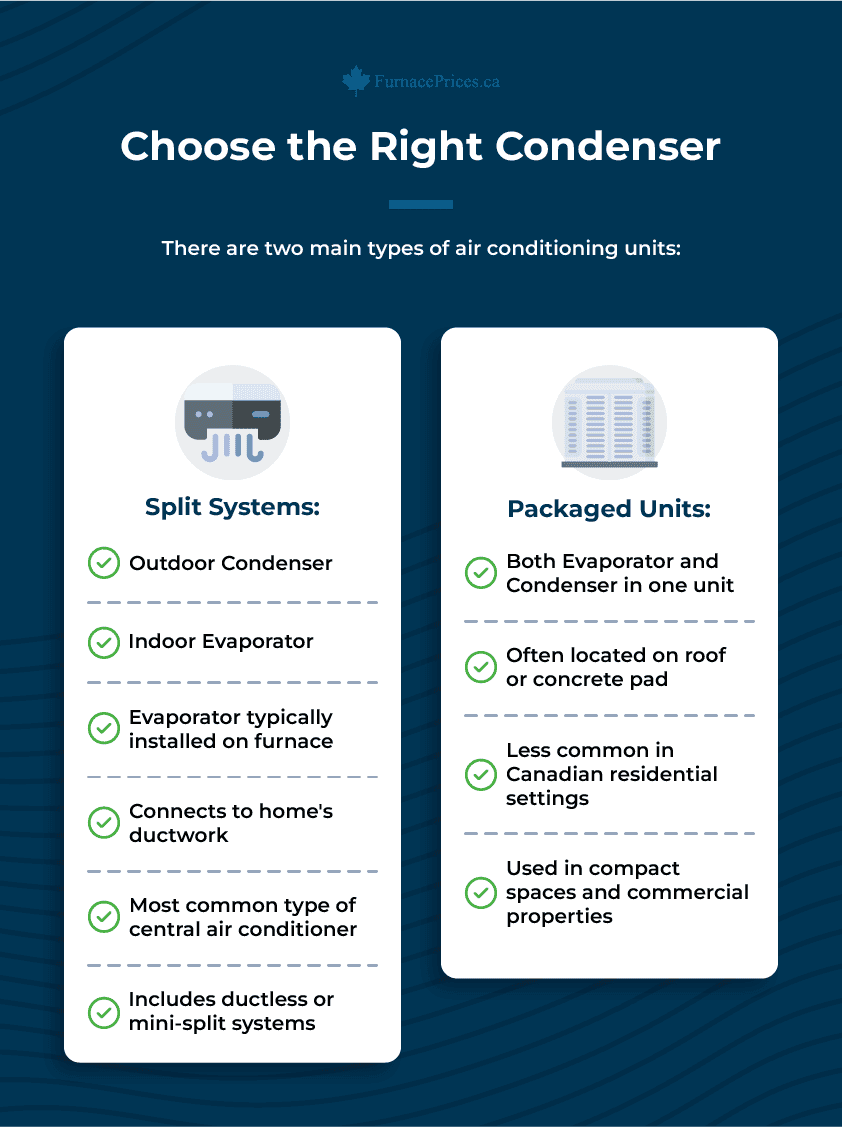
Central air conditioning cools the entire house through ducts. It is good for larger homes with existing ductwork.
This system uses a single outdoor unit connected to indoor vents to spread cool air evenly.
- Requires duct installation or existing ducts
- Provides uniform cooling in all rooms
- Usually more energy efficient for whole-house cooling
Ductless Mini-splits
Ductless mini-splits cool individual rooms without ductwork. They have an outdoor unit and one or more indoor units.
This type is great for rooms without ducts or additions to your home.
- Easy to install with no ducts needed
- Allows cooling specific rooms separately
- Energy efficient for spot cooling
Window Units
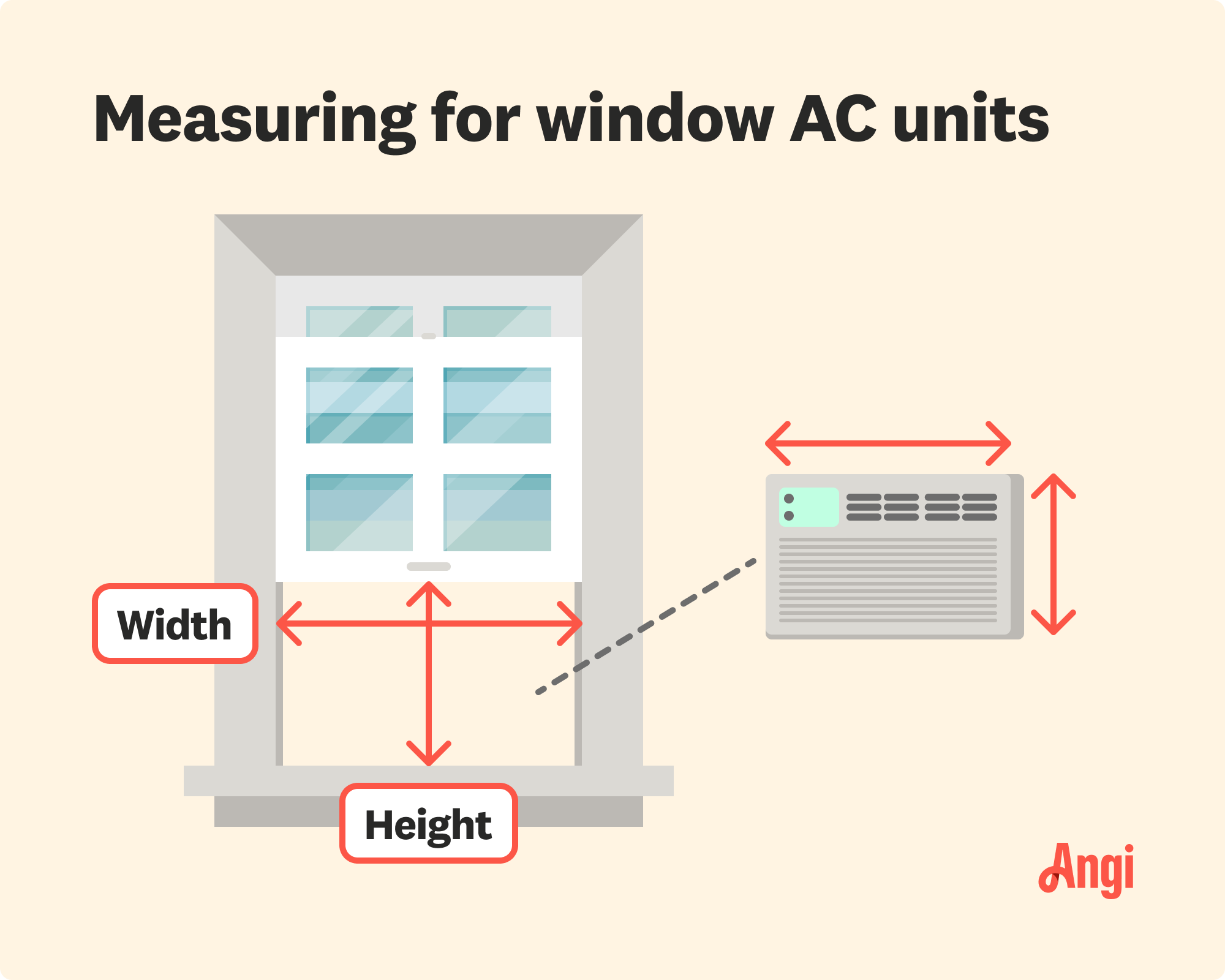
Window air conditioners fit into a window opening. They cool one room at a time.
Window units are affordable and simple to install for small spaces.
- Cost-effective for cooling small rooms
- Easy to install and remove
- Take up window space and may block light
Portable Air Conditioners
Portable air conditioners can move from room to room. They use a hose to vent hot air outside.
These units are flexible but usually less efficient than other types.
- No permanent installation needed
- Good for temporary cooling needs
- Requires venting through a window or wall
Credit: www.furnaceprices.ca
Matching Ac Size To System Type
Choosing the right air conditioner size depends on the type of system you want. Different systems need different sizing methods.
Picking the correct size helps your AC cool efficiently and saves energy. Too big or too small units cause problems.
Sizing Central Systems
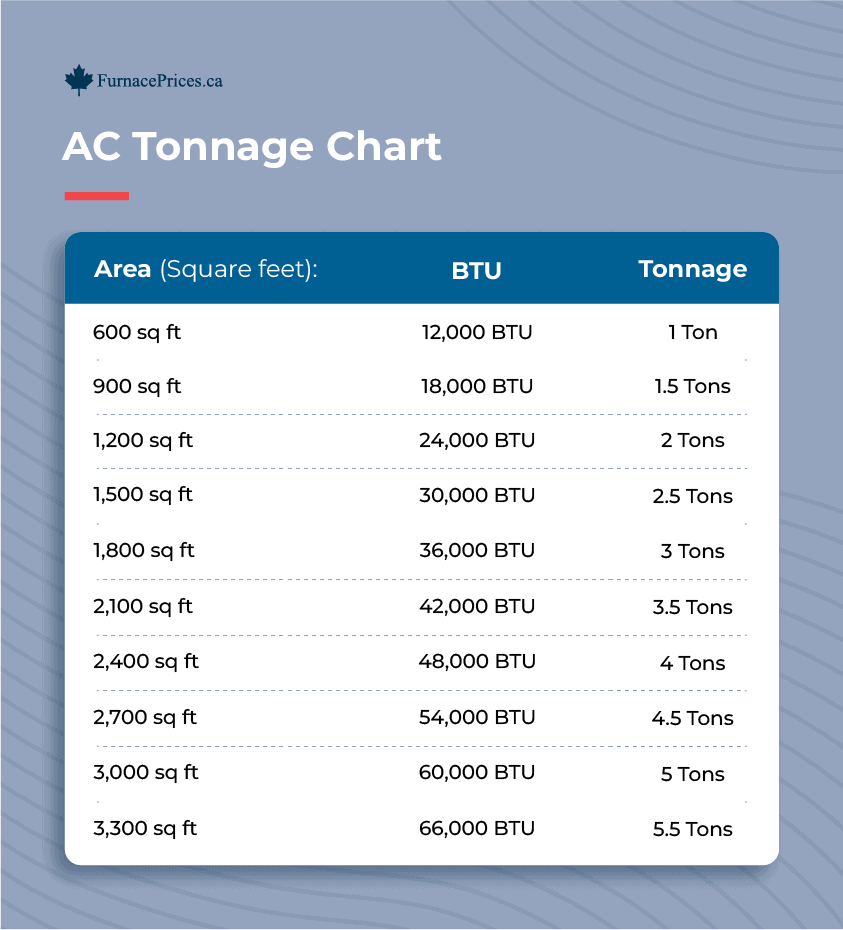
Central AC systems cool the whole house through ducts. Their size is measured in tons or BTUs (British Thermal Units).
A common rule is 20 BTUs per square foot of living space. But factors like ceiling height and insulation matter too.
- Calculate total square footage of cooled space
- Multiply by 20 BTUs per square foot
- Adjust for insulation, windows, and sun exposure
- Choose a system size close to the adjusted BTUs
Sizing Ductless Systems
Ductless mini-split systems cool individual rooms or zones. Each unit has a separate size rating in BTUs.
Measure each room’s area and use 20 BTUs per square foot. Add extra capacity for kitchens or rooms with many windows.
- Measure room size in square feet
- Multiply by 20 BTUs per square foot
- Increase BTUs for sunlight or heat sources
- Select a unit with the closest BTU rating
Sizing Window And Portable Units
Window and portable ACs cool single rooms. Their size is also in BTUs and depends on room size.
Use the room’s square footage times 20 BTUs. Small rooms need smaller units, large rooms need bigger ones.
- Measure room square footage
- Multiply by 20 BTUs per square foot
- Consider extra heat from appliances or sun
- Pick unit size near the calculated BTUs
Consequences Of Incorrect Ac Size
Choosing the right size air conditioner is important for your home. An AC that is too big or too small can cause problems.
Incorrect AC size affects comfort, energy use, and the unit’s lifespan. Below are the issues with oversized and undersized units.
Oversized Units
Oversized air conditioners cool your home too quickly. This causes the system to turn on and off often, which is called short cycling.
- Short cycling wastes energy and raises utility bills.
- It does not remove enough humidity, leaving rooms damp.
- Frequent starts and stops wear out the compressor faster.
- Uneven cooling can make some rooms too cold and others warm.
Undersized Units
Undersized air conditioners run all the time but cannot cool your home well. This leads to discomfort and higher energy use.
| Problem | Effect |
| Constant Running | Increases electricity costs and wears out parts. |
| Poor Cooling | Rooms stay warm and uncomfortable. |
| Humidity Issues | Does not remove moisture well, causing dampness. |
| Shorter Lifespan | Overworks the unit, leading to early breakdowns. |
Energy Efficiency And Cost Considerations
Choosing the right size air conditioner for your house affects energy use and costs. A unit that is too big or too small wastes energy.
Understanding energy efficiency and cost factors helps you pick a good air conditioner for your needs.
Seer Ratings
SEER stands for Seasonal Energy Efficiency Ratio. It measures how well an air conditioner cools your home.
A higher SEER rating means the unit uses less electricity to cool the same amount of space.
- SEER ratings usually range from 13 to 21
- Higher SEER units cost more upfront
- They save more money on energy bills over time
Operating Costs
Operating costs include the electricity you use to run your air conditioner. This depends on unit size and efficiency.
A properly sized unit with a good SEER rating lowers your monthly bills. Oversized units cool quickly but waste energy.
- Small units run longer but use less power
- Large units cycle on and off, using more energy
- Efficient units reduce overall electricity use
Long-term Savings
Investing in an efficient air conditioner saves money in the long run. Lower energy bills add up over years.
Choosing the right size prevents repairs caused by overworking the system. This reduces maintenance costs.
- Higher initial cost pays off with lower bills
- Right size means less wear and tear
- Good SEER ratings improve home comfort and savings
Professional Help And Tools
Choosing the right size air conditioner is important for comfort and energy savings.
Several professional options and tools can help you find the best fit for your home.
Hiring Hvac Experts
HVAC professionals have the skills to measure your home and recommend the right air conditioner size.
They consider factors like room size, insulation, and windows to give accurate advice.
- Detailed home assessment
- Custom cooling solutions
- Expert installation and support
Online Calculators And Apps
Many websites offer free calculators to estimate the needed air conditioner size.
These tools ask for room dimensions and other details to give a quick estimate.
| Tool | Input Needed | Output |
| Room Size Calculator | Length, width, height | BTU recommendation |
| Cooling Load Calculator | Room size, windows, insulation | AC size in tons |
| Mobile Apps | Room details, climate zone | AC size suggestions |
Diy Measurement Tips
You can measure your rooms to get a rough idea of the air conditioner size needed.
- Measure room length, width, and height
- Note the number of windows and doors
- Check how well the room is insulated
- Use a simple BTU per square foot rule (about 20 BTU per sq ft)
Credit: www.angi.com

Credit: www.bobvila.com
Frequently Asked Questions
How Do I Calculate The Right Ac Size For My Home?
Calculate AC size by multiplying your home’s square footage by 20 BTUs. Adjust for ceiling height, insulation, and sun exposure for accuracy.
What Happens If My Air Conditioner Is Too Big?
An oversized AC cools quickly but wastes energy and causes humidity issues. It cycles on and off frequently, reducing efficiency.
Can A Small Air Conditioner Cool A Large Room?
A small AC may struggle to cool large spaces effectively. It runs constantly, raising energy bills and failing to maintain comfort.
How Does Insulation Affect Air Conditioner Size?
Good insulation reduces cooling needs, allowing a smaller AC unit. Poor insulation increases heat gain, requiring a larger air conditioner.
Conclusion
Choosing the right air conditioner size is crucial. It affects comfort and energy bills. Measure your space accurately. Consider factors like insulation and sunlight. Consult a professional if needed. A correctly sized unit ensures efficiency. It provides optimal cooling during hot days.
Remember, bigger isn’t always better. A too-large unit wastes energy. A too-small unit struggles to cool. Make an informed decision for your home. Enjoy a cool and comfortable environment. Stay mindful of maintenance. Regular cleaning extends your AC’s life. Keep your home comfortable with the right air conditioner size.