Are you thinking about purchasing half a cow but unsure about the size of the deep freezer you’ll need? You’re not alone.
Many people are opting to buy meat in bulk to save money and enjoy high-quality cuts at their convenience. But the challenge is figuring out how much freezer space is required to store all that beef. Imagine the peace of mind you’ll have knowing you’ve made the right choice, avoiding the stress of running out of space or wasting your investment.
In this guide, we’ll simplify the process for you, ensuring you make the best decision for your needs. Dive in to discover how to maximize your storage and keep your meat fresh for months to come.
Estimating Meat Volume From Half A Cow
Estimating the amount of meat from half a cow helps decide the freezer size needed. It is important to understand the weight and types of cuts you will get. This knowledge ensures enough space to store all the meat safely and efficiently.
Average Weight And Yield
Half a cow usually weighs between 250 and 350 pounds. After butchering, expect about 60% to 65% of that weight in usable meat. This percentage is called the “hanging weight” or “take-home weight.”
For example, from 300 pounds of half a cow, you get roughly 180 to 195 pounds of meat. Bones, fat, and trim reduce the total weight. Knowing this helps estimate freezer space more accurately.
Types Of Cuts Included
The meat from half a cow includes various cuts. Some common types are:
- Steaks like ribeye, sirloin, and T-bone
- Roasts such as chuck, brisket, and rump
- Ground beef from trimmings
- Soup bones and stew meat
These cuts come in different sizes and packaging. Proper storage plans depend on knowing what cuts you will have and how much space they need.

Credit: floridapremiumbeef.com
Deep Freezer Sizes Explained
Choosing the right size deep freezer can feel overwhelming, especially when you’re storing something as substantial as half a cow. Understanding freezer sizes helps you avoid buying one that’s too small or unnecessarily large. Let’s break down what freezer capacities really mean and how different designs might fit your needs.
Common Capacity Ranges
Freezers come in a variety of sizes, usually measured in cubic feet. Small models start around 5 cubic feet, which is great for basic needs like extra frozen meals or a few bags of vegetables.
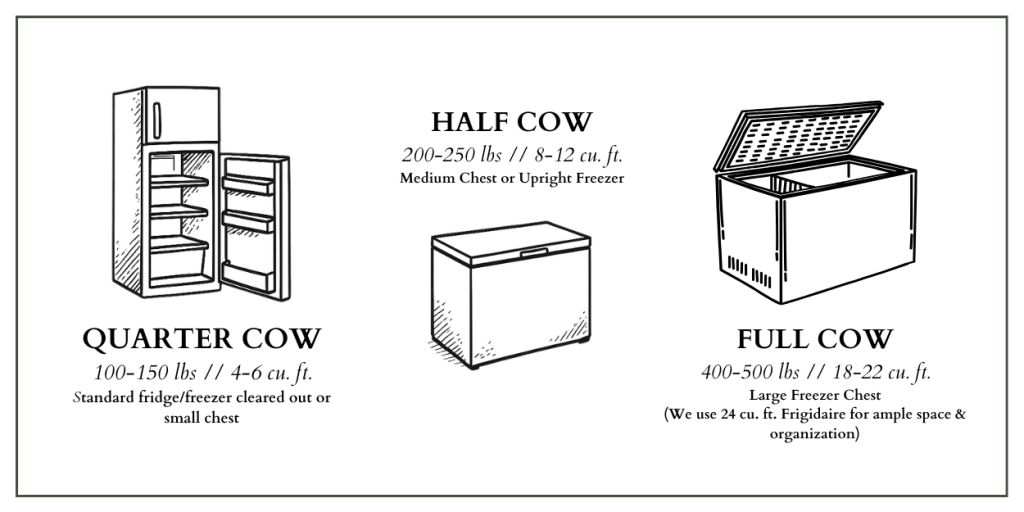
Mid-sized freezers range between 10 to 20 cubic feet, perfect for storing large amounts of meat, including half a cow. For example, half a cow can require roughly 15 to 20 cubic feet depending on how it’s butchered and packaged.
Larger freezers above 20 cubic feet are more suited for whole animals or bulk storage beyond just meat. Think about how much space your half cow will take up once divided and wrapped, then add room for air circulation to keep everything frozen properly.
Chest Vs Upright Freezers
Chest freezers are often favored for bulk meat storage. They tend to offer more usable space for less money. Their wide, open design lets you stack large packages flat, which can be a lifesaver when storing half a cow.
Upright freezers stand vertically like a refrigerator and have shelves and compartments. They’re easier to organize and access without digging through layers of frozen items. However, they generally cost more per cubic foot and may have less usable space.
Consider how often you’ll access your meat. If you plan to open the freezer frequently, an upright might save time. But if you’re focused on maximizing storage for a big purchase like half a cow, a chest freezer often gives better value and capacity.
Choosing The Right Freezer Size
Choosing the right freezer size is crucial when storing half a cow. The freezer must hold all the meat safely and keep it fresh. Selecting a freezer that is too small causes crowding and poor air circulation. Too large wastes space and energy. Understanding how to calculate the needed capacity and allowing space for packaging helps make the best choice.
Calculating Required Capacity
Half a cow typically yields around 150 to 200 pounds of meat. This amount varies by the cow’s size and butchering style. A general rule is to have at least 7 cubic feet of freezer space for every 100 pounds of meat.
For half a cow, plan on a freezer with 10 to 14 cubic feet capacity. This range provides enough room for all cuts and bones. It also avoids overpacking, which can affect freezing quality.
Allowing Space For Packaging
Packaging adds bulk to the meat. Vacuum-sealed bags or butcher paper increase the volume. Plan extra space for wrapping materials and air gaps.
Leaving some room between packages helps cold air circulate evenly. This prevents freezer burn and keeps meat fresh longer. Avoid stacking packages too tightly.
- Choose a freezer with shelves or baskets for better organization.
- Consider a chest freezer for larger items and easier stacking.
- Measure your packaging sizes before buying a freezer.
Credit: www.christensenranch.com
Freezer Features To Consider
Choosing the right deep freezer for storing half a cow means more than just picking the right size. The features your freezer offers can make a big difference in how efficiently it runs and how easy it is to organize your meat. Focusing on specific freezer features ensures you get the best value and convenience for your needs.
Energy Efficiency
Energy efficiency affects both your electricity bill and the environment. Look for freezers with an Energy Star rating or similar certifications. These models use less power while keeping your meat frozen solid.
Think about how often you open the freezer. A highly efficient model minimizes temperature fluctuations, saving energy. This can add up to significant savings over time, especially with a large load like half a cow.
Temperature Control
Precise temperature control is key to keeping your meat fresh and safe. A freezer that allows you to set exact temperatures helps prevent freezer burn and spoilage.
Some freezers come with digital displays and alarms that alert you if the temperature changes unexpectedly. Have you ever lost food because the freezer was too warm? This feature can save you from that hassle.
Storage Organization
Good storage options make it easier to manage large cuts of meat. Look for freezers with adjustable shelves, baskets, or compartments. These help you separate different cuts and find what you need quickly.
A well-organized freezer reduces the time the door stays open, which keeps the temperature steady. Consider models that offer clear drawers or removable bins for better access and cleaning.
Tips For Efficient Meat Storage
Storing half a cow requires more than just having enough space in your deep freezer. Efficient storage protects your meat’s quality and saves you money. You can keep your meat fresh longer and avoid freezer burn by following a few smart strategies.
Proper Packaging Techniques
Packaging is your first line of defense against freezer burn and moisture loss. Use airtight materials like vacuum-sealed bags or heavy-duty freezer paper to wrap your meat tightly. Avoid plastic wrap alone, as it can trap moisture and cause ice crystals.
Divide large cuts into meal-sized portions before packaging. This way, you only thaw what you need, reducing waste. Think about adding a layer of aluminum foil over vacuum-sealed packages for extra protection.
Labeling And Rotation
Keeping track of what’s in your freezer saves time and prevents spoiled meat. Use permanent markers to label each package with the cut type and the date it was frozen. Clear labeling helps you use older meat first, keeping your stock fresh.
Arrange your freezer so that the oldest packages are in front. This simple rotation method ensures you don’t forget about meat buried at the back. Have you ever found mystery bags in your freezer? Labeling stops that from happening.
Maintaining Freezer Temperature
Consistent temperature is key to preserving meat quality. Your deep freezer should stay at 0°F (-18°C) or lower to keep meat safe long-term. Avoid opening the freezer door frequently or leaving it open for too long.
Consider investing in a freezer thermometer to monitor the temperature accurately. Have you noticed frost buildup or temperature fluctuations? These can signal problems that might harm your stored meat. Regularly check and defrost your freezer when needed to keep it running efficiently.
Credit: www.snipershide.com
Budgeting For A Deep Freezer
Buying a deep freezer to store half a cow is a serious investment. It’s not just about the upfront cost; you need to think about how the price fits into your budget and what kind of freezer size will give you the best value over time. Balancing your initial spend with long-term savings can help you avoid surprises and make sure your freezer serves you well.
Price Ranges By Size
Deep freezers come in a variety of sizes, and their prices vary widely. Smaller chest freezers around 5 to 7 cubic feet can cost between $150 and $300. These might not hold half a cow efficiently, but they fit tight budgets.
Mid-sized freezers, usually 10 to 15 cubic feet, range from $300 to $600. These sizes often suit half a cow storage needs better. Larger models, 20 cubic feet and up, can cost from $600 to over $1,000. They offer more space for bulk storage but come with a higher price tag.
Think about your space and how much meat you plan to store before choosing. Ask yourself: Is a cheaper, smaller freezer worth the hassle of managing limited space?
Long-term Cost Benefits
Spending more initially on a larger, energy-efficient freezer can save you money over time. These models use less electricity, meaning lower monthly bills. Over several years, that adds up to significant savings.
Durability is another factor. A well-built freezer may last 15 to 20 years, avoiding replacement costs. Plus, having enough space to store your meat properly helps prevent waste, saving you money on food.
Think beyond the sticker price. Would you rather pay more upfront and less monthly? Or save now and risk higher energy bills or damage to your meat? Your choice shapes your budget in the long run.
Frequently Asked Questions
How Much Freezer Space Is Needed For Half A Cow?
Half a cow usually requires 14 to 20 cubic feet of freezer space. This depends on the cow’s size and meat packaging. Proper organization and vacuum sealing can optimize storage efficiency for your deep freezer.
What Deep Freezer Size Fits Half A Cow Best?
A deep freezer with 15 to 20 cubic feet capacity is ideal for storing half a cow. It offers enough space for large meat cuts and helps maintain proper freezing temperatures for long-term storage.
How To Organize Meat In A Deep Freezer?
Use vacuum-sealed bags and label each package clearly. Arrange meat cuts flat and in layers, leaving space for air circulation. This method keeps meat fresh and makes retrieval easy.
Can A Chest Freezer Hold Half A Cow?
Yes, a chest freezer with at least 15 cubic feet capacity can hold half a cow. Chest freezers are energy-efficient and maintain consistent temperatures, ideal for storing large meat quantities.
Conclusion
Choosing the right deep freezer size matters for storing half a cow. A freezer with about 15 to 20 cubic feet works well for most. It keeps your meat fresh and organized. Make sure the freezer fits your space and budget.
Think about future needs too. This way, you avoid overcrowding or wasting energy. Proper storage helps your meat last longer and taste better. A good freezer size makes your meat storage simple and stress-free.