When the power goes out, keeping your air conditioner running can make all the difference between discomfort and relief. But how do you know what size generator you need to keep your AC unit cool and steady?
Choosing the wrong generator size can lead to wasted money or, worse, your air conditioner not working when you need it most. You’ll discover exactly how to find the right generator size for your air conditioner, so you can stay cool no matter what.
Keep reading, because the answer is simpler than you think—and it could save you from a hot, frustrating day.
Generator Basics
Generators come in different types and sizes. Choosing the right one depends on your needs.
- Portable generatorsare small and easy to move. They work for small appliances and tools.
- Inverter generatorsgive clean power. Good for sensitive devices like laptops and phones.
- Standby generatorsare large and stay fixed. They power whole homes during outages.
Generator power is measured in watts. You need enough watts to run your air conditioner safely.
| Generator Type | Power Rating (Watts) | Use Case |
|---|---|---|
| Portable | 1,000 – 7,500 | Small appliances, tools, partial home power |
| Inverter | 1,000 – 4,000 | Sensitive electronics, camping, small devices |
| Standby | 7,000 – 20,000+ | Whole home backup, large appliances |

Credit: www.popularmechanics.com
Air Conditioner Power Needs
Air conditionersneed two types of power: starting wattsand running watts. Starting watts are the extra power needed to start the motor. Running watts are the power needed to keep the AC working.
Generators must handle both starting and running watts. A generator with only running watts power will not start the AC.
| AC Unit Size (Tons) | Running Watts | Starting Watts |
|---|---|---|
| 1 Ton | 1,200 – 1,500 | 2,500 – 3,000 |
| 1.5 Tons | 1,800 – 2,200 | 3,500 – 4,000 |
| 2 Tons | 2,400 – 3,000 | 4,000 – 5,000 |
Calculating Generator Size
Start by finding the wattageof your air conditioner. Most air conditioners list this on a label or in the manual. The size depends on the unit’s cooling power, usually measured in BTUs. To convert BTUs to watts, multiply BTUs by 0.293. This gives you the running wattageneeded.
Next, consider the starting wattage. Air conditioners use more power when they start. This can be two to three times the running wattage. Make sure the generator can handle this surge.
Other appliances also need power. Add their wattage to the air conditioner’s total. This includes lights, fans, and refrigerators.
| Appliance | Typical Running Watts | Typical Starting Watts |
|---|---|---|
| Air Conditioner (5,000 BTU) | 500 | 1500 |
| Refrigerator | 600 | 1200 |
| Lights (LED, 10 bulbs) | 100 | 100 |
| Fan | 75 | 75 |
Add all running watts to get the total running wattage. For safety, pick a generator with a wattage above this total. Also, check the starting wattsfor appliances that need more power at start. The generator must cover the highest starting wattage.
Generator Recommendations
Portable generatorsare good for small homes or short power outages. They usually range from 3,000 to 8,000 watts. A typical air conditioner needs about 2,000 to 3,500 wattsto run. Choose a generator with a bit more power than your AC’s startup wattage. This ensures the generator can handle the surge when the AC starts.
Standby generatorsare larger and connect to your home’s electrical system. They can run multiple appliances at once. These generators often start at 7,000 wattsand go much higher. They are good if you want to power your whole house including the air conditioner.
| Generator Type | Power Range (Watts) | Best For |
|---|---|---|
| Portable Generator | 3,000 – 8,000 | Single AC unit or small appliances |
| Standby Generator | 7,000 and up | Whole house, multiple devices |
Efficiency And Fuel Considerations
Fuel typeaffects how long a generator runs and its cost. Gasoline is common but uses fuel fast. Propane burns cleaner and stores longer. Diesel lasts the longest and often gives better fuel economy.
Generators have different runtime hoursbased on fuel tank size and load. A bigger tank means more hours without refueling. Running an air conditioner uses more fuel than small appliances.
| Fuel Type | Average Runtime (Full Tank) | Fuel Consumption Rate | Notes |
|---|---|---|---|
| Gasoline | 5-8 hours | 0.5-1 gallon/hour | Easy to find; shorter storage life |
| Propane | 8-12 hours | 1-1.5 lbs/hour | Cleaner burning; longer shelf life |
| Diesel | 10-20 hours | 0.4-0.8 gallon/hour | More efficient; good for heavy use |

Credit: www.jackery.com
Safety And Installation Tips
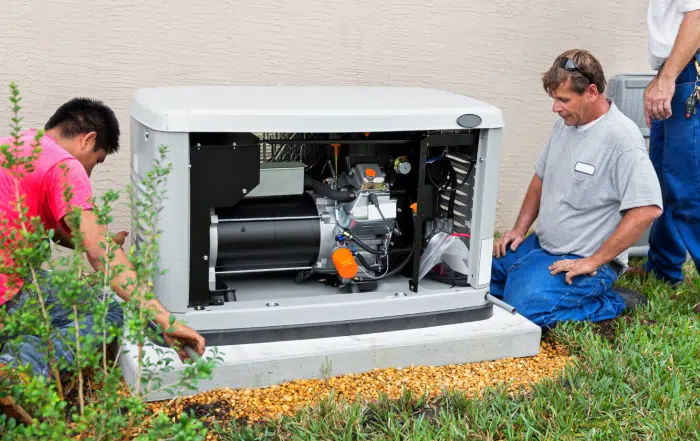
Proper ventilationis key to safe generator use. Generators produce carbon monoxide, a deadly gas. Always place the generator outdoors in a well-ventilated area. Keep it away from windows, doors, and vents to prevent gas from entering your home. Never run a generator inside a garage or basement, even if doors are open.
For electrical connections, use heavy-duty, outdoor-rated extension cords. Check cords for damage before use. Connect appliances directly to the generator or through a transfer switch. A transfer switch stops back-feed, protecting utility workers and your generator. Always follow the generator’s manual for wiring instructions.
Credit: louisvilleair.com
Frequently Asked Questions
What Size Generator Is Needed For A 5,000 Btu Ac?
A 5,000 BTU air conditioner typically requires a generator with at least 1,000 watts. This size ensures optimal performance without overloading the generator. Always check the AC’s energy requirements and the generator’s specifications for compatibility. Using a slightly larger generator can provide a buffer for additional power needs.
Can A Portable Generator Run A Central Ac Unit?
Yes, a portable generator can run a central AC unit, but it must have sufficient wattage. Central air conditioners often need 5,000 to 7,500 watts. Ensure the generator’s capacity matches the AC’s starting and running wattage. It’s important for safety and efficiency to check both devices’ specifications.
How Many Watts Does A 10,000 Btu Ac Use?
A 10,000 BTU air conditioner typically uses about 1,200 watts for operation. This includes starting and running wattage requirements. It’s crucial to choose a generator with a little more capacity. This ensures smooth operation and accounts for any additional power needs or fluctuations.
Is Inverter Generator Better For Air Conditioners?
Yes, inverter generators are often better for air conditioners due to their efficiency and stable power output. They adjust engine speed to the power required, saving fuel and reducing noise. This makes them ideal for sensitive electronics and appliances like air conditioners, ensuring optimal performance.
Conclusion
Choosing the right generator size keeps your air conditioner running smoothly. Check your AC’s starting and running watts first. Add extra power for other devices you want to use. A generator with enough capacity avoids damage and power loss. Small generators may not handle the load well.
Bigger ones ensure steady power but cost more. Balance your needs and budget carefully. Proper planning saves you stress during power outages. Stay cool and comfortable without surprises.