Are you confused about choosing the right garden hose for your outdoor needs? Knowing the standard size of a garden hose can save you time, money, and frustration.
Whether you’re watering your plants, washing your car, or filling a pool, having the correct hose size makes all the difference. You’ll discover exactly what a standard garden hose size is and why it matters for your home. Keep reading to find the perfect fit for your garden and make your watering tasks easier than ever.
Common Garden Hose Lengths
Garden hoses come in various lengths to fit different needs. Choosing the right length helps you water your plants efficiently.
Knowing the common sizes makes it easier to pick a hose that works well in your garden or yard.
Popular Length Options
Standard garden hoses usually come in these popular lengths. Each size suits different tasks and garden sizes.
- 25 feet:Good for small patios and flower beds.
- 50 feet:Most common length, fits many average gardens.
- 75 feet:Useful for larger yards or multiple garden areas.
- 100 feet:Best for very large yards or hard-to-reach spots.
Choosing The Right Length
Pick a hose length that reaches all your plants without stretching too much. A hose too short limits your reach. A hose too long can be hard to store and may reduce water pressure.
| Length | Best Use | Storage Tip |
| 25 feet | Small garden beds | Coil on a small reel |
| 50 feet | Medium-sized yards | Use a hose hanger |
| 75 feet | Large gardens | Store on a large reel |
| 100 feet | Very large areas | Keep in shaded area |
Standard Hose Diameters
Garden hoses come in different sizes. The diameter of a hose affects how much water flows through it. Knowing the standard sizes helps you pick the right hose for your needs.
The most common hose sizes fit most garden tasks. These sizes balance water flow and ease of use.
Typical Diameter Sizes
Garden hoses usually have diameters of 1/2 inch, 5/8 inch, or 3/4 inch. Each size serves different purposes in watering and gardening.
- 1/2 inch: Thin and light, good for small watering jobs.
- 5/8 inch: The most common size, good for most garden tasks.
- 3/4 inch: Larger size, used for heavy watering and longer distances.
Impact On Water Flow
Hose diameter affects how fast water flows. Larger hoses carry more water but may be heavier.
Choosing the right diameter helps keep good pressure and saves water.
| Diameter | Water Flow Rate | Best Use |
|---|---|---|
| 1/2 inch | Low | Small gardens, light watering |
| 5/8 inch | Medium | Most gardens, general watering |
| 3/4 inch | High | Large gardens, heavy watering |
Material Types And Their Sizes
Garden hoses come in different materials and sizes. Choosing the right material helps you get the best use.
Standard garden hoses usually have diameters between 1/2 inch and 5/8 inch. The material affects the hose’s durability and flexibility.
Rubber Vs. Vinyl Hoses
Rubber hoses are heavier but last longer. They resist cracking and kinks well. Rubber is good for heavy use.
Vinyl hoses are lighter and cheaper. They are less flexible and can crack in cold weather. Vinyl is good for light use.
- Rubber hose sizes: Usually 5/8 inch or 3/4 inch diameter
- Vinyl hose sizes: Often 1/2 inch or 5/8 inch diameter
- Rubber hoses handle higher water pressure
- Vinyl hoses are easier to carry and store
Expandable Hose Dimensions
Expandable hoses grow when filled with water. They are light and easy to store. Sizes vary by brand and length.
Most expandable hoses have a 1/2 inch diameter. They come in lengths from 25 feet to 100 feet. The hose shrinks back when empty.
| Hose Type | Diameter | Length Options |
|---|---|---|
| Rubber Hose | 5/8 inch or 3/4 inch | 25, 50, 75, 100 feet |
| Vinyl Hose | 1/2 inch or 5/8 inch | 25, 50, 75 feet |
| Expandable Hose | 1/2 inch | 25, 50, 75, 100 feet |
Fittings And Connector Sizes
Garden hoses need the right fittings to connect properly. Fittings come in various sizes and types. This guide explains standard connector sizes and how to match them with hoses.
Choosing the correct fitting size ensures a tight seal and prevents leaks. It also helps water flow smoothly through the hose.
Standard Connector Types
Most garden hoses use connectors that follow standard sizes. The common types include:
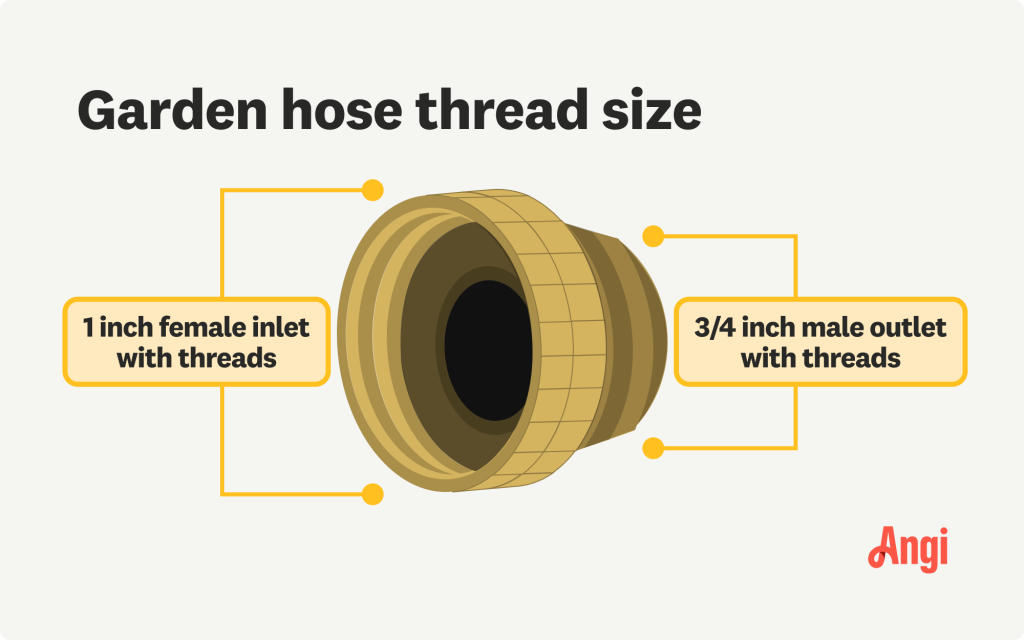
- Threaded Connectors:These screw onto hose ends or spigots. The threads are usually 3/4 inch.
- Quick-Connect Fittings:These snap together for easy use without tools.
- Barbed Fittings:These fit inside the hose and hold tight with clamps.
Threaded connectors are the most widely used for garden hoses. They come in male and female ends to fit the hose and water source.
Matching Hose And Fitting Sizes
Garden hoses come in different inside diameters, usually 1/2 inch, 5/8 inch, or 3/4 inch. It is important to match the fitting size to the hose size.
| Hose Diameter | Fitting Size | Common Use |
|---|---|---|
| 1/2 inch | 1/2 inch | Light watering and small gardens |
| 5/8 inch | 3/4 inch | Most common size for home use |
| 3/4 inch | 3/4 inch | Heavy-duty watering and commercial use |
Using a fitting that is too large or too small can cause leaks or reduce water flow. Always check the hose label or measure the inside diameter before buying fittings.
Choosing Hose Size For Different Uses
Garden hoses come in various sizes. Picking the right size depends on how you plan to use it.
Let’s explore which hose size fits best for different activities like gardening, car washing, and industrial tasks.
Gardening And Lawn Care
For gardening, a hose that is lightweight and easy to handle is ideal. Most homeowners prefer a 5/8 inch hose for their garden.
- Watering plants and flowers
- Feeding lawns with a sprinkler
- Cleaning garden tools
Car Washing And Cleaning
Washing a car requires a hose with good water pressure. A 1/2 inch hose can be sufficient, but a 5/8 inch hose is often better for more pressure.
| Hose Size | Usage |
| 1/2 inch | Light cleaning |
| 5/8 inch | Standard car washing |
| 3/4 inch | Heavy-duty cleaning |
Industrial Applications
In industrial settings, hoses need to withstand higher pressures and volumes. A 3/4 inch hose is often required for these tasks.
Credit: www.nytimes.com
Tips For Measuring Your Garden Hose
Knowing the size of your garden hose helps you buy the right replacement or extension. The two main parts to measure are length and diameter.
Measuring your hose correctly saves time and avoids mistakes. Use simple tools and clear steps to get accurate results.
Measuring Length Accurately
Lay your garden hose flat on the ground. Stretch it out fully without any kinks or loops.
Use a measuring tape or a long ruler to measure from one end to the other. Write down the length in feet or meters.
- If the hose is too long, measure in sections and add the numbers.
- Do not include the fittings in the length measurement.
- Measure twice to be sure of the length.
Checking Diameter Size
Diameter is the width of the hose opening. It determines the water flow and fitting size.
Use a ruler or caliper to measure the inside opening of the hose. Measure in inches or millimeters.
- Common garden hose diameters are ½ inch, ⅝ inch, and ¾ inch.
- Measure the inside width, not the outer hose diameter.
- Check the diameter at both ends to confirm it is consistent.
Common Mistakes When Selecting Hose Size
Choosing the right garden hose size is important for good watering. Many people pick the wrong size without thinking about how it affects water flow.
This guide looks at common errors made when picking hose sizes. Understanding these mistakes helps you avoid problems with your garden hose.
Oversized Vs. Undersized Issues
Using a hose that is too big or too small causes problems. An oversized hose wastes water and can be hard to handle. An undersized hose reduces water flow and pressure.
- Oversized hosesmay slow water pressure at the faucet.
- Undersized hoseslimit how much water reaches your plants.
- Too large or too small hoses make watering less efficient.
- Heavy hoses can cause strain and are harder to move.
Ignoring Water Pressure Factors
Water pressure affects how well a hose works. Many forget to check water pressure before choosing hose size. Low pressure needs a wider hose to keep flow steady.
| Water Pressure | Recommended Hose Size | Effect of Wrong Size |
| Low (below 40 psi) | 5/8 inch or larger | Too small hose reduces flow |
| Medium (40-60 psi) | 1/2 inch to 5/8 inch | Too large hose lowers pressure |
| High (above 60 psi) | 1/2 inch | Too large hose causes waste |

Credit: www.homehardware.ca

Credit: www.nytimes.com
Frequently Asked Questions
What Is The Standard Diameter Of A Garden Hose?
The standard garden hose diameter is typically 5/8 inches. This size balances water flow and ease of use for most garden tasks. It fits most common outdoor faucets and accessories.
How Long Is A Standard Garden Hose Usually?
A standard garden hose length is commonly 50 feet. This length provides good reach for typical garden watering needs. Longer or shorter hoses are also available for specific tasks.
Are There Different Types Of Garden Hose Sizes?
Yes, garden hoses come in 1/2 inch, 5/8 inch, and 3/4 inch diameters. Each size suits different water flow needs and pressure requirements. The 5/8 inch size is most popular.
Does Hose Diameter Affect Water Pressure And Flow?
Yes, a larger hose diameter increases water flow and reduces pressure loss. Smaller diameters restrict flow, which may reduce water output for larger gardens.
Conclusion
A standard garden hose usually measures 5/8 inch in diameter. This size fits most home watering needs well. Knowing hose size helps you pick the right one for your garden. It also ensures good water flow without wasting water. Choosing the correct hose size makes your gardening easier.
Keep this in mind when buying or replacing your hose. A simple step for better watering results.