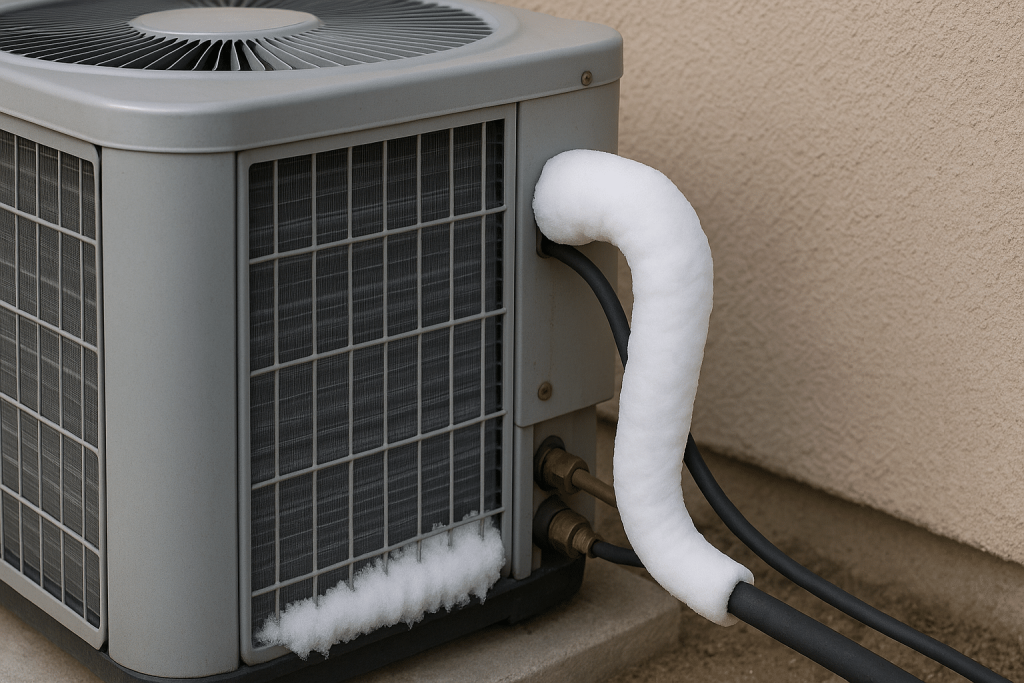
Is your air conditioner suddenly covered in ice? It’s frustrating when your cool relief turns into a chilly problem.
You might wonder why this happens and what you can do to fix it fast. Ignoring a frozen AC can make things worse and cost you more money. But don’t worry—you’re about to discover simple steps that can help you thaw your unit and keep your home comfortable.
Keep reading to learn exactly what to do when your air conditioner freezes up.
Signs Of A Frozen Ac
A frozen air conditioner can stop cooling your home properly. It can also cause damage if not fixed quickly.
Knowing the signs helps you act fast and avoid costly repairs. Look for these common clues that your AC is frozen.
Visible Ice On Coils
One clear sign is seeing ice on the AC coils. The evaporator coils inside the unit may look frosty or covered in thick ice.
- Ice may form on the pipes or metal parts.
- You might see a white, frosty layer on the coils.
- Sometimes ice builds up on the outdoor unit as well.
Reduced Airflow
If your AC is frozen, airflow from the vents will drop. The ice blocks air from passing through the system.
| Airflow Issue | Cause |
| Weak air coming from vents | Frozen coils block air |
| Cool air feels less strong | Ice limits cooling power |
| Longer cooling times | Frozen parts reduce efficiency |
Warm Air Blowing
When ice forms, the AC cannot cool the air well. The air blowing from the vents may feel warm or just slightly cool.
Common reasons for warm air include:
- Frozen evaporator coils reduce heat transfer
- Compressor strain lowers cooling output
- Blocked airflow stops cold air circulation

Credit: www.davisheat.com
Common Causes Of Freezing
Air conditioners may freeze up due to several common reasons. Understanding these causes helps you fix the problem quickly.
Freezing can reduce cooling efficiency and damage your AC unit. Let’s look at the main causes.
Dirty Air Filters
Dirty air filters block airflow inside your AC. This makes the evaporator coil too cold, causing ice to form.
- Filters collect dust and debris over time
- Restricted airflow lowers temperature on coils
- Ice builds up and stops normal cooling
- Change or clean filters every 1 to 3 months
Low Refrigerant Levels
Refrigerant absorbs heat from your home. Low levels make the coils colder than normal, causing ice to form.
| Sign | Effect |
| Hissing sound | Possible refrigerant leak |
| Warm air blowing | Not enough cooling |
| Ice on coils | Freezing problem |
Blocked Airflow
Blocked airflow happens if vents or ducts are closed or dirty. This stops warm air from reaching the evaporator coil.
- Closed or blocked vents reduce air movement
- Dirty ducts trap dust and limit airflow
- Ice forms because cold air stays too long on coils
- Keep vents open and ducts clean
Thermostat Issues
A faulty thermostat can make the AC run too long or not enough. This causes temperature problems leading to freezing.
| Problem | Result |
| Thermostat reads wrong temperature | AC runs too long or short |
| Improper fan settings | Airflow affected, causing ice build-up |
| Sensor damage | Inconsistent cooling and freezing |
Immediate Steps To Take
If your air conditioner freezes up, you must act quickly to prevent damage. Taking the right steps can help your AC work again soon.
Follow these simple actions to safely handle a frozen air conditioner and avoid bigger problems.
Turn Off The Ac
First, switch off your air conditioner. This stops the cooling process and prevents more ice from forming.
Turning off the AC helps protect the compressor and other parts from damage caused by ice buildup.
Switch To Fan Mode
After turning off the AC, set the system to fan mode. This moves air without cooling it.
Fan mode helps melt the ice by circulating warm air around the frozen parts safely.
Allow Ice To Melt
Give the ice time to melt naturally. Do not try to chip or force it off, as this can cause damage.
- Leave the fan running to speed melting
- Check the unit every 30 minutes
- Wait until all ice is gone before turning AC back on
Cleaning And Maintenance Tips
An air conditioner can freeze up if it is not clean or well maintained. Regular cleaning helps your AC work well.
Use these tips to keep your air conditioner clean. This will help prevent freezing and improve cooling.
Replacing Air Filters
Dirty air filters block airflow. This makes the air conditioner work harder and can cause freezing.
Change your air filters every 1 to 3 months. This keeps air flowing well and stops ice buildup.
- Turn off the AC before replacing the filter
- Remove the old filter carefully
- Install the new filter in the right direction
- Check the filter size before buying a new one
Cleaning Evaporator Coils
Evaporator coils absorb heat from the air. Dirt on coils lowers their efficiency and causes freezing.
Clean the coils gently using a soft brush or coil cleaner. Avoid bending the fins on the coils.
- Turn off power to the AC unit
- Use a soft brush to remove dust and dirt
- Apply coil cleaner if needed, following instructions
- Rinse with water if safe, then let dry before turning on
Clearing Vents And Registers
Blocked vents and registers reduce airflow. This can make the AC freeze up and cool poorly.
Keep vents and registers clear of dust and objects. Clean them regularly to maintain good air flow.
- Remove vent covers carefully
- Use a vacuum or brush to clean vents and registers
- Check for furniture or curtains blocking airflow
- Replace vent covers after cleaning
Checking Refrigerant Levels
When your air conditioner freezes up, low refrigerant could be the cause. Checking refrigerant levels helps find this issue early.
Refrigerant is the liquid that cools the air. If it runs low, the system cannot work properly and may freeze.
Signs Of Low Refrigerant
You can spot low refrigerant by watching for certain signs. These signs warn you the system needs attention.
- Air from vents feels warm or not as cold as usual
- Ice forms on the outdoor unit or refrigerant lines
- The air conditioner runs longer but cools less
- Higher electricity bills without a change in use
- Hissing or bubbling noises near the refrigerant lines
When To Call A Professional
Handling refrigerant needs skill and special tools. Calling a professional keeps you safe and protects your system.
| Reason | Why Call a Professional |
| Low refrigerant detected | Technicians can check and refill refrigerant safely. |
| Ice build-up on AC unit | Experts diagnose cause and fix it properly. |
| Unusual noises near refrigerant lines | Professionals identify leaks or damage quickly. |
| System runs constantly without cooling | Technicians evaluate and repair system issues. |

Credit: www.youtube.com
Preventing Future Freezing
An air conditioner that freezes up can stop cooling your home. It needs care to work well and avoid freezing again.
Following simple steps helps keep your AC running smoothly and cold air flowing freely.
Regular Maintenance Schedule
Check your air conditioner often to catch problems early. Clean or replace filters every month or two during use.
Schedule a professional tune-up at least once a year to inspect coils, refrigerant levels, and other parts.
- Clean or change filters regularly
- Inspect and clean evaporator and condenser coils
- Check refrigerant levels and recharge if low
- Look for leaks or damaged parts
- Ensure electrical connections are secure
Proper Thermostat Settings
Set your thermostat to a steady temperature to avoid strain on your AC. Avoid setting it too low or changing it often.
Use a programmable thermostat to keep temperature stable when you are home or away. This helps prevent freezing caused by overworking.
- Keep thermostat at a comfortable, steady temperature
- Do not set temperature lower than needed
- Use programmable settings for consistent control
- Avoid rapid temperature changes
Ensuring Adequate Airflow
Good airflow keeps your AC parts from freezing. Check that vents and registers are open and clean.
Clear any blockages near the outdoor unit and inside your home. Replace filters to keep air flowing freely.
- Keep vents and registers open and clear
- Remove furniture or items blocking airflow
- Clean debris from outdoor unit
- Replace air filters regularly
When To Seek Professional Help
If your air conditioner freezes up often, you might need a pro. Some problems are too hard to fix alone.
Knowing when to call a technician can save time and money. It also keeps your unit safe and working well.
Persistent Freezing Issues
If your AC freezes again and again, it shows a bigger problem. Simple fixes may not work anymore.
Repeated freezing can damage your system. A professional can find the root cause and fix it properly.
Complex Repairs
Some repairs need special tools or skills. If the problem involves refrigerant or electrical parts, get expert help.
Trying complex repairs yourself may cause more damage or void your warranty.
- Refrigerant leaks
- Electrical failures
- Compressor issues
Safety Considerations
Frozen AC units can be unsafe. Ice build-up can cause water leaks or electrical shorts.
Call a professional if you smell burning, hear strange noises, or see water pooling. Safety comes first.

Credit: www.delcohvac.com
Frequently Asked Questions
Why Does An Air Conditioner Freeze Up?
An air conditioner may freeze due to restricted airflow, low refrigerant levels, or a malfunctioning thermostat. Dirty filters or blocked vents can cause airflow issues. Regular maintenance and cleaning can help prevent freezing. Consult a professional if the problem persists for further diagnosis and repair.
How Can I Unfreeze My Ac Unit?
To unfreeze an AC, first, turn off the unit. Allow it to thaw naturally. Check and clean the air filters. Ensure all vents are open and unobstructed. Once completely defrosted, restart the unit. If the issue continues, consult a professional technician for further assessment and repair.
What Are The Signs Of A Frozen Ac?
Common signs include reduced airflow, ice on coils, or unusually high energy bills. You might also notice water leaks or the unit not cooling effectively. Regular checks and cleaning can help identify these issues early, preventing further damage to your air conditioner.
Can Low Refrigerant Cause Freezing?
Yes, low refrigerant levels can cause your AC to freeze. The refrigerant helps absorb heat from your home. If levels are low, the coils can become too cold, leading to ice formation. It’s essential to have a professional check and refill the refrigerant if needed.
Conclusion
A frozen air conditioner can cause many problems. Act quickly to avoid damage and discomfort. Turn off the unit and let it thaw naturally. Check the air filter and clean or replace it. Make sure the airflow is not blocked.
Regular maintenance helps prevent freezing issues. Call a professional if the problem continues. Stay cool and comfortable by keeping your AC in good shape. Don’t ignore small signs; they can save you money and hassle. Simple steps can keep your home cool all summer.