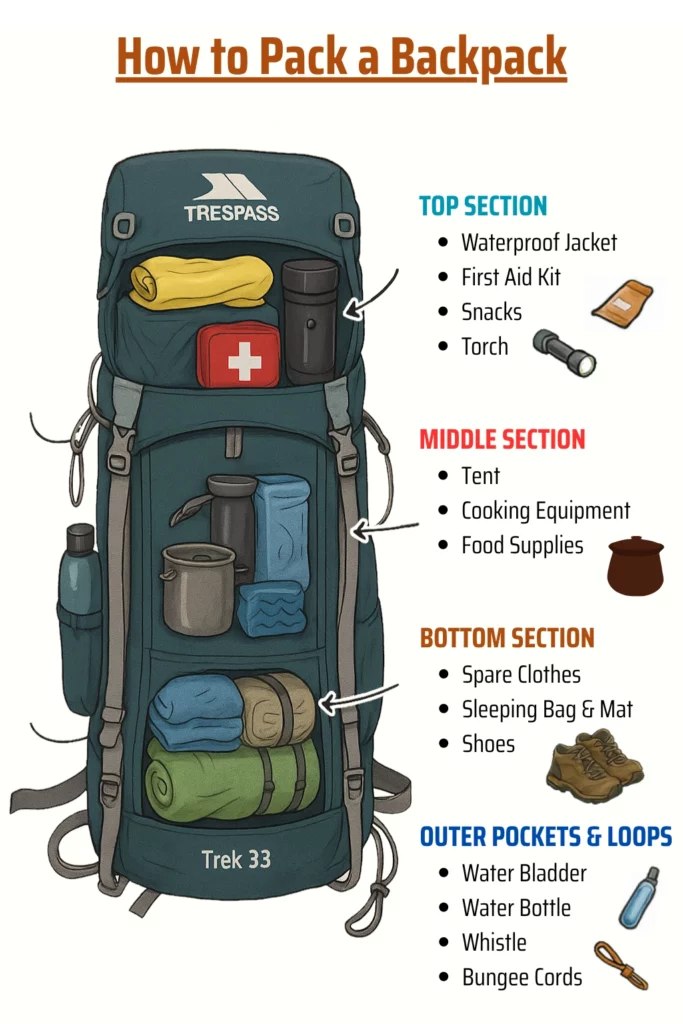
Planning a hiking trip? One of the most important steps is knowing exactly what to pack.
Packing the right gear can make your hike safer, more comfortable, and a lot more fun. But it’s easy to either overpack and carry too much, or forget something essential. You’ll discover the must-have items that will keep you prepared for whatever the trail throws your way.
Keep reading, and you’ll feel confident and ready before you even step outside.
Choosing The Right Backpack
Packing the right backpack is key for a good hiking trip. A good backpack holds your gear safely and feels comfortable to carry.
Think about your needs before picking one. Size, comfort, and durability matter the most.
Size And Capacity
Pick a backpack size that fits your trip length. Small backpacks are best for day hikes. Bigger ones work for overnight trips.
Capacity is measured in liters. Choose enough space for your gear without carrying extra weight.
- Day hikes: 15-30 liters
- Weekend trips: 30-50 liters
- Long trips: 50+ liters
Comfort And Fit
A backpack should fit your body well. Look for adjustable straps and padded areas. These reduce strain on your shoulders and back.
Try the backpack with weight inside. Walk around to check comfort before buying.
- Adjust shoulder straps
- Check hip belt fit
- Look for padded back panel
- Choose breathable materials
Durability And Features
Pick a backpack made from strong materials. It should resist tears and water. Look for reinforced stitching and durable fabric.
Extra features like multiple pockets, hydration bladder sleeves, and rain covers add value. These help organize gear and protect it from weather.
- Water-resistant fabric
- Multiple compartments
- Hydration bladder compatibility
- Rain cover included
Essential Clothing
Choosing the right clothes is key for a safe and fun hiking trip. Good clothing keeps you comfortable and protected.
Pack clothes that fit the weather and your hiking style. Think about layers, protection, and sturdy shoes.
Layering Basics
Layering helps you adjust to changing temperatures on the trail. Start with a base layer that moves sweat away from your skin.
Add a middle layer for warmth. Finish with an outer layer to block wind and rain.
- Base layer: lightweight and moisture-wicking
- Middle layer: insulating, like fleece or wool
- Outer layer: waterproof and windproof shell
Weather-appropriate Gear
Check the weather forecast before packing. Choose clothes that protect you from rain, sun, or cold.
Bring a hat and sunglasses for sun. Pack a rain jacket if rain is possible. Use gloves and a warm hat in cold weather.
- Sun protection: hat, sunglasses, and sunscreen
- Rain gear: waterproof jacket and pants
- Cold weather: insulated gloves, hat, and thermal layers
Footwear Choices
Wear shoes made for hiking. They should support your feet and protect against rough ground.
Choose boots for tough trails or rough weather. Use trail shoes for lighter hikes and dry conditions.
- Hiking boots: strong ankle support and waterproof
- Trail shoes: lighter and more flexible
- Wear moisture-wicking socks to avoid blisters
Navigation Tools
Good navigation tools keep you safe and on track during hikes. They help you find your way in nature.
Bring reliable gear to avoid getting lost. Choose tools that fit your hiking style and route.
Maps And Compass
Maps and compasses are basic but important tools. They do not need batteries and work in all conditions.
- Topographic maps show trails and land features.
- A compass points to magnetic north to help orient the map.
- Learn to read both before hiking.
- Check the map scale for distance understanding.
- Keep the compass flat and steady for accuracy.
Gps Devices
GPS devices use satellites to provide your exact location. They are easy to use and show your route on a screen.
| Feature | Benefit |
| Satellite tracking | Precise location anywhere |
| Route recording | Save and follow your path |
| Battery powered | Needs charging or spare batteries |
| Weather resistant | Works in rain and snow |
Trail Apps
Trail apps on smartphones offer maps and track your hike. Many apps work offline with downloaded maps.
- Download maps before hiking to save battery.
- Use apps with emergency features for safety.
- Check app reviews for reliability.
- Keep your phone charged with a power bank.

Credit: www.macpac.co.nz
Safety And First Aid
When hiking, safety must come first. Carrying the right first aid gear helps you stay prepared for minor injuries. It also offers peace of mind on the trail.
This guide covers key items to pack for safety. It includes basic first aid supplies, shelter options, and locator devices.
Basic First Aid Kit
A basic first aid kit treats common hiking injuries. It should be easy to carry and contain essential items for cuts, scrapes, and pain relief.
- Adhesive bandages in various sizes
- Antiseptic wipes to clean wounds
- Gauze pads and medical tape
- Elastic bandage for sprains
- Pain relievers like ibuprofen or acetaminophen
- Tweezers for removing splinters
- Antihistamine for allergic reactions
- Small scissors and safety pins
Emergency Shelter
Emergency shelter protects you from weather if you get stranded. It is lightweight and fits easily into your pack.
| Type | Description | Weight |
|---|---|---|
| Space Blanket | Reflects body heat and blocks wind | Less than 4 ounces |
| Emergency Bivvy | Compact sleeping bag for warmth | 12 to 16 ounces |
| Tarp or Poncho | Provides rain and wind protection | 6 to 10 ounces |
Personal Locator Beacons
Personal locator beacons (PLBs) send your location during emergencies. They help rescuers find you quickly if you are lost or hurt.
Choose a PLB with these features:
- GPS accuracy
- Long battery life
- Waterproof design
- Easy activation
Food And Hydration
Proper food and hydration are essential for a successful hiking trip. Packing smart ensures you stay energized and healthy on the trail.
Bring enough water and nourishing snacks to maintain your energy levels. Here are some tips for what to pack.
Water Storage Options
Carrying enough water is critical. There are different ways to store water while hiking.
- Water bottles are easy to fill and drink from.
- Hydration bladders fit in backpacks and have drinking tubes.
- Collapsible water bottles save space when empty.
Portable Water Filters
Water filters are useful for longer hikes. They allow you to drink safely from natural sources.
Choose lightweight filters that are easy to use. They should remove bacteria and parasites.
- Squeeze filters are small and efficient.
- Pump filters work well for larger groups.
- Gravity filters offer hands-free convenience.
High-energy Snacks
Snacks provide quick energy boosts. Choose snacks that are easy to carry and eat.
Look for snacks high in protein and carbohydrates. These give you lasting energy.
- Trail mix combines nuts, seeds, and dried fruits.
- Energy bars are compact and nutritious.
- Jerky offers protein with little weight.
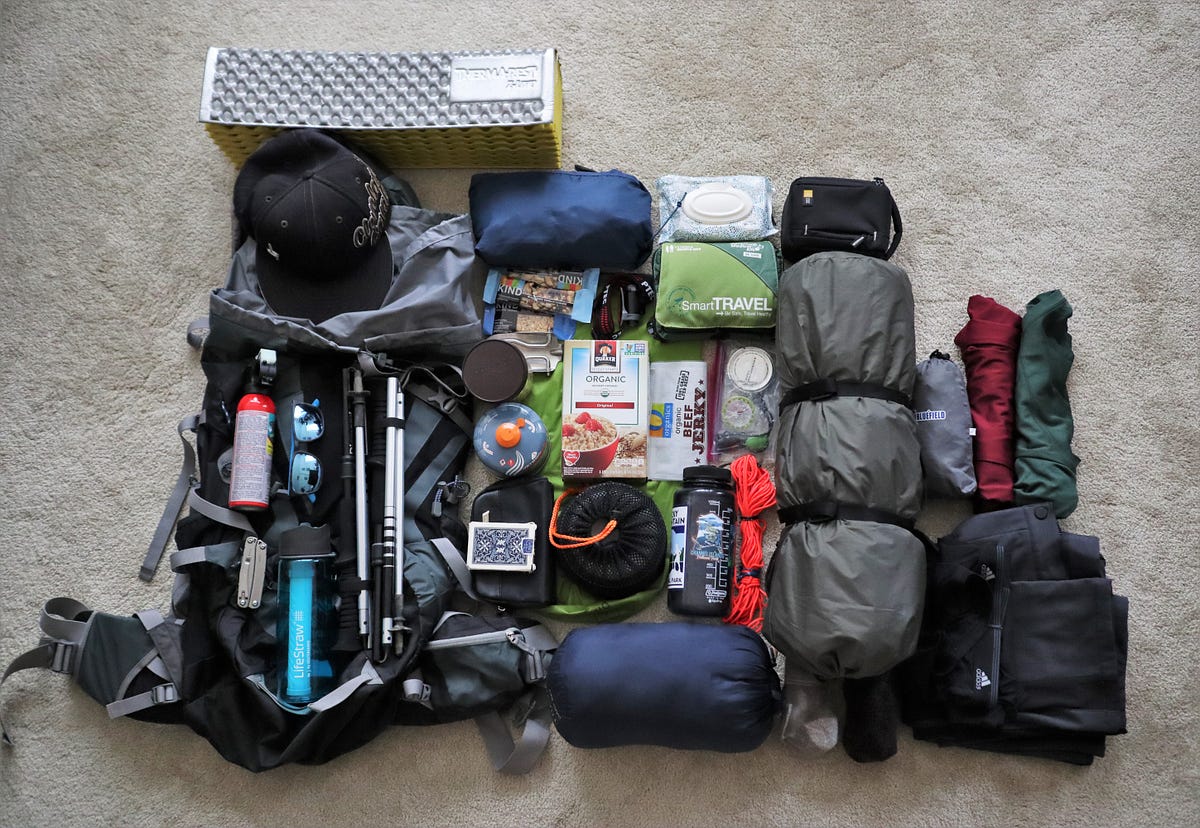
Credit: pangolinswithpacks.com
Camping And Sleeping Gear
Packing the right camping and sleeping gear is key for a safe hike. It helps you rest well and stay protected outdoors.
Choose gear that fits your trip length, weather, and weight limits. Quality gear makes camping easier and more fun.
Tents And Tarps
Tents keep you safe from rain, wind, and bugs. Pick a tent that suits the weather and number of campers.
Tarps are lightweight shelters. You can use them under tents or alone to block rain or sun.
- Choose waterproof and durable materials
- Look for easy setup designs
- Pick size based on how many people camp
- Bring stakes and guylines for stability
Sleeping Bags And Pads
Sleeping bags keep you warm at night. Select one with the right temperature rating for your trip.
Sleeping pads add comfort and insulation from the cold ground. They help you sleep better and stay warm.
- Choose sleeping bags with proper insulation type
- Check weight and pack size for hiking ease
- Pick sleeping pads that are lightweight and durable
- Consider self-inflating or foam pads
Cooking Equipment
Good cooking gear lets you prepare meals safely and quickly. Bring lightweight and easy-to-use items.
Include a stove, fuel, cookware, and utensils. Make sure everything fits well in your pack.
- Use compact camping stoves or portable grills
- Bring pots and pans suitable for your stove
- Carry reusable utensils and plates
- Pack a lighter or matches in a waterproof case
Tools And Accessories
When hiking, carrying the right tools and accessories keeps you safe and ready. These items help with many tasks on the trail.
Focus on lightweight and durable gear to save space and weight in your pack. Choose tools that fit your hiking needs.
Multi-tools And Knives
Multi-tools combine many functions in one compact device. They usually include pliers, screwdrivers, and blades. Knives are useful for cutting rope, food, or branches.
- Look for rust-resistant blades to last longer.
- Choose tools with locking mechanisms for safety.
- Pick a size that fits your hand comfortably.
- Consider a sheath or case to protect the blade.
- Test the tool before your hike to ensure it works well.
Lighting Options
Good lighting is essential for early mornings, late evenings, or emergencies. Carry a reliable light source to see clearly in the dark.
| Type | Advantages | Drawbacks |
|---|---|---|
| Headlamp | Keeps hands free; bright beam | May feel tight on the head |
| Flashlight | Easy to use; focused light | Needs one hand to hold |
| Lantern | Lights up a large area | Bulkier and heavier |
Fire Starters
Fire starters help you make fire quickly and safely. They are useful for warmth, cooking, and signaling.
Popular fire starters include:
- Waterproof matches
- Ferro rods
- Magnesium blocks
- Firestarter cubes or sticks
Keep fire starters in a dry, easy-to-reach place in your pack.
Credit: pangolinswithpacks.com
Packing Tips
Packing for a hike needs careful thought. You want to carry what is important but keep your load light. Good packing helps you move easily and stay safe on the trail.
Use smart methods to arrange your gear. This saves space and makes it easy to find things. Respect nature by packing in ways that cause no harm to the environment.
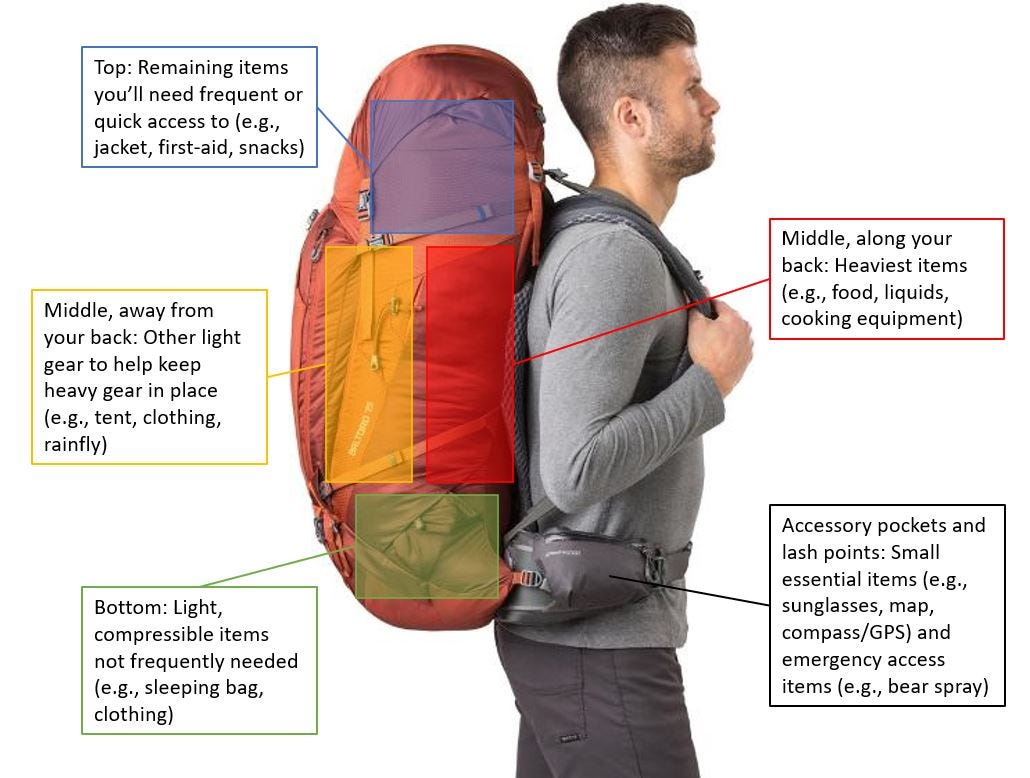
Weight Distribution
Keep heavy items close to your back and centered. This helps keep your balance and reduces strain. Place lighter items farther from your body to keep your pack stable.
- Put your sleeping bag at the bottom of the pack
- Place heavy gear like water and stove near the middle
- Keep frequently used items at the top or in side pockets
- Distribute weight evenly on both sides
- Adjust straps to bring the pack close to your body
Organizing Gear
Use bags or pouches to keep items sorted. This stops things from mixing and saves time. Organizing gear helps you find what you need fast while hiking.
| Gear Type | Storage Method | Example |
| Clothes | Compression sack | Jacket, socks |
| Food | Sealed bags | Snacks, meals |
| Cooking | Small container | Stove, fuel |
| First Aid | Waterproof pouch | Bandages, medicine |
| Electronics | Protective case | Phone, GPS |
Leave No Trace Principles
Protect nature by following simple rules. Pack out all trash and keep campsites clean. Respect plants and animals by staying on trails and avoiding damage.
- Carry all trash back with you
- Use existing campsites and trails only
- Do not pick plants or disturb wildlife
- Minimize campfire impact by using a stove
- Respect other hikers and keep noise low
Frequently Asked Questions
What Are Essential Items To Pack For A Day Hike?
Pack water, snacks, a map, sunscreen, a first aid kit, and weather-appropriate clothing. These basics keep you safe and comfortable.
How Much Water Should I Carry For Hiking?
Carry at least 2 liters of water per person for a day hike. Hydration is key to maintaining energy and health.
What Clothing Is Best For Hiking Trips?
Wear moisture-wicking layers, sturdy hiking boots, and a waterproof jacket. Dress for changing weather to stay dry and comfortable.
Should I Bring A First Aid Kit While Hiking?
Yes, a small first aid kit helps treat cuts, blisters, or insect bites quickly. It’s essential for safety.
Conclusion
Packing right makes hiking safe and fun. Carry only what you need. Choose light, useful items for comfort. Don’t forget water, food, and a first aid kit. Dress for the weather and bring a map. Check your backpack before you leave.
Ready gear means less stress on the trail. Stay prepared and enjoy every step of your hike. Happy hiking!