Choosing the right air conditioner can feel confusing, especially when you see terms like “tonnage” thrown around. But here’s the truth: picking the right tonnage for your air conditioner is key to keeping your home cool without wasting energy or money.
If your AC is too small, your space won’t cool properly. If it’s too big, you’ll end up with higher bills and uneven temperatures. So, how do you know exactly what tonnage you need? Keep reading, and you’ll find simple answers that help you stay comfortable all year long—without any guesswork.

Credit: hvacnearme.ca
How Air Conditioner Tonnage Works
Choosing the right air conditioner size helps keep your home cool and saves energy. Tonnage is a key factor in picking the right unit.
This guide explains what tonnage means and why it matters for your cooling needs.
Definition Of Tonnage
Tonnage measures the cooling power of an air conditioner. It shows how much heat the unit can remove in one hour.
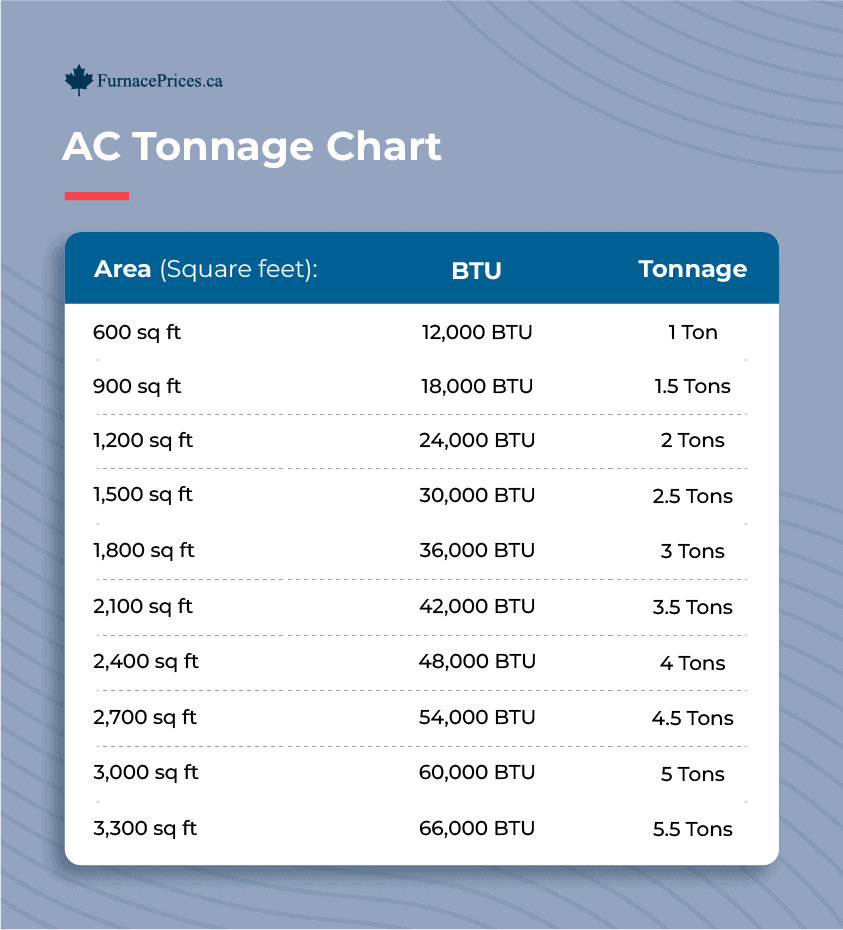
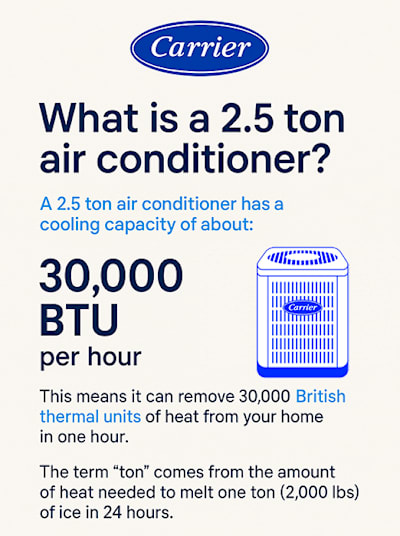
One ton equals 12,000 British Thermal Units (BTUs) per hour.
Cooling Capacity Explained
Cooling capacity tells how much heat an AC unit can remove from a room. It is measured in BTUs or tons.
| Tonnage | BTUs per Hour | Area Covered (approx.) |
|---|---|---|
| 0.5 Ton | 6,000 | 150 to 250 sq ft |
| 1 Ton | 12,000 | 400 to 600 sq ft |
| 1.5 Tons | 18,000 | 600 to 900 sq ft |
| 2 Tons | 24,000 | 900 to 1,200 sq ft |
| 3 Tons | 36,000 | 1,200 to 1,800 sq ft |
Why Tonnage Matters
Using the wrong tonnage can cause problems with comfort and energy use.
- Too small: The AC runs longer but can’t cool well.
- Too large: It cools fast but wastes energy and creates moisture issues.
- Right size: Balances comfort and efficiency.

Credit: aristotleair.com
Factors Influencing Tonnage Choice
Choosing the right air conditioner tonnage is important for comfort and efficiency. The tonnage depends on many factors. Understanding these helps you pick the best unit.
Too small a unit will not cool well. Too large will waste energy and money. Let’s look at key factors that affect tonnage choice.
Room Size And Layout
The size of the room is the main factor for AC tonnage. Bigger rooms need more cooling power. The layout also matters because open spaces cool differently than closed rooms.
High ceilings or many windows can increase cooling needs. Rooms with many walls or partitions may need more than one unit or higher tonnage.
Climate And Weather Conditions
Where you live affects the tonnage you need. Hot and humid climates require stronger AC units. Cooler areas may need less cooling power.
Consider the hottest temperature your area reaches. This helps ensure your AC can handle peak heat days comfortably.
Insulation And Ventilation
Good insulation keeps cool air inside and heat outside. Poor insulation means the AC works harder. Ventilation also affects cooling needs.
Rooms with drafts or poor seals lose cool air fast. This increases the tonnage required to maintain comfort.
- Well-insulated and sealed rooms need less tonnage
- Rooms with poor insulation or drafts need more cooling power
- Proper ventilation can reduce AC load
Number Of Occupants
People generate heat. More occupants raise the room temperature. This means the AC must work harder to cool the space.
For every extra person, add extra cooling capacity. This prevents the room from feeling warm and stuffy.
- 1-2 people: standard cooling load
- 3-4 people: increase tonnage slightly
- More than 4 people: consider higher capacity unit
Appliance Heat Generation
Appliances like computers, ovens, and lights produce heat. This adds to the cooling load in a room. More appliances mean more cooling power is needed.
Think about the type and number of appliances in the space. This helps in choosing the right tonnage for your AC.
- High heat appliances increase cooling needs
- Rooms with many electronics may need larger AC units
- Kitchen areas usually require higher tonnage
Calculating The Right Tonnage
Choosing the correct air conditioner size is important for comfort and energy savings. The right tonnage depends on your room’s size and other factors.
This guide explains how to calculate the right tonnage for your space step by step.
Measuring Room Square Footage
First, measure the length and width of the room in feet. Multiply these two numbers to get the square footage.
Example: A room 15 feet long and 12 feet wide is 180 square feet.
Btu Requirements Per Square Foot
Air conditioners are rated by BTUs (British Thermal Units). Each square foot needs about 20 BTUs for cooling.
| Room Size (sq ft) | BTU Needed |
| 100 | 2,000 |
| 200 | 4,000 |
| 300 | 6,000 |
| 400 | 8,000 |
| 500 | 10,000 |
Adjustments For Sunlight And Shading
Rooms with a lot of sunlight need extra cooling. Shaded rooms may need less.
- Add 10% to BTU if the room gets strong sunlight
- Subtract 10% if the room is mostly shaded
Accounting For Ceiling Height
Standard BTU calculations assume 8-foot ceilings. Taller ceilings need more cooling power.
| Ceiling Height | BTU Adjustment |
|---|---|
| 8 feet or less | No change |
| 9 to 10 feet | Increase BTU by 10% |
| Above 10 feet | Increase BTU by 20% |
Common Tonnage Sizes And Their Uses
Choosing the right air conditioner size is important for comfort and energy savings. Air conditioner size is measured in tons. One ton equals 12,000 BTUs of cooling power.
Different room sizes need different tonnage units. Picking the right tonnage helps keep your space cool without wasting energy.
Small Spaces: 0.75 To 1 Ton
Small rooms like bedrooms or home offices often need 0.75 to 1 ton air conditioners. These units cool areas up to 400 square feet effectively.
These ACs use less energy and are easy to install in small spaces.
- Bedrooms
- Home offices
- Small living rooms
- Studio apartments
Medium Spaces: 1.5 To 2 Tons
Medium-sized rooms or apartments usually need 1.5 to 2 ton air conditioners. These can cool spaces between 400 and 1,000 square feet.
This size works well for average living rooms, dining rooms, and combined areas.
- Living rooms
- Dining areas
- Two-bedroom apartments
- Small offices
Large Spaces: 2.5 To 5 Tons
Large rooms and big homes need 2.5 to 5 ton air conditioners. These units can cool areas from 1,000 up to 2,500 square feet or more.
They provide strong cooling power for big spaces but use more electricity.
- Large living rooms
- Open floor plans
- Large homes
- Event halls
Commercial Applications
Commercial buildings need air conditioners with higher tonnage. Sizes vary from 5 tons to over 20 tons, based on the building size and use.
Proper sizing ensures comfort for workers and customers while controlling energy costs.
| Building Type | Typical Tonnage Range |
|---|---|
| Small shops | 3 to 5 tons |
| Medium offices | 5 to 10 tons |
| Large commercial spaces | 10 to 20+ tons |
Risks Of Incorrect Tonnage
Choosing the right size air conditioner is very important. The tonnage affects comfort, cost, and energy use.
An incorrect tonnage can cause many problems. It can make your home too hot or cold and waste electricity.
Problems With Oversized Units
Too large air conditioners cool the space too fast. This stops them from removing moisture well.
- Short cycling: The unit turns on and off often.
- Poor humidity control: The air feels damp or sticky.
- Higher energy bills: The system uses more power than needed.
- Wear and tear: Frequent starts cause faster damage.
Issues With Undersized Units
Small air conditioners run constantly to cool the space. They may never reach the set temperature.
- Long run times: The system works too hard all day.
- Uneven cooling: Some rooms stay warm or hot.
- Increased repairs: The unit breaks down more often.
- Reduced comfort: It feels less cool inside.
Energy Efficiency Concerns
| AC Size | Energy Use | Comfort Level | Cost Impact |
|---|---|---|---|
| Oversized | High | Poor humidity control | Higher bills, more repairs |
| Correct Size | Optimal | Good cooling and humidity | Lower bills, less wear |
| Undersized | Very High | Uneven and insufficient cooling | More repairs, discomfort |
Credit: www.carrier.com
Additional Tips For Choosing Ac Tonnage
Choosing the right tonnage for your air conditioner is key to comfort and cost savings. Too big or too small can cause problems.
Here are extra tips to help you make a better choice for your space and needs.
Considering Energy Star Ratings
Energy Star ratings show how efficient an air conditioner is. A unit with a good rating uses less power and saves money.
- Look for ACs with high SEER ratings
- Check if the model meets Energy Star standards
- Choose units that fit your room size for best efficiency
Future Proofing Your Choice
Think about your home’s future when picking AC tonnage. Your needs might change over time.
| Factor | Impact on AC Size |
| Family Growth | May need larger capacity later |
| Home Renovations | Extra rooms require more cooling |
| Climate Changes | Hotter weather might need stronger AC |
Professional Assessment Benefits
A professional can measure your space and suggest the right AC tonnage. This avoids guesswork and wrong purchases.
- Accurate room size and insulation evaluation
- Advice on best AC models for your home
- Help with energy savings and cost estimates
Frequently Asked Questions
How Do I Determine The Right Ac Tonnage?
To determine the right AC tonnage, consider your room size and climate. Generally, 1 ton is suitable for 400-600 square feet. Larger spaces or hotter climates may need more tonnage. Consulting with an HVAC professional can provide precise recommendations based on your specific needs and home insulation.
What Happens If I Choose The Wrong Ac Tonnage?
Choosing the wrong AC tonnage can lead to inefficiency and discomfort. An undersized unit struggles to cool, increasing energy bills. An oversized unit cools quickly but inefficiently, leading to humidity problems. Proper sizing ensures effective cooling, energy efficiency, and comfort, maximizing your investment.
Is A Higher Tonnage Ac Always Better?
A higher tonnage AC isn’t always better. Oversized units cool quickly but inefficiently, causing humidity issues. They also cycle on and off more frequently, leading to wear and tear. Properly sized units balance energy efficiency and comfort, providing optimal performance and longevity.
How Does Climate Affect Ac Tonnage Needs?
Climate significantly impacts AC tonnage requirements. Hotter climates generally need higher tonnage for effective cooling. Conversely, milder climates may require less. Proper insulation and window efficiency can also influence tonnage needs. Consulting with an HVAC expert ensures an accurate assessment based on your location.
Conclusion
Choosing the right air conditioner size saves energy and money. A correctly sized unit cools your space well and runs efficiently. Too small means it works too hard; too big wastes power. Consider room size, insulation, and climate for the best choice.
Always check expert advice or use a sizing guide. Your comfort depends on the right tonnage. Stay cool without extra costs or problems. Simple steps lead to better cooling and savings.