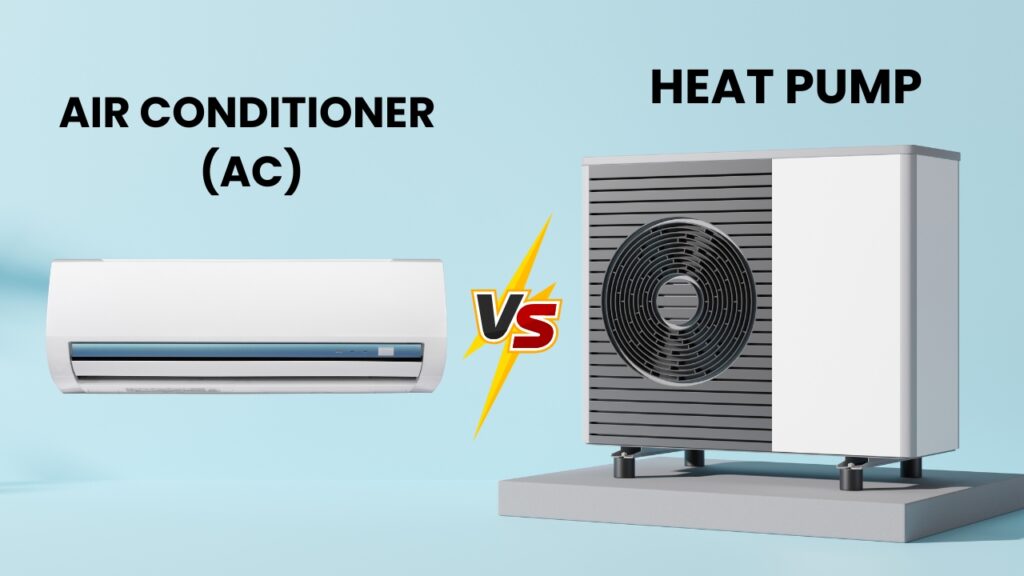
Are you confused about whether to choose a heat pump or an air conditioner for your home? You’re not alone.
Both systems cool your space, but they work in very different ways. Understanding these differences can save you money, boost your comfort, and even help the environment. You’ll discover exactly how heat pumps and air conditioners work, their pros and cons, and which one might be the best fit for your needs.
Keep reading to make a smart, informed choice for your home’s climate control.

Credit: northnjhvac.com
Heat Pump Basics
A heat pumpmoves heat from one place to another. It can coolor heatyour home. In summer, it takes heat out of your house. In winter, it brings heat inside. This is different from a normal air conditioner, which only cools.
Heat pumps work by using a special liquid called refrigerant. This liquid changes from gas to liquid and back. This change moves heat around. A fan blows air over the pipes, spreading hot or cold air inside your home.
There are three main types of heat pumps:
- Air-source heat pumpstake heat from the outside air.
- Ground-source (or geothermal) heat pumpsuse heat from the ground.
- Water-source heat pumpsget heat from nearby water.

Credit: www.rapidheat247.co.uk
Air Conditioner Essentials
An air conditioner moves heat from inside a room to outside. It uses a special fluid called refrigerant to absorb heat. The refrigerant changes from liquid to gas and back again to cool the air.
Air conditioners blow cool air into rooms while removing warm air. They also reduce humidity, making the room feel more comfortable.
| Type | Description | Best For |
|---|---|---|
| Window AC | Fits in a window, cools one room | Small rooms, easy installation |
| Split AC | Two parts; quiet and efficient | Homes and offices with multiple rooms |
| Portable AC | Movable, vents through a window | Temporary cooling, rental homes |
Heating Capability
Heat pumpscan both cool and heat a home. They move warm air from outside to inside during cold weather. This function makes them useful all year round. They work well in mild to moderate cold climates. Heat pumps save energy by using electricity efficiently.
Air conditionersonly cool indoor air. They do not have a heating function. To warm a home, a separate heating system is needed. Air conditioners cannot heat rooms during cold seasons. This limits their use in colder areas.

Credit: trident-heat.com
Energy Efficiency
Heat pumpsuse electricity to move heat, not create it. This makes them more energy efficientthan air conditioners in many cases. They can cool in summer and heat in winter, saving energy year-round.
Air conditioners only cool air and usually use more power during hot months. Heat pumps can reduce energy bills by using less electricity for the same cooling effect.
| Season | Heat Pump Efficiency | Air Conditioner Efficiency |
|---|---|---|
| Summer | High (moves heat out) | Moderate (cools inside air) |
| Winter | High (moves heat in) | None (no heating) |
Installation And Cost
Heat pumpsusually cost more to install than air conditioners. This is because heat pumps can both heat and cool a home. Air conditioners only cool, so they are simpler and cheaper to set up. The price difference depends on the size of the unit and the home’s needs.
Maintenance for both systems is similar but has some differences. Heat pumps need regular checks to ensure they work well in both heating and cooling modes. Air conditioners need maintenance mostly for cooling parts. Both require cleaning filters and checking refrigerant levels.
| Aspect | Heat Pump | Air Conditioner |
|---|---|---|
| Initial Cost | Higher due to dual function | Lower, cooling only |
| Maintenance | Check heating and cooling parts | Focus on cooling components |
Climate Suitability
Heat pumpswork best in places with mild winters and moderate summers. They both heat and cool by moving air. This makes them very energy-efficientin areas where temperatures don’t drop too low. Some ideal regions include the southern United States, parts of Europe, and coastal areas where winter stays warm.
Air conditioners are common in hot places. They cool indoor air but do not provide heating. In very cold climates, air conditioners are less useful in winter. Regions with hot summers and cold winters often use separate heating systems with air conditioners for cooling.
Environmental Impact
Heat pumpsuse electricity to move heat, causing fewer emissions than many air conditioners. Air conditioners mainly cool spaces but often rely on energy sources that produce more greenhouse gases.
Heat pumps work year-round, heating and cooling with less energy waste. They can reduce carbon footprint by using renewable energy sources. Air conditioners mostly focus on cooling and may increase energy use in hot climates.
| Factor | Heat Pump | Air Conditioner |
|---|---|---|
| Energy Source | Electricity, often renewable | Electricity, often fossil fuels |
| Emissions | Lower greenhouse gas emissions | Higher emissions due to energy use |
| Year-Round Use | Heats and cools | Only cools |
| Energy Efficiency | More efficient in moderate climates | Less efficient in extreme heat |
Choosing The Right System
Choosing the right system depends on your home’s needsand climate. Heat pumps work well in mild to cold areas because they heat and coolefficiently. Air conditioners are best for hot climates where only cooling is needed.
Consider the size of your home. Larger homes may need stronger systems. Check if your home has good insulation. This helps save energy and money.
- Heat pump:uses less energy for heating and cooling
- Air conditioner:only cools but may cost less upfront
- Climate:heat pumps work better in moderate climates
| System | Upfront Cost | Energy Use | Suitable Climate |
|---|---|---|---|
| Heat Pump | Higher | Lower over time | Mild to cold |
| Air Conditioner | Lower | Higher for heating | Hot only |
Frequently Asked Questions
How Do Heat Pumps And Acs Work Differently?
Heat pumps transfer heat from outside to inside during winter. In summer, they reverse the process. Air conditioners only cool indoor air by removing heat and moisture. Both systems use refrigerants, but heat pumps offer both heating and cooling capabilities.
Are Heat Pumps More Energy-efficient Than Acs?
Yes, heat pumps are generally more energy-efficient. They transfer rather than generate heat, using less electricity. In moderate climates, they provide both heating and cooling efficiently. Air conditioners are efficient for cooling but require additional systems for heating needs.
Can Heat Pumps Replace Air Conditioners?
Yes, heat pumps can replace air conditioners. They provide both heating and cooling functions. They are ideal for mild climates. However, in extremely cold areas, an auxiliary heating system might be needed. Heat pumps are versatile and energy-efficient, making them a popular choice.
Do Heat Pumps Work In Cold Climates?
Yes, heat pumps work in cold climates but with reduced efficiency. They need backup heating when temperatures drop significantly. Modern heat pumps are designed to work better in lower temperatures. However, they might still need auxiliary heating in extremely cold conditions.
Conclusion
Choosing between a heat pump and an air conditioner depends on your needs. Heat pumps cool and heat your home, saving energy in mild climates. Air conditioners only cool and work best in hot places. Both systems have pros and cons to consider.
Think about your local weather and budget. This helps pick the best option for comfort and savings. Understanding these differences makes your choice easier. Stay comfortable all year with the right system.