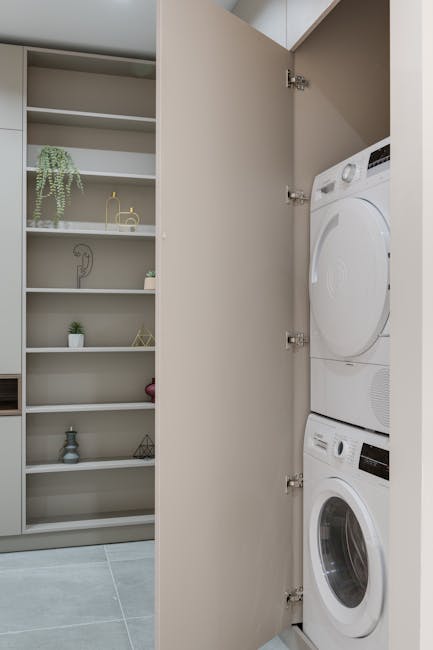
Are you planning to save space by stacking your washer and dryer but unsure which one should go on top? Getting this right is more important than you might think.
Placing the wrong machine on top can cause issues with stability, efficiency, and even damage your appliances. You’ll discover the simple rule that helps you stack your washer and dryer safely and effectively. Keep reading to make sure your laundry setup works perfectly for your home and your peace of mind.
Choosing The Right Order
Stacking a washer and dryer saves space in your laundry area. Choosing the right order matters for safety and ease of use.
Think about how you use both machines and your laundry room layout before stacking.
Washer On Bottom Benefits
Putting the washer on the bottom is the most common setup. It keeps the heavier machine low for stability.
This order helps reduce vibrations and noise during washing cycles. It also makes loading and unloading easier.
- Washer is heavier and stays stable on the floor
- Reduces shaking and noise during wash cycles
- Easier to reach dryer controls on top
- Prevents water leaks from damaging dryer below
Dryer On Bottom Considerations
Some people choose to put the dryer on the bottom. This setup can work but has some drawbacks.
Dryers are lighter but can be harder to load if placed low. Also, water leaks from the washer above could damage the dryer.
- Dryer at bottom may be harder to access
- Washer above can leak water on dryer
- Stack may be less stable due to lighter base
- Check space and hookups before choosing this order
Weight And Stability Factors
Stacking a washer and dryer saves space in small laundry areas. Choosing which appliance goes on top matters for safety and stability.
Understanding the weight and balance of each machine helps prevent accidents. This guide explains key points to consider.
Washer Weight Impact
Washers are usually heavier than dryers, especially when full of water. This extra weight makes them more stable on the ground.
Placing the washer on the bottom helps keep the stack steady. The washer’s weight lowers the center of gravity.
Dryer Weight Impact
Dryers are lighter than washers since they do not hold water. They are easier to place on top without risking collapse.
Putting the dryer on top reduces pressure on the washer. This setup supports both machines safely.
Ensuring Stack Stability
Use a proper stacking kit designed for your washer and dryer models. It locks the dryer in place on top of the washer.
Check that the floor is level and strong enough to hold the combined weight. Avoid stacking on uneven surfaces.
- Place the washer on the bottom for better balance
- Put the lighter dryer on top to reduce pressure
- Use a stacking kit for secure attachment
- Ensure the floor is flat and firm
- Verify the appliances are compatible for stacking
Installation Tips
Stacking a washer and dryer saves space in small laundry areas. Proper installation ensures safety and efficiency. Follow these tips for a secure setup.
Each part of the installation matters. Use the right tools and follow the manufacturer’s instructions carefully. This guide covers stacking kits, securing units, and leveling.
Using Stacking Kits
Stacking kits hold the washer and dryer together. They prevent the dryer from falling during use. Always use a kit made for your machine models.
- Read the kit instructions before starting.
- Attach the kit securely to both units.
- Use all screws and brackets provided.
- Check for any damage in the kit parts.
- Do not skip the safety clips or straps.
Securing The Units
Securing the units stops movement and noise. It also prevents accidents. Use straps or brackets to fix the dryer on top of the washer.
- Fasten all bolts tightly but do not overtighten.
- Check that no parts block vents or hoses.
- Test stability by gently shaking the stacked units.
- Add anti-slip pads under the washer’s feet.
Leveling And Alignment
Leveling keeps the washer steady and reduces vibration. Proper alignment ensures the dryer sits evenly on top.
| Task | How to Do It |
|---|---|
| Check washer feet | Use a spirit level and adjust each foot until the washer is flat. |
| Align dryer | Make sure the dryer sits squarely on the washer with no gaps. |
| Final test | Run a short wash cycle and watch for movement or noise. |

Credit: www.reddit.com
Ventilation And Accessibility
Stacking a washer and dryer saves space in small laundry rooms. It is important to think about ventilation and how easy you can reach the controls.
Good airflow helps the dryer work well. Easy access to controls makes using the machines safer and faster.
Dryer Vent Requirements
The dryer needs a vent to push out hot, moist air. The vent usually goes behind the dryer. If you stack, put the dryer on top to keep the vent clear.
Make sure the vent is not blocked or bent. A blocked vent can cause the dryer to overheat or work poorly.
- Use a rigid or semi-rigid metal vent for safety
- Keep the vent as short and straight as possible
- Check the vent opening outside to keep it clean
- Do not use plastic or foil vents
Accessing Controls Easily
Put the dryer on top so you can reach its controls without bending. The washer’s controls stay at the bottom for easy use.
Make sure the top machine’s controls are at a height you can reach safely. Avoid placing the dryer too high if you are short.
- Check the height before stacking
- Keep buttons and dials visible and reachable
- Leave space to open doors fully
- Think about who will use the machines most
Common Mistakes To Avoid
Stacking a washer and dryer saves space but needs care. Many people make mistakes that cause problems later.
Knowing what to avoid helps keep your machines safe and working well. Here are common errors to watch for.
Incorrect Placement Risks
Placing the wrong appliance on top can cause damage. Washers are heavy and vibrate a lot. Dryers are lighter and should go on top.
- Putting the washer on top can cause it to fall during spin cycles.
- Incorrect stacking can block vents and cause overheating.
- Uneven stacking leads to loud noise and machine wear.
- Wrong placement might void your appliance warranty.
Ignoring Manufacturer Guidelines
Manufacturers give specific rules for stacking. Ignoring these can cause safety risks and damage.
| Guideline | Reason |
| Only stack approved models | Ensures secure fit and balance |
| Use recommended stacking kits | Prevents slipping and vibration |
| Follow weight limits | Avoids structure damage |
| Keep vents clear | Allows proper airflow |

Credit: www.reddit.com
Space-saving Benefits
Stacking a washer and dryer can help you save space in your home. This setup is perfect for small apartments and houses.
By placing one appliance on top of the other, you make more room for other things. It is an efficient way to use limited space.
Maximizing Laundry Area
Organizing your laundry area can be simple and effective. A stacked washer and dryer help keep the area neat.
- Install shelves above the units for storage.
- Use vertical space for hanging clothes.
- Add bins for sorting laundry.
Alternative Arrangements
If stacking is not an option, side-by-side units can work. This setup allows easy access to both machines.
| Arrangement | Benefits |
| Stacked | Saves floor space |
| Side-by-Side | Easy access |
| Compact | Fits in tight spots |

Credit: www.reddit.com
Frequently Asked Questions
Which Appliance Should Go On Top When Stacking?
The dryer should be placed on top of the washer. Dryers are lighter and less prone to vibrations, making them safer and more stable when stacked above washers.
Can I Stack Any Washer And Dryer Brands Together?
It’s best to stack washers and dryers from the same brand or compatible models. This ensures proper fit and stability, preventing damage and safety issues.
Is Stacking Washers And Dryers Space-efficient?
Yes, stacking a washer and dryer saves floor space. It’s ideal for small laundry rooms or apartments, maximizing vertical space while maintaining functionality.
Do Stacked Washers And Dryers Need Special Installation?
Stacked units typically require a stacking kit for secure installation. This kit stabilizes the dryer on top and prevents movement during operation.
Conclusion
Stacking a washer and dryer saves space and adds convenience. Place the dryer on top for safety and ease. Washers are heavier and better on the bottom. This setup keeps your laundry area neat and functional. Remember to secure the machines well to avoid movement.
Proper stacking helps your appliances work better and last longer. Choose the right order for a smooth laundry routine. Simple steps make your laundry tasks easier every day.