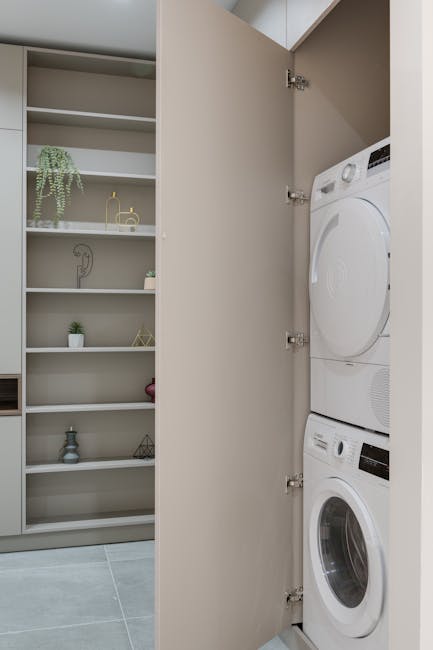
Are you thinking about stacking your washer and dryer but aren’t sure which one should go on top? You’re not alone.
Getting this right can save you space, prevent damage, and make laundry day much easier. You’ll discover the simple answer to which appliance belongs where—and why it matters. Keep reading to avoid common mistakes and make the most of your laundry setup.
Choosing The Right Order
Stacking a washer and dryer saves space in small laundry rooms. It is important to place them in the correct order for safety and convenience.
The right order depends on the type of machines and the setup of your laundry area. Let’s explore common arrangements and tips.
Washer First Or Dryer First?
The washer usually goes on the bottom. This is because washers are heavier and need a sturdy base. Dryers are lighter and can sit safely on top.
Placing the washer on the bottom also helps with water drainage and easier loading and unloading.
Common Configurations
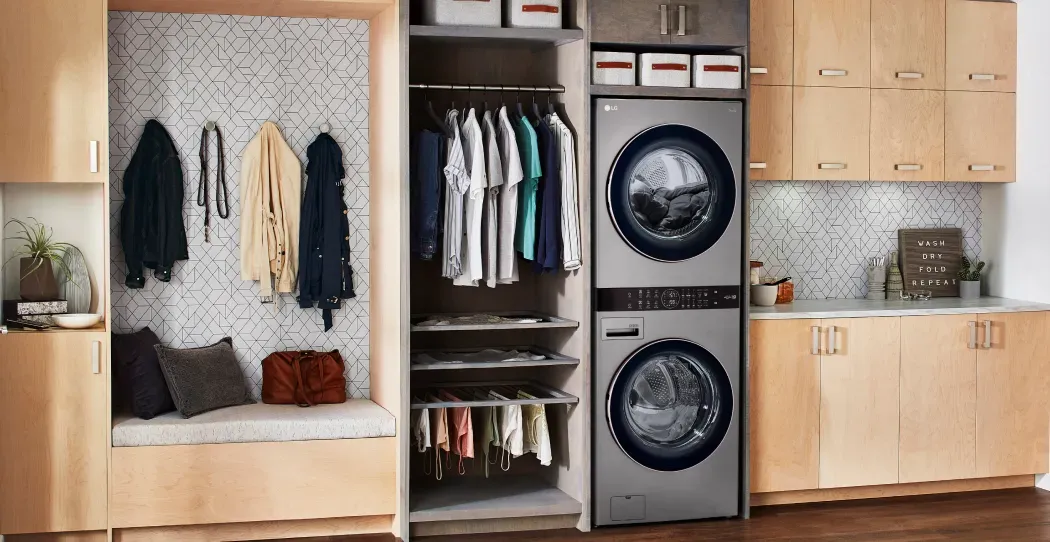
- Washer on bottom, dryer on top: Most popular and safest setup.
- Dryer on bottom, washer on top: Rare, usually avoided due to weight and vibration concerns.
- Side-by-side units: If space allows, this avoids stacking issues.
| Configuration | Advantages | Disadvantages |
| Washer bottom / Dryer top | Stable, easy to connect water and vent | Requires stacking kit |
| Dryer bottom / Washer top | Rarely used | Unstable, hard to manage water hookups |
| Side-by-side | Easy access to both machines | Needs more floor space |
Credit: www.woodcocks.us
Factors Influencing Placement
Stacking a washer and dryer saves space in small laundry rooms. Choosing which appliance goes on top needs careful thought.
Several factors affect the best placement for your washer and dryer. These include weight, vibration, and ventilation.
Weight And Stability
Washers are heavier than dryers, especially when full of water. Placing the washer on the bottom provides a stable base.
A lighter dryer on top reduces the risk of the stack tipping. Stability is important to keep the units safe during use.
- Washer should go on the bottom for weight support
- Dryer placed on top to keep the stack balanced
- Ensure stacking kits are used for extra safety
Vibration Considerations
Washers create more vibration during spin cycles. Putting the washer on the bottom helps absorb these movements.
Dryers usually vibrate less. Keeping the dryer on top prevents excess shaking and noise in the stack.
- Bottom placement reduces overall vibration
- Use anti-vibration pads for extra stability
- Check the floor is level to minimize shaking
Ventilation Needs
Dryers need proper airflow to work safely and dry clothes well. They require venting to the outside or a ventless system.
Placing the dryer on top helps with vent hose connection. It also makes it easier to manage heat and moisture.
- Dryer vents should have clear, direct paths
- Keep vent hoses short to avoid clogs
- Allow space behind the dryer for airflow
Stacking Kits And Safety
Stacking a washer and dryer saves space in small laundry rooms. You can place the dryer on top of the washer using a stacking kit. This setup needs the right tools and safety measures.
Choosing the correct stacking kit and installing it properly keeps your machines stable. Safety is important to prevent accidents or damage.
Types Of Stacking Kits
Stacking kits come in different styles for various washer and dryer models. Some kits use brackets, while others use a frame or a shelf. The type depends on the brands and sizes of your machines.
- Bracket kits: Attach the dryer to the washer using metal brackets.
- Frame kits: Enclose both machines in a sturdy frame for support.
- Shelf kits: A strong shelf holds the dryer above the washer.
- Universal kits: Adjustable for different machine sizes and brands.
Installation Tips
Place the washer on the floor first because it is heavier. The dryer should go on top. Follow the stacking kit instructions carefully for a safe setup.
Make sure the machines are level to avoid shaking or noise. Use the correct tools, and tighten all screws. Check the connections for water and electricity after installation.
- Check machine compatibility with your stacking kit.
- Use a level to keep machines steady.
- Tighten all bolts and screws firmly.
- Keep cords and hoses clear and connected properly.
- Ask for help to lift the dryer safely.
Safety Precautions
Stacking appliances can be risky if not done right. Use only approved stacking kits made for your models. Avoid DIY solutions that may cause instability.
Make sure the stacked units do not block vents or access panels. Check the stack regularly for loosening or damage. Keep children away from the stacked machines to prevent accidents.
- Use stacking kits designed for your washer and dryer.
- Do not stack without a kit or proper support.
- Keep the area around machines clean and dry.
- Regularly inspect the stack for stability.
- Follow manufacturer safety guidelines strictly.
Space And Accessibility
Stacking a washer and dryer saves space in small laundry rooms. It keeps your area neat and allows more room for other items.
Choosing which machine goes on top affects how easy it is to use and maintain them. This guide helps you decide.
Height And Reachability
The dryer usually goes on top because it is lighter and easier to lift. Washers are heavier and stay on the bottom for stability.
Make sure the top machine is at a height you can reach safely. Avoid placing controls too high or low to prevent strain.
- Place the dryer on top for easier loading and unloading.
- Keep controls within comfortable reach, usually between waist and shoulder height.
- Use a step stool if needed to access the top machine safely.
Utility Connections
Stacking machines must connect to water, electricity, and venting properly. The washer needs water and drainage below.
The dryer connects to a vent or uses electric power. Keeping it on top helps with venting and keeps hoses neat.
- Place the washer on the bottom for easy water hookups.
- Keep dryer vents clear and accessible on top.
- Check that cords and hoses are not stretched or kinked.
Maintenance Access
Stacked machines need enough space around them for cleaning and repairs. The bottom washer should be easy to open fully.
Keep the dryer on top so you can access its lint filter and controls without removing it. Leave room to disconnect hoses if needed.
- Allow space in front for opening doors wide.
- Keep lint filters reachable on the top machine.
- Leave room behind for hose and cord access.
Appliance Compatibility
Stacking a washer and dryer saves space in your laundry area. Not all machines fit well together. It is important to check their compatibility before stacking.
Choosing the right units ensures safe use and good performance. This guide explains how to match brands and models and consider design and size.
Brands And Models That Stack
Many brands offer washers and dryers designed for stacking. These units often come with stacking kits for safe installation. Mixing brands is possible but not always recommended.
- LG washers and dryers often stack well with their matching models.
- Samsung sets are designed to fit together with proper stacking kits.
- Whirlpool offers compatible pairs with included stacking hardware.
- Maytag units can be stacked, but check model compatibility carefully.
- GE appliances require specific kits and model matching for stacking.
Design And Dimensions
Stacking needs proper alignment and size matching. Dimensions and weight affect stability and safety when stacking washer and dryer units.
| Dimension | Washer | Dryer |
| Height | 38 inches | 39 inches |
| Width | 27 inches | 27 inches |
| Depth | 30 inches | 28 inches |
| Weight | 150 lbs | 130 lbs |
The washer usually goes on the bottom. It is heavier and more stable. The dryer sits on top to save space and allow easy access.

Credit: www.reddit.com
Energy Efficiency And Performance
Stacking washer and dryer units can save space in your home. It’s important to know how this setup affects energy use and performance.
Understanding the impact on operation and optimal usage is key. This helps maintain efficiency and prolongs the life of your appliances.
Impact Of Stacking On Operation
When stacking, the dryer is usually placed on top. This setup can affect the operation of both units.
- Heat rises, making the dryer more efficient when placed on top.
- Vibration from the washer can be absorbed by the dryer, reducing noise.
- Improper stacking might lead to imbalance during operation.
Optimal Usage Tips
To ensure the best performance, follow these tips when using stacked units.
- Always check the manufacturer’s stacking instructions.
- Use a stacking kit for better stability.
- Regularly clean lint filters to prevent clogs.
- Leave some space around the units for ventilation.
| Factor | Importance |
| Ventilation | High |
| Stability | Medium |
| Noise Reduction | Low |
Troubleshooting Common Issues
Stacking a washer and dryer can save space in your laundry area. But it may lead to some issues if not done properly.
Here are some common problems you may face and how to fix them.
Noise And Movement
Machines that are not level can cause noise and excessive movement. Check the level of your appliances with a spirit level tool.
- Ensure the floor is stable and even.
- Adjust the leveling feet of both machines.
- Place anti-vibration pads under the feet.
Dryer Vent Blockages
A blocked dryer vent can lead to longer drying times and overheating. Regular cleaning is important to maintain efficiency.
| Problem | Solution |
| Lint buildup | Clean the lint filter after each load. |
| Blocked vent pipe | Inspect and clean the vent pipe regularly. |
| Poor airflow | Ensure the vent pipe is not crushed or kinked. |
Washer Drainage Problems
Slow drainage or water remaining in the drum can be a sign of a problem. Regular maintenance can help prevent issues.
Credit: www.maytag.com
Frequently Asked Questions
Which Appliance Should Be On Top When Stacking Washer And Dryer?
The dryer should be placed on top of the washer. This setup ensures proper ventilation and easier access to the dryer controls. Washers are heavier and produce more vibrations, so placing them at the bottom provides better stability and safety.
Can A Washer Be Stacked On Top Of A Dryer?
No, a washer should never be stacked on top of a dryer. Washers are heavier and vibrate more, which risks damaging the dryer below. Proper stacking requires the dryer on top for structural support and to prevent appliance damage.
Are There Special Kits For Stacking Washers And Dryers?
Yes, stacking kits are available and recommended for safety. These kits secure the dryer on top of the washer to prevent shifting during operation. Using a stacking kit ensures stability and proper alignment of both appliances.
Does Stacking Washer And Dryer Save Space Effectively?
Yes, stacking washers and dryers saves significant floor space. It’s ideal for small laundry rooms or apartments. This vertical arrangement frees up room for storage or other uses, making it a practical solution for compact areas.
Conclusion
Stacking your washer and dryer saves space and keeps laundry organized. The washer should go on the bottom for stability and safety. Placing the dryer on top helps with ventilation and ease of use. Always follow the manufacturer’s instructions for proper installation.
This setup makes laundry tasks easier and your space neater. Now you know which appliance goes where. Ready to stack and save space?