Have you ever wondered where to put the weight on your fishing line to catch more fish? Getting this right can change your entire fishing experience.
If the weight is too close or too far from your hook, you might miss bites or lose your catch. You’ll discover the best spots to place the weight on your fishing line, so you can fish smarter, not harder.
Keep reading to learn simple tips that make a big difference every time you cast.
Choosing The Right Weight
Choosing the right weight for your fishing line helps you cast better and catch fish easier. The weight affects how deep your bait goes and how far you can throw your line.
Picking the correct weight depends on the type of fishing and the water conditions. This guide explains common types of fishing weights and factors to consider.
Types Of Fishing Weights
Fishing weights come in many shapes and sizes. Each type suits different fishing styles and water environments.
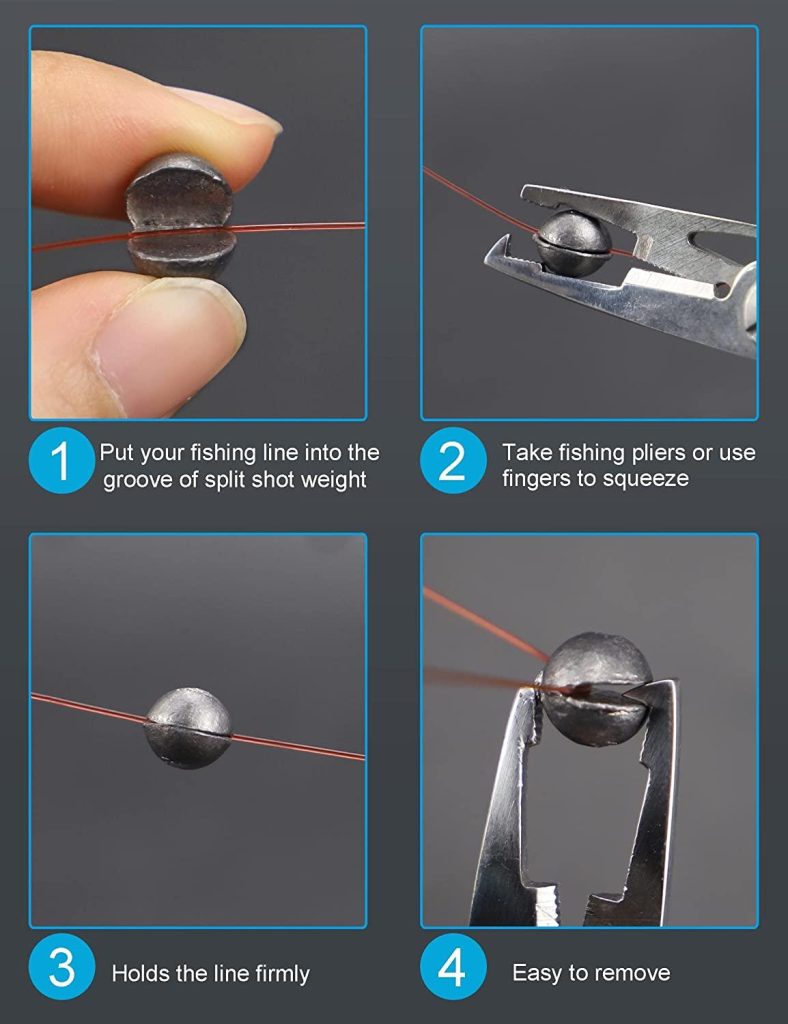
- Split Shot:Small and round, easy to attach to line for light fishing.
- Sinker:Larger and heavier, used to reach deep water quickly.
- Bullet Weight:Shaped like a bullet, slides smoothly through weeds.
- Egg Sinkers:Oval-shaped, prevents line tangling and allows free bait movement.
- Bank Sinkers:Flat and heavy, good for strong currents and bottom fishing.
Factors Affecting Weight Selection
Choosing the right weight depends on several factors. These factors help you decide how heavy or light your weight should be.
| Factor | Effect on Weight |
| Water Depth | Deeper water needs heavier weights to reach the bottom. |
| Current Strength | Strong currents require heavier weights to keep bait stable. |
| Type of Bait | Live bait may need lighter weights for natural movement. |
| Fishing Method | Techniques like float fishing use lighter weights than bottom fishing. |
| Casting Distance | Heavier weights help cast farther in open water. |

Credit: mysterytacklebox.com
Placement Techniques
Knowing where to place weight on a fishing line helps improve casting and bait presentation. Proper placement affects how the bait moves underwater.
This guide explains two common methods and how to position weights for various fishing styles.
Sliding Vs Fixed Weights
Sliding weights move freely along the line, while fixed weights stay in one spot. Each style offers different benefits depending on the fishing situation.
- Sliding Weights:These allow fish to take the bait without feeling heavy resistance. They are useful for bottom fishing and when using sensitive baits.
- Fixed Weights:These stay close to the hook, giving better control for casting and precise placement. Fixed weights suit fast-moving waters and certain lure types.
- Choosing Weight Size:Larger weights cast further but may scare fish. Smaller weights offer natural bait movement but may limit casting distance.
Positioning For Different Fishing Styles
Weight placement varies by fishing style. Adjust the position to match the target fish and water conditions.
| Fishing Style | Weight Placement | Reason |
| Bottom Fishing | Sliding weight above the hook | Lets fish take bait freely without feeling the weight |
| Float Fishing | Fixed weight just below the float | Keeps bait at set depth and stabilizes float |
| Lure Fishing | Fixed weight close to lure | Improves casting and lure control |
| Drift Fishing | Sliding weight above hook | Allows natural bait drift with water current |
Impact On Bait And Casting
Putting weight on your fishing line changes how the bait moves in the water. It also affects how far and how well you can cast your line.
Understanding where to put the weight helps you catch more fish and makes fishing easier.
How Weight Affects Bait Movement
Weight on the line makes the bait sink faster. It helps the bait reach the fish’s depth quickly.
The right weight lets the bait move naturally. Too much weight makes the bait sink too fast and look fake.
- Light weight lets bait drift slowly with currents
- Heavy weight pulls bait down fast and limits movement
- Weight near the bait gives better control over movement
Improving Casting Distance And Accuracy
Weight on the line helps you cast farther by adding momentum. It makes the line fly smoothly through the air.
Placing weight in the right spot improves where your bait lands. You can aim better and avoid tangles.
- Weight close to the hook helps with short, precise casts
- Weight farther up the line supports longer casts
- Balanced weight reduces line twists and snags

Credit: mysterytacklebox.com
Adjusting Weight For Water Conditions
Putting the right weight on your fishing line helps you catch more fish. Water conditions change how you should place the weight. Adjusting weight keeps your bait at the right spot.
Knowing where to put the weight depends on the water depth and flow. You must change weight placement based on currents and weather. This guide explains how to do it well.
Dealing With Currents And Depth
Strong currents push the bait and line. You need heavier weight to hold your bait steady. In deep water, more weight helps the bait reach the right depth quickly.
- Use heavier weights in fast currents to prevent drifting.
- Place weight closer to the hook in deep water for better control.
- Use lighter weights in slow or shallow water for natural bait movement.
- Adjust the weight size based on how strong the current feels.
Adapting To Weather Changes
Weather changes affect water movement and fish behavior. Wind can create waves that move your bait. Rain can cool the water and change fish depth.
| Weather Condition | Weight Adjustment | Reason |
| Windy | Use heavier weight | To keep bait steady in waves |
| Calm | Use lighter weight | Allows natural bait drift |
| Rainy | Adjust weight slightly heavier | Fish move deeper, need faster bait drop |
| Clear skies | Use medium weight | Balanced control and drift |
Common Mistakes To Avoid
Knowing where to put weight on a fishing line helps catch more fish. Many anglers make simple mistakes that reduce their success. Avoiding these errors improves your fishing experience.
This guide covers two common problems: using too much or too little weight, and placing the weight incorrectly. Read on to learn how to fix these mistakes.
Using Too Much Or Too Little Weight
Using the wrong amount of weight affects how your bait moves in water. Too much weight can scare fish away. Too little weight stops your bait from reaching the right depth.
- Too much weight makes the line sink fast and hard to control.
- Too little weight causes the bait to float or drift away from the target zone.
- Heavy weight can snap the line or damage your rod during casting.
- Light weight may not hold the bait steady in currents or wind.
Incorrect Weight Placement Effects
Where you put the weight on the line changes how the bait works. Wrong placement can confuse fish or tangle your line.
| Weight Placement | Effect on Fishing |
|---|---|
| Too close to the hook | Bait moves unnaturally and scares fish |
| Too far from the hook | Less control over bait depth and movement |
| Weight in the middle of the line | Line may tangle and cause casting problems |
| Weight near the rod tip | Improves casting but may reduce bite sensitivity |
Expert Tips For Best Results
Knowing where to put the weight on a fishing line can improve your catch. It helps balance sensitivity and control while fishing.
Use these tips to adjust your setup for better performance and fine-tune your gear for each fishing condition.
Balancing Sensitivity And Control
Place the weight close enough to the hook to feel bites but far enough to avoid scaring fish. This balance helps you react quickly and cast well.
- Put the weight about 12 to 18 inches above the hook for most fishing.
- Use lighter weights for sensitive bites in clear water.
- Heavier weights work better in strong currents or deep water.
- Adjust the weight location if you want more control or more sensitivity.
Testing And Fine-tuning Your Setup
Try different weight positions and sizes to find what works best for your fishing spot. Small changes can affect your line’s action.
| Weight Position | Effect | Best Use |
| Close to Hook (6-12 inches) | More sensitivity, less control | Calm water, light bites |
| Medium Distance (12-18 inches) | Balance of sensitivity and control | General fishing conditions |
| Far from Hook (18+ inches) | More control, less sensitivity | Strong currents, deep water |

Credit: mysterytacklebox.com
Frequently Asked Questions
Where Should I Attach The Weight On A Fishing Line?
Attach the weight 6 to 12 inches above the hook on the fishing line. This helps the bait sink naturally and improves casting distance.
Why Is Weight Placement Important On A Fishing Line?
Proper weight placement controls bait depth and stability. It ensures the bait moves naturally, attracting more fish and preventing tangles.
Can I Put The Weight Below The Hook On A Line?
Placing weight below the hook is not recommended. It can restrict bait movement and reduce catch efficiency.
How Does Weight Position Affect Casting Distance?
Correct weight placement balances the line and bait. It increases casting distance and accuracy, allowing you to reach fish more easily.
Conclusion
Placing weight on a fishing line affects your catch success. Proper positioning is crucial for balance. Add weight based on your fishing method. Consider water depth and fish type. Adjust weights for different conditions. Test small changes to find what works.
Experimentation helps improve your fishing skills. Understanding weight placement boosts your confidence. Enjoy your fishing trips more with these tips. Happy fishing!