Are you struggling to get your bait to the right spot? Knowing exactly where to put weights on your fishing line can make all the difference between a missed catch and a successful haul.
It’s not just about adding weight—it’s about placing it in the perfect spot to improve casting, control, and presentation. In this guide, you’ll discover simple tips that can instantly boost your fishing game. Keep reading, and you’ll learn how to make your line work smarter, not harder.

Credit: www.amazon.com
Choosing The Right Weights
Adding weights to your fishing line helps control bait depth and casting distance. Picking the right weight improves your fishing experience.
Different weights suit different fishing needs. Learn about types, sizes, and materials to make a smart choice.
Types Of Fishing Weights
Fishing weights come in many shapes and styles. Each type works best for certain fishing situations and water conditions.
- Sinker Weights:Drop your bait deep and keep it steady.
- Split Shot Weights:Small and easy to attach anywhere on the line.
- Egg Sinkers:Oval-shaped to slide along the line freely.
- Bell Sinkers:Shaped like a bell and good for rocky bottoms.
- Pyramid Sinkers:Pointed for holding in sandy or muddy bottoms.
Weight Sizes And Their Uses
Weight size affects how your bait moves and how far you can cast. Choosing the right size depends on fishing type and water conditions.
| Weight Size | Use Case |
|---|---|
| 1/16 oz to 1/8 oz | Light casting in calm water or small fish |
| 1/4 oz to 1/2 oz | Medium casting in rivers or lakes |
| 3/4 oz to 1 oz | Heavy casting in fast currents or deep water |
| Over 1 oz | Saltwater fishing or very deep casting |
Materials And Durability
Fishing weights come in different materials. Choose one that fits your budget and fishing style.
- Lead:Heavy and affordable but not eco-friendly.
- Tungsten:Dense and small but costlier than lead.
- Steel:Durable and rust-resistant, good for saltwater.
- Brass:Less common, offers good weight and durability.
- Plastic-coated:Protects the weight and line from damage.
Placement Basics
Adding weights to your fishing line helps control how your bait moves. Where you put the weight changes your cast and how fish feel the line.
Knowing the right spot for weights can make fishing easier and more fun. It helps you catch more fish by improving your line’s action.
How Weight Placement Affects Casting
Weights make your cast go farther and straighter. Placing weight too close to the hook can slow your cast. Too far can make it less accurate.
Good weight placement helps the lure reach the right depth quickly. It also stops the line from twisting or tangling during the cast.
- Weight near the hook: slower, shorter casts
- Weight far from the hook: longer, less control
- Weight in the middle: balanced distance and control
Balancing Sensitivity And Control
Putting weight on the line changes how much you feel the fish bite. More weight means less sensitivity but better control of the lure.
Less weight lets you feel tiny bites but can make casting harder. Find a balance that lets you feel bites and cast well.
- More weight: strong control, less bite feeling
- Less weight: better bite feeling, less control
- Adjust weight based on fishing style and water
Common Weight Positions On The Line
There are three common spots to place weights on fishing lines. Each spot changes how the bait moves and how you cast.
- Split shot weight: clipped near the hook for slow sinking
- Sliding sinker: moves freely, good for deep water
- Fixed sinker: placed far from the hook for long casts
Try different spots to see what works best for your fishing style and target fish.
Techniques For Different Fishing Styles
Adding weights to your fishing line helps control bait depth and stability. Different fishing styles need different weight placements.
Knowing where to put weights improves your chances of catching fish. This guide explains weight placement for common fishing methods.
Bottom Fishing Weight Placement
For bottom fishing, place the weight near the hook to keep bait close to the lake or river floor. This helps fish find your bait easily.
Use heavier weights if the water has a strong current. This keeps your bait from moving too much and drifting away.
- Slide the weight a few inches above the hook
- Use a sinker heavy enough to hold the line steady
- Adjust weight size based on water depth and current
Float Fishing Weight Setup
Float fishing needs weights placed below the float to balance it. This keeps the float upright in the water and shows bites clearly.
Place small split shot weights on the line below the float. Add or remove weights to make the float sit just right.
- Attach the float first on the line
- Add small weights 6 to 12 inches below the float
- Adjust weight so the float is stable but sensitive
Casting And Trolling Adjustments
For casting, place the weight so it helps your bait fly far and land softly. Balance is key to avoid tangles and improve accuracy.
In trolling, weights control bait depth behind a moving boat. Place weights to keep the bait at the desired water level without drag.
- For casting, put weight 12-18 inches above the hook
- Use aerodynamic weights to increase casting distance
- In trolling, add weights to reach target depth steadily
- Adjust weight size based on boat speed and water conditions

Credit: windrider.com
Tips For Specific Conditions
Putting weights on your fishing line helps control bait depth and movement. Different water conditions need different weight placements.
Adjusting where you put weights can improve your fishing success. This guide covers tips for strong currents, still waters, and various fish species.
Fishing In Strong Currents
Strong currents push your bait and line quickly. Place weights closer to the hook to keep the bait near the bottom.
Use heavier weights to hold the bait steady. Slide the weight down the line but stop it a few inches above the hook.
- Heavier sinkers prevent bait from drifting away
- Keep weight close to hook for better control
- Adjust weight size based on current strength
Fishing In Still Waters
In calm water, lighter weights work well. Place the weight further up the line to let the bait move naturally.
This setup allows the bait to float or drift slowly, attracting fish without suspicion. Use a bobber if you want to keep the bait suspended.
- Use lighter sinkers for a natural bait drift
- Place weights 12-18 inches above the hook
- Try a bobber for floating bait
Adapting To Different Fish Species
Different fish react to bait in unique ways. Adjust weight placement to match their feeding habits.
For bottom feeders, put the weight close to the hook. For fish that swim near the surface, use a float and place the weight higher up the line.
- Bottom feeders: weight near the hook
- Mid-water fish: weight midway on the line
- Surface feeders: use a float and light weight
Avoiding Common Mistakes
Knowing where to put weights on your fishing line helps you catch fish better. Many anglers make simple mistakes that hurt their fishing success.
This guide explains common mistakes and how to avoid them. Follow these tips to improve your fishing experience.
Overweighting And Its Effects
Putting too much weight on the line can cause many problems. It can scare fish away and make your bait sink too fast.
Heavy weights also make it harder to feel bites. Your line may snap more often under too much stress.
- Use just enough weight to cast properly
- Avoid weights that make the bait sink too quickly
- Check local fishing rules for weight limits
Improper Knot Tying With Weights
Tying knots incorrectly when attaching weights can cause them to slip off. This leads to lost tackle and wasted time.
Weak knots also weaken the line. A strong, tight knot keeps the weight secure and improves your catch chances.
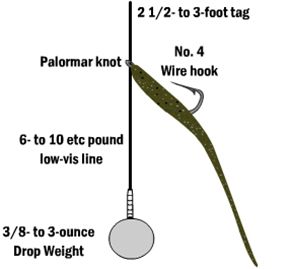
- Use common knots like Palomar or Improved Clinch
- Wet the knot before tightening to prevent friction damage
- Test your knot by pulling hard before fishing
Line Damage Prevention
Weights rubbing against the line can cause cuts or weak spots. Damaged line breaks easily and loses fish.
Place weights carefully to avoid sharp edges or constant movement on the line. Use tube sleeves or protectors if needed.
- Check the line often for nicks or damage
- Use sliding weights to reduce friction
- Replace damaged line before fishing

Credit: mysterytacklebox.com
Advanced Weighting Strategies
Adding weights to your fishing line can improve casting and bait presentation. Advanced strategies help control depth and distance more precisely.
Knowing how and where to place weights lets you adapt to different fishing conditions. Use the right setup for better results in various waters.
Using Multiple Weights
Multiple weights spread along the line give better control. You can slow the fall of the bait or keep it steady in currents.
- Place smaller weights near the hook for natural bait movement.
- Use heavier weights farther up the line to reach deeper water.
- Space weights evenly to balance the line and reduce drag.
- Combine different sizes to adjust sinking speed.
Slip Sinkers Vs Fixed Weights
Slip sinkers move freely on the line, while fixed weights stay in one place. Each has its uses depending on fishing style.
| Weight Type | Advantages | Best Use |
| Slip Sinkers | Allows natural bait movement | Bottom fishing, deep water |
| Fixed Weights | Better control over line tension | Casting, shallow water |
Customizing For Depth And Distance
Adjust weights based on how deep you want to fish and how far you want to cast. Different setups work for different fish and water types.
Consider these tips:
- Use heavier weights for longer casts.
- Place weights closer to the hook for shallow depths.
- Experiment with weight size to find the best sinking speed.
- Adjust the number of weights to balance between distance and bait control.
Frequently Asked Questions
How To Attach Weights To A Fishing Line?
To attach weights, thread the line through the weight’s hole. Position it above the hook or lure. Use split shot, egg, or bullet sinkers depending on your fishing style. Secure with a knot or stopper if necessary. Proper placement helps maintain balance and improves casting accuracy.
What Is The Purpose Of Weights On A Fishing Line?
Weights help sink the bait to desired depths. They maintain stability and improve casting distance. Properly placed weights ensure the bait reaches fish effectively. They balance the line, making it easier to control in currents or windy conditions. Weights enhance fishing accuracy and effectiveness.
Where Should Sinkers Be Placed On A Line?
Place sinkers 6 to 12 inches above the hook. This ensures natural bait movement. Adjust based on water depth and fish behavior. Proper placement helps maintain line balance and increases catch chances. Experiment with different distances for optimal results. Placement affects casting and bait presentation.
What Type Of Sinker Should I Use?
Choose sinkers based on fishing conditions. Use split shot for shallow waters. Egg sinkers are ideal for deeper waters and currents. Bullet sinkers work well for weed-heavy areas. Match sinker type to your fishing environment. Proper selection enhances bait performance and increases catch success.
Conclusion
Placing weights on your fishing line helps control depth and casting distance. Usually, weights go a few inches above the hook or lure. This setup keeps the bait steady in the water and attracts fish better. Experiment with weight size and position to find what works best.
Keep it simple, and adjust based on fishing conditions. This way, you improve your chances of a good catch every time.