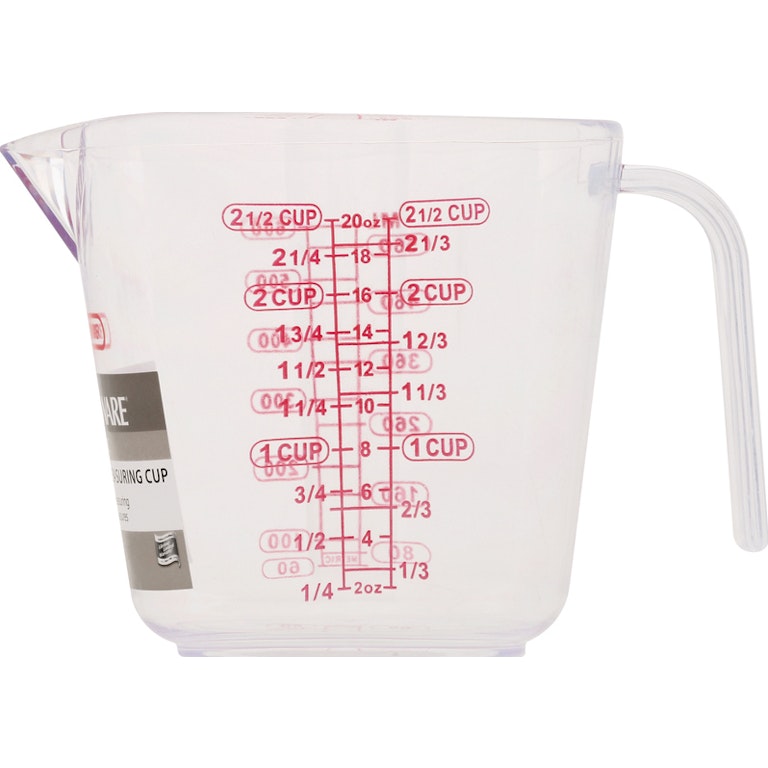
Have you ever stared at your measuring cup and wondered, “Where is 1/3?” It’s a small question, but it can make a big difference in your recipe. Getting the right amount of ingredients means your dish will turn out just right.
If you’re unsure where to find the 1/3 mark, you’re not alone. You’ll discover exactly how to spot it quickly and avoid common measuring mistakes. Keep reading, and you’ll never second-guess your measurements again.
Measuring Cup Basics
Measuring cups help you add the right amount of ingredients. They have marks to show different amounts.
The mark for 1/3 on a measuring cup shows one-third of a cup. It is usually between 1/4 and 1/2 cup marks.
Types Of Measuring Cups
There are two main types of measuring cups. Liquid measuring cups and dry measuring cups.
Liquid cups are clear with a spout for pouring. Dry cups are solid and meant for scooping.
- Liquid measuring cups often have marks on the side.
- Dry measuring cups come in sets of different sizes.
- Some cups show measurements in cups, ounces, or milliliters.
Common Measurement Units
Measuring cups use units like cups, ounces, and milliliters. These units help you measure ingredients correctly.
Cups are common in recipes. Ounces and milliliters are often used for liquids.
| Unit | Use | Example |
|---|---|---|
| Cup | Dry and liquid ingredients | 1/3 cup flour |
| Ounce (oz) | Liquid volume or weight | 4 oz water |
| Milliliter (ml) | Liquid volume | 80 ml milk |
Credit: www.walmart.com
Locating 1/3 On The Cup
Measuring 1/3 on a cup can be tricky. Understanding measurement lines helps.
Learn the differences between liquid and dry measuring cups to be accurate.
Reading Measurement Lines
Measurement lines guide you to pour the right amount. They are usually marked clearly.
- Find the 1/3 line on the cup.
- Pour liquid to this mark.
- Ensure your eyes are level with the line.
Differences Between Liquid And Dry Cups
Liquid and dry cups are designed for different uses. They help in measuring accurately.
Liquid measuring cups have a spout for pouring. They are usually transparent.
Dry measuring cups are for solid ingredients. They are filled to the top and leveled off.
| Type | Usage |
| Liquid Cup | Water, Milk, Oil |
| Dry Cup | Flour, Sugar, Rice |
Tips For Accurate Measuring
Measuring ingredients correctly helps your recipe turn out just right. Using a measuring cup with clear marks is important. Knowing where the 1/3 mark is on the cup can save you from mistakes.
Small errors can change how your food tastes or cooks. Follow these tips to measure ingredients with care and get the best results every time.
Leveling Ingredients
Fill the measuring cup to the 1/3 mark and then level off the ingredient for accuracy. Use a flat edge, like the back of a knife, to remove extra flour or sugar.
- Pour ingredient slowly until it reaches the 1/3 line.
- Hold the cup at eye level to check the measurement.
- Use a straight edge to level off excess material.
- Do not tap or shake the cup, as this can change the volume.
Avoiding Parallax Errors
Parallax error happens when you read the measuring cup from an angle. This can make you think you have more or less than 1/3 cup. Always check the measurement at eye level.
| How to Avoid Parallax Error | What to Do |
| Reading from above or below | Lower or raise the cup until your eyes are even with the 1/3 mark |
| Measuring on an uneven surface | Place the cup on a flat, stable surface before measuring |
| Using a cup with unclear marks | Choose a cup with clear and bold measurement lines |

Credit: littlesproutslearning.co
Alternatives To 1/3 Measurements
Sometimes your measuring cup may not have a 1/3 mark. You can still measure 1/3 cup using other tools.
This guide shows easy ways to measure 1/3 cup without the exact marking.
Using Tablespoons And Teaspoons
You can use tablespoons and teaspoons to measure 1/3 cup. One cup equals 16 tablespoons or 48 teaspoons.
- 1/3 cup = 5 tablespoons + 1 teaspoon
- Or 16 teaspoons for 1/3 cup
- Use a tablespoon measure five times and add one teaspoon
Estimating When Markings Are Missing
If your cup has no 1/3 mark, try to estimate by eye. Divide the cup into three equal parts mentally.
| Fraction | Description | Visual Tip |
|---|---|---|
| 1/3 cup | About 5 tablespoons + 1 teaspoon | Fill cup to just above one-third height |
| 1/2 cup | 8 tablespoons | Fill cup to half the height |
| 1/4 cup | 4 tablespoons | Fill cup to one-quarter height |
Common Measuring Mistakes
Measuring ingredients correctly is important for good recipes. Small mistakes can change the taste or texture.
One common question is where the 1/3 mark is on a measuring cup. Many people confuse the lines or use the wrong cup.
Misreading The Lines
Measuring cups have many lines, and it is easy to mix them up. The 1/3 mark is usually between 1/4 and 1/2 cup.
Some cups show decimals or milliliters, which can confuse you. Always check the label carefully before measuring.
- Look closely at each line’s label
- Use the cup at eye level for accuracy
- Check if the cup shows fractions or decimals
Using The Wrong Cup Type
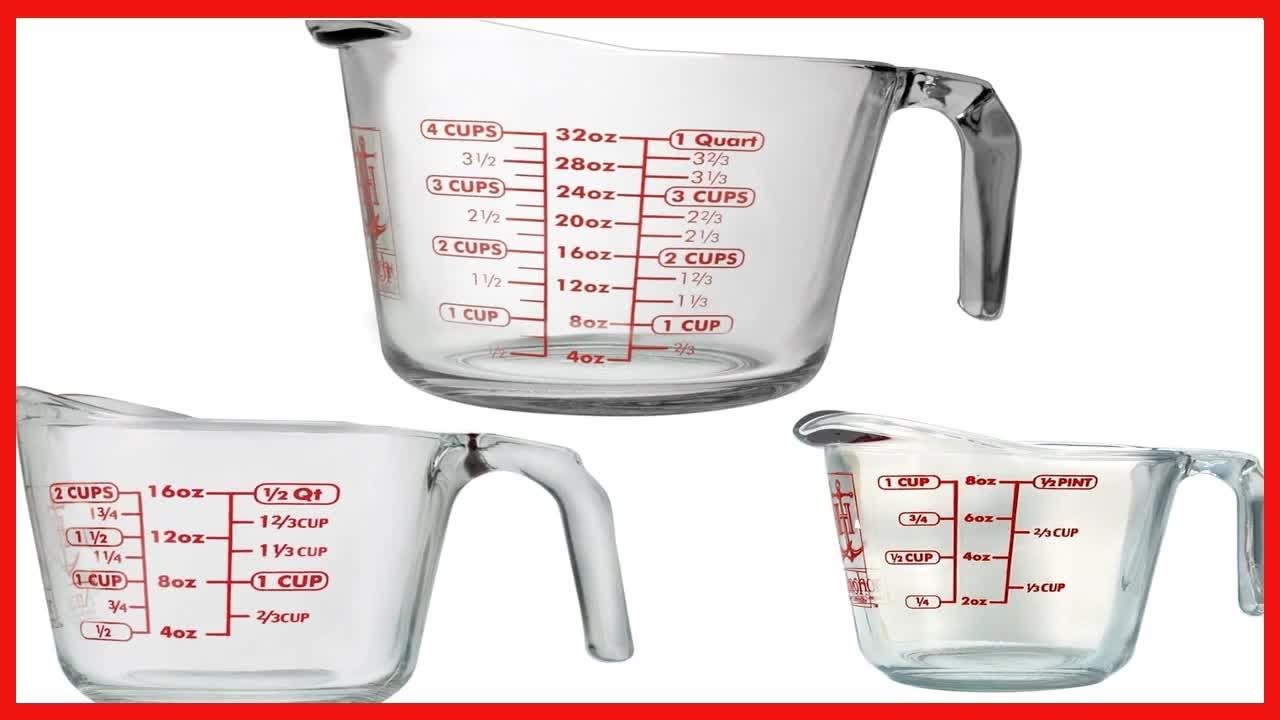
Dry measuring cups and liquid measuring cups look different. Using the wrong one can cause errors.
Dry cups are meant to be filled to the top and leveled off. Liquid cups have extra space and a pouring spout.
| Type | Best For | How to Use |
|---|---|---|
| Dry Measuring Cup | Flour, sugar, dry ingredients | Fill full and level off with a knife |
| Liquid Measuring Cup | Milk, water, oil, liquids | Fill to the line at eye level |
Credit: www.youtube.com
Frequently Asked Questions
Where Is 1/3 Marked On A Measuring Cup?
1/3 is usually marked between 1/4 and 1/2 cup on most measuring cups. It is a common fractional measurement.
How To Measure 1/3 Cup Accurately?
Use a liquid or dry measuring cup with 1/3 markings. Fill it to the line for precise measurement.
Can I Substitute 1/3 Cup With Other Measures?
Yes, 1/3 cup equals 5 tablespoons plus 1 teaspoon. This helps when you lack a 1/3 cup measure.
Why Is 1/3 Cup Important In Recipes?
1/3 cup provides accurate ingredient ratios. It ensures recipe consistency and proper texture in cooking and baking.
Conclusion
Finding 1/3 on a measuring cup is simple once you know where to look. Usually, it is marked between 1/4 and 1/2 cup lines. Some cups show it as a small line or number. Measuring ingredients correctly helps your recipe turn out great.
Always check your cup’s markings carefully before using. This small step saves time and avoids mistakes. Keep practicing, and reading measurements will feel natural soon. Cooking and baking become easier with clear measurements.