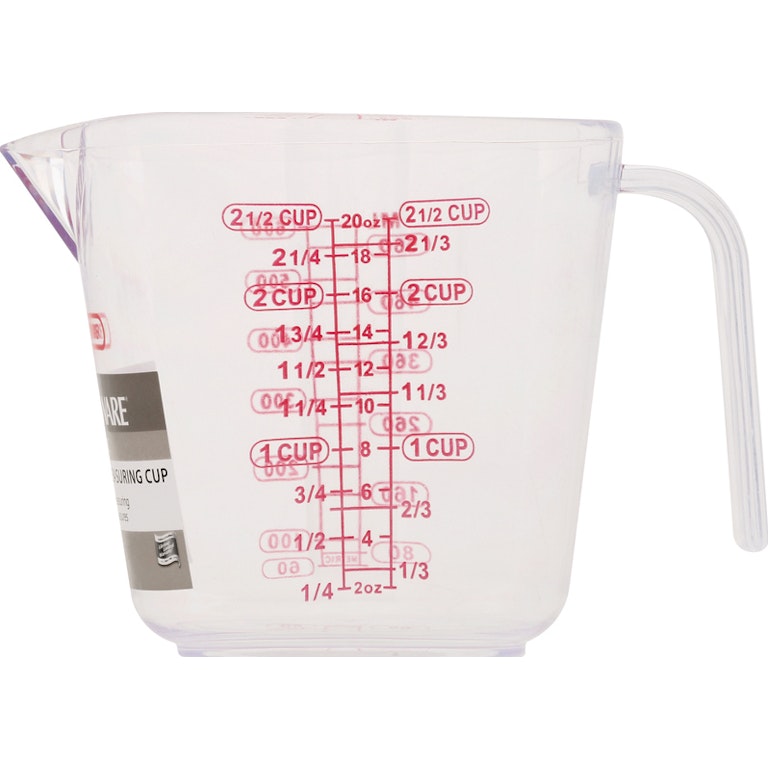
Have you ever struggled to find the 1/4 mark on your measuring cup? It’s a common problem that can throw off your entire recipe.
If you’ve ever wondered exactly where that tiny line is or how to read it correctly, you’re not alone. Knowing where 1/4 is on your measuring cup can save you time, prevent mistakes, and make your cooking or baking much smoother.
Keep reading, and you’ll learn the simple tricks to spot that elusive 1/4 mark with confidence every time.
Identifying 1/4 On Measuring Cups
Measuring cups help you add the right amount of ingredients. Knowing where 1/4 cup is on your measuring cup is important. This guide will show you how to find it easily.
Different types of measuring cups have different markings. Learning to read these marks can save you time and improve your cooking.
Common Measuring Cup Types
Measuring cups come in various styles. Some are clear plastic or glass with marks on the side. Others are metal with engraved numbers. Here are common types:
- Plastic cups with printed measurement lines
- Glass cups with etched or printed marks
- Metal cups with engraved or stamped measurements
- Collapsible silicone cups with printed marks
Reading Measurement Markings
Most measuring cups mark 1/4 cup clearly. It is usually one of the first marks after 0.25 or 1/4. The mark may be a line or a number.
| Mark | Fraction | Decimal | Description |
|---|---|---|---|
| 1/4 | ¼ | 0.25 | One quarter of a cup, often the first marked line |
| 1/3 | ⅓ | 0.33 | One third of a cup, usually after 1/4 |
| 1/2 | ½ | 0.5 | Half a cup, often the middle line |
| 2/3 | ⅔ | 0.66 | Two thirds of a cup, near the top |
| 3/4 | ¾ | 0.75 | Three quarters of a cup, just below full |

Credit: www.amazon.com
Materials And Sizes Of Measuring Cups
Measuring cups come in different materials and sizes. Knowing these helps you use them correctly.
The 1/4 mark on a measuring cup is common for small amounts. It is important for cooking and baking.
Plastic Vs Glass Cups
Plastic measuring cups are light and easy to handle. They usually have clear markings but can stain or scratch over time.
Glass cups are heavier and more durable. They do not absorb colors or smells and are safe for hot liquids.
- Plastic cups: lightweight, affordable, may stain
- Glass cups: heavy, durable, heat safe
Standard Cup Sizes
Measuring cups usually come in sets with sizes like 1 cup, 1/2 cup, 1/3 cup, and 1/4 cup. The 1/4 cup is a quarter of a cup.
| Size | Volume (ml) | Usage |
|---|---|---|
| 1 cup | 240 ml | Large amounts |
| 1/2 cup | 120 ml | Medium amounts |
| 1/3 cup | 80 ml | Small amounts |
| 1/4 cup | 60 ml | Precise small amounts |
Tips For Accurate Measurement
Measuring ingredients correctly is key to good cooking and baking. Using the right tools helps you get the best results every time.
Finding 1/4 on a measuring cup is easy if you know what to look for. Accurate measuring saves you from mistakes.
Leveling Ingredients
For dry ingredients like flour or sugar, scoop into the measuring cup and then level it off. Use a flat edge like a knife to remove the extra.
Leveling makes sure you do not add too much. Too much flour can make baked goods dry or heavy.
- Fill the cup above the 1/4 line
- Use a flat edge to scrape off excess
- Check the level at eye height
Using Liquid Vs Dry Measuring Cups
Liquid measuring cups usually have a spout and clear markings on the side. They let you pour liquids easily without spilling.
Dry measuring cups are meant to be filled and leveled. Do not pour liquids into dry cups because it can cause spills and wrong amounts.
- Use liquid cups for water, oil, milk, and other liquids
- Use dry cups for flour, sugar, grains, and powders
- Read the measurement at eye level for accuracy

Credit: cookswarehouse.com
Alternatives When 1/4 Mark Is Missing
Sometimes your measuring cup may not have the 1/4 cup mark. This can make measuring tricky. Luckily, there are easy ways to measure 1/4 cup without this mark.
Using simple kitchen tools and safe estimating methods helps keep your cooking accurate. Here are two helpful alternatives.
Using Spoons For Precision
If your measuring cup lacks a 1/4 cup line, use tablespoons or teaspoons. These spoons are common and can give you precise amounts.
- 1/4 cup equals 4 tablespoons
- Each tablespoon holds 3 teaspoons
- Use four level tablespoons to measure 1/4 cup
- For smaller amounts, use teaspoons for fine accuracy
Estimating Measurements Safely
When exact tools are missing, you can estimate 1/4 cup by dividing the cup into parts. This method is safe and simple.
| Method | Description | Tip |
|---|---|---|
| Half of 1/2 cup | Fill the 1/2 cup mark halfway | Use a flat surface to level off |
| Fill 1/3 cup then remove some | Fill 1/3 cup and take out a spoonful | Adjust gradually to reach 1/4 cup |
| Visual estimate | Fill the cup about one quarter full | Practice with water to improve accuracy |
Common Mistakes To Avoid
Measuring 1/4 cup accurately is important for cooking and baking. Many people make errors that affect their recipes.
Knowing how to read the measuring cup and use the right type helps get the right amount every time.
Reading Measurements At Eye Level
One common mistake is reading the 1/4 mark from above or below eye level. This causes wrong measurements.
Always place the measuring cup on a flat surface and bend down to see the liquid line at eye level.
- Looking from above makes the liquid seem less than 1/4 cup
- Looking from below makes the liquid seem more than 1/4 cup
- Eye-level reading ensures the right amount of liquid
Mixing Dry And Liquid Cup Usage
Using a liquid measuring cup for dry ingredients or vice versa is a common error. This causes incorrect portions.
Dry measuring cups are meant to be filled to the top and leveled off. Liquid cups have space for spills and a spout for pouring.
- Use dry cups for flour, sugar, and other powders
- Use liquid cups for water, milk, and oils
- Mixing cups can cause overflow or packed ingredients

Credit: www.amazon.com
Frequently Asked Questions
What Does 1/4 Mean On A Measuring Cup?
1/4 on a measuring cup represents one-quarter of a cup. It’s a common measurement in recipes. When you fill up to this mark, you’re using 25% of a full cup. This is particularly useful for precise baking and cooking, ensuring accurate ingredient proportions for the best results.
How Do I Identify 1/4 On A Measuring Cup?
To find 1/4 on a measuring cup, look for a line labeled “1/4. ” It’s typically the first significant mark after the base. This mark indicates one-quarter of the cup’s total capacity. Many measuring cups have both metric and imperial units for easy reference.
Is 1/4 Cup The Same As 4 Tablespoons?
Yes, 1/4 cup is equivalent to 4 tablespoons. This conversion is helpful when measuring smaller quantities. Use a standard tablespoon to measure, ensuring you fill it to the brim each time. This helps maintain consistency and accuracy in your recipes, especially in baking.
Can I Use 1/4 Cup For Liquid Ingredients?
Yes, you can use 1/4 cup for liquid ingredients. Ensure the measuring cup is designed for liquids. It should have a spout for easy pouring and clear markings for accuracy. Always check at eye level for precise measurement, as liquids form a meniscus.
Conclusion
Finding 1/4 on a measuring cup is simple once you know where to look. It usually appears as a clear line marked “1/4” or “0. 25. ” Using this mark helps you measure ingredients accurately for cooking or baking. Always check the cup’s markings before pouring.
A small step that makes a big difference in your recipes. Now, measuring 1/4 cup won’t feel confusing anymore. Just remember to keep your cup on a flat surface and read at eye level for best results.