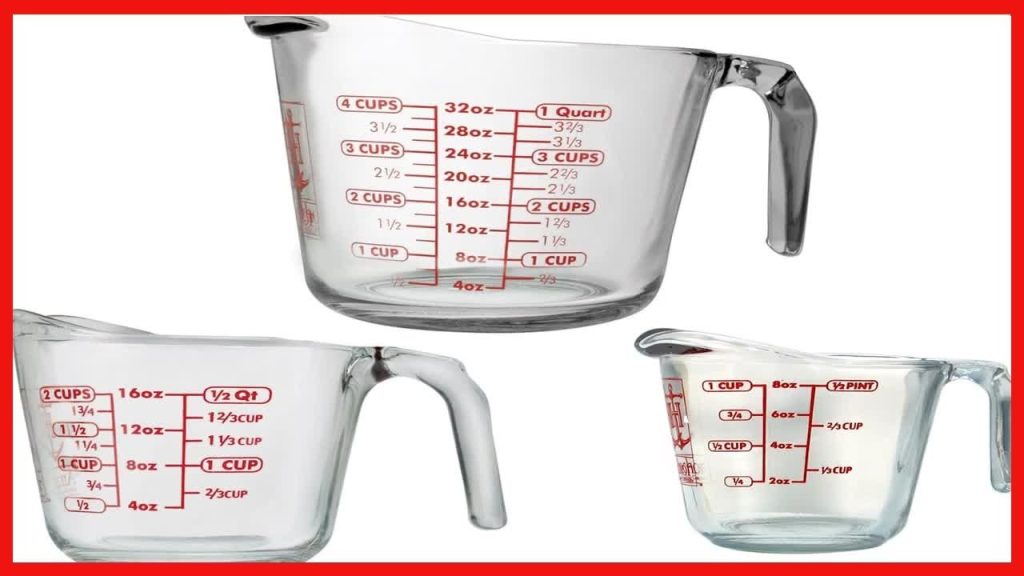
Have you ever stared at your measuring cup, wondering exactly where the 3/4 mark is? It might seem simple, but finding that spot can be tricky if you’re not sure what to look for.
Knowing where 3/4 is on your measuring cup can make a big difference in your cooking or baking. Getting the measurement just right helps your recipes turn out perfect every time. Keep reading, and you’ll learn how to spot 3/4 quickly and easily—no more guessing or second-guessing your ingredients!

Credit: www.amazon.co.uk
Locating 3/4 Mark On Measuring Cups
Measuring cups help you add the right amount of ingredients. Finding the 3/4 mark is important for accuracy. It can be tricky if you don’t know where to look.
This guide shows you where the 3/4 mark usually appears on measuring cups. You will also learn how to spot it by using visual cues.
Standard Measuring Cup Designs
Most measuring cups come in standard sizes like 1 cup, 1/2 cup, and 1/4 cup. The 3/4 cup mark is often included on cups that measure 1 cup or more.
These cups usually have clear lines and numbers printed on the side. The 3/4 line is between the 1/2 and 1 cup marks.
Common Placement Of 3/4 Mark
- On liquid measuring cups, the 3/4 mark is near the middle of the cup’s side.
- Dry measuring cups may have the 3/4 mark inside the cup, engraved or printed.
- Some cups show the 3/4 mark as a horizontal line with “3/4” written next to it.
- Plastic and glass cups both place the mark at a level easy to see while pouring.
Visual Cues To Identify 3/4
| Visual Cue | Description |
| Line Length | The 3/4 line is usually longer than smaller marks like 1/8 or 1/4. |
| Number Label | The mark often has “3/4” written next to the line for easy reading. |
| Position | It sits three-quarters up the cup from the bottom. |
| Color Contrast | Some cups use darker or bolder lines for important measurements like 3/4. |
Types Of Measuring Cups
Measuring cups help you add the right amount of ingredients. They come in different types for different uses.
Knowing the types of measuring cups makes cooking easier and more accurate.
Liquid Vs Dry Measuring Cups
Liquid measuring cups are usually clear and have a spout. They help pour liquids without spilling.
Dry measuring cups come in sets of different sizes. You fill them to the top and level off the extra.
- Liquid cups measure things like water and oil
- Dry cups measure flour, sugar, and similar items
- Using the right cup keeps measurements correct
Material Variations And Markings
Measuring cups come in plastic, glass, metal, and silicone. Each material has its benefits.
Markings on cups show measurements in cups, ounces, or milliliters. Clear markings help with accuracy.
- Plastic cups are lightweight and affordable
- Glass cups are sturdy and heat safe
- Metal cups last long and are easy to clean
- Silicone cups can bend for easy pouring
- Look for bold, easy-to-read measurement marks
Digital Measuring Tools
Digital measuring tools use sensors to give exact weights. They can measure solids and liquids by weight.
These tools are good for recipes needing precise amounts. They often have a clear display and easy buttons.
- Digital scales show grams and ounces
- Some models have tare function to zero out containers
- Good for measuring ingredients without cups
Tips For Accurate Measurement
Measuring ingredients correctly helps your recipes turn out great. Using a measuring cup right is very important.
Knowing where the 3/4 mark is on a measuring cup helps you get the right amount every time.
Reading Measurements At Eye Level
Always look at the measuring cup at eye level. This helps you see the liquid line clearly.
Looking from above or below can make the measurement seem wrong. The 3/4 mark is usually between 1/2 and 1 cup lines.
- Place the cup on a flat surface first
- Bend or raise your eyes to be even with the liquid line
- Read the measurement where the liquid touches the cup
Using A Flat Surface
Put the measuring cup on a flat surface like a kitchen counter. This stops the liquid from moving.
A flat surface helps you fill the cup to the 3/4 line more easily. It gives a true measurement.
- Use a stable, level countertop
- Hold the cup steady while pouring
- Check the level once the liquid stops moving
Avoiding Common Mistakes
Do not guess the 3/4 mark by eye from a distance. This causes errors in your recipe.
Do not fill the cup above the 3/4 line or let bubbles form. Both change the amount you measure.
- Do not tilt the cup while reading
- Avoid measuring over the sink or uneven places
- Do not shake or move the cup after filling
- Check for clear marks on your measuring cup

Credit: www.ebay.ca
Alternatives When 3/4 Mark Is Missing
Some measuring cups do not have a 3/4 cup mark. This can make measuring tricky for some recipes.
You can use other ways to measure 3/4 cup without the exact mark. These options are simple and accurate.
Estimating With Other Markings
Look at the lines for 1/2 cup and 1 cup on your measuring cup. The 3/4 cup is halfway between them.
Fill the cup to the 1/2 cup line, then add a bit more to reach halfway to the 1 cup line.
- Find the 1/2 cup mark
- Find the 1 cup mark
- Estimate halfway between them
Using Tablespoons And Teaspoons
You can measure 3/4 cup using tablespoons and teaspoons. One cup equals 16 tablespoons.
Since 3/4 cup is 12 tablespoons, you can count out 12 tablespoons to get the right amount.
| Measurement | Equivalent |
|---|---|
| 1 cup | 16 tablespoons |
| 3/4 cup | 12 tablespoons |
| 1 tablespoon | 3 teaspoons |
Measuring With A Scale
A kitchen scale can measure 3/4 cup by weight. This is very accurate for dry ingredients.
Check the ingredient’s weight for 1 cup and calculate 75% of it for 3/4 cup.
- Find the weight of 1 cup of your ingredient
- Multiply the weight by 0.75
- Measure that weight on your scale
Importance Of Accuracy In Cooking And Baking
Accurate measuring is key in cooking and baking. It helps create dishes that taste just right.
Using the correct amount of ingredients ensures the food cooks well and looks good.
Impact On Recipe Outcomes
Adding the right amount of ingredients affects the flavor and texture of your food. Too much or too little can change the taste.
For example, 3/4 on the measuring cup means three quarters of a cup. Using this exact amount keeps the recipe balanced.
Consistency In Results
Measuring accurately helps you get the same result every time. This is important if you want to repeat a successful recipe.
Using 3/4 cup exactly means your dish will taste and look the same each time you cook or bake it.
Adjusting Measurements For Scale
You may need to change ingredient amounts if you cook for more or fewer people. Knowing where 3/4 is on the measuring cup helps with this.
For example, doubling 3/4 cup means using 1 and 1/2 cups. Accurate measuring helps keep the recipe right when changing amounts.

Credit: www.restaurantsupply.com
Frequently Asked Questions
Where Is 3/4 On A Measuring Cup?
The 3/4 mark is typically located between the 1/2 and the 1 cup marks. It is often clearly labeled for easy identification. Look for the fraction 3/4 or the decimal equivalent, 0. 75. This helps ensure accurate measurements for your recipes.
How Do I Measure 3/4 Cup Of Liquid?
To measure 3/4 cup of liquid, use a clear measuring cup with marked lines. Pour the liquid slowly until it reaches the 3/4 mark. Ensure the measuring cup is on a flat surface for accuracy. Check at eye level to confirm the correct amount.
What Does 3/4 Cup Look Like?
3/4 cup fills three parts out of four in a measuring cup. Visually, it’s slightly more than half but less than full. When using a see-through measuring cup, this level should align with the 3/4 mark or 0. 75 indicator.
How To Convert 3/4 Cup To Ounces?
3/4 cup is equivalent to 6 fluid ounces. To convert cups to ounces, multiply the cup measurement by 8, since there are 8 ounces in a cup. This conversion is useful for precise cooking and baking.
Conclusion
Finding 3/4 on a measuring cup is simple and saves time. Just look for the line between 1/2 and 1 cup marks. It often appears as “3/4” or a line three-quarters up. Measuring cups help make cooking easier and more accurate.
Now, you can measure ingredients correctly without guesswork. Cooking becomes more fun and less stressful. Keep this tip in mind for your next recipe. Accurate measuring leads to better results every time.