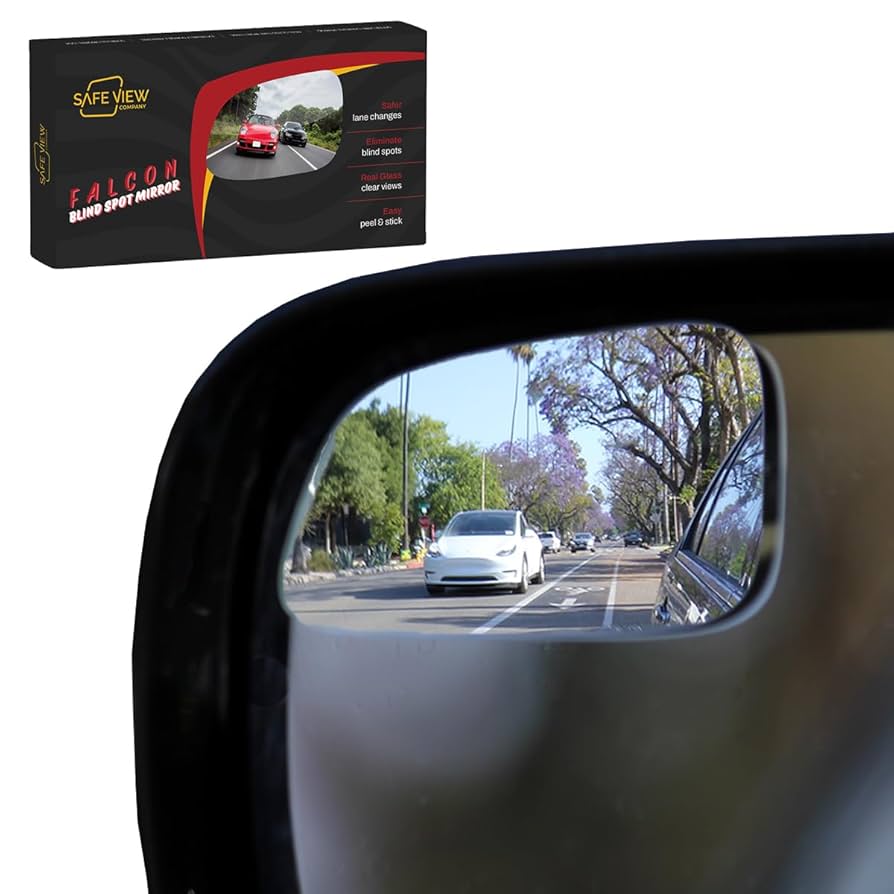
Do you ever worry about missing a car in your blind spot while driving? Blind spot mirrors can be a simple fix, but only if you place them in the right spot.
If you put them in the wrong place, they might not help—or worse, they could create confusion. You’ll discover exactly where to put blind spot mirrors on your car so you can drive with confidence and stay safer on the road.
Keep reading to find out how a small change can make a big difference for your daily drive.

Credit: www.amazon.ca
Why Use Blind Spot Mirrors
Blind spot mirrors help drivers see areas not visible in regular side mirrors. These mirrors reduce the chance of accidents.
They give a wider view of the road and other vehicles near your car. This extra view makes driving safer.
Benefits For Safety
Blind spot mirrors improve safety by showing cars in hard-to-see areas. They help avoid crashes when changing lanes or turning.
These mirrors also reduce blind spots around large vehicles and trucks. They make it easier to judge distance and speed.
- Helps spot vehicles in blind zones
- Reduces lane change accidents
- Improves awareness of nearby traffic
- Assists in parking and tight spaces
- Supports safe merging on highways
Types Of Blind Spot Mirrors
There are different blind spot mirrors for cars. Each type fits different needs and mirror styles.
Some mirrors are small and round, while others are wide and rectangular. Some stick-on mirrors are flat, others are convex.
- Flat Blind Spot Mirrors:Simple mirrors that match side mirror shape.
- Convex Blind Spot Mirrors:Curved mirrors that show a wider view.
- Adjustable Blind Spot Mirrors:Can be moved to the best angle.
- Stick-On Blind Spot Mirrors:Easy to attach and remove.
- Integrated Blind Spot Mirrors:Built into some side mirrors by manufacturers.
Choosing The Right Blind Spot Mirror
Blind spot mirrors help drivers see areas not visible in regular mirrors. Picking the right mirror improves safety and driving comfort.
Consider size, shape, and how the mirror attaches to your car. These factors affect how well the mirror works.
Size And Shape Options
Blind spot mirrors come in different sizes and shapes. Choose one that fits your car’s mirror well and shows a wide view.
Small mirrors cover less area but fit easily. Larger mirrors show more but can be bulky.
- Round mirrors offer a wide field of view
- Rectangular mirrors match the shape of side mirrors
- Convex mirrors curve outward for better angle coverage
Adhesive And Mounting Styles
Mirrors attach using different adhesives or mounting methods. Choose one that stays secure and is easy to install.
Some use sticky pads, while others have clips or suction cups. Consider your car’s mirror surface and personal preference.
- Double-sided adhesive pads offer strong, permanent hold
- Removable adhesive allows easy repositioning
- Suction cups can be moved but may lose grip over time
- Clip-on mirrors fit over the existing mirror edges
Ideal Placement On Side Mirrors
Blind spot mirrors help drivers see areas outside the normal view. Placing them correctly on side mirrors improves safety and reduces accidents.
This guide explains the best spots on your side mirrors to attach blind spot mirrors for clear visibility.
Top Corner Positioning
Placing blind spot mirrors at the top corner of your side mirrors gives a wide view of the lane beside you. It helps spot vehicles that are slightly behind and beside your car.
- Attach the mirror on the outer upper corner of the side mirror.
- Ensure it does not block the main mirror’s view.
- Adjust the angle to cover the blind spot area.
- Check visibility by sitting in the driver’s seat before driving.
Bottom Corner Positioning
Placing the blind spot mirror at the bottom corner works well for spotting vehicles close to the rear bumper. It is useful when changing lanes or reversing.
| Placement | Advantages | Considerations |
|---|---|---|
| Bottom Outer Corner | Good for seeing cars near rear wheels | May reduce view of road surface in main mirror |
| Adjust Angle | Custom angle improves blind spot coverage | Needs testing to avoid blind spots |
Adjusting For Optimal Visibility
Blind spot mirrors help you see areas your regular mirrors miss. Proper adjustment is key to getting the best view.
Placing and adjusting these mirrors correctly reduces accidents and improves safety on the road.
Angle Adjustment Tips
Set the blind spot mirror angle so you see the side of your car and the lane next to you. This helps spot other vehicles quickly.
A slight tilt inward usually works well. Avoid pointing the mirror too far out or down, as it limits visibility.
- Start by placing the mirror on the upper outer corner of your side mirror.
- Adjust the angle so you see a small part of your car’s side.
- Tilt the mirror to cover the adjacent lane.
- Test visibility and fine-tune as needed.
Testing Mirror Coverage
Check your blind spot mirror coverage by using a helper or parked cars. This confirms the mirror shows blind spots clearly.
Drive slowly in a safe area and watch how well the mirror shows vehicles in adjacent lanes. Adjust if you miss spots.
- Ask a friend to stand beside your car in the blind spot area.
- Look in the blind spot mirror to see if you can spot them.
- Drive near parked cars and check coverage in the mirror.
- Adjust the mirror angle if any blind spots remain.
Common Mistakes To Avoid
Blind spot mirrors help drivers see areas not visible in regular mirrors. Incorrect placement can reduce their effectiveness. Avoiding common mistakes ensures better safety on the road.
This guide covers two frequent errors when placing blind spot mirrors. Fixing these issues improves your view and lowers accident risk.
Placing Mirrors Too Far Inward
Putting blind spot mirrors too close to the car’s center limits their use. They should not be angled inward too much. This mistake creates blind zones instead of removing them.
- The mirror must show the lane next to your car, not just your car’s side.
- Place the mirror near the outer edge of the existing side mirror.
- Adjust until you see the side of your car and the adjacent lane clearly.
- Keep the mirror stable; avoid moving it inward after adjustment.
Ignoring Driver’s Eye Level
Blind spot mirrors must align with your eye level for the best view. If you ignore this, the mirror angle will be off. This causes wrong reflections and poor visibility.
| Problem | Effect | Fix |
| Mirror too high | Sees sky or car roof | Lower mirror to eye level |
| Mirror too low | Sees ground or car body | Raise mirror to eye level |
| Mirror angled away | Misses adjacent lanes | Adjust angle toward lane |
Credit: www.aclassclub.co.uk
Maintaining And Cleaning Blind Spot Mirrors
Blind spot mirrors improve your view while driving. Keeping them clean helps you see clearly. Regular maintenance also keeps them attached well.
This guide explains how to clean and check your blind spot mirrors. Follow simple steps to keep them working right.
Cleaning Techniques
Clean your blind spot mirrors gently to avoid scratches. Use soft cloths and mild cleaners for best results.
- Use a microfiber cloth to wipe the surface.
- Apply a small amount of glass cleaner or soapy water.
- Do not use abrasive materials or strong chemicals.
- Dry the mirror with a clean, dry cloth to avoid streaks.
- Clean the mirrors regularly to prevent dirt build-up.
Checking Adhesive Strength
Strong adhesive keeps blind spot mirrors fixed on your car. Check the stickiness often to avoid losing mirrors while driving.
| Check Point | What to Look For | Action If Needed |
|---|---|---|
| Loose edges | Mirror edges lifting from the car | Press firmly or replace adhesive tape |
| Sticky residue | Old glue losing stickiness | Clean surface and apply new adhesive |
| Mirror movement | Mirror moves when touched | Reattach securely or replace mirror |

Credit: www.youtube.com
Frequently Asked Questions
Where Should Blind Spot Mirrors Be Placed On A Car?
Blind spot mirrors should be placed on the outer edge of the side mirrors. Position them on the upper corner for maximum visibility. This placement helps in reducing blind spots effectively. Ensure they are adjusted to provide a clear view of adjacent lanes.
Proper positioning enhances safety while driving.
Do Blind Spot Mirrors Fit All Car Models?
Yes, blind spot mirrors are generally universal and fit most car models. They are designed to stick onto existing side mirrors easily. However, always check the mirror size before purchasing. Some mirrors come with adjustable features to ensure compatibility with various car models and mirror sizes.
How Do Blind Spot Mirrors Improve Driving Safety?
Blind spot mirrors provide a wider field of view, reducing blind spots. They help drivers see vehicles in adjacent lanes. This enhanced visibility minimizes the risk of collisions during lane changes. By offering a broader perspective, blind spot mirrors contribute to safer driving experiences.
Are Blind Spot Mirrors Easy To Install?
Yes, blind spot mirrors are very easy to install. Most come with adhesive backing for simple attachment. Clean the side mirror surface before sticking them on. Ensure they are securely placed for optimal performance. Installation usually takes just a few minutes and requires no special tools.
Conclusion
Placing blind spot mirrors on your car improves driving safety. Attach them to the top outside corner of your side mirrors. This spot shows areas your regular mirrors miss. Adjust the mirrors until you see the blind spots clearly. Check them before changing lanes or merging.
Small changes can prevent accidents and keep you safe. Remember, proper placement matters more than mirror size. Practice using the mirrors daily to build confidence. Safe driving starts with good habits and proper tools.