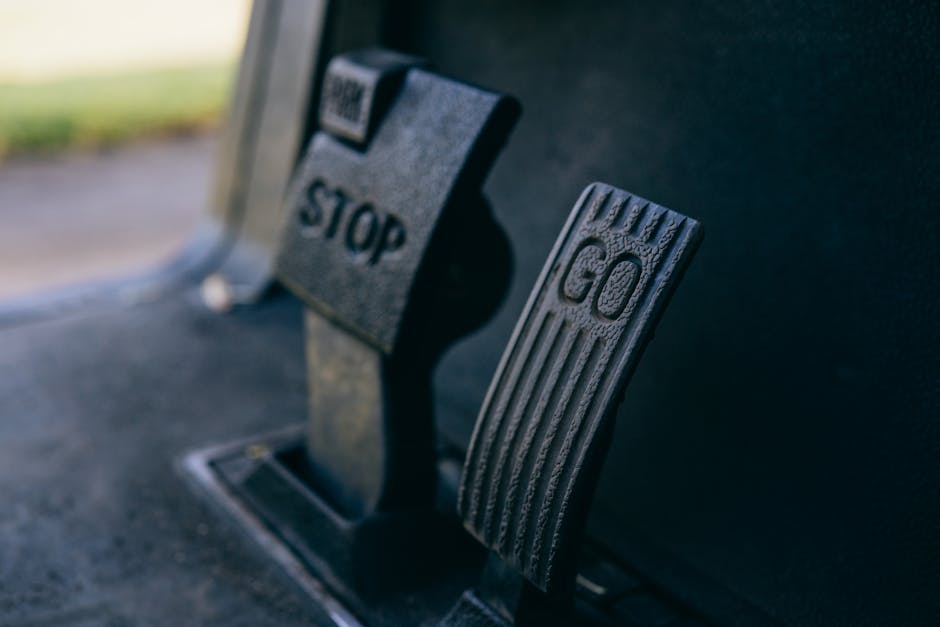
Have you ever sat behind the wheel of an automatic car and wondered which pedal actually controls the brakes? It’s a simple question, but knowing the answer can make a huge difference in how confident and safe you feel while driving.
If you’re new to driving or just switching from a manual to an automatic, this little detail can seem confusing. But don’t worry—by the end of this article, you’ll clearly understand which pedal stops your car and why it’s so important to get it right every time you hit the road.
Keep reading to avoid common mistakes that could cost you time, stress, or even safety.
Brake Pedal Location
In an automatic car, the brake pedal is easy to find. It is one of the two main pedals on the floor.
Knowing where the brake pedal is helps you drive safely and stop the car when needed.
Position Compared To Accelerator
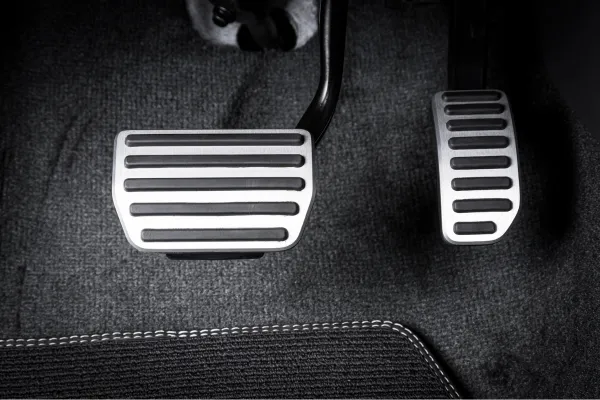
The brake pedal is always to the left of the accelerator pedal. The accelerator is the pedal you press to go faster.
The brake pedal is larger and closer to the center of the car. The accelerator is smaller and on the far right side.
- Brake pedal is on the left side of the two pedals
- Accelerator pedal is on the right side
- Brake pedal is wider than accelerator pedal
Visual Differences
The brake pedal looks different from the accelerator pedal. It is usually bigger and shaped differently.
The brake pedal often has a flat surface. The accelerator pedal may be curved or narrower.
- Brake pedal is larger and flat for easy pressing
- Accelerator pedal is smaller and sometimes curved
- Brake pedal may have a textured surface for grip

Credit: accessories.buick.com
How The Brake Pedal Works
The brake pedal in an automatic car is a crucial component. It helps the driver to slow down or stop the vehicle safely.
Understanding how the brake pedal functions can improve your driving skills. It also enhances road safety.
Mechanism Behind Braking
When you press the brake pedal, the car slows down. This happens due to a system called hydraulic brakes.
- Hydraulic fluid transfers force to the brake pads.
- The brake pads press against the rotors.
- Friction between pads and rotors slows the car.
Safety Features Linked To Brake
Modern cars have safety features linked to the brake system. These features help prevent accidents and ensure safe driving.
Here are some common safety features:
| Feature | Function |
| ABS (Anti-lock Braking System) | Prevents wheels from locking |
| EBD (Electronic Brakeforce Distribution) | Distributes brake force evenly |
| Brake Assist | Increases brake force in emergencies |
Common Mistakes With Pedals
Many new drivers find it hard to know which pedal is the brake in an automatic car. This confusion can cause mistakes while driving.
Understanding the pedals helps prevent accidents and keeps you safe on the road.
Confusing Brake And Accelerator
In automatic cars, the brake pedal is on the left, and the accelerator is on the right. Some drivers press the wrong pedal by mistake.
This error can cause sudden stops or unwanted acceleration, which is dangerous for the driver and others.
- The brake pedal is usually wider than the accelerator.
- The accelerator pedal is smaller and narrower.
- Practice feeling the pedals with your foot before driving.
Tips To Avoid Pedal Mix-ups
Take time to learn the pedal positions before driving. This helps you react correctly in traffic.
Try these simple tips to avoid mixing up the pedals:
- Before moving, place your right foot on the brake pedal.
- Look down and check which pedal your foot is on.
- Practice pressing each pedal while the car is off.
- Wear shoes that let you feel the pedals well.
- Stay calm and focus on your foot movements.

Credit: ownersmanual.kia.com
Using The Brake In Different Situations
Knowing which pedal is the brake in an automatic car is important for safe driving. The brake pedal is always the one on the left side of the two pedals. It helps you slow down or stop the car in many situations.
Using the brake correctly can keep you safe on hills and during emergencies. Below, we explain how to use the brake in these cases.
Stopping On Hills
When you stop on a hill, use the brake pedal to hold the car in place. Press the brake firmly and keep your foot on it until you start moving again. This stops the car from rolling backward.
- Press the brake pedal fully to stop the car.
- Keep the brake pressed when stopped on the hill.
- Release the brake slowly while pressing the gas to move forward.
- If needed, use the parking brake for extra hold.
Emergency Braking
In an emergency, press the brake pedal hard and fast. Do not pump the brake if your car has ABS (Anti-lock Braking System). Just keep the pedal pressed to stop quickly.
| Action | Do | Don’t |
| Emergency braking | Press the brake pedal firmly and hold it down. | Do not release or pump the brake if the car has ABS. |
| Car without ABS | Press the brake hard and pump gently to avoid lockup. | Do not slam the brake pedal abruptly. |
Automatic Vs Manual Brake Pedals
In cars, the brake pedal helps you stop safely. Automatic and manual cars have different pedal setups.
Knowing which pedal is the brake in each type is important for safe driving.
Key Differences
Manual cars have three pedals: clutch, brake, and gas. Automatic cars only have two pedals: brake and gas.
In an automatic car, the brake pedal is always the left pedal. The right pedal is the gas.
- Manual brake pedal is in the middle of three pedals
- Automatic brake pedal is the left of two pedals
- Manual cars need a clutch pedal for shifting gears
- Automatic cars do not have a clutch pedal
Adaptation Tips For Automatic Drivers
Automatic drivers must learn to use only two pedals. This can feel different from manual driving.
Practice using your left foot only for the brake and right foot for gas. This helps avoid confusion.
- Keep your left foot ready on the brake pedal
- Use your right foot for the gas pedal only
- Do not use two feet on pedals at the same time
- Practice stopping smoothly using just the brake pedal
Maintenance And Safety Checks
Knowing which pedal is the brake in an automatic car is very important. Regular maintenance helps keep your brakes working well and keeps you safe on the road.
Safety checks of the brake system prevent accidents. They also help find problems before they get worse.
Checking Brake Responsiveness
Test your brakes often to see if they respond quickly. Press the brake pedal gently and notice how the car slows down.
If the brake pedal feels soft or the car takes longer to stop, your brakes might need attention.
- Press the brake pedal with steady pressure
- Check if the car stops smoothly and fast
- Listen for unusual noises when braking
- Watch for shaking or pulling to one side
When To Consult A Mechanic
See a mechanic if your brakes do not work well. Do this right away to avoid danger on the road.
Also, get help if you notice strange sounds, smells, or warning lights related to brakes.
- The brake pedal feels very soft or hard
- The car pulls to one side when braking
- There are grinding or squealing noises
- You smell burning or unusual odors
- The brake warning light is on
Credit: ivsabq.com
Frequently Asked Questions
Which Pedal Acts As The Brake In An Automatic Car?
The brake pedal in an automatic car is the larger pedal on the left. It is used to slow down or stop the vehicle safely.
How To Identify The Brake Pedal In An Automatic Car?
In an automatic car, the brake pedal is usually wider and positioned to the left of the accelerator pedal. Pressing it slows or stops the car.
Can You Use The Accelerator As A Brake In Automatic Cars?
No, the accelerator pedal is only for increasing speed. The brake pedal must be used to reduce speed or stop in automatic cars.
Why Is The Brake Pedal Bigger In Automatic Cars?
The brake pedal is larger for safety reasons. It provides better control and is easier to press quickly during emergencies.
Conclusion
The brake pedal in an automatic car is always the one on the right. Press it gently to slow down or stop the vehicle. The left pedal is the gas, used to make the car go. Knowing this helps you drive safely and avoid mistakes.
Always keep your foot ready on the brake pedal in traffic. Practice makes it easier to react quickly. Remember, safe driving starts with understanding your car’s controls well.