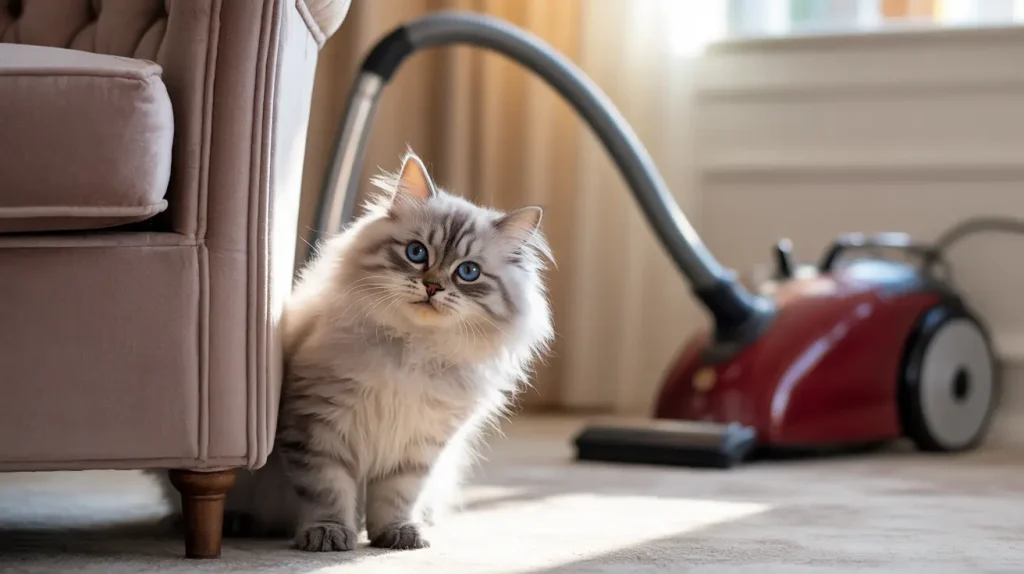
Have you ever wondered why your furry friend bolts for cover every time you turn on the vacuum cleaner? You’re not alone.
Many cat owners are puzzled by their pet’s intense fear of this household appliance. Understanding why cats are scared of vacuums isn’t just about satisfying your curiosity—it’s about improving your cat’s comfort and well-being at home. By diving into the reasons behind this common feline phobia, you can create a more harmonious living environment for both you and your cat.
So, let’s unravel this mystery and discover what you can do to ease your cat’s anxiety.
Cats And Loud Noises
Cats and loud noises rarely mix well. If you’ve ever turned on a vacuum and watched your cat bolt from the room, you know how intense their reaction can be. Understanding how cats experience sound reveals why vacuums trigger such fear.
How Cats Perceive Sound
Cats have an extraordinary sense of hearing. They can detect sounds at much higher frequencies than humans—up to 64 kHz compared to our 20 kHz limit.
This means noises that seem ordinary or even quiet to you might feel overwhelming or piercing to your cat. Their ears also move independently, allowing them to pinpoint the exact location of a sound quickly.
Imagine hearing a strange, loud noise that feels like it’s coming from every direction all at once. Would you feel relaxed or alert? Your cat’s heightened sensitivity makes loud household noises much more stressful.
Vacuum Noise Characteristics
Vacuum cleaners produce a complex mix of sounds. There’s a constant low rumble combined with sharp, high-pitched whines from the motor and brushes.
This combination creates an unpredictable and intense noise environment. The sound is not only loud but also fluctuates as you move the vacuum around.
Additionally, the vibration and sudden bursts of noise can feel like a threat to your cat. Have you noticed how your cat sometimes hides under furniture or disappears entirely when the vacuum starts? That’s their way of seeking safety from a perceived danger.

Credit: www.reddit.com
Unfamiliar Movements
Cats are creatures of habit. They like to watch and understand their surroundings. Sudden movements confuse them. These unfamiliar actions can make cats feel unsafe. The vacuum cleaner often moves fast and unpredictably. This causes stress and fear in cats.
Vacuum’s Sudden Appearance
A vacuum cleaner often appears quickly in a room. It may be hidden, then suddenly pushed across the floor. This fast, unexpected movement startles cats. They do not expect an object to move like that. The vacuum seems strange and threatening. Its sudden presence triggers their natural alarm.
Cats’ Reaction To Quick Actions
Cats react to rapid movements by running or hiding. Their instinct tells them to avoid danger fast. They may hiss or puff up to look bigger. Quick vacuum movements make cats feel trapped or cornered. This reaction is normal. Cats need time to get used to new objects and their movements.
Vibrations And Sensory Overload
Cats have very sensitive bodies and sharp senses. Vibrations from a vacuum can feel strange and strong to them. This causes stress and fear. Their delicate sensory system can get overwhelmed easily. Understanding this helps explain why vacuums scare cats so much.
Feeling The Vacuum’s Vibrations
Vacuums create strong vibrations through the floor and air. Cats can feel these vibrations deep in their paws and body. These unusual movements make them uneasy. The constant shaking nearby feels like a threat. Cats prefer calm and steady environments, so sudden vibrations can startle them.
Impact On Cat’s Sensory System
Cats have a highly tuned sensory system. Their ears and whiskers pick up tiny changes in the environment. The loud noise and shaking from a vacuum can overload their senses. This sensory overload causes anxiety and fear. Cats may try to run away or hide to escape the discomfort.

Credit: www.reddit.com
Past Experiences And Conditioning
Past experiences shape much of a cat’s behavior, especially when it comes to their fear of vacuums. These encounters create lasting impressions, turning an ordinary household appliance into a source of stress. Understanding how conditioning works can help you ease your cat’s anxiety.
Negative Encounters With Vacuums
Many cats associate vacuums with loud noises and sudden movements that startle them. Imagine your cat peacefully resting when the vacuum suddenly roars nearby—it’s no surprise they bolt or hide. Sometimes, vacuums accidentally come too close, causing discomfort or even minor injuries to curious paws.
These moments build a mental link between the vacuum and a threat. Your cat isn’t afraid of the vacuum itself but what it represents: unpredictability and potential harm. Have you noticed your cat’s body language change instantly when you reach for the vacuum?
Learned Fear Responses
Cats can learn fear from repeated negative experiences. If each time the vacuum appears, your cat feels scared or stressed, they start anticipating danger. This learned response makes it harder for them to relax whenever the vacuum is near.
Sometimes, the fear spreads beyond the vacuum to other noisy objects or situations. Your cat’s brain creates a pattern, linking specific sounds and movements with the need to escape. How can you break this cycle to help your cat feel safe again?
Try gradual exposure combined with positive reinforcement. Start by placing the vacuum in a room without turning it on, rewarding calm behavior with treats. Slowly increase your cat’s comfort level to change their association from fear to curiosity.
Natural Instincts And Survival
Cats have lived alongside humans for thousands of years, yet their instincts remain deeply rooted in survival. These natural instincts guide their reactions to unfamiliar or loud objects, like vacuums. Understanding these behaviors helps you connect better with your feline friend and ease their anxiety.
Flight Response Mechanism
Your cat’s sudden dash from the vacuum cleaner isn’t just random—it’s a survival tactic hardwired into their brain. When cats hear the loud, unpredictable noise of a vacuum, their nervous system triggers a quick escape response.
This reaction stems from their need to stay safe in the wild. Loud noises often signal danger, so running away helps them avoid potential harm. Have you noticed how your cat freezes or darts away as soon as the vacuum starts? That’s their flight response kicking in.
Avoidance Of Potential Threats
Cats are naturally cautious creatures. They avoid anything unfamiliar that might threaten their well-being. Vacuums are large, noisy, and move unpredictably, which makes them a perfect example of something your cat wants to steer clear of.
Think about how you react to sudden, loud sounds—your cat feels similarly, but with sharper instincts. You can help by introducing the vacuum slowly, allowing your cat to observe it from a distance without pressure. This can reduce their stress and help them learn that the vacuum isn’t a real threat.
Tips To Reduce Vacuum Fear
Many cats feel uneasy around vacuums. Their loud noise and sudden movements cause stress. Reducing this fear can improve your cat’s comfort and your cleaning routine. The right approach helps cats adjust slowly and feel safe. Here are some practical tips to ease their anxiety.
Gradual Exposure Techniques
Introduce the vacuum slowly to your cat. Start by placing it in the room without turning it on. Let your cat explore and sniff it at their own pace.
Next, turn the vacuum on for a few seconds from a distance. Stop and praise your cat if they stay calm. Repeat this over several days, gradually increasing the time and closeness.
Creating Safe Spaces
Provide a quiet area where your cat can hide during cleaning. This space should be cozy and out of sight.
Use blankets or cat beds to make it inviting. Cats feel more secure when they have control over their environment.
Using Quiet Vacuum Models
Choose vacuums designed to operate quietly. Lower noise levels reduce stress for your cat.
Look for models labeled as “low noise” or “quiet.” These vacuums still clean well but produce less sound, making the experience less frightening.

Credit: www.ecovacs.com
Frequently Asked Questions
Why Do Cats Fear Vacuum Cleaners?
Cats fear vacuums because of the loud noise and sudden movement. These sounds stress their sensitive ears. Vacuums also emit vibrations that cats find unsettling. This combination triggers their natural fight-or-flight response, making them anxious and scared.
How Do Vacuum Noises Affect Cats’ Behavior?
Vacuum noises are loud and unpredictable, causing stress in cats. Their sensitive hearing makes the sound overwhelming. This can lead to hiding, fleeing, or aggressive behavior. Cats associate vacuum noise with danger, so they avoid it instinctively.
Can Vacuum Vibrations Harm Cats?
Vacuum vibrations are not harmful but can be disturbing. Cats feel these vibrations through the floor or air. This unfamiliar sensation may cause discomfort and fear. Although not physically harmful, vibrations increase a cat’s stress around vacuums.
How To Reduce Cats’ Fear Of Vacuum Cleaners?
Introduce the vacuum slowly and calmly near your cat. Use it at a distance, then gradually get closer. Offer treats and positive reinforcement during exposure. This helps cats associate the vacuum with safety, reducing fear over time.
Conclusion
Cats fear vacuums because of loud noise and sudden movement. They feel unsure about this strange machine in their space. Their sharp senses pick up vibrations and sounds humans miss. This makes them want to run and hide. Understanding their fear helps owners stay patient and gentle.
Giving cats time to adjust can reduce their stress. Quiet vacuums and slow introduction might help too. Respecting a cat’s feelings builds trust between pet and owner. Fear of vacuums is normal, not a sign of bad behavior. Being calm around them makes a big difference.