
Have you ever turned on your car’s air conditioner on a hot day, only to feel warm air blowing out instead? It’s frustrating and uncomfortable, especially when you need relief from the heat.
You might be wondering, “Why did my air conditioner stop working in my car? ” Understanding the common reasons behind this problem can save you time, money, and stress. Keep reading to discover the simple fixes and key signs that your car’s AC needs attention—so you can get back to driving in cool comfort.
Credit: www.sunautoservice.com
Common Reasons For Ac Failure
Your car’s air conditioner may stop working for many reasons. Knowing these reasons helps you fix the problem fast.
Some causes are simple to fix. Others need a mechanic’s help. Let’s look at the common reasons for AC failure.
Refrigerant Leaks
The AC system uses refrigerant to cool the air. If there is a leak, the refrigerant level drops.
Low refrigerant means the AC cannot cool well. Leaks happen in hoses, seals, or the condenser.
- Small leaks reduce cooling over time
- Large leaks stop cooling quickly
- Leaks cause the AC system to work harder
- Refrigerant leaks may damage the environment
Electrical Issues
The AC uses electrical parts to work. If there is a bad wire or fuse, the AC may stop.
Faulty switches, relays, or sensors can also cause AC failure. Sometimes the control module has problems.
- Blown fuses stop the AC from turning on
- Loose wires cause intermittent cooling
- Bad sensors send wrong signals
- Faulty relays interrupt power to AC parts
Compressor Problems
The compressor moves refrigerant through the AC system. If it fails, the AC will not cool.
Compressor issues include worn parts, clutch failure, or lack of lubrication. These cause noise or no cooling.
- Worn compressor parts reduce efficiency
- Clutch failure stops compressor from running
- Low oil causes compressor damage
- Overheating can cause compressor failure

Credit: www.carsales.com.au
Signs Of A Faulty Air Conditioner
Your car’s air conditioner keeps you cool in warm weather. When it stops working, it can be uncomfortable. Knowing the signs can help you fix it early.
Here are some common signs that your car’s air conditioner might be having problems. Pay attention to these, so you can address them quickly.
Warm Air Blowing
If your air conditioner blows warm air, it may have a problem. The air should be cool and refreshing. Warm air often means a refrigerant leak or a faulty compressor.
- Check for refrigerant levels.
- Inspect the compressor for damage.
- Ensure the AC system is free of blockages.
Strange Noises
Odd sounds from your air conditioner can signal a problem. Listen for rattling or squealing. These noises might mean a loose part or a worn-out component.
Common sounds include:
- Rattling: Could mean loose parts.
- Squealing: Might indicate a worn belt.
- Hissing: Often a sign of a refrigerant leak.
Unusual Smells
Bad smells from the air conditioner can be unpleasant. These smells might point to mold or a dirty filter. It’s important to address this to maintain air quality.
| Smell | Possible Cause |
| Moldy | Mold in the vents |
| Burning | Wiring issues |
| Gasoline | Fuel leak |
Impact Of Weather And Usage
Your car’s air conditioner can stop working due to many reasons. Weather and how you use it play a big role. Understanding these factors helps you find the problem.
Extreme weather can strain the system. Using the AC too often also causes wear and tear. Both affect your car’s cooling ability.
Extreme Temperatures
Very hot or very cold weather can damage your car’s AC. High heat makes the system work harder. This can cause parts to fail.
Cold weather can cause the refrigerant to freeze or leak. This stops the AC from cooling properly. It can also clog the system.
- Heat causes compressor overload
- Freezing temperatures may freeze refrigerant
- Extreme weather wears out hoses and seals
- Temperature swings cause system pressure issues
Frequent Usage Effects
Using your car’s AC all the time can cause parts to wear out faster. The compressor and belts may break down from overuse.
Frequent use can lead to low refrigerant levels. Dirt and debris also build up inside the system. These reduce cooling performance.
- Compressor wears out with constant use
- Belts can crack or break
- Refrigerant leaks due to pressure changes
- Filters and coils get dirty and blocked
Diy Checks Before Repair
If your car’s air conditioner stops working, some simple checks can help. You can do these checks yourself before seeing a mechanic.
These checks save time and money. They help you find easy problems you can fix or tell the mechanic what to focus on.
Inspecting Fuses
Fuses protect the car’s electrical parts like the air conditioner. A blown fuse can stop the AC from working.
Look in your car’s manual to find the fuse box location. Check the fuse for the AC system and see if it is broken or burnt out.
- Turn off the car before checking fuses
- Remove the AC fuse carefully
- Look for a broken wire inside the fuse
- Replace the fuse with one that has the same rating
Checking Refrigerant Levels
The air conditioner uses refrigerant to cool the air. Low refrigerant can make the AC stop blowing cold air.
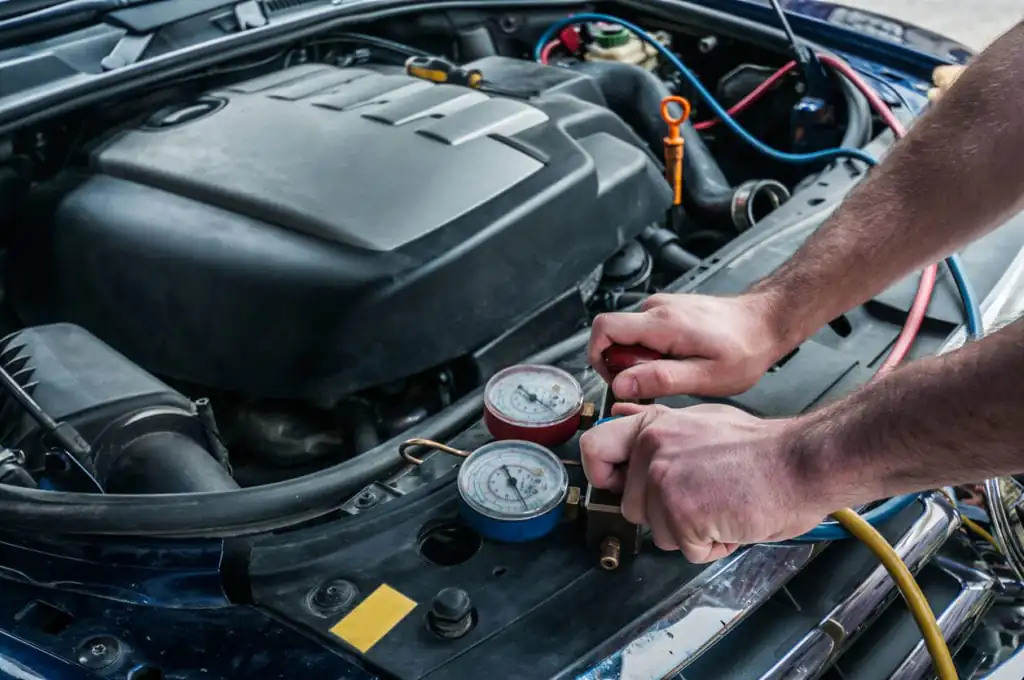
You can check refrigerant levels with a gauge set. These sets connect to the AC service ports under the hood.
- Locate the low-pressure service port
- Attach the gauge set to the port
- Read the pressure level on the gauge
- Compare with the recommended pressure in the manual
- Add refrigerant only if the level is low
Examining Belts And Hoses
Belts and hoses help the AC system work by moving parts and carrying refrigerant. Worn belts or cracked hoses can cause problems.
Check belts for cracks, looseness, or wear. Look at hoses for leaks, cracks, or soft spots.
- Open the hood and find the AC compressor belt
- Press the belt to check tightness
- Look along the belt for cracks or shiny spots
- Follow hoses to see if any have leaks or damage
- Replace damaged belts or hoses before repair
When To Call A Professional
Your car’s air conditioner may stop working for different reasons.
Some problems need a professional’s tools and skills to fix safely and correctly.
Complex Electrical Problems
Electrical issues in your car’s AC system can be hard to find.
- Blown fuses or faulty relays
- Broken wiring or loose connections
- Damaged control modules
- Sensor failures
These problems need special diagnostic tools that only professionals have.
Compressor Replacement Needs
The compressor is the heart of your AC system.
| Sign | Reason to Call a Professional |
| No cold air | Compressor may be broken or seized |
| Strange noises | Internal damage inside the compressor |
| AC clutch not engaging | Electrical or mechanical failure in compressor |
| Oil leaks | Compressor seals might be damaged |
Replacing a compressor requires skill and special equipment.
Refrigerant Recharge Services
Low refrigerant can stop your AC from cooling well.
Reasons to get a professional refrigerant recharge:
- Proper leak detection and repair
- Correct refrigerant type and amount
- Use of safe recovery and recharge machines
- Compliance with environmental laws
Handling refrigerant needs care and training to avoid harm.

Credit: www.youtube.com
Preventive Tips For Ac Maintenance
Car air conditioners need care to work well. Regular maintenance helps avoid sudden stops.
Following simple tips can keep your AC cool and comfortable during every drive.
Regular Inspections
Check your car AC system every few months. Look for leaks, strange noises, or weak airflow. Early checks save costly repairs later.
- Inspect the compressor and belts for wear
- Check refrigerant levels to ensure proper cooling
- Look at hoses and connections for leaks
- Test the AC controls inside the cabin
Keeping The System Clean
Dirt and debris reduce AC efficiency. Clean the vents, filters, and condenser regularly. This helps air flow better and cool faster.
| Part | Cleaning Frequency |
| Cabin Air Filter | Every 12,000 miles |
| AC Vents | Monthly |
| Condenser | Every 6 months |
Timely Repairs
Fix small AC problems quickly. Ignoring them can cause bigger damage. Listen for unusual sounds or weak cooling and get repairs fast.
- Replace worn belts and faulty parts promptly
- Recharge refrigerant when levels are low
- Repair leaks to prevent loss of cooling gas
- Service the compressor before it fails
Frequently Asked Questions
Why Did My Car Air Conditioner Suddenly Stop Working?
Your car’s AC may stop working due to low refrigerant, a faulty compressor, or electrical issues. Check for leaks or blown fuses. Regular maintenance helps prevent sudden failures and ensures proper cooling.
How Can I Fix A Car Ac Not Blowing Cold Air?
First, check the refrigerant level and refill if low. Inspect the compressor and condenser for damage. Clean or replace the cabin air filter. If issues persist, consult a professional mechanic for diagnosis.
What Causes A Car Ac Compressor To Fail?
Common causes include refrigerant leaks, electrical faults, or worn-out compressor parts. Overuse without maintenance can also lead to compressor failure. Timely inspections and servicing can extend compressor life and maintain AC performance.
Can A Dead Car Battery Affect The Air Conditioner?
Yes, a dead or weak battery can prevent the AC system from operating properly. The AC relies on electrical power to run the compressor and fans. Ensure your battery is charged and terminals are clean.
Conclusion
A car’s air conditioner stops working for many reasons. It might be low on refrigerant or have a broken part. Dirt and debris can block airflow too. Regular check-ups help prevent big problems later. Fixing small issues early saves money and stress.
Remember, a cool car keeps you comfortable and safe. Stay aware of changes in your AC’s performance. Quick action can bring back cool air fast. Don’t wait until the heat becomes unbearable. Your car’s AC needs care just like any other part.