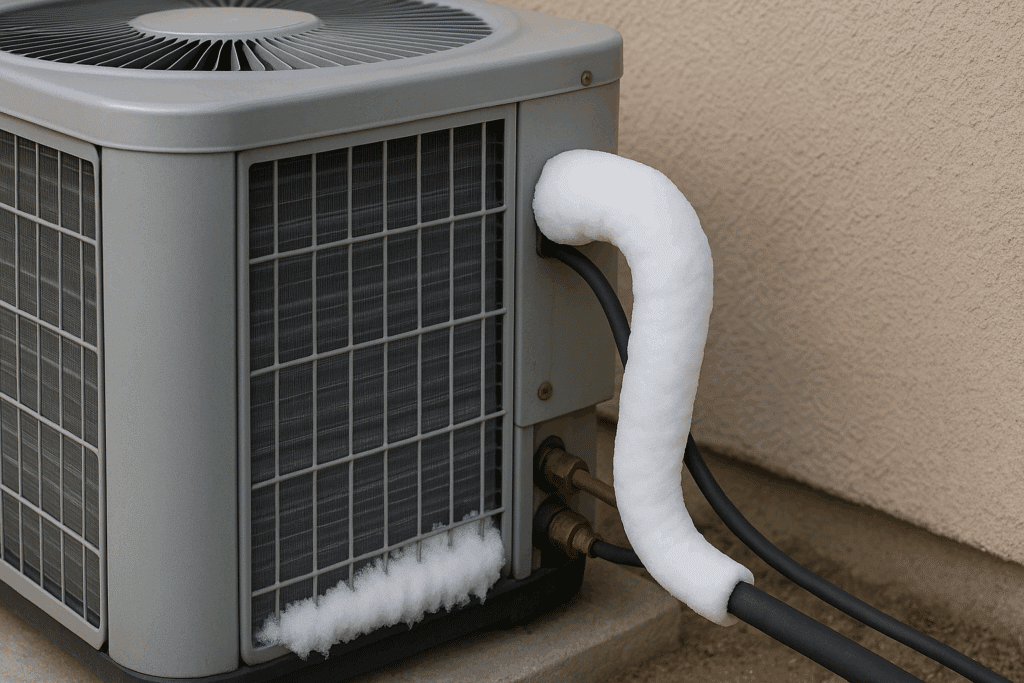
Is your air conditioner turning into an ice machine? You might have noticed those chilling ice patches forming on your AC unit, leaving you confused and worried.
Why does your air conditioner keep freezing, and what does it mean for your comfort and your wallet? If you’ve ever asked yourself these questions, you’re not alone—and you’re in the right place. Understanding why this happens can save you from costly repairs and keep your home cool when you need it most.
Keep reading to uncover the surprising reasons behind your freezing AC and learn simple steps to fix it fast.
Common Causes Of Air Conditioner Freezing
Air conditioners sometimes freeze, stopping cool air from flowing. This can make your home uncomfortable.
Understanding why your air conditioner freezes helps you fix it faster and avoid damage.
Insufficient Airflow
When air cannot flow well through the system, the coils get too cold and freeze. This stops the unit from working properly.
- Blocked or closed vents reduce airflow.
- Dirty air filters restrict air movement.
- Obstructions near the outdoor unit limit air supply.
Low Refrigerant Levels
Refrigerant helps cool the air. When levels are low, the pressure drops, causing the coils to freeze.
| Cause | Effect on AC |
| Refrigerant leak | Coils get too cold and freeze |
| Undercharge | Insufficient cooling and freezing |
| Overcharge | System damage and poor efficiency |
Thermostat Issues
A faulty thermostat can make the air conditioner run too long or too cold. This causes ice to build up on the coils.
- Wrong temperature settings cause overcooling.
- Broken sensors give incorrect readings.
- Improper installation leads to poor control.
Dirty Coils
Coils collect dirt and dust over time. This stops heat transfer and causes the coils to freeze.
Signs of dirty coils include:
- Reduced cooling power
- Longer running times
- Higher energy bills
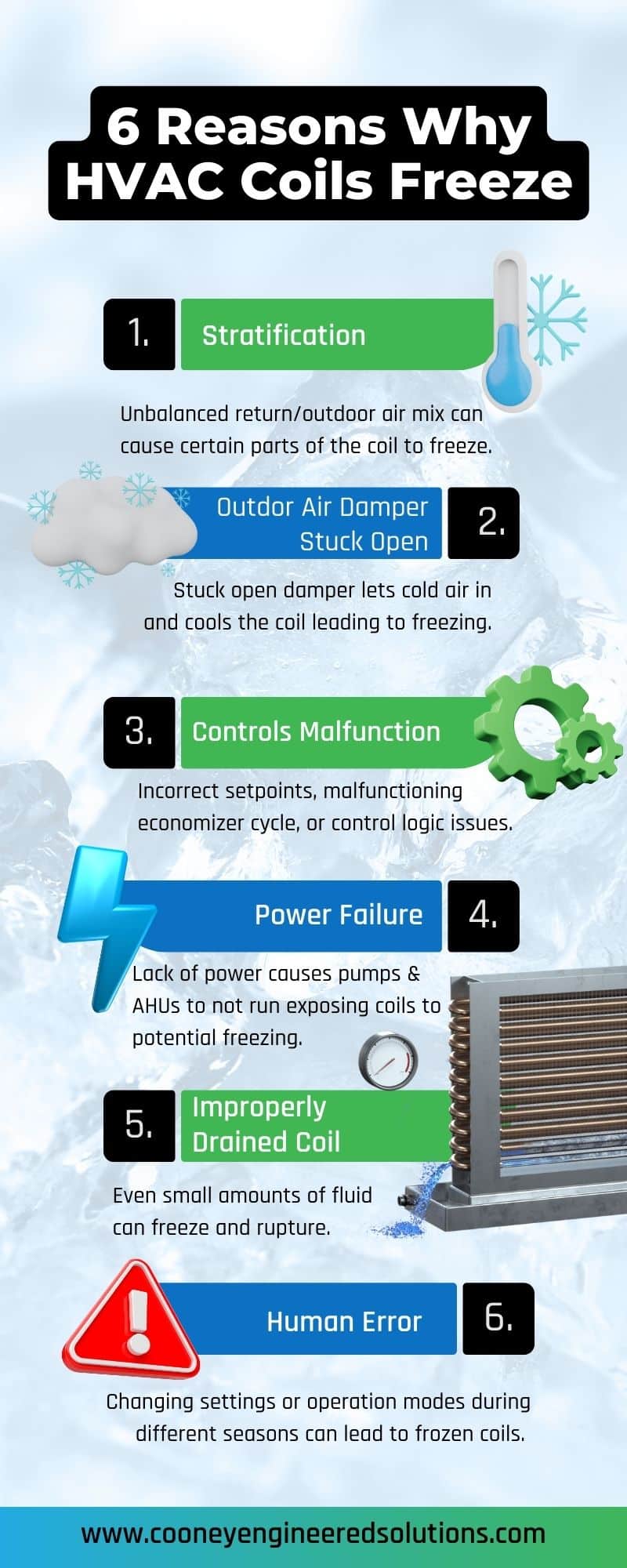
Credit: cooneyengineeredsolutions.com
Signs Your Air Conditioner Is Freezing
Air conditioners can freeze for several reasons. Knowing the signs helps you fix the problem quickly.
Freezing reduces your AC’s ability to cool your home. Watch for these common signs.
Ice Buildup On The Unit
You may see ice forming on the coils or pipes of your AC unit. Ice looks like white or blue frost.
- Ice covers the outdoor unit or indoor evaporator coils
- Frozen water droplets drip from the unit
- Ice grows bigger if the unit runs for a long time
Reduced Cooling Efficiency
A freezing AC cannot cool your home properly. It may take longer to reach the set temperature.
| Symptom | What You Notice |
| Cold Air Weakness | Air feels less cool than usual |
| Longer Cooling Time | AC runs longer but does not cool well |
| Increased Energy Use | Electric bill rises because of extra AC work |
Water Leakage
When ice melts, water can leak around your AC unit. This is a common sign of freezing.
Look for these water leaks near your air conditioner:
- Water puddles under the indoor unit
- Dripping sounds from the AC
- Damp spots on walls or floor near the unit
Preventing Air Conditioner Freezing
Air conditioners can freeze up and stop working well. This happens when cold air builds up inside the unit.
Stopping your air conditioner from freezing keeps it working longer and cools your home better.
Regular Maintenance
Cleaning and checking your air conditioner often helps stop freezing. Dirt and dust can block parts and cause ice.
- Clean or replace air filters every 1-3 months
- Clear debris around outdoor units
- Inspect and clean evaporator coils yearly
- Schedule professional tune-ups each year
Checking Airflow
Good airflow stops ice from forming. Blocked vents or fans reduce air movement and cause freezing.
| Cause | Effect |
| Dirty air filter | Blocks airflow, causes freezing |
| Closed or blocked vents | Reduces air circulation |
| Fan problems | Stops air moving through system |
Monitoring Refrigerant Levels
Refrigerant helps cool the air. Low refrigerant means the system works too hard and ice can form.
Signs of low refrigerant:
- Air conditioner runs longer than usual
- Warm air from vents
- Ice on refrigerant lines
- Higher energy bills
Diy Fixes For A Frozen Air Conditioner
A frozen air conditioner can stop cooling your home properly. It often happens when ice builds up on the coils. You can try simple fixes yourself before calling a technician.
These tips help you thaw the unit, clean filters, and adjust settings to prevent freezing. Follow these steps carefully to get your AC working again.
Thawing The Unit
Turn off the air conditioner to stop ice buildup. Let the ice melt naturally or use a fan to speed it up. Avoid using sharp objects to remove ice.
- Switch off the AC and unplug it.
- Use a fan to blow warm air on the frozen parts.
- Wait for the ice to melt completely.
- Check for any blocked vents or debris.
- Turn the AC back on and watch for normal operation.
Replacing Filters
Dirty filters reduce airflow and cause freezing. Replace or clean your filters regularly to keep your AC running smoothly.
| Filter Type | Cleaning Frequency | Replacement Frequency |
|---|---|---|
| Fiberglass | Every 30 days | Every 3 months |
| Pleated | Every 60 days | Every 6 months |
| HEPA | Every 90 days | Every 12 months |
Adjusting Thermostat Settings
Setting the thermostat too low can cause the coils to freeze. Raise the temperature slightly and set the fan to “auto” to improve airflow.
- Increase thermostat temperature by 2–3 degrees.
- Set fan mode to “auto” instead of “on.”
- Avoid rapid temperature changes.
- Use a programmable thermostat for steady settings.
When To Call A Professional
If your air conditioner keeps freezing, you may wonder when to get help. Some problems need a trained technician to fix safely and properly.
Knowing the signs that require expert attention can save your AC from damage and keep your home cool.
Persistent Freezing Issues
If your AC freezes repeatedly after thawing, it shows a deeper problem. Simple fixes like cleaning filters may not be enough.
Call a professional if you notice:
- Ice builds up again soon after melting
- Airflow feels weak or uneven
- Unusual noises come from the unit
- Temperature does not improve
Complex Repairs Needed
Some AC problems require special tools and skills to fix. This includes electrical issues and mechanical failures inside the unit.
| Problem | Why It Needs a Pro |
| Frozen coils | Must diagnose cause and safely defrost |
| Faulty blower fan | Needs replacement or repair by expert |
| Electrical shorts | Risk of shock or fire if handled incorrectly |
| Drain line clogs | Requires proper cleaning tools |
Refrigerant Handling
Refrigerants cool your AC but need careful handling. Only certified technicians should check or add refrigerant.
Signs you need a pro for refrigerant issues:
- Low cooling performance
- Hissing or bubbling noises
- Ice forming on refrigerant lines
- Visible leaks or oil stains

Credit: www.delcohvac.com

Credit: www.advantageairtech.com
Frequently Asked Questions
Why Does My Air Conditioner Freeze Up Suddenly?
Your air conditioner freezes due to poor airflow or low refrigerant. Dirty filters or blocked vents reduce airflow. Low refrigerant causes coil temperature to drop below freezing. Regular maintenance and cleaning help prevent freezing.
How Can Dirty Filters Cause Ac Freezing?
Dirty filters block airflow, making the evaporator coil too cold. This causes condensation to freeze on the coil. Replace or clean filters regularly to maintain proper airflow and prevent freezing issues.
Can Low Refrigerant Levels Cause My Ac To Freeze?
Yes, low refrigerant lowers pressure in the coil, dropping its temperature. This causes ice to build up on the coil and pipes. A professional must check and recharge refrigerant to fix this issue.
What Role Does Airflow Play In Ac Freezing?
Proper airflow keeps the evaporator coil warm enough to avoid freezing. Blocked vents or dirty filters reduce airflow, causing the coil to freeze. Regularly clean filters and ensure vents are open to maintain airflow.
Conclusion
A frozen air conditioner can cause many problems at home. Poor airflow, dirty filters, or low refrigerant often cause freezing. Regular cleaning and timely repairs help keep your AC running well. Don’t ignore strange noises or cold spots inside your house.
Fixing issues early saves money and stress later. Stay cool and comfortable by caring for your air conditioner. Small steps make a big difference in preventing freezing. Keep your home cool all summer long.