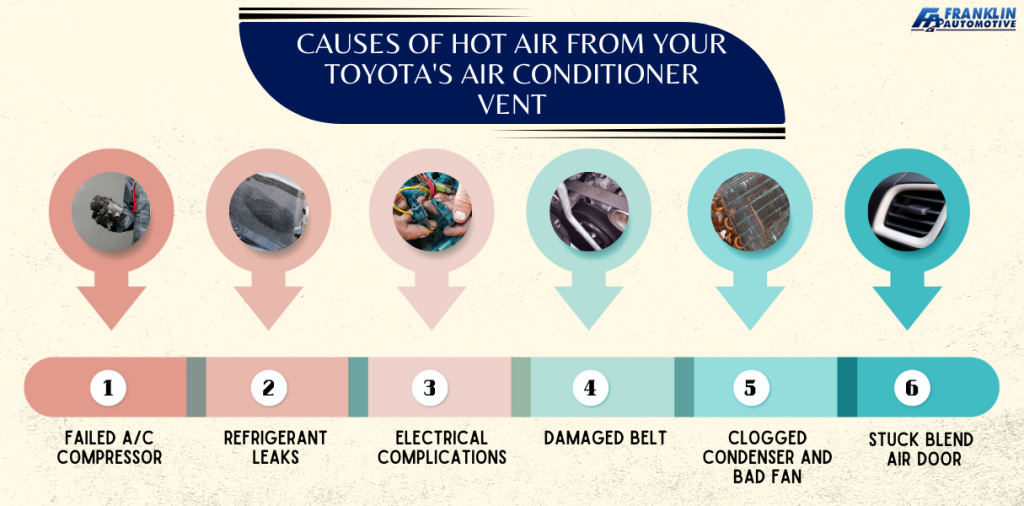
Is your car’s air conditioner blowing hot air when you need it most? It’s frustrating, uncomfortable, and can make every drive feel like a challenge.
You might wonder why this is happening and how to fix it quickly. Understanding the common reasons behind this problem can save you time, money, and stress. Keep reading to find out what could be causing your car’s AC to blow hot air—and what you can do right now to get back to cool, comfortable rides.
Common Signs Of Hot Air From Ac
Your car air conditioner should cool the air inside your vehicle. If it blows hot air, it means there is a problem. Recognizing the signs can help you fix the issue quickly.
Look for changes in temperature, strange noises, or bad smells. These signs show your AC needs attention.
Temperature Changes
The most obvious sign is a sudden change in air temperature. Instead of cold air, your AC blows warm or hot air inside your car.
This can happen if the refrigerant is low or if the compressor is not working. Sometimes, the AC system may freeze, causing warm air to blow.
- Air feels warm or hot instead of cold
- AC cools poorly or stops cooling
- Temperature changes occur quickly
Unusual Noises
Listen for strange sounds when you turn on the AC. Rattling, buzzing, or hissing noises mean something is wrong.
Noises can come from a failing compressor, loose parts, or a blocked airflow. These sounds warn you that the AC needs repair.
- Rattling or knocking sounds
- Hissing or bubbling noises
- Buzzing or grinding sounds
Bad Odors
Bad smells from the AC vents are a common sign of trouble. Musty or moldy odors often mean mold or bacteria inside the system.
Burning smells can indicate electrical issues or overheating parts. Pay attention to any strange odors when the AC is on.
- Musty or moldy smell
- Burning or electrical odor
- Unpleasant or sour scent
Low Refrigerant Levels
One common reason your car air conditioner blows hot air is low refrigerant levels. Refrigerant is the substance that cools the air inside your car.
If the refrigerant leaks or gets low, the air conditioner cannot cool properly. This causes warm air to come from the vents.
Causes Of Refrigerant Loss
Refrigerant can leak from the system for several reasons. These leaks reduce the cooling power of the air conditioner.
- Damaged hoses or seals allow refrigerant to escape
- Corrosion in the AC system parts creates small holes
- Worn-out compressor valves cause leaks
- Punctured condenser from road debris
- Improper installation or repairs lead to leaks
Checking Refrigerant Levels
You can check refrigerant levels to know if they are low. A professional mechanic usually uses special tools for this.
Some signs of low refrigerant include weak cooling and hissing sounds from the AC system. It is important to fix leaks and refill refrigerant to keep the AC working well.
Faulty Compressor
Your car’s air conditioner may blow hot air if the compressor is faulty. The compressor is a key part of the AC system. It helps cool the air inside your car.
If the compressor breaks or stops working, the AC cannot cool the air. This often causes the air to blow warm or hot instead of cold.
Role Of The Compressor
The compressor pumps refrigerant through the AC system. It raises the refrigerant pressure and moves it to the condenser. This process helps remove heat from the air.
Without the compressor, the refrigerant cannot flow. The AC system loses its ability to cool the air inside your car.
Symptoms Of Compressor Issues
You can notice several signs if your compressor has problems. These signs show that the AC system is not working well.
- Air blows warm or hot from the vents
- Strange noises like clicking or grinding from the AC
- AC compressor clutch does not engage
- Leaks or visible damage near the compressor
- AC system cycles on and off frequently
Clogged Or Dirty Condenser
Your car’s air conditioner may blow hot air if the condenser is dirty or clogged. The condenser helps cool the refrigerant. Dirt and debris block airflow through it.
A dirty condenser stops the AC from releasing heat outside. This causes poor cooling inside your car. Cleaning it can fix the problem.
Effects On Cooling
A clogged condenser reduces the AC system’s ability to cool. Air can’t pass through easily. The refrigerant stays hot and the AC blows warm air.
Over time, this can cause the AC to work harder and wear out faster. You may notice the AC takes longer to cool your car.
- Less airflow through the condenser
- Higher pressure in the AC system
- Reduced cooling inside the car
- Possible damage to AC parts
Cleaning Tips
Clean the condenser regularly to keep your AC working well. Use a soft brush or low-pressure water to remove dirt and leaves. Be gentle to avoid damage.
Check the condenser for bugs, grass, or debris after driving on dirt roads. Clean it before the hot season to keep cool air flowing.
- Turn off the engine before cleaning
- Use low-pressure water spray
- Remove leaves and bugs with a soft brush
- Do not use high-pressure water
- Check the condenser often for dirt
Malfunctioning Blower Motor
The blower motor pushes air through your car’s air conditioning system. If it breaks, the airflow stops or slows down. This can cause your air conditioner to blow hot air instead of cold.
A broken blower motor can make driving uncomfortable. It is important to know how to spot problems early to fix them fast.
Impact On Airflow
The blower motor controls the air moving inside your car. When it malfunctions, airflow weakens or stops. This makes the air conditioner less effective.
Without enough airflow, cold air cannot reach the vents. This causes warm air to blow instead. Your car feels hot even if the AC is on.
- Reduced air speed from vents
- Uneven air distribution inside car
- Warm air blowing despite AC settings
- Noise or no sound from blower motor
Identifying Motor Problems
Look for signs that your blower motor is failing. Check if the fan only works on certain speeds or not at all. Listen for strange sounds like grinding or squealing.
Sometimes the motor may stop suddenly or work intermittently. You might also notice burning smells or smoke from the vents. These are warning signs of a bad blower motor.
- Fan works only on high or low speed
- Unusual noises from blower area
- Burning smell near dashboard vents
- Fan stops running randomly

Credit: timsquality.com
Electrical Problems
Your car’s air conditioner may blow hot air due to electrical issues. These problems stop the system from working right.
Fixing electrical faults can often restore cold air quickly. Let’s look at common electrical problems.
Blown Fuses And Relays
Fuses protect the air conditioning system from power surges. If a fuse blows, the AC may stop working.
Relays control the power flow to the AC compressor. A faulty relay can prevent the compressor from starting.
- Check the fuse box for blown fuses linked to the AC
- Replace any blown fuses with the correct rating
- Test relays to see if they click when powered
- Swap relays with a similar one if you suspect a fault
Wiring Issues
Damaged or loose wires can stop the AC from getting power. This causes the system to blow hot air.
Look for broken wires, corrosion, or loose connections in the AC wiring harness.
- Inspect wiring near the battery and fuse box
- Check connectors for dirt or corrosion
- Repair or replace damaged wires
- Secure any loose wiring to avoid future problems
Thermostat And Sensor Failures
Your car’s air conditioner may blow hot air if the thermostat or sensors fail. These parts help control the AC system’s temperature and performance.
Understanding how these parts work can help you spot problems early and fix them before they cause bigger issues.
Role In Ac Function
The thermostat and sensors monitor and adjust the temperature inside your car. The thermostat controls coolant flow to keep the engine and AC system at the right temperature. Sensors send information to the AC control unit to regulate cooling.
- The thermostat ensures the engine does not overheat or run too cold.
- Temperature sensors detect the cabin temperature and outdoor heat.
- Pressure sensors check refrigerant levels and system pressure.
- The AC control unit uses sensor data to adjust cooling output.
Signs Of Sensor Malfunctions
| Symptom | Possible Cause | Effect on AC |
| AC blows warm air | Faulty temperature sensor | Incorrect temperature reading causes no cooling |
| AC cycles on and off | Bad pressure sensor | System shuts down to prevent damage |
| Engine overheats | Stuck thermostat | Coolant flow blocked, AC performance drops |
| AC compressor won’t engage | Sensor sends wrong signal | Compressor does not turn on |

Credit: www.youtube.com
Leaks In The Ac System
Car air conditioners can blow hot air if there are leaks in the system. Leaks cause the refrigerant to escape. Without enough refrigerant, the AC cannot cool the air properly.
It is important to find and fix leaks quickly. Leaks can damage the AC system and increase repair costs.
Common Leak Points
Leaks often occur at places where parts connect or wear out. These are some common leak points:
- Hoses and hose connections
- Compressor seals
- Condenser and evaporator coils
- O-rings and gaskets
- Service valves and fittings
Detecting And Repairing Leaks
Detecting leaks needs special tools. A mechanic may use a UV dye or an electronic leak detector. These help find small leaks that are hard to see.
| Method | Description |
| UV Dye | Added to refrigerant; leaks glow under UV light |
| Electronic Leak Detector | Detects escaping refrigerant gas in the air |
| Soap Bubble Test | Apply soap to joints; bubbles form if there is a leak |
Once found, leaks must be repaired. This may include replacing seals or hoses. Sometimes, parts like the compressor need to be fixed or changed.
Regular AC maintenance helps prevent leaks. Check hoses and seals often. Keep the system clean and topped up with refrigerant.
Impact Of External Factors
Your car’s air conditioner may blow hot air due to outside conditions. These factors affect how well the system cools your car.
Understanding these external factors can help you spot why the air conditioner is not working right.
High Ambient Temperatures
When the outside temperature is very high, your car’s air conditioner works harder. The system needs more time to cool the hot air.
Extreme heat can reduce the AC’s ability to cool the cabin. The engine also runs hotter, which affects the AC performance.
- Hot weather makes cooling less efficient
- Engine heat adds extra load to the AC system
- Cooling takes longer in very warm conditions
Blocked Airflow
Airflow blockage can stop cool air from reaching inside the car. Dirt, leaves, or debris can block vents or filters.
Blocked airflow forces the AC to work harder. This can cause it to blow warm air or reduce air volume.
- Dirty cabin air filters reduce airflow
- Blocked vents limit air circulation
- Debris near condenser lowers cooling ability

Credit: keepincool.com.au
Preventive Maintenance Tips
Car air conditioners can blow hot air if not maintained well. Regular care helps keep the system cool and efficient. You can avoid costly repairs with simple checks and timely fixes.
Below are key tips for keeping your car’s air conditioner working properly. Follow these steps to enjoy cool air during your drives.
Regular Inspections
Check your air conditioner often to spot problems early. Look for leaks, strange noises, or weak airflow. Inspect belts and hoses for cracks or wear. Clean or replace the cabin air filter regularly.
- Inspect refrigerant level and refill if needed
- Examine compressor and clutch for proper function
- Check condenser for dirt or damage
- Test thermostat and controls
- Ensure vents are clear and clean
Timely Repairs
Fix issues as soon as you find them. Small repairs stop bigger problems later. Replace worn parts and fix leaks quickly. Keep the system charged with the right refrigerant amount.
| Common Issue | Cause | Action |
| Air is warm | Low refrigerant | Recharge system |
| Strange noises | Compressor or belt damage | Replace damaged parts |
| Weak airflow | Clogged filter or vents | Clean or replace filter |
| Leaks | Hose or seal damage | Repair or replace hoses |
Frequently Asked Questions
Why Is My Car Ac Suddenly Blowing Hot Air?
Your car AC may blow hot air due to low refrigerant. It can also result from a faulty compressor or leaks in the system. Regular maintenance helps prevent these issues and keeps your AC cooling efficiently.
How Can Low Refrigerant Affect My Car Ac?
Low refrigerant reduces cooling power. It causes the AC to blow warm air instead of cold. Recharging the refrigerant and fixing leaks restores proper cooling performance.
Can A Broken Compressor Cause Hot Air From Ac?
Yes, a broken compressor can’t circulate refrigerant properly. This leads to warm air blowing from your car AC vents. Repair or replacement of the compressor is necessary.
Why Does My Car Ac Blow Hot Air Only When Idling?
At idle, low engine speed reduces AC compressor efficiency. This causes the AC to blow warm air. Increasing engine RPM or fixing compressor issues can solve this problem.
Conclusion
A hot-blowing car AC can really frustrate drivers. Common causes include low refrigerant levels, faulty compressors, or blocked condensers. Regular maintenance can prevent these issues. Check your AC system periodically to ensure it works efficiently. Quick fixes at home may help, but professional help is often best.
Don’t ignore warning signs like unusual noises or weak airflow. Address problems early to save time and money. Keeping your car cool ensures a comfortable ride. Remember, a functional AC system is essential for enjoyable journeys in hot weather. Stay cool and drive safely!