Have you ever found yourself pondering the amount of freezer space needed for half a cow? You’re not alone.
As more people turn to buying meat in bulk to save money and enjoy quality cuts, the question of storage becomes crucial. You might be wondering if your current freezer can handle the load or if it’s time to upgrade.
Understanding the right cubic footage not only prevents spoilage but also maximizes convenience and efficiency in your kitchen. Dive into this article to discover the ideal freezer size for your needs, ensuring you never waste a single steak or roast. Your future self, enjoying delicious home-cooked meals, will thank you.
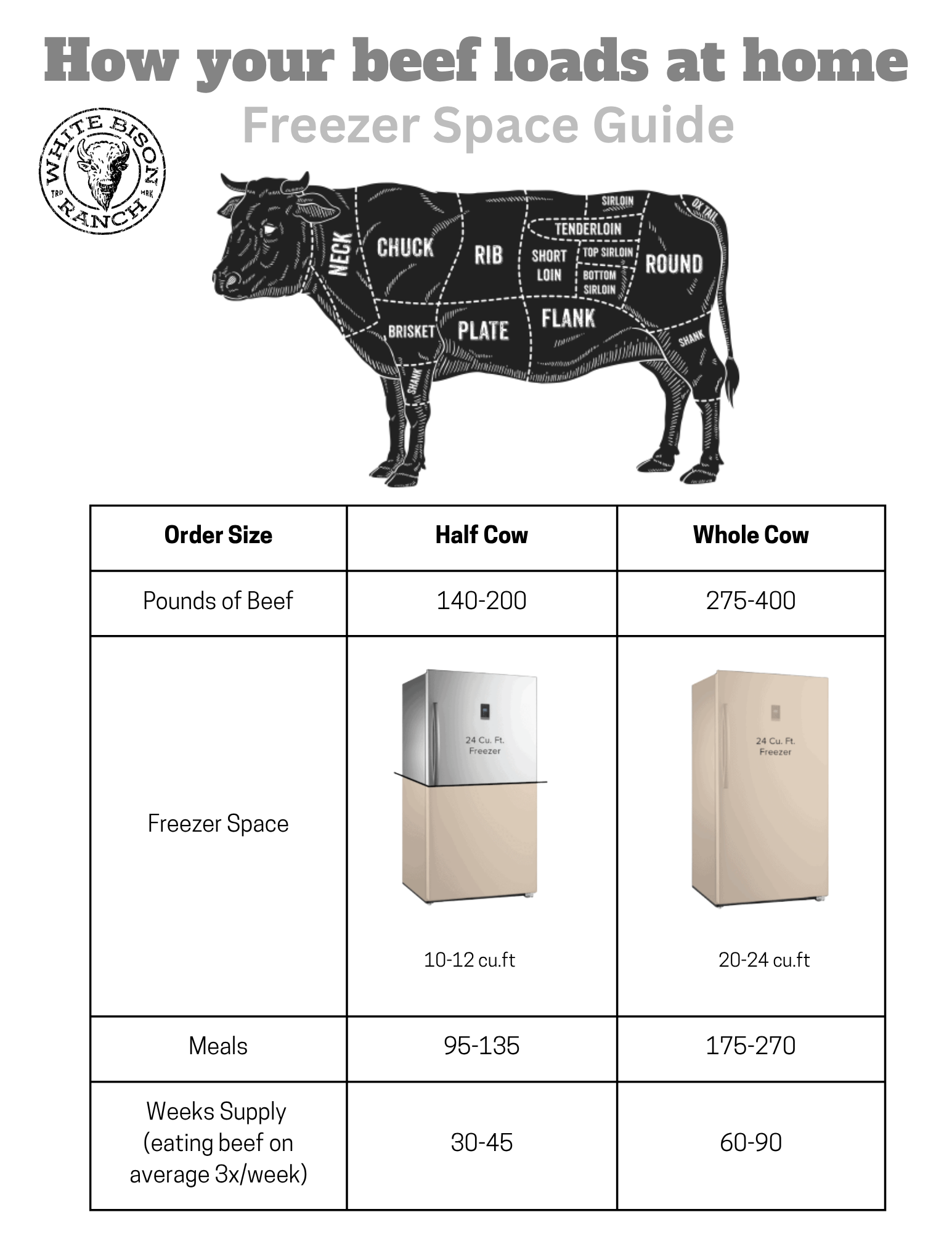
Credit: www.whitebison-ranch.com
Estimating Meat Yield From Half A Cow
Estimating the amount of meat from half a cow helps plan freezer space. The yield varies based on several factors. Knowing what affects meat quantity aids in choosing the right freezer size. Understanding typical pounds of meat and types of cuts clarifies expectations.
Factors Affecting Meat Quantity
- Breed and size of the cow
- Age and health of the animal
- Butchering method and cut style
- Amount of fat and bone included
- Trim level of the meat
Average Pounds Of Meat From Half A Cow
Half a cow usually yields 200 to 250 pounds of meat. This is after removing bones, fat, and other waste. The exact weight depends on the factors listed above. Buyers often get about 60% of the live weight in usable meat.
Types Of Cuts Included
- Steaks like ribeye, sirloin, and T-bone
- Roasts such as chuck and round
- Ground beef from various trimmings
- Short ribs, stew meat, and brisket
Calculating Freezer Space Needed
Calculating freezer space for half a cow requires understanding how much room frozen meat occupies. It depends on the weight, packaging, and types of cuts. Proper estimation helps avoid overcrowding and keeps meat well-preserved. Measuring space correctly saves time and money.
Volume Per Pound Of Frozen Meat
Frozen meat usually takes about 0.07 to 0.09 cubic feet per pound. This range varies depending on how tightly the meat is packed. For half a cow, which weighs around 250 to 300 pounds of meat, plan for roughly 18 to 27 cubic feet of freezer space. This estimate ensures enough room without cramming.
Space For Packaging And Air Circulation
Packaging adds extra bulk to frozen meat. Vacuum sealing reduces space but leaves some room for air. Leave gaps between packages for air circulation. Good airflow helps maintain consistent freezing temperatures. A well-ventilated freezer preserves meat quality longer.
Adjusting For Different Meat Cuts
Different cuts of beef vary in shape and size. Large cuts like roasts take more space than ground beef. Bone-in cuts may need more room due to irregular shapes. Adjust freezer space estimates based on the mix of meat cuts you have. This approach ensures all pieces fit comfortably.
Freezer Sizes And Capacities
Understanding freezer sizes and capacities is key when storing half a cow. Freezer space needs to fit large amounts of meat safely. Choosing the right size helps keep your meat fresh and organized. It also saves energy and avoids overcrowding. Let’s explore the types and sizes of freezers that work best for this purpose.
Common Freezer Types
Two main freezer types suit storing half a cow:
- Chest Freezers:These have a top lid and open from above. They offer more usable space and keep cold air inside better.
- Upright Freezers:These stand like a fridge and open with a front door. They have shelves and are easier to organize.
Both types come in various sizes. The choice depends on space, budget, and how you store the meat.
Standard Cubic Foot Measurements
Freezer capacity is measured in cubic feet. This number shows how much space is inside. For half a cow, you typically need between 15 and 25 cubic feet.
| Freezer Size (cubic feet) | Approximate Meat Capacity |
|---|---|
| 10-15 | Small to medium amounts, less than half a cow |
| 15-20 | Enough for half a cow |
| 20-25+ | Can store half a cow plus extra items |
Choosing Between Chest And Upright Freezers
Chest freezers hold cold air better. Meat stays frozen longer during power loss. They usually provide more space for the price. However, they need more floor space and access from the top.
Upright freezers save floor space and are easier to organize. They have shelves and compartments for better visibility. They may use more energy and lose cold air faster when opened.
Consider how much space you have and your storage style. Both types can work well for half a cow, but the choice depends on your needs.

Credit: floridapremiumbeef.com
Recommended Freezer Size For Half A Cow
Choosing the right freezer size for half a cow is crucial to ensure your meat stays fresh and organized. It’s not just about fitting the meat; it’s about having enough room to easily store, access, and even add other items. Let’s break down the freezer sizes that work best for storing half a cow, so you can make a smart choice for your needs.
Minimum Cubic Feet Required
Half a cow typically yields about 150 to 200 pounds of meat. To store this amount safely, you need at least 15 to 20 cubic feet of freezer space. This size ensures the meat fits without being crammed, which helps maintain consistent freezing temperatures.
If you try to squeeze half a cow into a smaller freezer, you risk uneven freezing and difficulty organizing your cuts. Have you ever struggled to find a steak buried under frozen packages? Avoid that hassle by starting with enough space.
Optimal Freezer Size For Convenience
Going beyond the minimum, an optimal freezer size ranges from 20 to 25 cubic feet. This size lets you arrange your meat neatly in boxes or vacuum-sealed bags without stacking them too tightly. It also allows you to separate different cuts, making meal prep simpler and faster.
Think about how much time you spend hunting for a particular cut in a crowded freezer. A well-sized freezer can save you that frustration. Plus, it provides better air circulation, keeping the meat fresher longer.
Allowing Extra Space For Additional Storage
Have you thought about other items you might want to freeze alongside your half cow? Adding 5 to 10 extra cubic feet gives you room for vegetables, fruits, or even ready meals. This flexibility means your freezer becomes a multi-purpose storage unit rather than just a meat locker.
Consider your shopping habits—do you buy in bulk, or like to prep meals ahead? A larger freezer can accommodate those needs, preventing overcrowding and ensuring everything stays properly frozen.
Tips For Efficient Freezer Storage
Storing half a cow in your freezer can quickly become overwhelming without the right approach. Efficient freezer storage not only saves space but also keeps your meat fresh longer. Let’s look at some practical tips that make managing large quantities easier and more effective.
Proper Packaging Techniques
Packaging your meat correctly is crucial to prevent freezer burn and maintain quality. Use airtight vacuum-sealed bags or heavy-duty freezer paper to wrap each cut tightly.
Label every package with the cut name and date using a permanent marker. This simple step saves time and confusion when you start cooking.
Have you ever found mystery packages in your freezer? Clear labels and tight seals eliminate guesswork and reduce waste.
Organizing Meat For Easy Access
Think about how you access your meat before you stack it. Arrange packages by type and size for quick retrieval.
Use bins or stackable containers to keep similar cuts together. This helps you avoid digging through piles and keeps your freezer neat.
Try keeping frequently used cuts at eye level or near the front. This small change saves you effort during busy meal prep times.
Maintaining Freezer Temperature
Keep your freezer at a steady 0°F (-18°C) or below to ensure your meat stays safe and fresh. Fluctuating temperatures can cause spoilage and ice crystals.
Check the door seal regularly to prevent cold air from escaping. Even a small leak can raise the temperature inside and affect your meat’s quality.
Have you noticed frost buildup? It’s a sign your freezer may need defrosting or maintenance to keep it running efficiently.
Cost Considerations And Budgeting
Buying a freezer for half a cow involves more than just size. Costs and budgets play a key role. Planning your expenses helps avoid surprises and keeps your purchase smart. Understanding price ranges, energy use, and long-term benefits makes the choice easier.
Price Ranges For Different Freezer Sizes
Freezers come in many sizes, each with its own price. Smaller freezers, around 10-15 cubic feet, cost less but may not fit half a cow easily. Mid-size freezers, 15-25 cubic feet, offer a good balance of space and price. Larger freezers, above 25 cubic feet, are more expensive but provide plenty of storage.
- Small freezers: $200 – $400
- Mid-size freezers: $400 – $800
- Large freezers: $800 – $1,500+
Energy Consumption And Operating Costs
Energy use affects your monthly bills. Larger freezers use more power but run less often if packed full. Energy-efficient models save money over time. Look for freezers with Energy Star labels for better savings. Regular maintenance also helps keep energy costs down.
Long-term Investment Benefits
Buying a freezer is a long-term choice. A good freezer protects your meat for months or years. This reduces waste and saves money on food shopping. High-quality freezers last longer and need fewer repairs. Spending more now can mean less cost later.
Credit: www.snipershide.com
Frequently Asked Questions
How Many Cubic Feet Freezer For Half A Cow?
A half cow typically requires a freezer with 20 to 25 cubic feet capacity. This size ensures enough space to store all cuts properly without overcrowding.
Can A 15 Cubic Feet Freezer Hold Half A Cow?
A 15 cubic feet freezer is usually too small for half a cow. It may fit some cuts but won’t accommodate all parts comfortably.
What Freezer Type Is Best For Storing Half A Cow?
Chest freezers are ideal for storing half a cow. They offer more usable space and better temperature stability than upright freezers.
How Long Can You Store Half A Cow In A Freezer?
Half a cow can be safely stored in a freezer for 6 to 12 months. Proper packaging and consistent freezing temperatures are essential to maintain quality.
Conclusion
Choosing the right freezer size saves space and keeps meat fresh. Half a cow usually needs about 20 to 25 cubic feet. This size fits most cuts and keeps them organized. Think about future needs before buying. A freezer that is too small wastes time and money.
Too big, and it uses more power than needed. Plan well, and you will enjoy fresh beef for months. Freezing properly keeps your meat tasty and safe to eat.