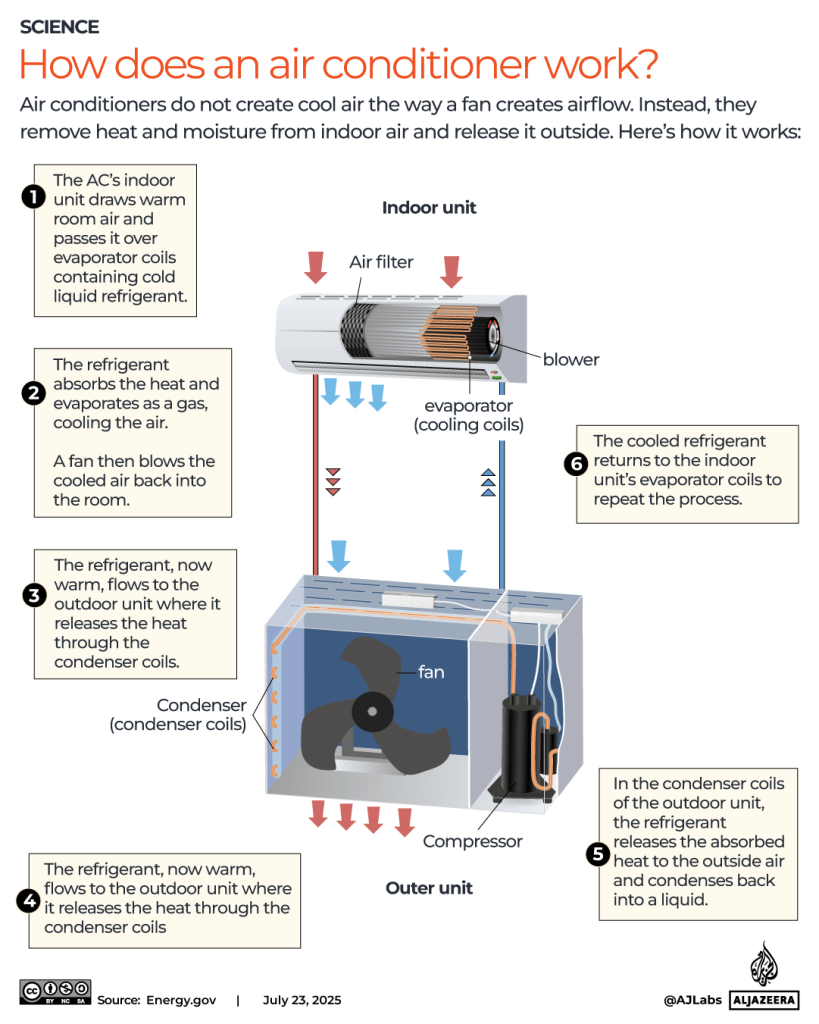
Have you ever wondered what happens inside your air conditioner to keep your home cool and comfortable? Understanding how an air conditioner works can help you appreciate this everyday marvel—and even save you money on energy bills.
We’ll break down the process step-by-step with a simple, easy-to-follow diagram. By the time you finish reading, you’ll know exactly how your air conditioner transforms warm air into refreshing coolness. Ready to uncover the secret behind your cool comfort? Let’s dive in!
Basic Air Conditioner Components
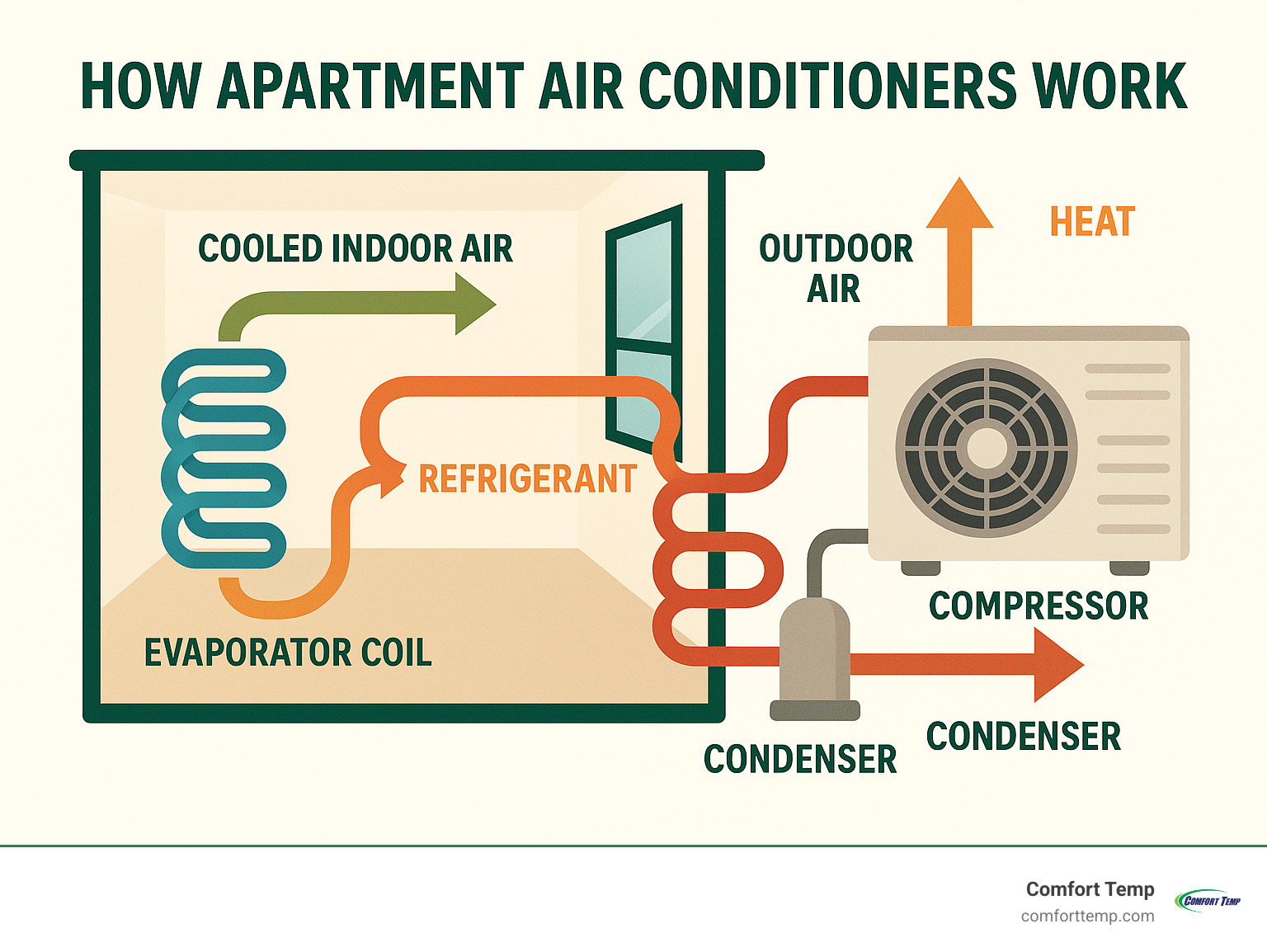
Compressorpumps the refrigerant through the system. It raises the refrigerant’s pressure and temperature.
Condenser Coilcools the hot gas refrigerant. It changes the gas into a liquid by releasing heat outside.
Expansion Valvecontrols the flow of liquid refrigerant. It lowers the refrigerant’s pressure before it enters the evaporator.
Evaporator Coilabsorbs heat from inside the room. The liquid refrigerant turns back into gas here, cooling the air.
Refrigerantis the special fluid that moves heat. It changes between gas and liquid to carry heat outside.
Credit: comforttemp.com
Air Conditioning Cycle
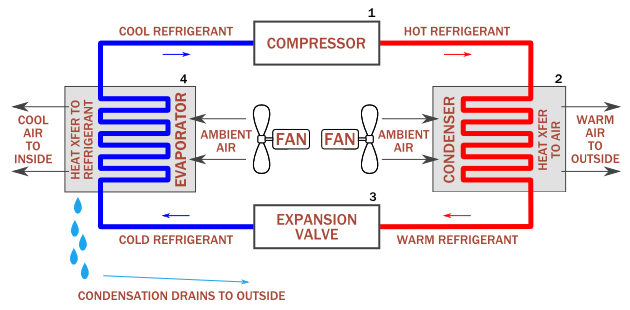
Compression Phase:The air conditioner compresses the refrigerant gas, raising its pressure and temperature. This hot, high-pressure gas moves to the next phase.
Condensation Phase:The hot gas flows through coils and cools down. It changes into a liquid by releasing heat outside the house.
Expansion Phase:The liquid refrigerant passes through a small valve. This lowers its pressure and temperature quickly, turning it cold.
Evaporation Phase:The cold refrigerant absorbs heat from inside the house. It evaporates back into gas, cooling the air around it.
Heat Transfer Process
Heat absorption indoorshappens as the air conditioner pulls warm air from inside the room. The warm air passes over cold coils filled with refrigerant. This refrigerant absorbs the heat, cooling the air. The cool air is then blown back into the room, lowering the temperature. The refrigerant, now warm, carries the heat away from indoors.
Heat release outdoorsoccurs when the warm refrigerant flows to the outside unit. Here, the heat is transferred to the outside air through condenser coils. A fan helps blow this heat away. The refrigerant cools down and turns back into a liquid, ready to absorb more heat indoors. This cycle keeps repeating to maintain a cool room.
Credit: medium.com
Role Of Refrigerant In Cooling
The refrigerantis the key to air conditioning. It moves heat from inside to outside.
It changes phasefrom liquid to gas and back. This change lets it absorb and release heat.
During evaporation, the refrigerant turns into gas. This process coolsthe air inside your home.
When it condenses back to liquid, the heat leaves the refrigerant and goes outside.
The refrigerant has a high heat carrying capacity. It can carry a lot of heat with little amount.
This ability makes the air conditioner efficient. It cools air quickly and uses less energy.
Airflow Path Inside Unit
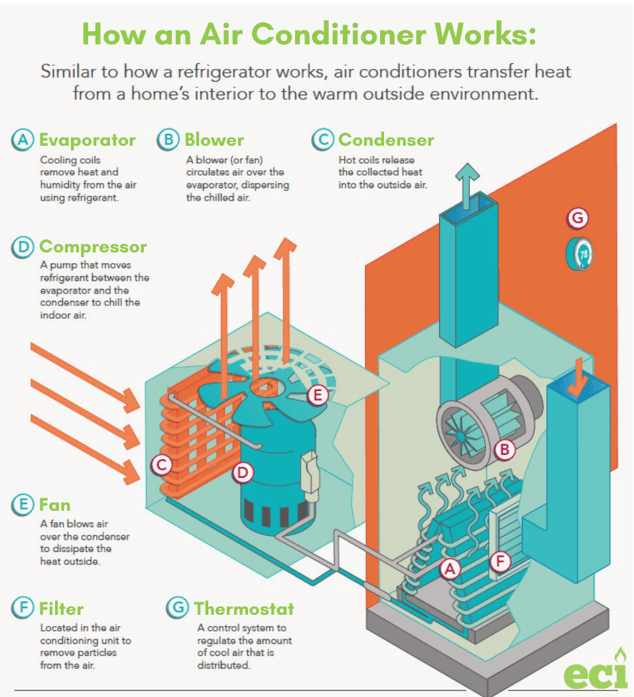
The air conditionerpulls warm air from the room through the intake vent. This air passes over the cool evaporator coil, where heat is removed. The cooled air then moves through the fan and is pushed back into the room.
Inside the unit, the air circulatescontinuously. Warm air enters, cool air leaves. This cycle helps keep the room temperature steady and comfortable.
- Intake:Warm air enters the unit.
- Cooling:Air flows over cold coils.
- Distribution:Cool air blows back into the room.
Energy Efficiency Factors
SEER ratingsshow how well an air conditioner uses energy. Higher SEER means better energy use and lower electric bills. This rating helps you compare different AC models easily. A unit with a SEER rating of 16 or more is quite efficient.
Proper maintenancekeeps the air conditioner running smoothly. Cleaning filters regularly improves air flow and cools air better. Checking refrigerant levels helps the system work without extra effort. Scheduling yearly professional tune-ups can prevent big problems and save money.
Common Air Conditioner Issues
Refrigerant leakscause the AC to lose cooling power. Low refrigerant means the unit works harder and uses more energy. Signs include warm air and ice on pipes.
Compressor failuresstop the air conditioner from working. The compressor moves the refrigerant through the system. If it fails, the AC won’t cool the air.
- Clogged coilsreduce airflow and cooling efficiency.
- Dirt and debris block heat transfer.
- Cleaning the coils helps the AC run smoothly.
Credit: www.ecicomfort.com
Visual Diagram Tips
Understanding an air conditioner diagram becomes easier with some key symbols. These symbols show parts like the compressor, condenser, evaporator, and fan. Recognizing these helps follow how air moves and cools.
Color coding is useful. Blue usually means cool airor refrigerant, while red means hot airor gas. This makes it simple to see which parts are hot and which are cold.
| Color | Meaning |
|---|---|
| Blue | Cool air or cold refrigerant |
| Red | Hot air or hot refrigerant |
The flow shows steps clearly:
- Warm air enters the system.
- Refrigerant absorbs heat in the evaporator.
- Compressor raises refrigerant pressure and temperature.
- Condenser releases heat outside.
- Cooled air blows back into the room.
Frequently Asked Questions
How Does An Air Conditioner Work Step-by-step?
An air conditioner absorbs heat from inside your home using refrigerant. The refrigerant evaporates, removing heat, then compresses and releases heat outside. This cycle cools indoor air effectively and maintains a comfortable temperature.
What Role Does The Compressor Play In Ac?
The compressor pumps refrigerant through the system. It compresses low-pressure gas into high-pressure gas, raising its temperature. This process enables heat release outside, essential for cooling indoor air efficiently.
How Does The Evaporator Coil Cool The Air?
The evaporator coil absorbs heat from indoor air. Refrigerant inside evaporates, turning from liquid to gas and absorbing heat. This cooled air circulates back inside, lowering room temperature.
Why Is The Condenser Coil Important In Air Conditioning?
The condenser coil releases heat absorbed from indoor air. High-pressure refrigerant gas passes through, cools, and condenses into liquid. This process expels heat outside, allowing the cycle to repeat.
Conclusion
Understanding how an air conditioner works is essential. The diagram simplifies the process. It shows the parts and their functions. You’ll see how air cools and circulates. Refrigerant plays a key role. It absorbs heat and releases it outside. The compressor and evaporator work together.
This teamwork keeps your home comfortable. Regular maintenance ensures efficiency. Clean filters and check components. An efficient system saves energy and money. With this knowledge, you can make informed decisions. Stay cool and comfortable all summer long.