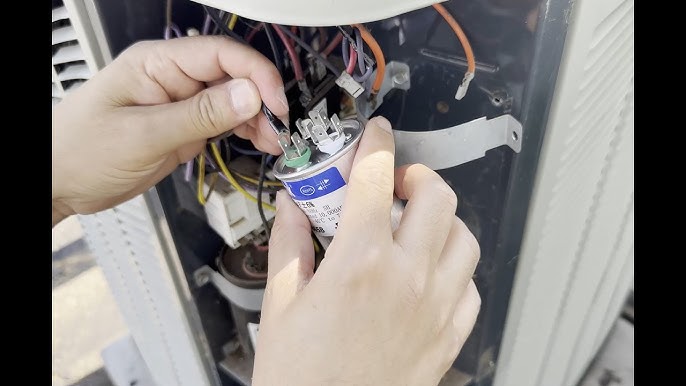
Wiring an air conditioner capacitor might sound tricky, but with the right steps, you can do it safely and easily. If your AC isn’t running smoothly or you’re hearing strange noises, the capacitor could be the problem.
Understanding how to wire it correctly can save you time and money on repairs. You’ll learn simple, clear instructions that anyone can follow—even if you’re new to DIY projects. Keep reading, and you’ll gain the confidence to fix your AC like a pro.

Credit: www.youtube.com
Types Of Ac Capacitors
Air conditioner capacitors help start and run the motor inside the AC unit. They store electrical energy and release it when needed. There are different types of capacitors for various functions in an AC system.
Knowing the types of capacitors helps when wiring or replacing them. Each type has a specific role to keep the air conditioner working smoothly.
Start Capacitors
Start capacitors give the motor an extra boost to start running. They provide a strong electric charge at the beginning. After the motor starts, the capacitor stops working until the next start.
These capacitors are usually bigger and have a short working time. They help the AC motor overcome the initial resistance.
Run Capacitors
Run capacitors keep the motor running after it starts. They provide a steady electric charge to the motor while it works. This improves motor efficiency and saves energy.
Run capacitors stay active as long as the AC unit is on. They are smaller than start capacitors but last longer.
Dual Capacitors
Dual capacitors combine the functions of start and run capacitors in one unit. They have three terminals for connecting to the fan and compressor motors. This makes wiring simpler and saves space.
Using a dual capacitor helps reduce parts and wiring in the air conditioner. It is common in modern AC systems.

Credit: www.reddit.com
Tools And Safety Gear
Wiring an air conditioner capacitor needs the right tools and safety gear. Using proper equipment helps you work safely and correctly.
This guide covers the essential tools and safety steps you should follow before starting the wiring process.
Essential Tools
Having the right tools makes wiring easier and safer. Prepare all tools before you start to avoid delays.
- Multimeter to check electrical readings
- Screwdrivers, both flathead and Phillips
- Wire strippers to remove insulation
- Needle-nose pliers for bending and holding wires
- Insulated gloves to protect from shocks
- Electrical tape for secure insulation
- Capacitor discharge tool to safely release stored charge
Safety Precautions
Safety is critical when wiring a capacitor. Follow these rules to prevent accidents and injuries.
| Safety Rule | Description |
| Power Off | Always turn off power at the breaker before working on the unit. |
| Discharge Capacitor | Use a capacitor discharge tool to remove stored electricity. |
| Wear Insulated Gloves | Protect your hands from electric shocks. |
| Use Insulated Tools | Prevent accidental short circuits or shocks. |
| Avoid Wet Conditions | Do not work in rain or wet areas to reduce shock risk. |
| Check for Damage | Inspect wires and tools for wear before use. |
Locating The Capacitor
Knowing where the capacitor is in your air conditioner helps you fix it safely. The capacitor stores energy to start the motor and keep it running.
This guide shows you how to find the capacitor step-by-step. You will learn how to access the AC unit and identify the capacitor inside.
Accessing The Ac Unit
First, turn off the power to your air conditioner. This stops any risk of electric shock. Locate the outdoor unit of your AC system.
- Switch off the circuit breaker for the AC unit.
- Wear gloves to protect your hands.
- Remove the screws from the metal cover on the unit.
- Lift off the cover carefully and set it aside.
Identifying The Capacitor
Inside the unit, you will see many parts. Look for a small, cylindrical or oval object with wires attached.
| Capacitor Features | Description |
|---|---|
| Shape | Cylindrical or oval |
| Color | Usually silver, gray, or black |
| Labels | Shows microfarad (µF) ratings and voltage |
| Wires | Two or three wires connected to terminals |
Reading Capacitor Labels
Knowing how to read the labels on an air conditioner capacitor is important. It helps you pick the right part and wire it correctly.
Capacitor labels show key information like size, voltage, and terminal markings. This guide explains these details clearly.
Understanding Microfarads
Microfarads (µF) measure the capacitor’s storage capacity. The label shows this number, which must match your AC unit’s needs.
- Look for a number followed by “µF” or “MFD”.
- Common values are 5, 10, 20, or 35 µF.
- A wrong microfarad rating can cause the motor to fail.
Voltage Ratings
The voltage rating tells you the maximum voltage the capacitor can handle. It is usually printed as “VAC” on the label.
| Voltage Rating | Description |
| 370 VAC | Common rating for residential AC units |
| 440 VAC | Used in larger or commercial systems |
| Other Ratings | Check unit specifications carefully |
Terminal Markings
Terminals connect wires to the capacitor. Labels show letters or numbers to identify each terminal.
- Cstands for common terminal.
- HERMconnects to the compressor.
- FANconnects to the fan motor.
- Match wires to terminals as per the label.
Discharging The Capacitor
Before wiring an air conditioner capacitor, you must discharge it safely. Capacitors hold electrical charge even after power is off.
Discharging the capacitor prevents electric shocks and damage to the unit or yourself.
Why Discharge Matters
A capacitor stores electricity that can shock you if not released. It can cause serious injury or damage tools.
Discharging removes stored power, making it safe to handle the capacitor and wires.
- Prevents electric shock
- Protects tools and equipment
- Stops accidental short circuits
- Makes repairs safer and easier
Safe Discharge Methods
Use a resistor or screwdriver with insulated handle to discharge the capacitor. Never use bare hands or metal objects without insulation.
Always check the capacitor with a multimeter after discharge to confirm it is safe to work on.
- Turn off power to the unit
- Use insulated tools only
- Hold resistor leads to capacitor terminals for a few seconds
- If no resistor, carefully bridge terminals with insulated screwdriver
- Wear rubber gloves for extra safety
- Test capacitor voltage with a multimeter
Wiring The Capacitor
Wiring an air conditioner capacitor is important for the unit to work well. The capacitor stores energy and helps start and run the motor.
It has three main wires to connect: start, run, and common. Each wire must be attached to the right terminal.
Connecting The Start Wire
The start wire helps the motor begin turning. Find the terminal marked “Start” on the capacitor.
Connect the start wire to this terminal firmly. Use a screwdriver or pliers to make a tight fit. Loose wires cause problems.
Connecting The Run Wire
The run wire keeps the motor running after it starts. Look for the terminal labeled “Run” on the capacitor.
Attach the run wire to the run terminal securely. Check that the wire is not frayed or damaged before connecting.
Connecting The Common Wire
The common wire is the shared connection for the start and run wires. It goes to the terminal marked “Common” or “C”.
Connect the common wire carefully to the common terminal. Ensure the connection is tight and the wire is clean.
Double-checking Connections
After wiring, check all connections again. Make sure wires are on the right terminals and fit tightly.
- Verify start wire on the start terminal
- Confirm run wire on the run terminal
- Ensure common wire on the common terminal
- Look for any loose or damaged wires
Tight and correct wiring helps your air conditioner work safely and efficiently.
Testing The Connection
After wiring an air conditioner capacitor, testing the connection is important. This ensures the capacitor works well and the unit runs smoothly.
Testing helps find mistakes in wiring early. It keeps the air conditioner safe and efficient.
Using A Multimeter
A multimeter checks if the capacitor is wired correctly. It measures electrical values like resistance and capacitance.
Set the multimeter to the capacitance mode. Connect the probes to the capacitor terminals. The reading shows if the capacitor stores charge well.
- Turn off power before testing
- Discharge the capacitor to avoid shocks
- Connect multimeter probes to the right terminals
- Compare reading to capacitor’s rated value
- Replace capacitor if reading is low or zero
Signs Of Proper Wiring
Proper wiring shows clear signs. The air conditioner starts smoothly and runs without issues.
You may see steady motor speed and no unusual sounds. The capacitor should not overheat or bulge.
- Air conditioner powers on quickly
- Motor runs without noise or vibration
- Capacitor stays cool to the touch
- No burning smell or smoke
- Multimeter shows correct capacitance

Credit: www.youtube.com
Troubleshooting Tips
Wiring an air conditioner capacitor can be tricky. It is important to check everything carefully.
This guide helps you avoid common mistakes and know when to replace the capacitor.
Common Wiring Mistakes
One common mistake is mixing up the terminals on the capacitor. This causes the AC to not start or run poorly.
Another error is using the wrong capacitor size. A capacitor with the wrong microfarad rating can damage the motor.
- Confusing the “C” (common), “FAN,” and “HERM” terminals
- Connecting wires loosely or not tightening screws properly
- Using a capacitor with incorrect voltage or microfarad rating
- Not discharging the capacitor before handling wires
When To Replace The Capacitor
Replace the capacitor if the air conditioner won’t start or runs slowly. A bad capacitor can cause these problems.
Look for physical signs like bulging, leaking, or rust on the capacitor. These show it needs replacement.
- AC motor hums but does not start
- Unit takes longer to cool
- Capacitor is swollen or leaking fluid
- Capacitor is more than 5 years old
Frequently Asked Questions
What Tools Are Needed To Wire An Ac Capacitor?
You need a screwdriver, needle-nose pliers, a multimeter, and wire connectors. Safety gloves and eye protection are recommended. These tools help ensure a safe and accurate wiring process.
How Do I Identify Capacitor Terminals For Wiring?
Capacitors have labeled terminals: “C” for common, “FAN” for fan, and “HERM” for compressor. Match wires accordingly to avoid damage and ensure proper function.
Can I Wire An Ac Capacitor Without Turning Off Power?
No, always turn off the power before wiring a capacitor. This prevents electric shock and protects you from injury or damage to the AC unit.
How To Test An Ac Capacitor Before Wiring?
Use a multimeter set to capacitance mode. Disconnect the capacitor and measure its value. Replace if the reading is below the rated capacitance.
Conclusion
Wiring an air conditioner capacitor is a simple task with care. Follow safety steps to avoid any risks. Always double-check connections before turning on power. Using the right tools makes the job easier. This guide helps you understand the basic wiring process.
Take your time and work carefully. Fixing your capacitor can improve your AC’s performance. Stay safe and confident while working on your unit. Small efforts lead to better cooling and less repair cost. Keep this guide handy for future reference.